Parking a UTV in Town Legally
You’ve just enjoyed an incredible ride on the trails, the dust still settling from your adventure, and now you’re craving a bite to eat or need to grab some supplies in the nearest town. But then the questions hit: can you even drive your UTV on these paved roads? And if you can, where in the world are you supposed to park it without getting a ticket or, worse, having it towed? This guide is here to untangle the complexities of legally parking your UTV in Nevada towns, ensuring your post-ride errands are as smooth as your off-road exploits.
The Foundation: Making Your UTV Street Legal in Nevada
Before you even think about parking your UTV in town, the absolute first step is ensuring your machine is legally allowed on public roads. Nevada has very specific requirements for what it calls a "Large All-Terrain Vehicle" (LATV), and without meeting these, you’re looking at citations, not parking spaces. Many riders assume any UTV can just hop on the road, but it's far more nuanced than that.
Understanding Nevada's "Large ATV" Definition
Nevada law, specifically NRS 490.043, defines a Large All-Terrain Vehicle, and this is the category your UTV needs to fall into to even be considered for street legality. It’s not just about having four wheels or sitting side-by-side. The key distinguishing factors typically revolve around the machine's width, weight, and crucially, its seating capacity and features. For instance, a UTV generally needs to have a manufacturer's original design for four or more seats, OR a truck bed. This means many of your favorite two-seat sport quads, no matter how powerful, won't qualify.
This distinction is often a point of frustration for riders with high-performance two-seaters who might want to use their machine to grab groceries. They see other UTVs in town and wonder why theirs can’t join the club. The law is quite clear: a two-seat sport quad generally fails Nevada's test because it lacks the designated four-seat capacity or a bed. This definition aims to differentiate true utility or larger recreational vehicles from smaller, faster off-road machines. So, if your UTV is a four-seater with a bed, like many utility side-by-sides, you're likely on the right track regarding the foundational definition. If it's a two-seat Polaris RZR, unfortunately, it's probably not going to make the cut for a street-legal designation in Nevada.
Essential Equipment for Road Readiness
Once you’ve confirmed your UTV meets the LATV definition, the next hurdle is equipping it with all the necessary safety features to be road-ready. Think of it like taking a standard vehicle and adding specific off-road protections, but in reverse—you're making an off-road vehicle safe for the paved world. These aren't suggestions; they are legal requirements.
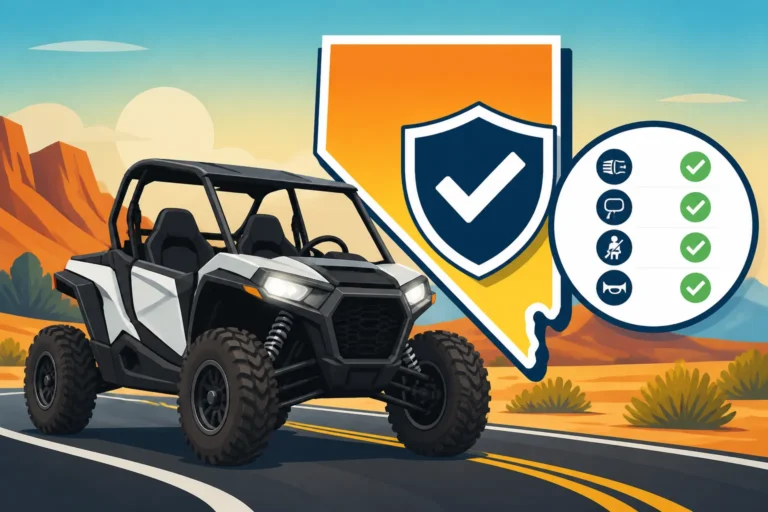
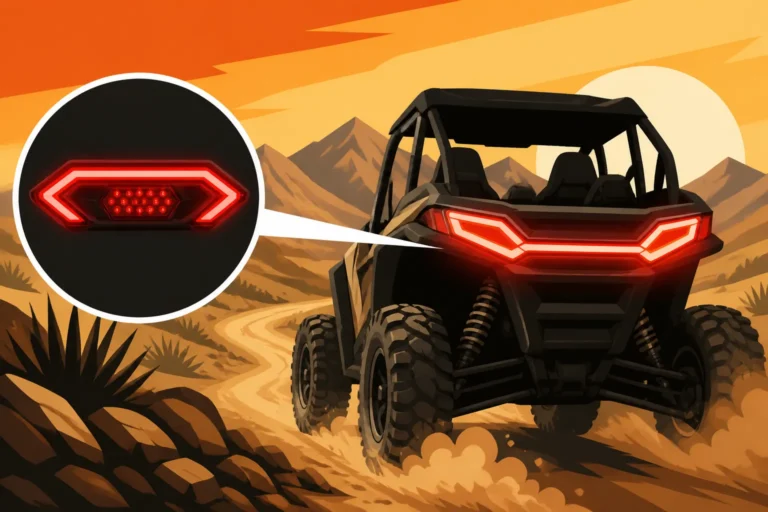
Your UTV must be outfitted with headlights and taillights that are visible from 500 feet, ensuring you can be seen by other motorists, especially at dusk or dawn. A working stop lamp (brake light) is also critical, clearly signaling when you’re slowing down. Turn signals, both front and rear, are non-negotiable for indicating your intentions on the road. Don't forget a horn, essential for alerting pedestrians or other drivers to your presence, especially in crowded parking areas. You'll also need at least one mirror that provides a clear view of the road to the rear, and typically, two mirrors are preferred for better visibility, particularly when parking. Beyond lighting and mirrors, your UTV needs a spark arrester to prevent trailside fires, which is vital in Nevada’s dry climate, and a functional muffler to keep noise levels reasonable for residential areas. Lastly, make sure you have DOT-compliant tires. While those aggressive off-road tires are great for mud and rocks, they might not be street-legal. Companies like SuperATV offer a great selection of DOT-approved tires and complete street-legal kits, making it easier to upgrade your machine and avoid issues when navigating town. You can find robust, road-friendly options that still perform well off-road, striking that perfect balance for Nevada's diverse terrain.
The Large ATV Decal and Paperwork
Even with all the right equipment, you can't just hit the pavement. You need the official blessing from the Nevada DMV in the form of a Large ATV decal. This isn't your standard OHV registration decal; it's specifically for street-legal use on designated roads. [Applying for a Nevada Large ATV Decal] involves a specific application process, often requiring proof that your vehicle meets all the aforementioned equipment requirements. You'll likely need a VIN inspection, and certain dealerships are authorized to perform these, helping to verify your UTV’s identity and confirm its equipment.
Once approved, you'll receive a distinctive decal that signifies your UTV is street-legal for applicable roads. It's crucial to understand that this decal doesn't grant you free rein on every public road; it merely allows you to operate on certain roads. Additionally, when driving your UTV on county roads, you'll need a valid driver's license, and Nevada requires liability insurance. You can find detailed requirements in [Nevada Street Legal UTV Requirements]. Always carry your registration card, proof of insurance, and driver's license with you. A common practice among riders is to keep these documents in a waterproof bag or container, especially since [Keeping Paperwork Dry in a Dusty Machine] is a real concern out on the trails and even on dusty county roads. Without these essential documents, even a perfectly equipped and decaled UTV could lead to a citation.
Parking Ponderings: Navigating Town Legally
Once your UTV is street legal, the next logical question is, where can you actually park it in town? It's not as simple as pulling into the nearest empty spot. You’ll need to consider general parking regulations, local ordinances, and common sense.
General Nevada Parking Laws
For the most part, when you're legally operating your UTV on designated county roads, it falls under the same general parking regulations as any other motor vehicle. This means obeying posted signs for parking zones, time limits, and restricted areas. You can't park in red zones, no-parking zones, or block driveways, fire hydrants, or crosswalks. Parallel parking rules apply, and you must park in the direction of traffic flow. If you're parking in a marked space, ensure your UTV fits entirely within the lines.
It’s easy to think of your UTV as "just an ATV," but once it's road-legal, it's expected to abide by vehicle laws. This includes parking meters where applicable. Yes, you might have to feed the meter for your UTV! Forgetting these basic rules, common to any car, can quickly turn a fun outing into an expensive lesson. Remember, deputies and police officers treat your street-legal UTV as a vehicle. If you wouldn't park your truck there, you probably shouldn't park your UTV there either.
Local Ordinances and Designated Routes
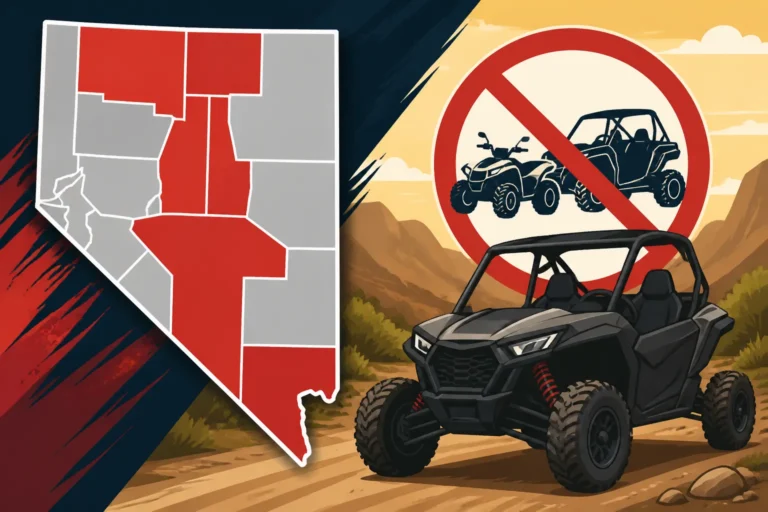
This is where things can get tricky, as Nevada is not a uniform state when it comes to OHV access. While the state provides a framework for street-legal UTVs, individual counties and cities have the power to enact their own ordinances regarding where OHVs can and cannot be operated and, by extension, where they can be parked. A prime example is [Nevada Cities That Require Designated OHV Routes]. Some cities, particularly larger ones like Las Vegas, Henderson, and Reno, may have very restrictive rules, often limiting OHV use to specific, designated routes, and completely prohibiting them from general city streets and parking areas.
On the flip side, some rural counties and smaller towns, especially those that cater to outdoor recreation, might have more relaxed rules, even allowing street-legal UTVs on nearly all county roads outside of major highways. For instance, towns like Mesquite have a reputation for being more open to OHV use on city streets, but even there, you still have to adhere to the 2-mile limit on paved highway, which means you can ride a paved shoulder to reach dirt, but not continuously through town. Before venturing into any specific town, it’s always best to check with the local city or county government website for their specific ordinances. What’s perfectly fine in Logandale might get you a ticket in Sparks. Understanding [Nevada Counties That Ban OHVs on County Roads] is crucial for planning your ride and avoiding legal trouble. The burden of knowing these local rules falls squarely on the rider.
Common Sense and Courtesy
Beyond the legalities, there's the matter of common sense and courtesy, especially when parking your UTV in a town. While your UTV might be street legal, it's still a different type of vehicle than a car or truck, and its presence can sometimes be met with curiosity or even irritation by residents who aren't used to seeing them parked in commercial areas.
Try to choose parking spots that are clearly designated and where your UTV won't look out of place or cause any inconvenience. Avoid parking areas that might be tight or difficult for other vehicles to navigate around. Don't block pedestrian walkways, building entrances, or accessible ramps. In busy commercial areas, it’s best to find a spot that offers ample room for your UTV and for other drivers to move freely. Remember, your UTV is often wider than a motorcycle and potentially shorter than a car, which can sometimes lead to awkward parking situations if not chosen carefully. Parking where your vehicle is not obstructing views, traffic flow, or access points helps foster a positive image for the OHV community and reduces the likelihood of complaints that could lead to stricter local regulations down the line.
Security & Practicalities for Urban UTV Use
Taking your UTV into town, even if it's street legal, introduces new considerations, especially regarding security and how you manage your gear. Unlike when you're out on the trail, a town environment presents different challenges, particularly theft and convenience.
Theft Prevention Strategies
Leaving your UTV parked in a public area, even for a short time, exposes it to a higher risk of theft than leaving it trailside in a remote area. UTVs are valuable, and unfortunately, they can be tempting targets for thieves. Implementing strong theft prevention strategies is paramount.
Start with basic physical deterrents. A heavy-duty disc lock on a wheel, a chain lock around a frame member and a fixed object (like a light pole if permitted, or even through the frame and a wheel), or a cable lock securing essential components can go a long way. Consider a steering wheel lock or a pedal lock, similar to those used in cars, which can make it much harder for a thief to drive off. Many modern UTVs also come with ignition kill switches or advanced security systems. If yours doesn't, consider aftermarket options. GPS trackers are another excellent investment, allowing you to locate your UTV if it is stolen. Visibly displaying security devices can often deter opportunistic thieves, making them move on to an easier target. Brands like SuperATV offer a variety of robust security accessories, from sturdy storage boxes that can be locked to winches that can help secure your machine if you’re parking in an unconventional spot. While no method is foolproof, layering multiple security measures significantly increases the safety of your machine.
Carrying Your Essentials
When you ride your UTV into town, you're not just bringing yourself; you're often bringing a lot of gear. Unlike a car with a trunk, UTVs often have open beds or limited enclosed storage. You'll need to think about what you're carrying and how it's secured and protected.
This includes your essential paperwork: your driver's license, UTV registration, and proof of insurance. As mentioned earlier, keeping these documents in a dry bag or a waterproof compartment is vital, especially given Nevada's dusty conditions and the occasional unexpected rain shower. [Keeping Paperwork Dry in a Dusty Machine] is not just a trail concern. If you're running errands, you might accumulate groceries or other purchases. Plan for secure storage that won't allow items to fly out during the ride back or be easily snatched when parked. Lockable storage boxes or bags specifically designed for UTVs are invaluable for this. Also, consider any personal items like wallets, phones, or cameras. While out on the trail, you might just tuck them into a backpack, but in town, they become more vulnerable. Always take valuables with you when you leave your UTV, just as you would with any other vehicle. It's about being prepared for the ride and the stop.
Planning Your Route
A critical aspect of legally parking your UTV in town is understanding that "street legal" doesn't mean "any street legal." It generally means "street legal for designated county roads," not necessarily main thoroughfares or interstates. Nevada law generally restricts UTVs on primary state highways and interstates, often limiting their use to minor county roads or to crossing a highway for up to 2 miles. [How Far You Can Ride Pavement in Nevada] is a key restriction to keep in mind.
This means you need to plan your route carefully. Don't just pull up Google Maps and blindly follow directions. Identify the specific county roads that allow OHV traffic and stick to them. Many riders use their street-legal UTVs to ride from a trailhead or their home to a gas station, a small diner, or a convenience store, often within these permitted "minor county roads." [Riding to the Trailhead, Not to the Store] is a good mantra to remember. Your UTV is likely meant for reaching the trail or navigating smaller, less-trafficked routes, not for cruising the main drag of Las Vegas or Reno. Understanding where these roads are and planning your stops accordingly will prevent you from accidentally veering onto a prohibited highway or into an area where OHV use is strictly forbidden. Always have a clear understanding of your destination's accessibility via approved UTV routes before you embark.
Here’s a quick checklist to help you ensure your UTV is street legal and you’re prepared for parking in town:
| Item | Description | Check Mark |
|---|---|---|
| LATV Definition Met | UTV has 4+ seats or a truck bed (NRS 490.043) | ✅ |
| Headlights | Visible from 500 feet | ✅ |
| Taillights | Visible from 500 feet | ✅ |
| Stop Lamp (Brake) | Functional and clearly visible | ✅ |
| Turn Signals | Front and rear, working properly | ✅ |
| Horn | Audible, warning pedestrians/drivers | ✅ |
| Mirrors | At least one rearview mirror, two recommended | ✅ |
| DOT-Approved Tires | Suitable for road use | ✅ |
| Spark Arrester | Functional | ✅ |
| Muffler | Meets sound regulations | ✅ |
| Valid Driver's License | Required for operation on public roads | ✅ |
| Liability Insurance | Meets Nevada's minimum requirements | ✅ |
| Large ATV Decal | Displayed correctly | ✅ |
| Registration Card | Carried in a waterproof container | ✅ |
| Proof of Insurance | Carried with registration | ✅ |
| Local Ordinances | Checked for specific city/county restrictions | ✅ |
| Security Measures | Locks, alarms, GPS tracking considered | ✅ |
| Secure Storage | For personal items and any purchases | ✅ |
| Planned Route | Utilizes designated minor county roads, avoids prohibited highways | ✅ |
Navigating Nevada in your UTV can be an incredibly rewarding experience, offering unparalleled access to stunning landscapes. By understanding and adhering to the specific rules for street legality and mindful parking, you can seamlessly transition from the excitement of the trail to the convenience of town, ensuring every adventure is both thrilling and fully compliant with the law.
Disclaimer
This article is for general informational purposes only and does not constitute professional advice. Laws, prices and regulations vary by location and change over time. Consult a qualified professional for guidance on your specific situation.