Nevada Counties That Ban OHVs on County Roads
It's one of the most frustrating things about riding off-highway vehicles in Nevada: you can be following all the state rules, confidently thinking you know where you can and can't ride, and then suddenly find yourself in a county or city where local ordinances completely change the game. This guide is here to untangle the confusion, helping you understand which Nevada counties have decided to ban or severely restrict OHV use on their county roads, and what that means for your ride.
Understanding Nevada's General OHV Road Law
Before we dive into the specific bans, it's really important to get a handle on the baseline, the general rule that Nevada tries to follow. The state of Nevada, through NRS 490.060, generally allows off-highway vehicles – that's your ATVs, UTVs, dirt bikes, and other machines – to be operated on certain public roads. This isn't a free-for-all, mind you. There are strict conditions, such as the machine meeting the definition of a "large all-terrain vehicle" if it's a UTV, or specific equipment requirements like working headlights, taillights, a stop lamp, and a spark arrester. You'd also need a valid driver's license and proof of insurance for these road-legal machines.
The idea behind this state law was to offer riders a bit more flexibility, especially for getting to trailheads, accessing remote camping spots, or simply moving between designated riding areas without having to trailer your machine for every short hop. It acknowledges that many of Nevada's county roads, particularly in rural areas, are more like dirt paths than bustling highways, and off-highway machines are perfectly capable of handling them. However, the state also gave local governments, like counties and cities, the power to opt out of this general rule through their own ordinances. This local control is where the confusion and frustration often creep in for riders. What's allowed in one county might land you a hefty fine in the next, even if the roads look exactly the same. This power to opt out is critical to understanding why some areas are off-limits.
Counties That Have Opted Out of General OHV Road Use
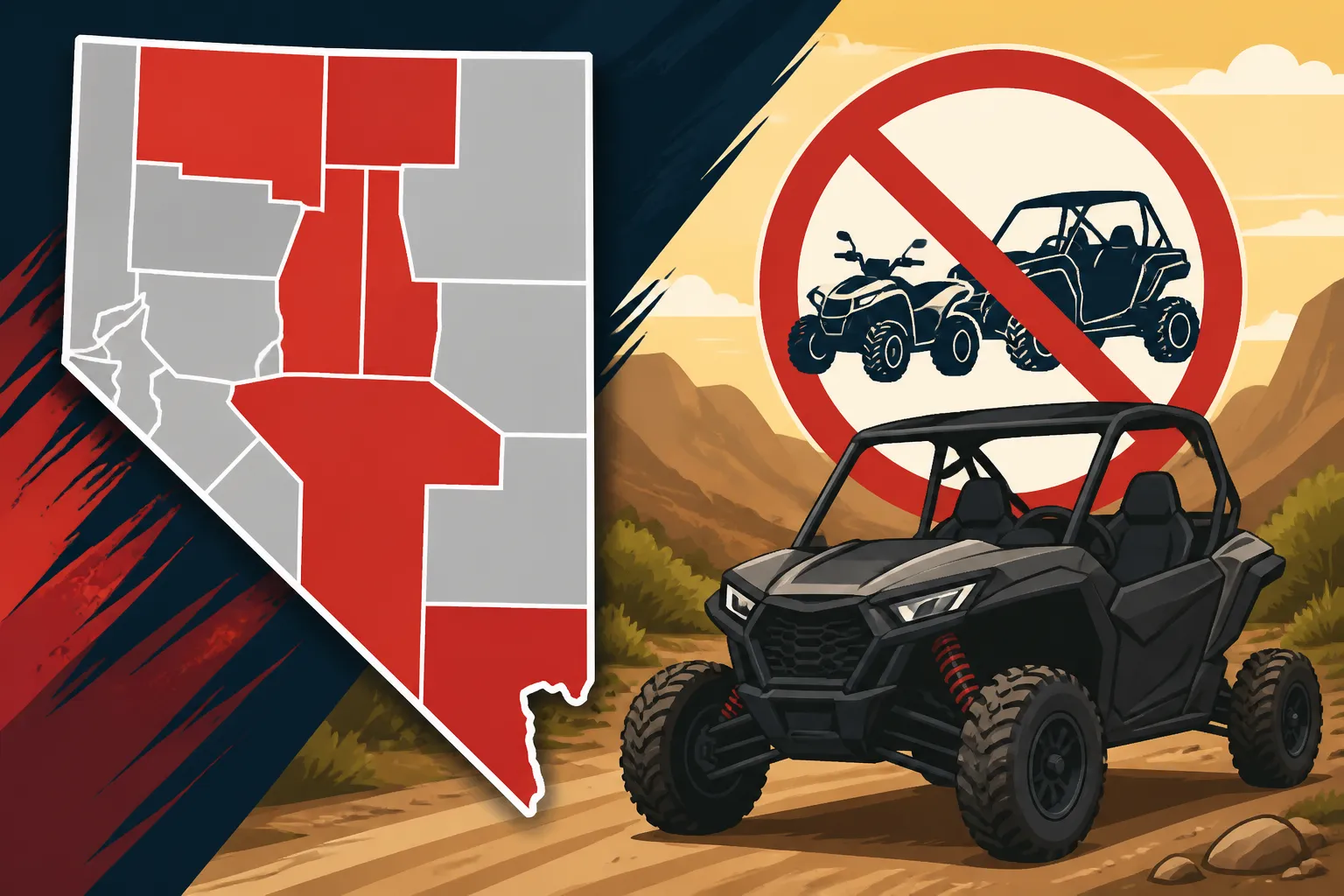
So, which counties have actually used this power to say "no thank you" to the state's general OHV road access law? The most prominent and widely known example, and one that often catches unsuspecting riders by surprise, is Washoe County. If you're riding in or around the Reno, Sparks, or North Lake Tahoe areas, this is absolutely crucial to know. Washoe County passed an ordinance, specifically Ordinance 1507, that effectively bans off-highway vehicles from most of its county roads, with very few exceptions. This means that unlike many other rural Nevada counties where you might legally ride your UTV down a dirt road to get to a trail, doing so in Washoe County could quickly get you a ticket.
This ordinance reflects the denser population and different traffic patterns found in the Reno-Sparks metropolitan area compared to, say, the vast, sparsely populated areas of Nye or Lincoln County. Washoe County's rationale often centers on public safety, noise concerns, and wear and tear on roads that might see more conventional vehicle traffic. While the state law tried to create uniformity, Washoe County exercised its right to set a different standard based on its local context. For riders who live in or visit this area, it creates a very distinct boundary. You might be able to ride your machine across a county road for a short distance in many parts of Nevada, but in Washoe County, unless it's a specifically designated route (which are rare and highly localized), you're better off trailering. Remember, checking local ordinances is key, especially when crossing county lines, as highlighted in [Nevada County Roads Open to UTVs].
What a Ban Means for Riders in Prohibited Counties
When a county like Washoe opts out, it's not just a suggestion; it's a legally binding ban. For you, the rider, this means a few very important things. First and foremost, operating your OHV on a county road where a ban is in place can result in a citation and fines. These aren't usually minor infractions, and they can quickly put a damper on your riding adventure. Law enforcement in these areas, whether it's the Washoe County Sheriff's Office or local municipal police, are typically aware of their ordinances and enforce them. They're looking for OHVs on roads where they shouldn't be, and ignorance of the law is rarely an acceptable defense.
The ban also means you'll need to adjust your trip planning significantly. If your destination is a trail system within or accessible only through a prohibited county, you absolutely must trailer your machine. You cannot just ride a mile down a county road to get from your campsite to the trailhead. This often means planning your parking, staging areas, and routes with much more precision. It also means you need to be extra vigilant about where you're riding, as county lines aren't always clearly marked, and a road that looks identical to one you were legally riding moments ago might suddenly be off-limits. For example, if you're riding in an area bordering Washoe County, you might be legally riding on a dirt road in an adjacent county, only to cross an invisible line and suddenly be in violation. Keep in mind that [Nevada Fines for No Large ATV Decal] or riding where prohibited can be steep.
It's not just about avoiding fines, though. These bans are often put in place for a reason, whether it's safety, environmental protection, or maintaining peace in residential areas. Respecting these local rules is part of being a responsible rider. While it can be frustrating, especially when you've invested in making your machine compliant for road use in other parts of the state with accessories you might have picked up from a place like SuperATV, it's crucial to understand that local laws take precedence in these situations.
Enforcement and Penalties
When you're caught riding your OHV on a prohibited county road, the consequences can range from a warning to a full-blown citation. Law enforcement officers, whether they're a county deputy or a state trooper, are trained to identify OHVs and understand local ordinances. They'll pull you over, ask for your registration, driver's license, and proof of insurance, just as they would with any other vehicle. If you're found to be in violation of a local ban, you'll likely receive a ticket. The specific fine amount can vary, but it's generally designed to be a deterrent, not just a slap on the wrist. Repeated offenses, or additional violations like reckless driving, can escalate the penalties significantly.
Beyond the immediate financial cost, a citation can also mean lost riding time, as you might be instructed to load your machine onto a trailer or even have it impounded if there are other serious violations. This is why being proactive and knowing the rules before you ride is so important. Imagine planning a weekend trip to a new area, only to have it cut short by a ticket within the first hour because you weren't aware of a local ordinance. It’s a completely avoidable headache. Officers also often check for state-level compliance, so ensure your machine has its [Nevada's Large All-Terrain Vehicle Decal] if it's a UTV meant for any road use, and that you meet all other equipment requirements.
Impact on Trail Access
A county-level ban on OHV use on county roads can profoundly affect how you access your favorite trails. For many riders, county roads serve as crucial connectors, allowing them to ride from their campsite to a distant trailhead, or link up different sections of a larger trail system. When these roads are closed to OHVs, you often have to find alternative solutions. This usually means more trailering. You might have to drive further to find a designated staging area or trailhead that doesn't require road travel. This adds time, fuel costs, and logistical challenges to your outing.
Consider a scenario where a popular riding area is surrounded by a county that has enacted such a ban. You might be able to ride extensively within the designated OHV area, but getting to and from that area becomes a problem. Instead of being able to hop on a machine right from your cabin or a dispersed camping spot, you'd need to load it up, drive to a specific parking area, unload, ride, and then repeat the process on the way back. This can be especially inconvenient for multi-day trips or for riders who prefer the flexibility of riding directly from their basecamp. Always check maps and local regulations to identify any "no-go" zones on county roads, especially those that might otherwise seem like logical access points. [Riding County Roads Legally in Nevada] delves into the general state rules, but remember, the local ban overrides them.
How to Confirm OHV Road Status in Any Nevada County
Given the variability of OHV road laws across Nevada's counties, you might be asking yourself, "How on earth do I find out what's allowed where I want to ride?" It’s a completely valid question, and thankfully, there are reliable ways to get the information you need. The best approach is always to do your homework before you load up your machine and hit the road.
First, your number one resource should be the county government's official website. Look for sections on "Ordinances," "County Code," or "Public Works." Many counties will have their full code of ordinances published online, searchable by keywords like "off-highway vehicle," "OHV," "all-terrain vehicle," or "UTV." This is the most direct way to see if a county has passed any specific laws that restrict or permit OHV use on its roads. For instance, if you're planning a trip near Reno, searching "Washoe County OHV ordinance" would quickly lead you to Ordinance 1507.
Second, contacting the local Sheriff's Office or Police Department for the specific area you plan to visit can be incredibly helpful. While they might not be able to recite every single ordinance from memory, they can often direct you to the right department or website, or give you a concise answer regarding major restrictions. They are, after all, the ones who enforce these laws, so they have a vested interest in public awareness. Just be polite and clear about your intentions – state that you're an OHV rider trying to understand local rules before you visit.
Third, local OHV clubs and associations are a treasure trove of knowledge. These groups are usually made up of passionate local riders who are intimately familiar with the riding areas and their specific regulations. They often actively work with local governments and can provide up-to-date information on bans, designated routes, and any recent changes. A quick online search for "[County Name] OHV club" can often yield results, and many have Facebook groups or forums where you can ask questions.
Finally, while not always perfectly up-to-date on every single local nuance, online trail mapping resources and government land management agency websites (like the BLM or Forest Service) can sometimes provide clues. They might show designated OHV routes and implicitly suggest areas where riding is not permitted. However, always cross-reference this with county-specific ordinances, as land management maps might not reflect local road bans. Remember the state permits certain uses, but local rules can always be more restrictive.
By using these resources, you can equip yourself with the knowledge needed to ride legally and responsibly, avoiding frustrating surprises on your next Nevada OHV adventure. It might seem like a bit of extra work, but it’s far better than facing a ticket or having your trip cut short because of an unforeseen local ban. When researching, keep an eye out for mentions of [Nevada Cities That Require Designated OHV Routes] too, as city limits often have even tighter restrictions.
To help visualize the difference, here's a general comparison:
| Category | General Nevada State Law (NRS 490.060) | Washoe County (Example of Opt-Out) |
|---|---|---|
| Default Stance on County Roads | Generally Permitted for OHVs meeting specific criteria (large ATV, equipment, licensed driver, insurance) on minor county roads. | Generally Prohibited for OHVs on most county roads (Ordinance 1507), with very limited, specific exceptions for designated routes. |
| Purpose | Allow reasonable access to trails, rural areas; connect riding spots. | Prioritize public safety, minimize noise, reduce traffic on denser roads. |
| Equipment Requirements | Yes (headlights, taillights, stop lamp, mirrors, spark arrester, etc. for "large ATVs") | Not applicable on most county roads due to ban; only relevant for designated routes or private property. If riding anywhere in NV, a spark arrester is always a good idea. |
| Driver's License / Insurance | Required for road use. | Required if operating on any road, even a permitted designated route. |
| Enforcement | State troopers, county deputies check for compliance with state law. | Washoe County Sheriff, Reno/Sparks PD enforce local ordinance. |
| Penalty for Violation | Fines for non-compliance with state equipment/licensing rules or for riding where prohibited. | Fines for riding on prohibited county roads, in addition to any state-level non-compliance. |
This table really highlights that while the state offers some flexibility, a county's decision to opt out completely changes the landscape for riders. Always double-check!
Disclaimer
This article is for general informational purposes only and does not constitute professional advice. Laws, prices and regulations vary by location and change over time. Consult a qualified professional for guidance on your specific situation.