Fueling Up at a Station on a County Road
A fuel stop can turn into a legal and safety headache if your ATV or UTV is not allowed on the road leading to the station. In Nevada, having an off-highway registration decal does not automatically make a machine street legal. This guide explains how to check your route, prepare your vehicle, fuel safely, and avoid assuming every county road is open to OHVs.
Can you ride a Nevada ATV or UTV to a gas station?
Sometimes—but the fact that a station sits on a county road does not by itself make the ride there legal. Nevada road use depends on the machine, the road, applicable local rules, and whether you meet the requirements for operating on that route.
An OHV decal is not the same as permission to ride on roads
Nevada’s standard OHV registration decal is for off-highway use. It is not a general license to ride a quad or UTV on public streets or roads. Some qualifying larger ATVs may be eligible for a separate large-ATV decal for certain road use, but that does not mean every machine qualifies or every road is open.
The distinction catches riders off guard. A machine can be properly registered for trail riding and still be prohibited from taking the paved route to a fuel station. Before planning a ride, check Nevada Large ATV Decal requirements and the applicable Nevada Equipment List for Road-Legal UTVs details. A road-use decal also does not replace the need to follow road rules, carry required documents, or meet equipment and insurance requirements.
A two-seat sport quad, for example, should not be assumed to qualify just because it is registered for off-highway riding. Nevada’s rules for larger ATVs use specific eligibility criteria, so check the machine’s configuration and paperwork rather than relying on its size or how other riders use it. If it does not qualify, trailer it to a legal riding area or use a street-legal vehicle to reach the station.
The route matters as much as the vehicle
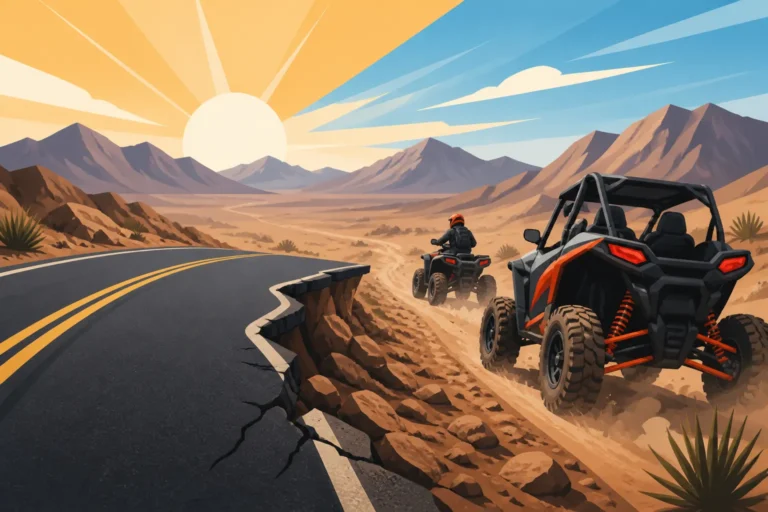
Even an eligible machine cannot necessarily use any road it finds convenient. Counties and cities may restrict OHV travel, and rules can differ between routes in the same area. A road that looks like a quiet connection from a trailhead to town may pass through a city, enter a restricted area, or be closed to OHVs.
That is why “it’s only a short ride to the pump” is not a reliable test. Check whether each road on your intended route is open to your type of machine. Local restrictions can affect where riders may travel in town, including whether designated routes are required. For example, review Nevada Cities That Require Designated OHV Routes and the relevant county or city rules before setting off.
Also consider whether your trip includes pavement or a highway crossing. Nevada has specific restrictions that can limit how far certain OHVs may travel on paved roads, and a crossing has its own rules. Review Nevada's 2-Mile Limit on Paved Highway and Nevada Rules for Crossing a State Route before building a route around a fuel stop. Do not treat a short paved segment as automatically legal.
Confirm the road-use requirements before leaving
Road operation involves more than choosing an open route. The driver, machine, and documents all need to meet the requirements that apply to that road. These may include a qualifying decal, a valid driver’s license, liability insurance, and required equipment. Requirements can differ from ordinary off-road riding rules, so verify them specifically for road use.
A practical check is to ask three questions:
- Is my machine eligible for the road-use decal or authorization required for this kind of travel?
- Is every part of my planned route open to OHVs like mine?
- Do I have the required driver credentials, insurance, equipment, and paperwork with me?
For a closer look at driver requirements, see Nevada Driver's License Rules for UTV Road Use. For coverage requirements, read Liability Insurance Nevada Requires Under NRS 485.185. If any answer is uncertain, trailering is a safer plan than improvising once you reach a paved road.
| Before riding to the station | What to confirm |
|---|---|
| Vehicle eligibility | Whether your ATV or UTV qualifies for the road-use authorization needed on the route |
| Route access | Whether each road is open to your vehicle and whether local restrictions apply |
| Driver and coverage | Required license, liability insurance, and documents |
| Equipment | Required road-use equipment, not just trail accessories |
| Fuel stop | Whether the station is reachable without using a closed road or crossing private property |
Plan the fuel stop before you start riding
A station can look close on a map and still be a poor choice for an OHV fuel stop. The approach may require an unapproved road, a stretch of pavement you cannot use, or a turn across a busy road. Planning the route first helps avoid the stressful situation of arriving near town and realizing the last leg is not legal or safe.
Choose a legal, practical route
Use a current route map and check local rules for the roads you plan to take. Pay attention to route boundaries, posted signs, and points where a trail joins a paved road. A route that is open to UTVs may not be open to every kind of ATV, and permission to cross a road does not necessarily mean permission to ride along it.
If your ride is near Mesquite, Fallon, or another Nevada community, do not assume that a route used by locals is lawful for every rider or machine. Rules can change as you move between county roads, city streets, and designated OHV routes. A useful place to start is Nevada Rules on Riding Into Town for Fuel. Mesquite riders can also use Riding the Street in Mesquite as a reminder to check the specific local route rather than relying on a broad assumption about town access.
Think through the full trip—not just the final mile. Include the route back, too. You may be able to reach a station on a legal road but face a different road closure, traffic pattern, or restriction on the return leg. If you cannot identify a permitted route in both directions, refuel before leaving the road network or transport the machine.
Check the station approach and parking
Before setting out, consider how you will enter and leave the station. A busy forecourt, narrow entrance, steep driveway, or tight turn can be difficult in a wide side-by-side. On arrival, stay on the station’s paved access area and park only where the operator allows. Do not cut across an adjacent lot or private driveway to avoid traffic.
At a crowded station, wait for a clear pump and give other vehicles room to maneuver. A UTV may take up more space than a passenger car, and a trailer or extra-long machine can make a pump island difficult to use. If the station’s layout is not suitable, do not force a tight turn beside moving vehicles. Find another station, or arrange to fuel the machine somewhere it can be parked safely.
If you are unsure whether the property permits OHVs, ask the station attendant before fueling. Permission to ride on a public route does not automatically grant permission to use private property beyond the normal customer area. Be courteous, avoid blocking pumps, and leave space for emergency access and delivery vehicles.
Carry a plan for a station that is unavailable
Desert rides can be hard on fuel range, and a station may be closed, out of a needed fuel grade, or inconvenient to access with your machine. Build in a reasonable reserve instead of planning to reach the pump with nearly an empty tank. Check your own vehicle’s fuel consumption under the conditions you expect: soft sand, hills, heavy cargo, and repeated stops can use more fuel than easy trail riding.
Do not count on finding a legal shortcut if your planned route fails. If the road to a station is closed or unsuitable, turn back or use a permitted alternate route. Carrying spare fuel may be an option for some rides, but transport and storage must be handled safely and in accordance with applicable rules. Keep fuel in a suitable, secured container and away from passengers, hot components, and potential ignition sources. A container should never be an excuse to ride a prohibited road.
Prepare your machine and your documents
A machine that feels ready for a desert trail may still need attention before road travel. Road-use equipment and paperwork are separate from basic trail preparation, so check both before you leave the staging area.
Inspect equipment that matters on the road
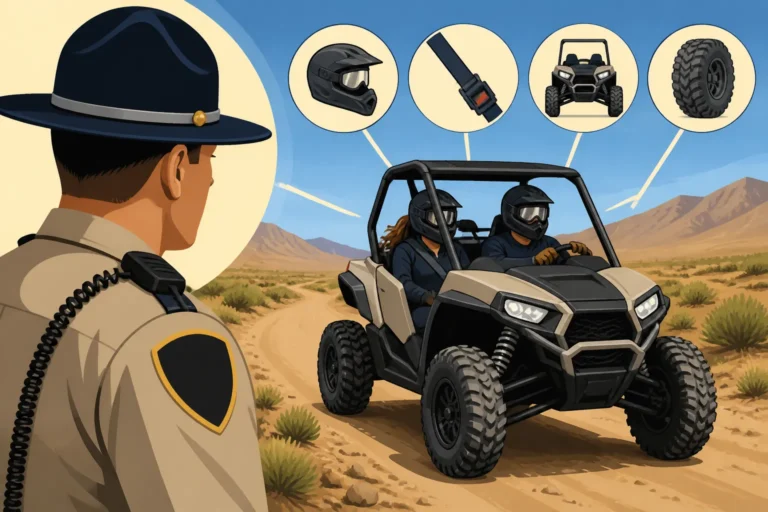
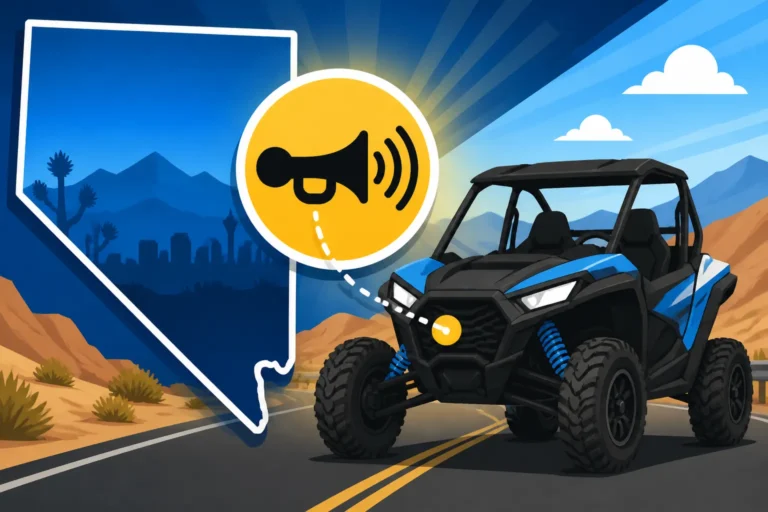
Before riding to a station, check the equipment required for your machine and route. Depending on the applicable requirements, this can include items such as lights, reflectors, mirrors, a horn, and other safety equipment. Do not assume that a headlight installed for night riding, or a mirror added for trail visibility, automatically satisfies the rules for road use.
Aftermarket accessories can be useful, but an accessory’s presence does not establish legal compliance. Riders comparing items from companies such as SuperATV should match each item to the actual requirement for their vehicle and confirm that the completed setup is acceptable for the intended road. A kit marketed for a particular machine is not, by itself, proof that the vehicle meets every Nevada road-use rule.
Do a basic walk-around, too. Check tires, brakes, steering, lights, and any loose cargo. On a UTV, confirm that doors or nets are secured and seat belts work. A slow trip to a nearby pump still puts you among road traffic, where a loose load or failed light can create a serious problem.
Keep paperwork easy to reach
Bring the registration or other required proof, the documents associated with road use, and proof of insurance when required. Keep them somewhere protected from dust and water but easy to access if asked. A phone photo can be a convenient backup, but do not assume it replaces original or otherwise required documents.
A simple pre-ride routine helps when several people share a machine. One person can check the route and local restrictions, another can inspect equipment, and the driver can confirm the documents are present. That avoids the familiar last-minute scramble—searching a gear bag for paperwork while everyone waits at the trailhead.
If you have recently changed the vehicle setup, recheck the road equipment. A new windshield, roof, storage box, or accessory from a brand such as SuperATV may change visibility, access, or the way an item is mounted. The point is not to add accessories for their own sake; it is to ensure the vehicle remains safe and compliant after changes.
Fuel safely at the pump
Fueling a UTV or ATV calls for the same care as fueling other motor vehicles, with a few extra considerations for a machine that may be dusty, hot from a ride, or carrying passengers and gear.
Make the machine safe before opening the tank
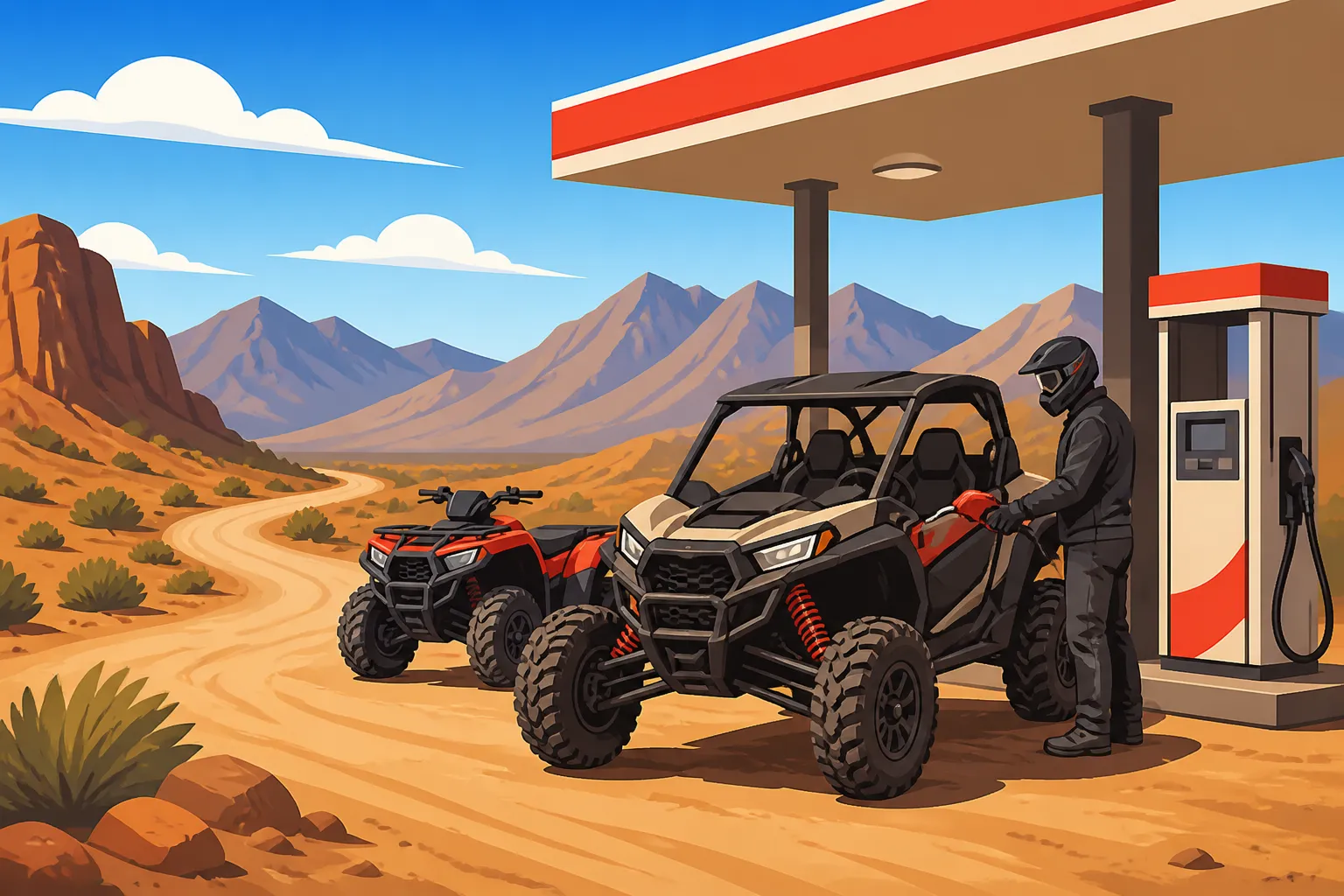
Park in the station’s designated fueling area, set the brake, switch off the engine, and follow the station’s posted instructions. Keep passengers clear of the immediate fueling area. Avoid fueling beside an operating engine, hot exhaust, or an open flame, and do not smoke while handling fuel.
If the machine has just completed a demanding climb or a long stretch in soft sand, give yourself a moment to settle before refueling. Be deliberate rather than rushing because another vehicle is waiting. Keep the nozzle attended, avoid overfilling, and replace the cap securely before restarting. If fuel spills, stop and follow the station’s instructions for reporting and cleaning it up; do not leave a puddle near a pump or ride away with fuel on the machine.
Before pulling away, check for drips, a loose cap, or fuel on the seat or cargo. If you smell fuel after restarting, shut the machine down in a safe place and investigate rather than continuing onto a road or trail.
Keep passengers, cargo, and traffic in mind
A station forecourt is a busy shared space. Passengers should not climb on or off near a moving vehicle, and loose cargo should not block the driver’s view or interfere with controls. If you are riding with children, make sure they remain supervised and follow the station’s safety directions.
Watch for vehicles backing out, pedestrians crossing between pumps, and drivers who may not expect an OHV. Use a slow, predictable path through the lot. If you have to wait, position the machine where it does not block an entrance, pump, or traffic lane. Riders arriving together should avoid forming a line that prevents other customers from using the station.
A mirror or lighting upgrade may improve visibility, but it cannot make a restricted route legal or compensate for careless movement in a crowded forecourt. If you are evaluating equipment from SuperATV or another supplier, first identify the actual safety or compliance need, then verify that the product is appropriate for your particular machine. The station stop should remain straightforward: arrive by a lawful route, fuel carefully, and leave without obstructing other customers.
Know when to trailer instead
Trailering is often the simplest answer when your quad is not eligible for road use, the station is beyond a permitted route, or the road conditions feel unsafe. It can seem inconvenient when the pump is only a short distance away, but it avoids turning a routine fuel stop into an illegal ride or a roadside hazard.
A good rule is to settle the access question before the tank is low. If the route is uncertain, do not leave the trailhead assuming you will figure it out near town. Plan a legal fuel stop, use a suitable transport vehicle, or choose a riding area where you can refuel without traveling on a restricted road.
Disclaimer
This article is for general informational purposes only and does not constitute professional advice. Laws, prices and regulations vary by location and change over time. Consult a qualified professional for guidance on your specific situation.