Why a Montana Plate Does Not Help in Nevada
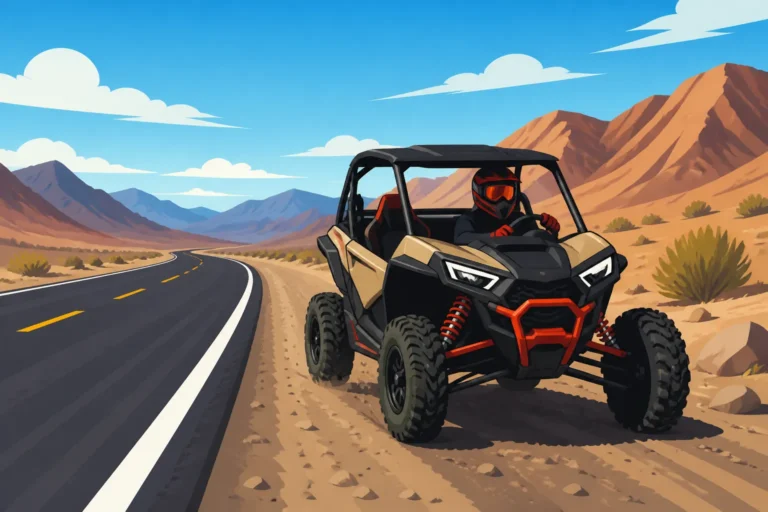
It's a common dream for many off-road enthusiasts: the freedom to cruise from your campsite or home directly to the trailhead, or even just nip into town for supplies, all on your trusty ATV or UTV. The reality of making these machines street-legal can be a frustrating maze of regulations, and one solution that often pops up in discussions is getting a Montana license plate. But for those of us riding in Nevada, thinking a Montana plate will magically solve your street-legal woes is often a misunderstanding that can lead to a lot of headaches and potential fines. This guide will walk you through why a Montana plate doesn't work as a bypass for Nevada's street-legal requirements and what you truly need to know to ride legally on Nevada roads.
The Lure of Out-of-State Plates for Nevada Riders
It’s easy to see why the idea of an out-of-state plate, specifically from Montana, has gained traction among off-road vehicle owners. Many riders are tired of constantly trailering their machines everywhere, especially for short hops or connecting trails. The appeal lies in the perceived simplicity and lower cost of registering an OHV in Montana, often through an LLC, to obtain a standard vehicle plate, thus bypassing the more stringent and often confusing street-legal conversion laws in one’s home state.
The "Montana LLC" Myth for OHVs
The "Montana LLC" strategy usually involves creating a limited liability company in Montana and then registering your ATV or UTV through that entity. Because Montana has no sales tax and a reputation for being lenient with vehicle registrations, particularly for luxury vehicles and RVs, people assume this extends universally to OHVs and automatically confers street legality. The thought is, if it's legally registered and plated in Montana, other states must recognize that registration and allow it on their roads. This approach banks on the idea of reciprocity between states, where one state honors another's vehicle registration. However, this is where the wheels often come off for Nevada residents.
Nevada's Own Street Legal Pathway
Contrast this with Nevada, which has a specific, albeit narrow, pathway for certain OHVs to become street legal. Nevada law, under NRS 490.043, defines a "large all-terrain vehicle" that can be registered for limited road use. This isn't a blanket allowance for all quads and side-by-sides; it's a very particular classification with strict equipment requirements and usage restrictions. The existence of this specific pathway means Nevada isn't looking for workarounds from other states; it has its own rules for its residents. Ignoring these rules in favor of an out-of-state solution, especially if you're a Nevada resident, is where the trouble begins.
Nevada's Stance on Out-of-State Street Legal Conversions
Nevada takes its vehicle registration and road use laws seriously, and while it generally respects reciprocity for properly registered vehicles, there are significant caveats when it comes to OHVs and residency. The state is well aware of the Montana LLC trend and doesn't consider it a legitimate way for Nevada residents to circumvent local laws.
Reciprocity vs. Residency
Reciprocity means that if your vehicle is legally registered in your home state, Nevada will recognize that registration. For example, if you live in Arizona and your UTV is street legal and plated there, you can likely drive it on designated Nevada roads for a visit, abiding by Nevada's rules. However, this goodwill largely applies to non-residents visiting Nevada with their properly registered home-state vehicles.
The crucial distinction here is residency. If you are a Nevada resident, even if your machine is technically registered to a Montana LLC, Nevada considers your primary residence to be here. This means you are expected to register your vehicles according to Nevada law. Registering a vehicle that is primarily garaged and operated in Nevada in another state, especially to avoid local regulations, can be seen as an attempt to evade registration and taxes, and it can be challenged by local law enforcement. It's a common misconception, but a Montana plate for a Nevada resident's machine doesn't make it street legal in Nevada in the way a Montana resident's machine might be when visiting. You'll still need to follow Nevada's rules for [Registering an Out-of-State Machine in Nevada] if you truly move here.
The Definition of a "Large ATV" in Nevada
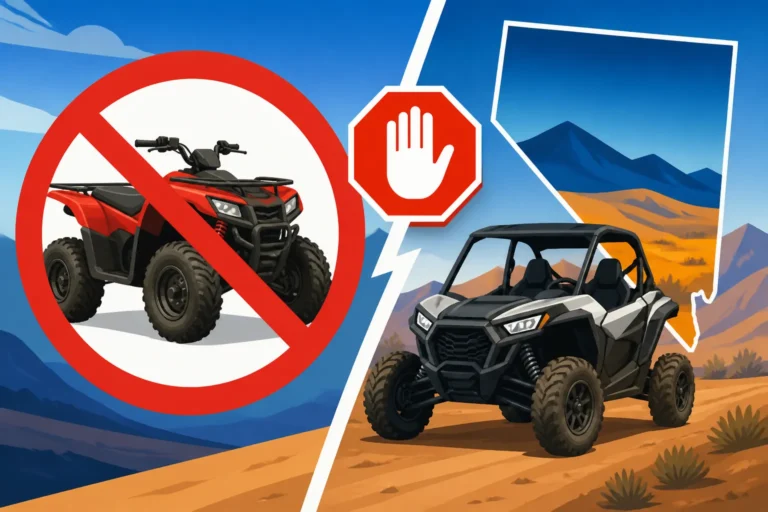
Nevada's ability to be street legal hinges entirely on whether your machine qualifies as a "large all-terrain vehicle" under NRS 490.043. This is the legal foundation, and it doesn't care about what another state calls your machine. In simple terms, a "large ATV" is generally a side-by-side that has at least four seats or a truck bed, and meets certain width and weight requirements. Most sport quads and even many smaller two-seat UTVs simply do not fit this definition. The state's criteria are clear, and if your machine doesn't check these boxes, a Montana plate won't change its classification or make it street legal in Nevada. This is where many riders get caught out, as their two-seat sport UTV, while plated in Montana, doesn't meet Nevada's core requirement.
Local Enforcement and the Paper Chase
When a deputy, park ranger, or Nevada Highway Patrol trooper sees an OHV on a county road, their first instinct is to check for proper Nevada registration and, if it's street legal, a Nevada Large ATV decal. If you present a Montana plate, especially if you reside in Nevada, it's a red flag. They are looking for clear evidence that your machine adheres to Nevada's rules. They'll ask for your driver's license, your machine's registration, and then start looking for the required safety equipment specified by Nevada law. They are trained to recognize the specific legal pathway for OHV road use in Nevada. If you're pulled over on a county road around Pioche or in the rural areas near Caliente, showing a Montana plate for a machine that doesn't meet Nevada's Large ATV definition is likely to result in a citation for [Nevada Fines for No Large ATV Decal] or even more serious charges related to improper registration. They are not simply looking for any plate; they're looking for the right plate for a Nevada-legal machine operated by a Nevada resident.
Understanding Nevada's Specific Rules for Street-Legal OHVs
So, if a Montana plate isn't the magic bullet, what does it take to legally ride your OHV on Nevada's roads? It comes down to adhering strictly to Nevada's own laws, which are quite specific and generally more restrictive than what many riders hope for.
The "Large ATV" Criteria
As mentioned, the core of Nevada's street-legal framework for OHVs rests on the definition of a "Large ATV." This isn't just about having four wheels; it's about the machine's intended purpose and design. To qualify for a [Nevada Large ATV Decal], your machine must:
- Be a side-by-side (UTV) or similar vehicle. Sport quads are almost universally excluded.
- Have a manufacturer's width greater than 50 inches. Most UTVs meet this.
- Have a dry weight of more than 900 pounds but less than 3,800 pounds. Again, common for UTVs.
- Crucially, it must be designed by the manufacturer for at least four seats OR have a cargo bed that can carry at least 400 pounds. This is the big hurdle. A two-seat Polaris RZR, while wide and heavy, typically doesn't have four seats or a cargo bed that meets the 400-pound capacity, meaning it won't qualify. Conversely, a utility-focused UTV like a Can-Am Defender with its full truck bed would likely qualify. This distinction is critical and often misunderstood. [What Qualifies as a Large ATV in Nevada] delves into this in more detail.
Equipment Requirements for Nevada Road Use
Even if your UTV qualifies as a "Large ATV," it must then be equipped with specific safety features to be considered street-legal. These are not suggestions; they are mandatory for operation on public roads and are exactly what a deputy will be looking for. Many aftermarket parts, like those offered by SuperATV, can help you meet these requirements, but you need to know exactly what's needed:
- Headlights: Must be visible from 500 feet. Many stock UTV headlights suffice, but upgrading for better visibility or adding auxiliary lights (like those from SuperATV) can be a good idea for night riding.
- Taillights: One or more, visible from 500 feet.
- Stop Lamp: A brake light that illuminates when you hit the brakes.
- Reflectors: Red reflectors on the rear, visible from 200 feet. Sometimes the taillights incorporate these.
- Mirrors: At least one rearview mirror mounted to allow the driver to see 200 feet to the rear. Many UTVs come with side mirrors, or you can add a panoramic rearview mirror.
- Horn: An audible warning device.
- Muffler and Spark Arrester: To keep noise levels reasonable and prevent wildfires. This is often standard on most machines but check for modifications.
- Tires: Must be DOT-approved tires, not just off-road knobbies. This is a crucial, often overlooked detail that SuperATV also offers options for.
- Seatbelts: If the vehicle has them, they must be used.
- Brakes: Adequate brakes on all wheels.
Failing to have any of these can lead to a citation, regardless of any plate. This checklist is part of [Nevada Street Legal UTV Requirements].
Designated Routes and Road Restrictions
Even with a qualifying machine and all the proper equipment, you can't just ride anywhere. Nevada has very specific rules about where street-legal OHVs can operate.
- County Roads: Large ATVs can generally be ridden on "minor county roads" within Nevada, unless a specific county or city ordinance prohibits it. This means you can often ride to and from a trailhead, or between rural communities, but it's not a free pass. [Nevada County Roads Open to UTVs] offers more details.
- State Highways/Interstates: Absolutely prohibited. You cannot ride on Nevada state highways, and especially not on interstates. There is a very limited 2-mile exception for crossing a highway, but not for traveling along it. This means you generally can't just take US 93 or US 50 through town.
- City Limits: Many Nevada cities, especially those over 100,000 residents like Las Vegas and Reno, have ordinances that restrict or prohibit OHV use on city streets unless they are designated OHV routes. Don't assume you can ride your UTV through downtown. Mesquite, for example, has a reputation for being more open to OHVs on its streets, but even there, there are rules.
- Paved Shoulders and Ditches: Riding in the paved shoulder or ditch alongside a prohibited road is still considered riding on the road and is not allowed.
These restrictions are why the freedom envisioned by the Montana plate often falls short in practice. You might have a plate, but if you're a Nevada resident on a road where your machine type is prohibited, you're still liable for fines.
The Risks of Relying on a Montana Plate in Nevada
Trying to use a Montana plate as a workaround for Nevada's OHV street-legal laws, particularly if you are a Nevada resident, carries significant risks. It's not just a minor slap on the wrist; it can be a costly and frustrating experience.
Fines, Citations, and Vehicle Impoundment
The most immediate risk is being stopped by law enforcement. Nevada deputies, highway patrol, and BLM rangers are increasingly familiar with the out-of-state plate strategy. If you are found to be a Nevada resident operating an OHV with a Montana plate that doesn't meet Nevada's definition of a "Large ATV" or lacks the required safety equipment, you could face:
- Citations for improper registration: This applies if you're a Nevada resident who should have registered your vehicle here. [Nevada Fines for Riding Without Registration] can be significant.
- Citations for operating an unregistered or improperly equipped vehicle: Even with a Montana plate, if your machine doesn't have the necessary mirrors, horn, or DOT tires for Nevada road use, you're still in violation.
- Citations for operating on a prohibited road: Regardless of your plate, if you're on a state highway or a city street that bans OHVs, you'll be ticketed.
- Vehicle impoundment: In more severe cases, or for repeat offenders, law enforcement has the authority to impound your vehicle, adding towing and storage fees to your financial burden.
This isn't just a hypothetical scenario. Rangers at places like Sand Mountain or deputies in Lincoln County regularly enforce these rules.
Insurance Headaches and Liability
This is perhaps one of the most overlooked and dangerous aspects of relying on an illegitimate street-legal conversion. Your insurance policy is based on the information you provide and the legal status of your vehicle.
- Voided Coverage: If your OHV is registered as street-legal in Montana via an LLC, but you're operating it illegally on Nevada roads as a Nevada resident, your insurance company could deny coverage in the event of an accident. They could argue that the vehicle was not legally registered for its operating environment, or that you misrepresented its primary location.
- Personal Liability: Without insurance coverage, you become personally liable for any damages or injuries you cause in an accident. Imagine hitting another vehicle or injuring a pedestrian while riding your "Montana plated" UTV on a Nevada road, only to find your insurance won't pay out. This could lead to massive financial ruin, far outweighing any perceived savings from the Montana registration.
- Difficulty Proving Ownership: Should your vehicle be stolen or involved in an accident, having it registered in an LLC in a different state, especially if you reside elsewhere, can complicate proving ownership and processing claims. [Insurance and Nevada OHV Registration] is something all riders need to consider carefully.
The Costly Backfire
What initially seems like a cost-saving or convenience-driven solution can quickly become incredibly expensive.
- Legal Fees: Fighting citations, dealing with impoundment, or addressing civil lawsuits from an accident can rack up thousands of dollars in legal fees.
- Lost Time and Hassle: The time spent dealing with courts, law enforcement, and insurance companies is time away from work, family, and most importantly, riding.
- Re-registration Costs: You might eventually be forced to properly register your machine in Nevada, incurring new registration and title fees, plus any sales tax you originally avoided. [Cost to Title an ATV in Nevada] and [Nevada OHV Registration Fee for Three Years] can add up.
The appeal of avoiding Nevada's specific requirements with an out-of-state plate is understandable, but the risks and potential costs far outweigh the perceived benefits for a Nevada resident.
What to Do If You Want to Ride Nevada Roads Legally
So, if the Montana plate isn't the answer, what is? The path to riding your OHV on Nevada roads legally for a Nevada resident is clear, though it might not apply to every machine.
Registering Your Machine as a "Large ATV" (If It Qualifies)
If your side-by-side meets the specific criteria for a "Large ATV" (four seats or a 400lb-capacity truck bed, width, weight), then you can pursue official Nevada registration for road use. This involves:
- Ensuring Your Machine Qualifies: Double-check the seating or cargo bed requirement. [What Nevada's NRS 490.043 Counts as a Large ATV] is the key here.
- Equipping Your Machine: Install all the necessary street-legal components: DOT tires, mirrors, horn, working lights, etc. Many reputable companies, including SuperATV, offer kits and individual parts to help ensure your UTV meets these requirements. For instance, a quality set of side mirrors and a durable horn are crucial, and SuperATV has a variety of options that can withstand desert riding conditions.
- VIN Inspection: You'll need a VIN inspection from a Nevada licensed OHV dealer or a sworn officer. The Nevada DMV itself typically will not perform these inspections for OHVs. [Which Dealers Can Inspect a VIN in Nevada] and [Asking a Sworn Officer to Verify a VIN] are important steps.
- Application Process: Complete the necessary Nevada DMV forms (OHV-001 or OHV-012, depending on how you acquired the machine) and submit them with your proof of ownership, VIN inspection, and fees. This process is detailed in [Applying for a Nevada Large ATV Decal].
- Receiving Your Decal: If approved, you will receive a specific "Large ATV" decal from the Nevada DMV, which must be displayed on your machine. This is your official permission to operate on designated minor county roads.
This is the only legitimate pathway for a Nevada resident to make a qualifying OHV street legal in Nevada. Anything else is inviting trouble.
Exploring Nevada's Extensive Off-Road Trail Network
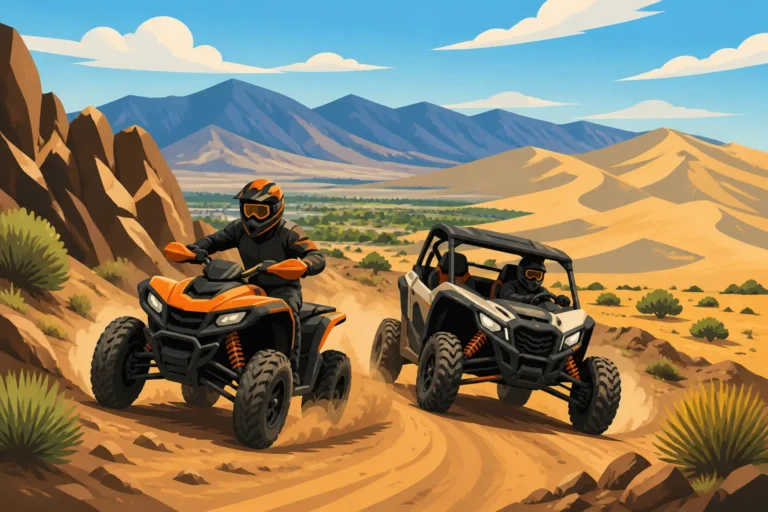
For those machines that don't qualify as a "Large ATV" – which includes all sport quads and many popular two-seat sport UTVs – the good news is that Nevada boasts an incredible network of off-highway trails. Instead of trying to force a square peg into a round hole by making it street legal, embrace the vast opportunities for off-road adventure.
- Designated OHV Areas: Nevada has numerous fantastic OHV recreation areas like Sand Mountain, Logandale Trails, and Nellis Dunes. These areas are specifically designed for off-road use, with varied terrain and designated routes. You can spend days exploring without ever needing to touch a paved road, apart from trailering in. [Best Places to Ride an ATV in Nevada] is a great resource.
- BLM Land: Much of Nevada is managed by the Bureau of Land Management (BLM), which offers extensive open riding areas and miles of dirt roads and trails. You can often travel for miles and miles across public lands, experiencing the beauty of the Nevada desert. Remember to always respect private property, wilderness boundaries, and any posted restrictions.
- Trailering is Standard: For most off-road machines, trailering to the riding area is the expected and safest way to transport them. It protects your machine from road wear and keeps you compliant with laws.
By focusing on the incredible off-road opportunities, you can avoid the legal complexities and risks associated with trying to make a non-qualifying machine street-legal. Your Nevada OHV registration decal, which is distinct from a Large ATV decal, serves as your "permit" for riding on public lands. [What a Nevada OHV Decal Actually Proves] is that you're registered for off-highway use.
Remember, the goal is to enjoy your machine safely and legally. Trying to find loopholes with out-of-state plates can turn your passion into a costly legal quagmire.
Nevada Street Legal ATV Comparison
| Feature/Requirement | Montana Plate (for Nevada Resident) | Nevada Large ATV Decal (Proper) |
|---|---|---|
| Legitimacy in NV | Highly questionable for NV residents; high risk of fines | Fully legal for qualifying machines on designated roads |
| Machine Type | Any OHV (assumed street legal in MT) | UTVs only, must have 4 seats OR 400lb cargo bed |
| Residency Issue | Nevada resident operating MT-registered vehicle in NV | Nevada resident registering vehicle in NV |
| Required Equipment | Varies by MT law; may not meet NV standards | Strict NV equipment list (DOT tires, mirrors, horn, etc.) |
| Roads Allowed | Perceived "anywhere"; actual: risky and restricted in NV | Minor county roads only; restricted in cities/highways |
| Insurance Coverage | Potential for voided coverage due to misrepresentation | Standard coverage valid as per NV law |
| Common Outcome | Fines, impoundment, legal hassles, no actual street legality | Legal road access to designated areas, peace of mind |
| Cost | MT LLC fees, registration; potential NV fines/legal costs | NV registration/title fees, equipment upgrades |
Disclaimer
This article is for general informational purposes only and does not constitute professional advice. Laws, prices and regulations vary by location and change over time. Consult a qualified professional for guidance on your specific situation.