Insurance Cards and Roadside Stops in Nye County
Picture this: You’re out enjoying the wide-open spaces of Nye County, perhaps exploring some of the incredible trails near Beatty or cruising a dirt road out to a favorite camping spot. The sun is shining, the dust is flying, and then… you see those flashing lights in your rearview mirror. A roadside stop, especially when you’re on an off-highway vehicle (OHV), can be a jarring experience, leaving you wondering what paperwork you need to have on hand. This guide is here to walk you through exactly what officials in Nye County might ask for during an OHV stop, focusing particularly on insurance cards and other essential documents, so you can ride with confidence and peace of mind.
The Reality of Roadside Stops in Nye County
Nye County is vast, covering a huge chunk of central Nevada, and it’s a paradise for OHV enthusiasts. But with all that open land comes the responsibility of adhering to state and local regulations, and law enforcement is out there ensuring everyone is doing their part to keep the trails safe and accessible. It's not always about catching someone doing something wrong; often, it's about making sure everyone is legal and prepared.
Why You Might Get Pulled Over
There are numerous reasons why you might catch the attention of a deputy or ranger while riding your ATV or UTV in Nye County. Sometimes, it’s a simple check for compliance. Other times, it might be something more specific. For instance, if you're riding too fast, kicking up an excessive amount of dust in a populated area, or operating your machine in an unsafe manner, you're more likely to be stopped. Riding without proper safety gear, especially helmets in areas where they are required, can also lead to a stop. What many riders don't realize is that even a quick jaunt across a paved county road to get from one section of trail to another can put you under the jurisdiction of traffic laws, making you subject to a stop for things like missing mirrors or insufficient lighting. It's all about being visible and compliant, both on and off the official trails.
Another common reason for a stop, particularly in more remote areas, is simply for a general welfare check. Deputies often patrol these areas, and if they see a machine that looks broken down, or riders who appear to be in distress, they'll pull over to offer assistance. This is especially true for families or larger groups that might look like they're struggling with a trail obstacle. While these checks are usually benign, they can still lead to a request for your vehicle's documentation. The key is to be prepared for any interaction, no matter the reason for the stop.
Who's Doing the Stopping
In Nye County, you could encounter several different types of law enforcement or authorized personnel on your rides. The most common would be deputies from the Nye County Sheriff's Office. They are responsible for enforcing all state and local laws, including those pertaining to OHV registration, safety, and operation on roads. You'll often see them patrolling county roads and popular trailheads, especially during peak riding seasons. They’re well-versed in OHV laws and will expect you to be too.
Beyond the local sheriff's department, you might also be stopped by officers from the Bureau of Land Management (BLM) or the U.S. Forest Service, particularly if you're riding on federal lands. These agencies manage vast tracts of public land in Nye County, and their rangers enforce federal regulations, which often align with state OHV laws regarding registration and permissible riding areas. They might be looking for issues like riding in closed areas, disturbing protected habitats, or littering. Lastly, the Nevada Highway Patrol (NHP) might also be involved if your OHV activity involves state routes or highways, even if it's just crossing them. Each of these authorities has the right to ask for your documentation to ensure you're operating legally and safely.
Essential Paperwork for Your Nevada OHV
When those lights come on, the first thing that often flashes through a rider's mind is, "Do I have everything I need?" The good news is that if you understand the basic requirements, you can easily ensure your paperwork is always in order. Nevada has a pretty clear set of expectations, whether you're strictly off-road or venturing onto a county road.
Proof of Ownership and Registration
First and foremost, you need to prove the machine you're riding belongs to you and is properly registered if required. This usually means carrying your OHV registration card. This card is distinct from your title; it's the proof that your machine has been registered with the state and that you've paid the necessary fees, often a [Nevada OHV Registration Fee for One Year] or a [Nevada OHV Registration Fee for Three Years]. It will match the registration decal prominently displayed on the left side or rear of your machine. Deputies will often cross-reference the information on your card with the decal, so make sure they match. [What a Nevada OHV Decal Actually Proves] is that you've met the state's basic requirements for riding on public lands.
In addition to the registration card, it's always a good idea to have some proof of ownership, such as your OHV title or a bill of sale. While the title isn't always explicitly required to be carried on your person, having a copy, or knowing exactly where it is in case of a more in-depth inquiry, can save a lot of headaches. If you've just [Buying a Used ATV Privately in Nevada], the bill of sale is crucial until you can get the title transferred into your name and complete the registration process. Remember, Nevada gives you [Nevada's Thirty Day Clock After a Purchase] to get everything squared away, so don't procrastinate.
Insurance Requirements for Road Use
This is where things can get a little tricky and often causes confusion for OHV riders. Many people assume that because their ATV or UTV isn't a "street-legal" car, they don't need insurance. However, if you plan on riding your OHV on any public paved county roads or highways in Nevada, even for a short distance, you absolutely need liability insurance. Nevada Revised Statute (NRS) 485.185 mandates this. This isn't just a suggestion; it's a legal requirement, and deputies in Nye County will enforce it. If you're using products from brands like SuperATV to make your machine more capable for various terrains, and you also intend to use those parts on designated county roads, you need to be aware of this insurance requirement.
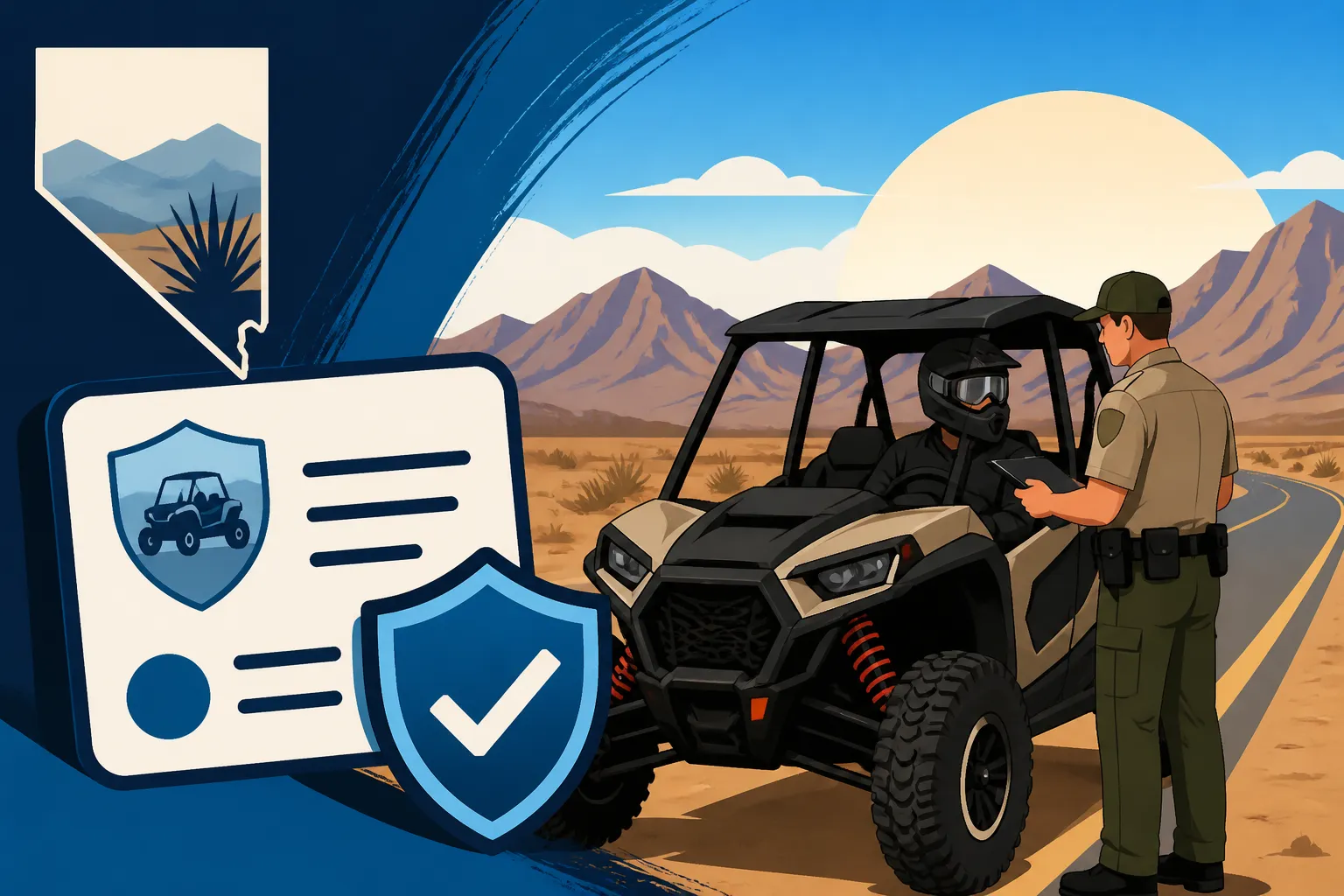
So, what does this mean for you at a roadside stop? You'll need to present proof of this liability insurance. This usually comes in the form of an insurance card, just like you'd carry for your car or truck. It should clearly show the effective dates of coverage, the policy number, and the OHV's VIN. If you're pulled over on a county road and cannot produce this proof, you could face significant fines or even have your machine impounded. It’s a serious requirement, so always double-check your policy before heading out for a ride that might involve any paved county roads, even brief crossings. [Insurance and Nevada OHV Registration] are two distinct but equally important components of legal riding.
What to Do During a Roadside Stop
Getting pulled over can be stressful, but knowing how to react can make the experience smoother and more positive for everyone involved. Your demeanor and cooperation can go a long way in how the situation plays out.
Staying Calm and Compliant
When you see those lights, the first and most important thing to do is remain calm. Find a safe place to pull over immediately, turn off your engine, and keep your hands visible. This applies whether you're on a dirt road, a paved road, or a shoulder. Remove your helmet and goggles so the officer can see your face and you can hear them clearly. Avoid making any sudden movements that might be misinterpreted. Remember, officers are primarily concerned with safety—theirs, yours, and the public's. A calm, cooperative attitude from the start sets a much better tone for the interaction.
Listen carefully to the officer's instructions and respond politely. They will likely ask for your driver's license (if you're driving on a county road), registration, and proof of insurance. If you need to reach into a bag or a storage compartment, inform the officer what you are doing before you do it. For example, "Officer, my registration is in my saddlebag, may I reach for it?" This simple courtesy can prevent misunderstandings. Even if you believe the stop is unwarranted, a roadside stop is not the time or place to argue your case. Comply with requests and address any concerns later through proper channels.
Presenting Your Documents
When the officer asks for your documents, present them clearly and without fumbling. It's incredibly helpful to have all your necessary paperwork organized and easily accessible. A waterproof pouch or a small, dedicated storage bag, perhaps one designed for OHV use like some offerings from SuperATV, is a fantastic investment. This keeps your documents clean, dry, and together. Hand over your driver's license (if requested), your current OHV registration card, and your insurance card for road use.
| Document Type | Required for Off-Road (Trails/Dirt Roads) | Required for On-Road (Paved County Roads) | Important Notes |
|---|---|---|---|
| OHV Registration Card | Yes | Yes | Proves your machine is registered and fees are paid. Must match your physical decal. |
| OHV Decal | Yes (Displayed) | Yes (Displayed) | Must be affixed properly (left side or rear) and clearly visible. |
| Proof of Ownership (Title/Bill of Sale) | Recommended (Copy) | Recommended (Copy) | Not always required to be carried, but good to have a copy or photo. Crucial for recent purchases. |
| Driver's License | Only if operating on a county road (see note) | Yes | Required if operating on a public street or highway. A rider Nevada Minimum Age to Ride Off-Road might not need one off-road, but on-road is different. |
| Proof of Liability Insurance | No | Yes (NRS 485.185) | Absolutely mandatory for any paved public road use. This is often the biggest surprise for riders and is frequently checked by authorities. |
Note: For off-road riding on private property, many of these requirements may not apply, but the moment you hit public lands or roads, Nevada's rules kick in.
Common Misconceptions and Proactive Steps
Even experienced riders can sometimes get tripped up by misunderstandings about OHV laws, especially when it comes to riding on roads. A little preparation can prevent a lot of trouble.
The "Private Land Only" Myth
One common misconception is that if you only ride your machine on private land, or if you just "cross" a public road to get to more trails, you don't need to worry about registration or insurance. This simply isn't true for public roads. The moment your wheels touch a public paved road, even for a short distance to access a trail, you are subject to the same rules as any other vehicle operating on that road. This means a driver's license, proper registration, and, critically, liability insurance are all required. The law doesn't differentiate between a two-mile cruise and a ten-foot crossing when it comes to these basic requirements.
For example, if you're taking your UTV with its new SuperATV aftermarket accessories from your cabin out to the trailhead, and that involves even a short stretch of paved county road, you need to be fully compliant. Deputies in Nye County are aware of these access points and will often patrol them to ensure riders are legal before they hit the dirt. Don't let the convenience of a quick road hop lead to a costly citation. Understand where [Nevada County Roads Open to UTVs] are, and what the [Nevada Rules for Crossing a State Route] entail, and always be prepared with the right paperwork.
Preparing for the Unexpected
The best defense against a stressful roadside stop is thorough preparation. Beyond having your physical documents in order, consider taking photos of your registration card, title, and insurance card on your phone. While a photo isn't always accepted as official proof, it can serve as a backup and provide immediate information to an officer if your physical documents are somehow lost or damaged. Store these photos in a secure album or cloud service on your phone.
Another key step is to keep your physical documents protected. The Nevada desert is dusty, and unexpected rain showers can happen. A simple plastic sleeve or a dedicated waterproof document holder can save your paperwork from becoming unreadable. If you're riding a UTV, storing them in a secure, covered compartment is ideal. For ATVs, a small, waterproof tank bag or fender bag works wonders. Regularly check the expiration dates on your registration and insurance to avoid riding with expired paperwork, which is a common reason for citations. Being proactive ensures that your ride through the beautiful landscapes of Nye County remains enjoyable and hassle-free.
Disclaimer
This article is for general informational purposes only and does not constitute professional advice. Laws, prices and regulations vary by location and change over time. Consult a qualified professional for guidance on your specific situation.