Reflectors and When a Taillight Substitutes
It can be incredibly frustrating to think you've got your off-highway vehicle (OHV) ready for a quick run down a county road, only to realize the complex web of Nevada's street-legal equipment laws might leave you in a bind. We all just want to get to the trailhead or grab a forgotten item from the general store without risking a ticket, but the specifics around reflectors, taillights, and other safety gear can be confusing. This guide is here to untangle those rules, particularly focusing on when your taillights might cover your rear visibility and what else you absolutely need to know to ride legally on designated Nevada roads.
Understanding Nevada's "Large All-Terrain Vehicle" Designation
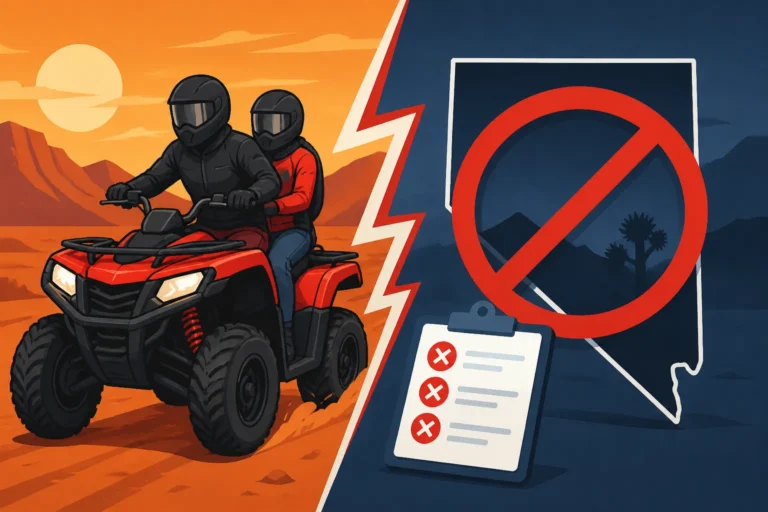
Before we dive into the nitty-gritty of lights and reflectors, it’s crucial to understand what kind of OHV Nevada allows on certain paved public roads. Nevada isn't like some states where you can just slap a license plate on your sport quad and go. Our state has a very specific category called a "Large All-Terrain Vehicle" (Large ATV), and this designation is the gatekeeper for road use. If your machine doesn't fit this definition, then the conversation about reflectors and taillights for street legality becomes moot, because it won't be street legal anyway.
Essentially, Nevada's law is designed to allow larger, more stable side-by-sides (UTVs) to navigate certain county roads, not typically the smaller, sport-oriented quads. The key criteria for a Large ATV under Nevada's NRS 490.043 include having four or more wheels, being 50 inches or more in width, and having a non-straddle seating position with a steering wheel or handlebars. Most importantly, it must have a dry weight of 900 to 2,400 pounds OR a width of at least 60 inches, OR a bed capable of carrying a load. This is why many two-seat sport quads, despite their power, generally won't qualify. You might have seen some bigger, four-seat machines out there, like a four-seat RZR or a Can-Am Defender with its utility bed, and these are often the types of machines that can meet the Large ATV criteria. It's a critical distinction, because without it, no amount of reflective tape or fancy taillights will make your ride permissible on those designated county roads.
Why the "Large ATV" Definition Matters for Road Use
The designation isn't just a bureaucratic hurdle; it's a safety measure. The state considers these larger, heavier machines to be more stable and visible in a road environment compared to smaller ATVs. This is why you'll see different rules for [What Nevada's NRS 490.043 Counts as a Large ATV] versus a standard quad. Without meeting these foundational requirements, trying to equip your machine for road use is like trying to fit a square peg in a round hole – it just won't work in Nevada. This means that if you're riding a standard two-seat ATV, even one with a powerful engine and excellent off-road capabilities, it's highly unlikely to qualify for a "Large ATV" decal, irrespective of how many lights or reflectors you add.
This classification dictates every other equipment requirement we'll discuss. For instance, the need for seat belts, specific mirror configurations, and even the type of driver's license required for operation on roads are all tied back to whether your machine qualifies as a Large ATV. So, before you invest in any upgrades to make your OHV street-ready, double-check that your machine actually falls within this definition. Many riders get frustrated when they realize their beloved quad, perfect for the dunes of Sand Mountain or the trails of Logandale, is simply not built to cruise the paved roads of Nye County.
The Special Large ATV Decal
Once your machine qualifies as a "Large All-Terrain Vehicle," you'll then need to apply for a special decal that allows limited road use. This isn't your standard OHV registration decal for off-road use; it's a separate permit issued by the Nevada DMV that signifies your machine meets the additional criteria for on-road operation. This decal needs to be displayed prominently, just like your off-highway registration decal. Without this specific "Large ATV" decal, even if your machine technically meets all the physical equipment requirements, you're still not legal for county road travel.
It's an additional layer of administrative effort, but it's vital. Think of it as the state acknowledging that your UTV is a bit more car-like in its construction and, therefore, can share certain paved surfaces. You'll go through a specific application process, ensuring your machine is properly identified and documented for this type of use. Without this decal, a county deputy or a Nevada State Trooper will still consider your OHV an off-road only vehicle when you're on a paved surface, regardless of your headlights, taillights, or even the most compliant reflectors. The cost for this decal is usually separate from your regular [Nevada Large ATV Decal Cost], so budget accordingly.
Essential Lighting and Visibility Requirements for Nevada Roads
When you're riding your qualifying Large ATV on designated Nevada county roads, visibility is paramount. It’s not just about seeing where you’re going; it’s about ensuring every other driver on the road can see you, especially during dawn, dusk, or less-than-ideal weather conditions. Nevada has specific requirements for headlights, taillights, brake lights, and turn signals, all designed to make your OHV as conspicuous as any other vehicle sharing the pavement.
These requirements mirror those for passenger vehicles to a large extent, ensuring a consistent level of safety on shared roadways. You can't just throw on any old light and call it good; there are specifications for brightness, visibility distance, and color that must be met. Ignoring these can not only lead to a fine but, more importantly, can put you and others at serious risk. Whether you're making a quick run to a gas station in Mesquite or navigating a country road outside of Caliente, proper lighting is non-negotiable.
Headlight Requirements for Road Use
Your Large ATV needs at least one, but more commonly two, working headlights that emit a white or amber light. The crucial part? These headlights must be visible from a distance of 500 feet to the front of your machine during darkness. This isn't just for night riding; it includes any time visibility is reduced, like heavy rain or fog. Many stock UTVs come with headlights, but it's essential to check if they meet this 500-foot visibility standard. Sometimes, aftermarket headlights, perhaps from brands like SuperATV, might be necessary to achieve the required brightness and beam pattern for road use.
Beyond just being bright, your headlights need to be aimed properly. You don't want to blind oncoming traffic, but you also need enough illumination to see obstacles and road hazards. A common frustration for riders is realizing their off-road focused light bar, while fantastic for trail riding at Nellis Dunes, isn't appropriate or even legal for on-road use because it lacks proper aiming or produces too much glare. Remember, the goal here is to integrate safely into road traffic, not just light up the desert.
Taillights and Brake Lights: More Than Just a Glow
This is where our main topic truly shines, or reflects, as it were. Every Large ATV operating on Nevada roads must be equipped with at least one taillight that emits a red light visible from 500 feet to the rear. This taillight needs to be illuminated whenever your headlights are on. In addition to the taillight, you must have a stop lamp (brake light) that emits a red light, illuminates upon application of the brake, and is visible from 500 feet to the rear during daylight. Most modern UTVs come with integrated taillight and brake light systems, which typically satisfy both requirements with a single unit that glows steadily for the taillight function and brightens considerably when the brake is applied.
The key distinction here, and a point of frequent confusion, is that a taillight provides continuous rear illumination, while a brake light activates specifically when you're slowing down or stopping. While many units combine these functions, they are distinct requirements. It’s crucial that your brake light activates reliably with minimal pedal or lever travel, giving drivers behind you ample warning of your intentions. Imagine riding on [Riding County Roads Legally in Nevada] where vehicles might be traveling at higher speeds; clear and immediate brake light indication is vital for preventing rear-end collisions.
Turn Signals: Communicating Your Intentions
While not explicitly called out in every basic OHV equipment list, turn signals are typically required for any vehicle operating on public roads where speed limits allow for meaningful traffic flow. For a Large ATV to be truly street-legal on Nevada roads, it needs functional turn signals that are visible from both the front and rear. These signals usually emit an amber light and must clearly indicate your turning intentions to other drivers. Many aftermarket kits, including those you might find from companies like SuperATV, offer integrated turn signal solutions that can be added to your UTV.
Trying to get by with hand signals might work for a quick hop across a quiet residential street, but it's inadequate and often illegal for sustained travel on county roads. Think about the safety aspect: your hands should be on the wheel, not signaling turns, especially when navigating curves or intersections. Reliable, visible turn signals are a non-negotiable component for communicating your movements safely to other vehicles.
Reflectors: Passive Visibility When Lights Aren't Enough
Now, let's get to the heart of the matter: reflectors and their specific role in Nevada's street-legal OHV landscape. While your headlights and taillights actively emit light, reflectors provide passive visibility. They work by bouncing back light from other vehicles, making your machine visible even if its own lights are off (say, if you're parked on the shoulder) or if a bulb burns out. This passive safety feature is critical, especially when you consider that many county roads might not have streetlights.
Nevada requires specific reflectors, and understanding their placement and function is vital. It’s not just about sticking on any reflective tape; there are regulations concerning color, size, and where they need to be located on your Large ATV to ensure maximum visibility from all angles. This is where some riders get tripped up, thinking their bright taillights are enough, but the law often calls for both active lighting and passive reflectivity.
Rear Reflectors: Why They're Crucial
For a Large ATV operating on Nevada roads, you must have at least two red reflectors mounted on the rear of the machine. These need to be placed as far apart as practicable and visible from a distance of 500 feet to the rear. This requirement is separate from your taillight and brake light. Think about a scenario where you're parked on a dark shoulder of a county road, and your engine (and thus your lights) are off. Those red reflectors are the only thing making your UTV visible to an approaching driver's headlights, potentially preventing a collision.
Many modern UTVs might come with some integrated reflectors, but it's important to verify if they meet the specific visibility and placement requirements. Often, aftermarket solutions or even simple stick-on reflectors are needed to ensure compliance. Don't underestimate the importance of these passive safety devices; they're your last line of defense for being seen when active lights aren't illuminating. This is particularly true if you ride in remote areas around places like Pioche or Caliente, where county roads can be incredibly dark at night.
Side Reflectors: Seeing You From All Angles
Beyond the rear, Nevada also often requires side reflectors for vehicles on public roads, typically amber ones positioned on the front sides and red ones on the rear sides. While the specific wording for "Large ATVs" might focus heavily on front and rear illumination, general vehicle safety codes for public roads lean towards 360-degree visibility. If you're pulled over by a deputy checking for compliance, they will be looking for comprehensive visibility, not just what's directly in front or behind.
Side reflectors are vital for intersection safety or when your OHV is viewed from an oblique angle. Imagine pulling out of a side road onto a main county road; those side reflectors, catching the light of an approaching vehicle, can make all the difference in alerting them to your presence. They supplement the active lighting of turn signals and side markers, offering a constant, unpowered visual cue.
When a Taillight Substitutes for a Reflector: The Nuance
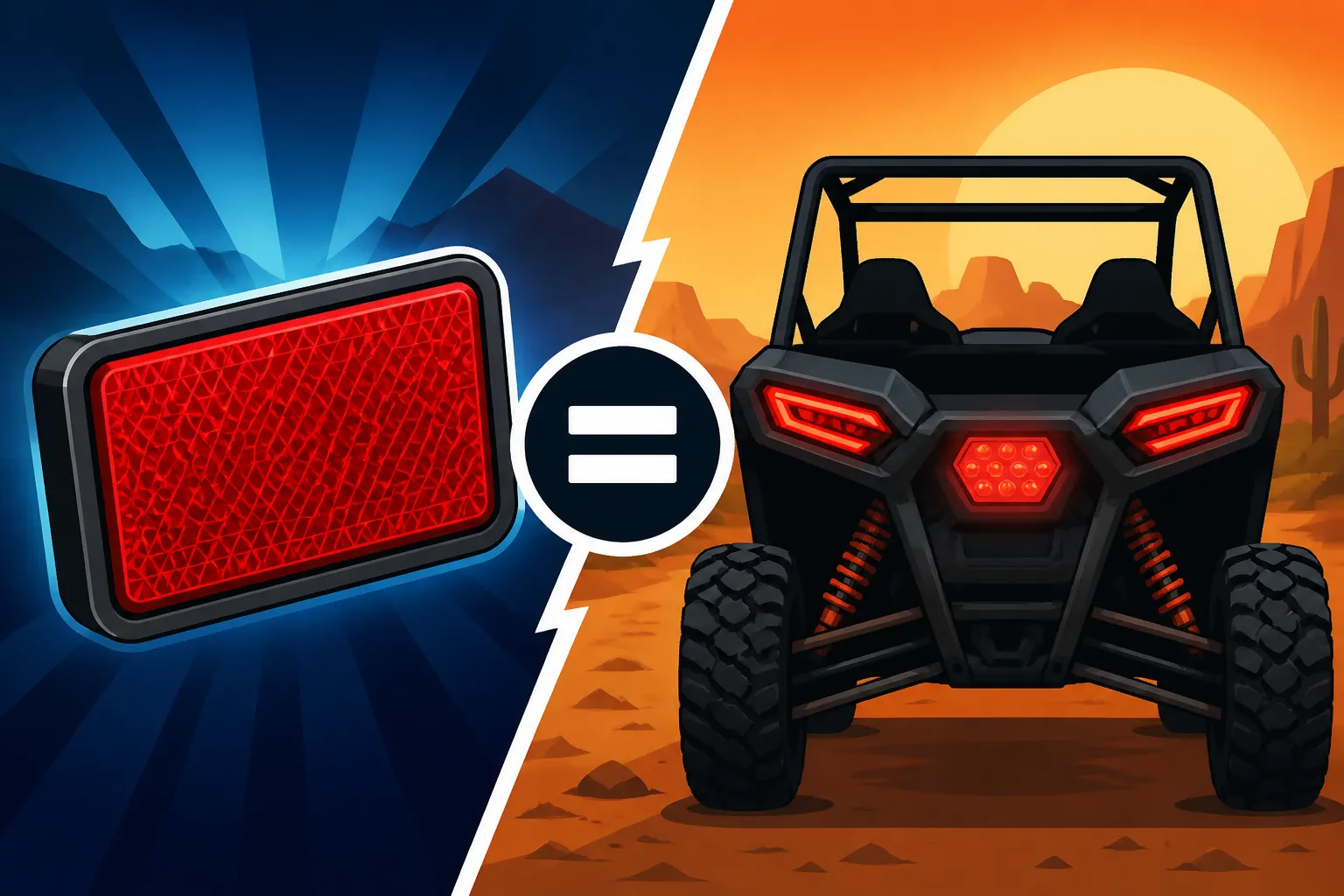
This is the specific question that often arises, and it's a point of frequent misunderstanding. In strict legal terms for Nevada, a taillight does not substitute for a reflector. They are typically considered separate requirements because they serve different functions. A taillight emits light, making you visible when powered on. A reflector reflects light, making you visible even when unpowered.
However, many modern taillight assemblies for vehicles are designed with integrated reflective elements within their lenses. If your taillight housing itself incorporates a red reflective surface that meets the visibility and size requirements for a rear reflector, then that specific physical unit might satisfy both the taillight and the rear reflector requirement. You would need to check the specific design of your UTV's taillights or any aftermarket ones you've installed. Don't assume; verify. If your taillight is just a clear lens with a bulb, it's not a reflector. If it has a distinctly red, reflective plastic housing that is visible from 500 feet when light hits it, then it might serve double duty.
| Feature | Function | Active/Passive | Required for Nevada Large ATV Road Use | Can Taillight Substitute? |
|---|---|---|---|---|
| Headlights | Illuminates path, alerts oncoming traffic | Active | Yes | N/A |
| Taillights | Continuous rear visibility | Active | Yes | No, typically separate |
| Stop (Brake) Lights | Alerts drivers of braking/slowing | Active | Yes | No |
| Turn Signals | Indicates turning intentions | Active | Yes | N/A |
| Rear Reflectors | Passive rear visibility | Passive | Yes | Only if integrated into a taillight housing that also functions as a legal reflector |
| Side Reflectors | Passive side visibility | Passive | Recommended/Often Required | No |
The crucial takeaway is this: always aim for separate, dedicated reflectors unless you are absolutely certain that your integrated taillight unit explicitly states or is designed to meet the legal requirements for both functions. When in doubt, adding separate, compliant reflectors is always the safer bet to avoid issues with law enforcement.
Other Essential Equipment for Nevada Street-Legal OHVs
Beyond the critical lighting and reflectivity, Nevada law requires several other pieces of equipment for your Large ATV to be legally operated on designated county roads. These are standard safety features you'd expect on any road-going vehicle and are in place to protect you, your passengers, and others sharing the road. Neglecting any of these can result in a citation and compromise your safety.
Many of these items are things you might already have on your UTV for off-road safety, but their specifics for road use might be a bit different. For example, a helmet rule might change, or a mirror might need to be of a certain type. It's about meeting the "lowest common denominator" of safety for road use, ensuring your OHV isn't an unexpected hazard.
Mirrors: Seeing What's Behind You
For road use, your Large ATV must be equipped with at least one rear-view mirror. While many off-road riders prefer a single center mirror, for road legality, you'll often find that two mirrors (one on each side) provide better visibility and meet the spirit of the law, similar to what a car or truck would have. The mirror(s) must be positioned to allow the driver to see at least 200 feet to the rear of the vehicle. This is non-negotiable for safe lane changes, checking for traffic, and general situational awareness on a paved road.
Aftermarket mirror kits, often easily installed, are a popular upgrade for UTVs looking to go street-legal. Companies like SuperATV offer a range of robust, vibration-resistant mirrors designed for OHV use that also meet these visibility requirements. Trying to navigate a county road without adequate mirrors is incredibly dangerous and a surefire way to attract attention from a passing sheriff's deputy.
Horn: Sounding an Alert
Just like any car, your Large ATV needs an audible warning device – a horn. This horn must be capable of emitting a sound audible under normal conditions from a distance of at least 200 feet. This isn't just for fun; it's a vital safety tool for alerting pedestrians, other drivers, or even wildlife to your presence. Whether you're navigating a tight turn on a mountain road or approaching a blind driveway, a quick honk can prevent an incident.
Many UTVs come with a rudimentary horn, but ensure yours is in good working order and meets the audibility standard. It should be easily accessible from the driver's seat. A feeble beep or a non-functioning horn will not pass muster if you're inspected by law enforcement.
Windshield and Wipers: Clear Vision in All Conditions
While not always a universal requirement for all "Large ATVs" in every scenario, if your UTV has an enclosed cabin or a full windshield, it must be made of safety glass or a similar approved material. Furthermore, if equipped, a windshield needs to have functional windshield wipers to ensure clear visibility during inclement weather. It's a pragmatic safety feature; you can't drive safely if you can't see, whether it's from dust, rain, or mud.
If your UTV came with a half-windshield or no windshield, you might consider adding one, especially if you plan on extended road travel. Again, the focus is on mimicking passenger vehicle safety standards where appropriate. Many off-road windshields are designed to be easily removable or flip-up, which might be convenient for trail riding but could be a point of contention for full street legality if they don't provide adequate protection or clear vision.
Seat Belts and Occupant Protection
Since a Large ATV uses non-straddle seating, it must be equipped with seat belts for all designated seating positions. These seat belts must meet federal safety standards and be properly maintained. More importantly, all occupants must wear their seat belts while the machine is in motion on a public road. This aligns directly with standard vehicle laws and is a critical safety component.
This means if you have a four-seat side-by-side, all four seats must have functional seat belts, and every person riding in those seats must be buckled up. This is a common point of enforcement, as deputies know many riders are accustomed to less stringent rules off-road. The moment your tires hit pavement and you're operating under the "Large ATV" decal, you're expected to follow these fundamental safety rules, just like a car. This includes [Nevada Helmet Rules for Passengers] if they are children, as well as [Nevada Rules for a Child Passenger on a Road].
Additional Considerations and Local Ordinances
Even if your Large ATV meets all the state-level equipment requirements for road legality, there are still other factors to consider. Nevada's laws allow individual counties and cities to set additional restrictions or designate specific routes for OHV use. This means what's legal in one county, like riding certain county roads around Mesquite, might be restricted in another, such as parts of Washoe County.
It's a patchwork system that can trip up even experienced riders. Always do your homework for the specific area you plan to ride. Ignorance of local ordinances is not a valid defense, and you could find yourself with a ticket even if your machine is perfectly compliant with state law.
County and City Specific Rules
Nevada Revised Statute (NRS) 490.060 explicitly allows counties to adopt ordinances regulating OHV use on county roads. Some counties, especially those with larger populations like Washoe County, have very restrictive ordinances. For example, [Washoe County Ordinance 1507] might prohibit OHVs on most county roads unless specifically designated, or impose tighter restrictions than state law. Conversely, smaller, more rural counties might have a more open approach, allowing OHVs on a wider range of county roads.
It’s crucial to check with the local Sheriff's office or county government website for any specific ordinances before you ride. Don't assume that because you have a Large ATV decal and all the right equipment, you can ride anywhere. Always look for signage indicating designated routes or areas where OHVs are permitted. [Nevada Cities That Require Designated OHV Routes] will have very clear rules you need to follow.
The 2-Mile Rule and Other Limitations
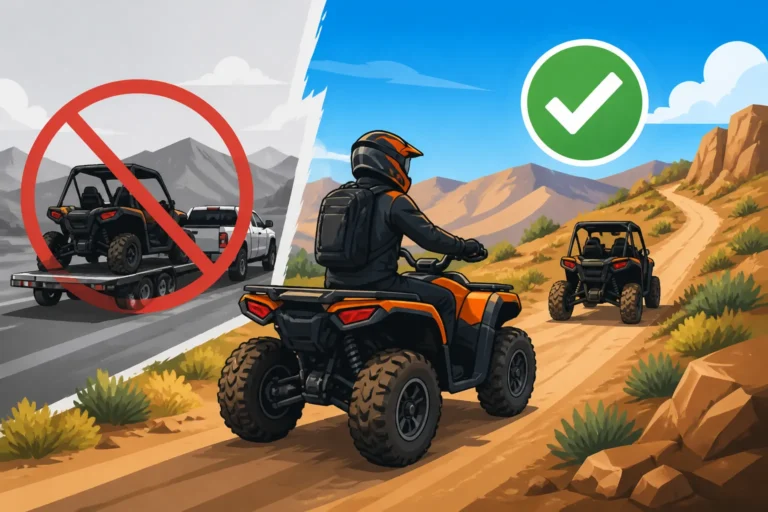
Even when riding on a designated county road, Nevada's law often includes limitations. The famous "2-mile rule" allows OHVs to ride up to two miles on a paved highway to access a trail or connect to another OHV route, but not for general transportation. This applies to a wide range of machines, not just Large ATVs, but it’s a critical rule to remember. For a Large ATV with the special decal, the rules are slightly more lenient, allowing for more extensive travel on designated county roads, but it's still not carte blanche to cruise through downtown Las Vegas or Reno.
You also cannot ride on interstate highways at all. [Nevada's Ban on Interstate Riding] is absolute for OHVs. The intent of allowing Large ATVs on certain roads is to facilitate access to riding areas, not to replace traditional vehicles for everyday commuting or long-distance travel. Be clear on the distinction between a "highway" (which generally means state routes and interstates) and a "county road" when interpreting these rules.
Rider and Passenger Requirements
Finally, remember that rider and passenger requirements also apply when operating on public roads. This includes a valid driver's license for the operator (usually a standard Class C non-commercial license for a Large ATV) and adherence to all traffic laws. Just because you're in a UTV doesn't mean stop signs, speed limits, or right-of-way rules don't apply.
If you have passengers, especially minors, ensure they meet any age or size requirements for the specific seating and that they are properly secured with seat belts. For riders under 16, there are specific supervision rules even on off-road trails, and these become even more critical on public roads. Always prioritize safety and legal compliance to ensure your road-legal OHV experience in Nevada is both enjoyable and free of unexpected trouble.
Disclaimer
This article is for general informational purposes only and does not constitute professional advice. Laws, prices and regulations vary by location and change over time. Consult a qualified professional for guidance on your specific situation.