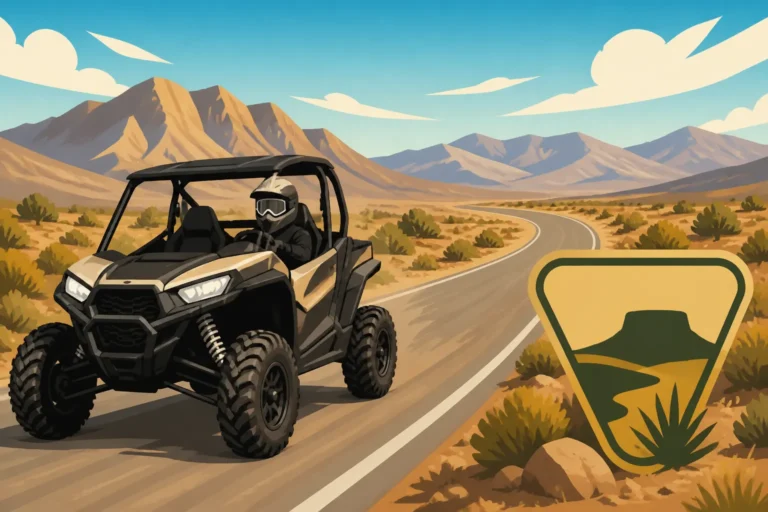
Can a Two-Seat Quad Get a Nevada Road Decal?
It's incredibly frustrating when you see some side-by-sides cruising down a county road in Nevada, and you think, "Hey, my awesome two-seat quad is just as capable, why can't I get it road-legal too?" Many riders face this exact dilemma, assuming that if a machine has a motor and wheels, it should be able to get a special decal for road use. This guide will dive deep into Nevada's very specific rules for what can and cannot get a "Large All-Terrain Vehicle" (LATV) decal, explaining exactly why your beloved two-seat sport quad likely doesn't make the cut, and what your actual options are for enjoying Nevada's vast riding opportunities.
The Frustration of "Street Legal" in Nevada: Why It's Not What You Think
For years, riders have grappled with the complex and often confusing landscape of "street legal" in the off-road world. In many states, the idea of getting an ATV or UTV registered for road use can seem like a free-for-all, with some even plating machines through other states to bypass local restrictions. But Nevada, true to its independent spirit, has carved out a very particular niche with its Large All-Terrain Vehicle (LATV) decal. This isn't about general "street legal" kits, blinker lights, or a horn you picked up from SuperATV, though those are essential components for any machine you do get road-approved. This is about Nevada's specific definition that dictates which machines can even begin the process.
The common misconception is that if you add all the safety gear – headlights, taillights, mirrors, horn, and turn signals – your ATV should be good to go. You’ve probably invested in high-quality accessories, maybe even a new exhaust system for better performance, and you feel your machine is perfectly capable of handling a paved road for short distances. You just want to ride from your cabin down a minor county road to the trailhead, or pop into town for gas without having to load up the trailer every single time. It feels like a logical step for responsible riders. However, Nevada's law focuses less on the modifications you make and more on the inherent design of the machine itself. This is where the dreams of riding your sport quad down the street often hit a legal wall. [Riding County Roads Legally in Nevada]
Nevada's Specific Definition of a "Large All-Terrain Vehicle" (LATV)
To understand why a two-seat quad typically can't get a road decal, we need to look at Nevada's legal definition of a "Large All-Terrain Vehicle," or LATV. The state isn't just throwing around the term "large" for fun; it has a very precise meaning codified in law (NRS 490.043, if you're into legislative deep dives). This definition is the gatekeeper for road use, and it's designed to distinguish certain types of utility and multi-passenger vehicles from traditional, smaller ATVs.
When Nevada talks about an LATV, it's not simply referring to a bigger ATV. The law specifically states that to be considered an LATV, a machine must meet certain criteria that most two-seat quads just don't possess. The key elements revolve around seating capacity, vehicle width, and often, the presence of a cargo bed. Think about the machines you see with LATV decals: they are almost exclusively side-by-sides (UTVs), not traditional ATVs (quads). This isn't an oversight or a bias; it's a direct consequence of how the law is written and interpreted by the Nevada Department of Motor Vehicles (DMV) and law enforcement. [What Nevada's NRS 490.043 Counts as a Large ATV]
The Seating and Cargo Test
Here's the critical part: for a machine to qualify as an LATV in Nevada, it generally needs to be designed to carry more than one person in a side-by-side seating arrangement and often includes a cargo bed.
Consider a four-seat UTV like a Polaris RZR XP 4 or a Can-Am Defender MAX. These machines clearly have multiple seats, often a bench-style rear seat, and a dedicated cargo bed. They are designed for utility, touring, and carrying multiple passengers, which aligns with the state's intent for LATVs on public roads.
Now, think about your two-seat sport quad. It has two seats, sure, but they are typically arranged one behind the other, like a motorcycle. And while you might strap a cooler to a rear rack, it doesn't have a purpose-built, integrated cargo bed in the same way a UTV does. This distinction, subtle as it might seem to a rider, is fundamental to how Nevada classifies these vehicles for road-legal purposes. [Does a Four-Seat RZR Pass Nevada's Seating Test?]
Why Your Two-Seat Sport Quad Fails the Test
The heart of the matter is that almost all traditional two-seat quads, even the larger ones, don't meet the "Large All-Terrain Vehicle" criteria because they lack the specific design characteristics outlined in Nevada law.
It's not about the engine size, the horsepower, or how stable it feels on the road. It's about the fundamental layout.
A sport quad, even one built for two riders, is still fundamentally an ATV. Its design emphasizes maneuverability, aggressive handling, and a riding experience where the rider shifts their body weight with the machine. This is very different from a UTV, where occupants are seated side-by-side, usually with a steering wheel and foot pedals, much like a small car. The law specifically looks for those UTV-like characteristics. [Why a Two-Seat Sport Quad Fails Nevada's Test]
Let's break down the key differences in a table:
| Feature | Typical Two-Seat Sport Quad | Nevada "Large All-Terrain Vehicle" (LATV) |
|---|---|---|
| Seating | Tandem (one behind the other) | Side-by-side seating for multiple passengers |
| Steering | Handlebars | Steering Wheel |
| Control | Straddle seat, lean to steer | Bucket or bench seats, drive like a car |
| Cargo Area | Small rear rack, not integrated cargo bed | Integrated cargo bed (often dump bed) |
| Width | Generally narrower (under 50-60 inches) | Often wider (over 60 inches) |
| Purpose | Recreational, sport riding, agility | Utility, touring, multi-passenger transport |
As you can see, your sport quad, no matter how robust or how many lights you've added from SuperATV, just doesn't fit the LATV mold according to Nevada's definition. This isn't a loophole you can exploit; it's a structural legal barrier.
Why Your Two-Seat Sport Quad Doesn't Qualify for a Road Decal
It's natural to feel a pang of disappointment when you realize your machine, which you love and have invested so much in, isn't eligible for that coveted road decal. Many riders come to Nevada from states with more lenient street-legal laws, or they simply expect a common-sense approach to road use. Unfortunately, Nevada's specific legal framework for LATVs prioritizes a different set of criteria.
The core reason, as we've established, is that your two-seat quad simply doesn't meet the statutory definition of an LATV in Nevada. The law was clearly written with side-by-sides in mind, machines that resemble small trucks or golf carts more than they do traditional ATVs. This distinction isn't arbitrary; it's tied to perceived safety differences, stability on paved surfaces, and the general operational characteristics of these different types of vehicles. A quad, even a large two-seater, is designed to be ridden actively, with the operator shifting weight and using handlebars for control. A side-by-side, on the other hand, is operated more passively, similar to an automobile, which is likely why the state feels more comfortable allowing them on certain roads.
The Legislative Intent Behind LATV Designation
The Nevada Legislature, when creating the LATV designation, wasn't just thinking about adding more vehicles to the road. They were likely considering the growing popularity of UTVs for both recreational and work purposes, and the need to allow these larger, more stable machines access to minor county roads for specific, limited purposes. These machines, with their roll cages, seatbelts, and steering wheels, offer a different safety profile and operational experience compared to an ATV. Your two-seat quad, while perhaps powerful and fun, doesn't align with this legislative intent for road use. It truly is a case of square peg, round hole.
The DMV's Stance and Enforcement
When you go to the DMV, or if you inquire about getting an LATV decal for your two-seat quad, you'll be met with a firm "no." The DMV is bound by the letter of the law. They don't make exceptions based on how well-equipped your quad is or how responsibly you plan to ride. The form [Applying for a Nevada Large ATV Decal] specifically asks for details that only a UTV would typically possess, such as the seating arrangement.
Furthermore, law enforcement officers on the trails and county roads are trained to recognize the difference. A deputy in [Lincoln County] or a ranger patrolling [Sand Mountain] will know immediately if your machine, even with a full complement of road-legal accessories, is technically eligible for an LATV decal. They're not looking at your added mirrors or turn signals; they're looking at the fundamental vehicle type. If it's a quad, regardless of its size or seating, it doesn't qualify. You could face citations for riding an unregistered or improperly designated vehicle on a county road, which nobody wants. [Nevada Fines for No Large ATV Decal]
Alternatives and Realities for Riding Your Quad in Nevada
So, if your two-seat quad can't get a Nevada road decal, what are your options for riding and enjoying the incredible terrain Nevada has to offer? The good news is that Nevada is still an off-road paradise, and there are plenty of ways to enjoy your machine legally and responsibly, even without a street-legal designation.
Embracing the Off-Road Life
First and foremost, your two-seat quad is an off-highway vehicle, and Nevada has millions of acres of public land perfect for it. From the vast open spaces of BLM land to designated trail systems, there's no shortage of places to ride. Your quad excels in these environments – that's what it was built for!
Here are some common scenarios and solutions:
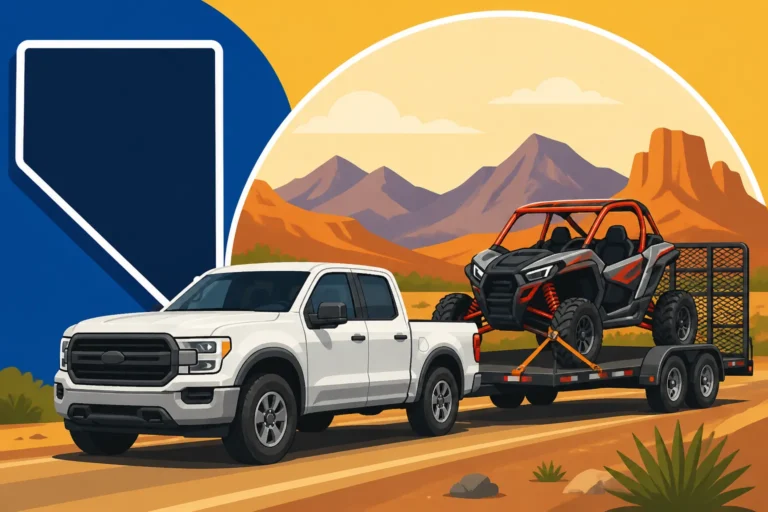
- Trailering to the Trailhead: This is the most common and often the only legal way for quads to access many riding areas. Load up your machine on a trailer, drive to a designated staging area or trailhead, and unload there. Many popular spots like [Logandale Trails] and [Nellis Dunes] have ample parking for trucks and trailers.
- Designated OHV Parks and Areas: Nevada has several fantastic OHV areas where you can ride freely without needing to touch paved roads. [Sand Mountain] is a prime example, offering a massive dune for all kinds of off-road fun. These areas are specifically managed for OHV use, often with facilities and trail markers.
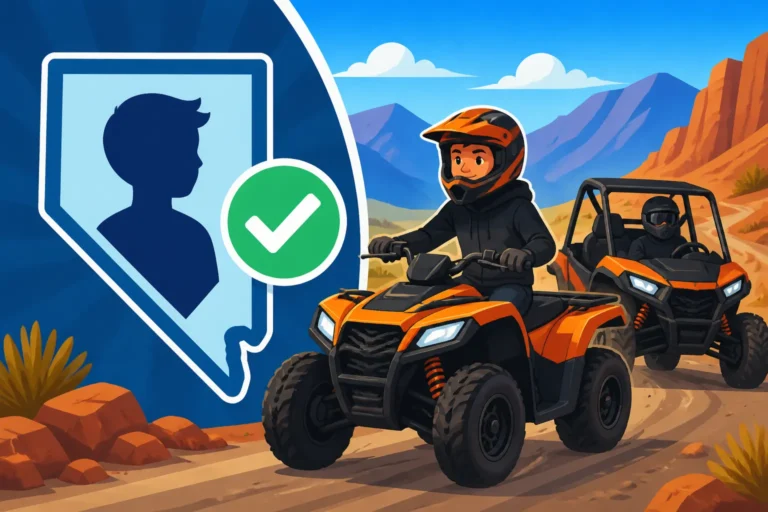
- The 2-Mile Pavement Limit: While your quad can't get an LATV decal, Nevada law does allow any registered OHV to travel up to two miles on a paved county road to access an OHV trail or area, provided certain conditions are met. This is a very limited exception and not a blanket permission for road riding. You must be actively traveling to or from a trail, and you must have your regular [Registering an ATV in Nevada] OHV decal current. This is a critical distinction and often misunderstood. It's about access, not general road use. [Nevada's 2-Mile Limit on Paved Highway]
- Private Land: If you own private land, or have permission from a landowner, you can ride your quad without restriction on that private property. Just be mindful of noise ordinances and good neighbor etiquette.
Equipping Your Quad for Off-Road Safety and Performance
While you might not be outfitting your quad for street legality, you can certainly equip it for maximum safety and performance on the trails. Companies like SuperATV offer a wide range of accessories that enhance your off-road experience. Think about:
- Skid Plates and A-Arm Guards: Essential for protecting vital components from rocks and debris on rough trails.
- Winches: Invaluable for self-recovery or helping a buddy out of a sticky situation.
- LED Light Bars: Even though you're not riding on public roads at night, good lighting is crucial for early morning or late evening rides, especially in dusty conditions or remote areas.
- Tires: Investing in tires suited for the specific terrain you ride most (sand, rocks, desert hardpack) will significantly improve traction and ride quality.
These kinds of upgrades focus on what your quad does best: conquering challenging off-road terrain, safely and reliably.
Considering a UTV if Road Access is a Must
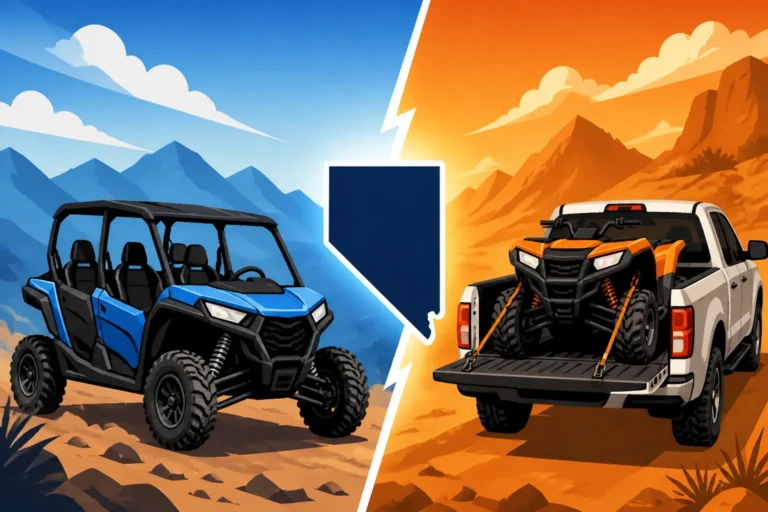
If truly having a machine that can access certain county roads is a non-negotiable for you, and the two-mile limit isn't sufficient, then you might need to consider a UTV (side-by-side). These machines are what Nevada's LATV decal system was designed for. While it's a significant investment, a UTV would open up those limited county road opportunities that your quad simply can't access under current Nevada law. Many UTVs also offer a different riding experience, often favored for their stability, comfort, and ability to carry more passengers and gear. [Registering a UTV Versus a Quad in Nevada]
In conclusion, while it's tough news for two-seat quad owners hoping for a Nevada road decal, understanding the specific laws and definitions is key. Your quad is a fantastic off-road machine, and focusing on where it truly shines – the vast, beautiful Nevada backcountry – will lead to countless adventures.
Disclaimer
This article is for general informational purposes only and does not constitute professional advice. Laws, prices and regulations vary by location and change over time. Consult a qualified professional for guidance on your specific situation.