Why a Spark Arrester Matters on Road and Trail
There's nothing quite like the thrill of exploring Nevada's incredible backcountry on your ATV or UTV, feeling the desert wind whip past as you navigate sandy washes, rocky trails, or even a designated county road. But with that freedom comes a huge responsibility, one that many riders, especially newcomers, might not fully appreciate until they're staring down a ranger or worse, a wildfire. One tiny, easily overlooked component on your machine – the spark arrester – is absolutely critical for keeping you legal, safe, and our beautiful, tinder-dry landscape protected. This comprehensive guide will explain exactly what a spark arrester is, why it's legally mandated for both road and trail use in Nevada, and how it acts as a silent guardian against devastating wildfires.
Understanding What a Spark Arrester Is and How It Works
Before we dive into the legalities and the environmental impact, let's get down to basics. What exactly is a spark arrester, and how does this seemingly small device play such a monumental role in preventing wildfires? It's not just some random piece of equipment; it's a carefully engineered component designed to neutralize a very real and present danger whenever your engine is running.
The Anatomy of a Spark Arrester
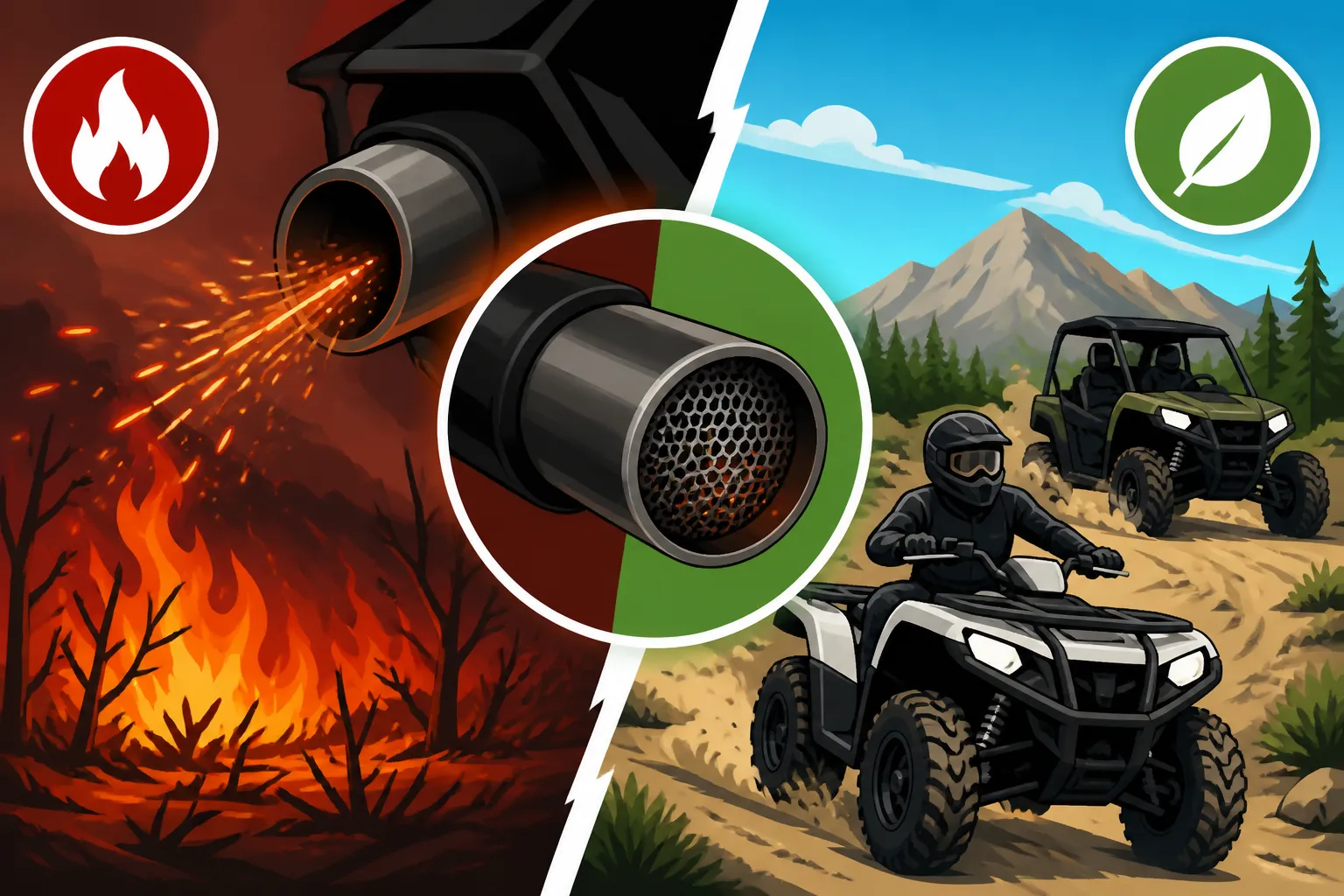
At its core, a spark arrester is a mechanical device, typically made of a fine metal mesh screen or a series of intricate baffles, installed within the exhaust system of your ATV or UTV. Think of it as a specialized filter for your exhaust. As hot exhaust gases, laden with potentially incandescent carbon particles, exit your engine, they are forced to pass through this screen or baffle system. The mesh is fine enough to trap or break up these glowing carbon fragments, often referred to as "sparks," which are essentially hot pieces of unburned fuel or carbon buildup that have broken free from the combustion chamber or exhaust pipe walls.
Without a spark arrester, these red-hot embers could easily be ejected from your tailpipe, landing in dry grass, brush, or even just on a pile of leaves. Considering how incredibly dry and susceptible to fire Nevada's landscape is for much of the year, even a tiny spark can quickly escalate into an uncontrollable blaze. The arrester's job is to cool these particles down and reduce them in size so they're no longer capable of igniting flammable material.
The Science Behind Fire Prevention
The concept behind a spark arrester's effectiveness lies in breaking the "fire triangle": heat, fuel, and oxygen. Your exhaust system, especially when your engine is working hard, gets incredibly hot. While the primary purpose of the exhaust is to expel gases, it also expels these carbon particles, which retain a significant amount of heat. If these hot particles come into contact with fuel (like dry grass, pine needles, or even spilled fuel) in the presence of oxygen, you have the perfect recipe for a fire.
A spark arrester specifically targets the "heat" leg of that triangle. By forcing the hot carbon particles to collide with the metal mesh or baffles, several things happen:
- Cooling: The contact with the cooler metal surfaces of the arrester rapidly dissipates the heat from the carbon particles.
- Quenching: The particles are effectively "quenched," losing enough thermal energy that they can no longer reach ignition temperatures.
- Size Reduction: Larger, more dangerous incandescent particles are broken down into smaller, cooler, and ultimately harmless fragments that can't sustain combustion once they exit the exhaust.
It's a clever, passive system that continuously works to prevent a potential disaster every time you ride. This simple device is what allows you to enjoy [Riding BLM Land in Nevada] without inadvertently igniting the very trails you cherish.
The Non-Negotiable Legal Requirement in Nevada
It's one thing to understand the science, and another entirely to grasp the legal implications. In Nevada, having a U.S. Forest Service-approved spark arrester on your off-highway vehicle (OHV) isn't just a recommendation; it's the law. This isn't unique to Nevada, but given our arid climate and vast expanses of public land, the enforcement and the underlying reasoning are particularly critical here.
Nevada Law and Fire Safety
Nevada Revised Statutes (NRS) are quite clear on this matter. While specific sections might delve into the minutiae, the overarching principle is that any off-highway vehicle operating on public lands (which includes most of the trails and open desert you'll explore) must be equipped with a spark arrester. This mandate isn't about bureaucracy; it's a direct response to the very real and devastating threat of wildfires. Nevada has seen its share of catastrophic fires, many of which can be traced back to human activity, including errant sparks from OHVs.
The "why" behind this law is straightforward: to protect our natural resources, wildlife habitats, private property, and human lives. A single spark in the wrong place during fire season can quickly consume thousands of acres, costing millions of dollars in firefighting efforts and leaving a scar on the landscape that takes decades to heal. Law enforcement, from local deputies to BLM rangers, takes this very seriously. Getting caught without a compliant spark arrester can lead to significant fines. It's an essential part of your [Nevada OHV Registration Paperwork Checklist] for compliance on the trails.
Road Versus Trail: Why the Rules Don't Change
Sometimes riders might think, "Well, I'm just riding my UTV on a gravel [Nevada County Roads Open to UTVs] to get to the trailhead, or crossing a paved road for a short distance, so a spark arrester isn't as critical." This couldn't be further from the truth. The legal requirement for a spark arrester applies universally to OHVs when operating in areas where fire is a risk, regardless of whether you're actively on a designated off-road trail or merely traversing a county road.
Consider the environment adjacent to many Nevada roads. Even paved highways are often bordered by dry grass, sagebrush, or other highly flammable vegetation. A hot carbon particle ejected from your exhaust onto a dry roadside could just as easily start a fire there as it could on a remote desert trail. In fact, roadside fires can be particularly dangerous because they can quickly spread to developed areas or block critical transportation routes.
Authorities patrolling these areas, whether it's a local sheriff or a state trooper, are just as likely to check for a spark arrester on a machine using a county road as they would be for one deep in the backcountry. The risk of fire doesn't magically disappear when you hit a graded dirt road or a paved section. Therefore, it's crucial to ensure your machine is always compliant. You can learn more about specific regulations regarding exhaust systems on public roads in guides like [Spark Arresters on Nevada Roads]. The equipment list for road-legal machines also highlights this, as covered in [Nevada Equipment List for Road-Legal UTVs].
Maintenance, Inspection, and Replacement
A spark arrester is not a "set it and forget it" component. Like any part of your machine, especially one that deals with extreme heat and exhaust gases, it requires regular attention. Neglecting your spark arrester can not only put you at risk of fines and environmental damage but can also negatively impact your machine's performance.
Regular Checks and Cleaning
The primary enemy of a spark arrester is carbon buildup. Over time, the mesh screen or baffles can become clogged with soot and carbon deposits. This buildup reduces the effectiveness of the arrester, making it less capable of trapping and cooling sparks. In severe cases, a heavily clogged spark arrester can restrict exhaust flow, leading to a noticeable drop in engine performance and even potential engine damage due to increased back pressure and heat.
Here’s a general routine for inspection and cleaning:
- Frequency: Check your spark arrester every 10-20 hours of riding, or more frequently if you ride in dusty conditions, use lower-quality fuel, or have an older engine that burns oil. Before any major trip, especially to popular spots like [Sand Mountain: Nevada's Great Basin Dune] or [Logandale Trails Outside Las Vegas], always do a quick check.
- Inspection: With the engine cool, locate your spark arrester (it's usually at the very end of your muffler or easily accessible via a removable cap). Visually inspect the mesh screen for any holes, tears, or excessive carbon buildup. If the mesh is damaged, it needs to be replaced immediately, as it's no longer performing its job.
- Cleaning: If you see buildup, you'll likely need a stiff wire brush, a scraper, and possibly some exhaust cleaner. Many spark arresters are designed to be removable for easy cleaning. Carefully scrape away the carbon deposits from the screen and surrounding exhaust passages. Be gentle with the screen itself to avoid damaging it. Some riders find that a strong degreaser or carburetor cleaner can help dissolve stubborn carbon, but always follow the product's instructions and ensure complete drying before reassembly.
Maintaining a clean spark arrester ensures optimal fire prevention and keeps your machine running smoothly.
When to Replace Your Spark Arrester
Even with diligent cleaning, spark arresters don't last forever. The extreme heat cycles, vibrations, and constant bombardment of exhaust particles will eventually take their toll. Here are the signs it's time for a replacement:
- Physical Damage: Any holes, tears, or significant deformation of the mesh screen means it's compromised. Even a small hole can allow dangerous sparks to escape.
- Irreparable Clogging: If the carbon buildup is so severe or baked on that you can't clean it effectively without damaging the screen, it's time for a new one.
- Engine Performance Issues: While many factors can affect performance, a consistently clogged spark arrester, even after cleaning attempts, might indicate a deeper issue with the arrester itself or an exhaust system problem that needs addressing.
- Age and Wear: If your machine is older and the spark arrester is original, it might simply be worn out from years of service. Proactive replacement is always better than reactive.
When you do need to replace it, consider quality aftermarket options. Brands like SuperATV offer a range of exhaust components, including spark arresters and complete exhaust systems, that are designed for durability and performance, ensuring you maintain compliance and protection.
DIY vs. Professional Installation
For many ATVs and UTVs, replacing or cleaning the spark arrester is a fairly straightforward DIY task, often requiring basic hand tools. Most manufacturers design them to be easily accessible, either as a removable cap at the end of the muffler or as a screen that slides out. If you're comfortable with basic mechanical work, you can typically handle this yourself.
However, sometimes the spark arrester is an integral part of the muffler and cannot be easily removed or replaced independently. In such cases, you might need to replace the entire muffler or even the complete exhaust system to get a new spark arrester. If you're facing a more complex job, or if you're unsure about the process, it's always wise to consult a qualified mechanic or an OHV dealer. They can ensure the correct part is installed and that your exhaust system is properly sealed and functioning, giving you peace of mind before your next ride. High-quality exhaust systems, such as those that SuperATV manufactures, often come with integrated spark arresters that meet or exceed compliance standards, making them a reliable choice.
Beyond Legal Compliance: The Broader Benefits
While the legal requirement for a spark arrester is a compelling reason to ensure your OHV is equipped with one, the benefits extend far beyond simply avoiding a ticket. Riding responsibly means understanding your impact on the environment and the community, and a functioning spark arrester is a cornerstone of that responsibility.
Protecting Our Pristine Nevada Landscape
Nevada's landscape is breathtakingly beautiful, from the towering dunes to the vast expanses of sagebrush and the rugged mountain ranges. It's a playground for OHV enthusiasts, but it's also incredibly fragile and vulnerable to wildfires, especially during the long, hot, and dry summer months. A single spark from an improperly equipped or poorly maintained machine can ignite a wildfire that devastates thousands of acres, destroys wildlife habitats, and releases massive amounts of carbon into the atmosphere.
Wildfires don't just consume vegetation; they can decimate entire ecosystems, destroy private property, and even threaten communities. The cost of fighting these fires, both financial and human, is immense. By ensuring your machine has a properly functioning spark arrester, you are actively participating in the stewardship of our public lands. You're helping to preserve the very trails and scenic areas that you and future generations want to enjoy. It's about being a responsible outdoor enthusiast and doing your part to keep Nevada beautiful and safe. When you're out exploring trails, remember the importance of fire safety, especially during [Nevada Rules for Riding During Fire Season].
Preventing Costly Fines and Headaches
Let's be pragmatic for a moment. Beyond the environmental impact, there's a very direct and personal consequence to riding without a spark arrester: fines. Law enforcement officers, including BLM rangers and local deputies, are vigilant about checking OHVs for proper equipment, especially in fire-prone areas or during periods of high fire danger.
Getting caught without a U.S. Forest Service-approved spark arrester can result in a hefty citation. These fines can quickly add up, often exceeding the cost of simply buying and installing a new spark arrester. Imagine planning an exciting weekend trip, only to have it cut short by a roadside stop and a ticket because of an overlooked detail. It's an unnecessary headache and a drain on your wallet. A deputy, like [What a Nevada Trooper Looks For on a County Road], will certainly check for this critical piece of equipment. Penalties for non-compliance can be serious, sometimes even escalating if your machine is involved in a fire, as you can see by related rules on [Nevada Fines for Riding Without Registration].
A properly installed spark arrester gives you peace of mind. You can ride confidently, knowing you're compliant with the law and doing your part to protect the environment. It's a small investment in time and money that pays huge dividends in safety and legality.
Engine Health and Performance
While the primary function of a spark arrester is fire prevention, its condition can indirectly affect your engine's health and performance. As mentioned earlier, a heavily clogged spark arrester restricts the flow of exhaust gases. When exhaust cannot escape efficiently, it creates back pressure in the system. This can lead to several undesirable effects:
- Reduced Power: Your engine has to work harder to push exhaust gases out, which translates to a noticeable decrease in horsepower and torque. You might feel your machine is sluggish or not accelerating as crisply as it should.
- Increased Heat: Restricted exhaust flow can cause engine temperatures to rise. Excess heat can lead to premature wear on engine components, compromise lubrication, and potentially reduce the overall lifespan of your engine.
- Poor Fuel Economy: An engine struggling with exhaust restriction will often run less efficiently, consuming more fuel to produce the same amount of power.
By keeping your spark arrester clean and free-flowing, you ensure your exhaust system operates as intended, allowing your engine to breathe properly. This contributes to optimal performance, better fuel efficiency, and a longer, healthier life for your ATV or UTV. If you're upgrading your exhaust system for performance, ensure any aftermarket parts, like those from SuperATV, still incorporate a compliant spark arrester or allow for its easy installation, maintaining both power gains and legal compliance.
Here's a quick look at common spark arrester issues and their simple fixes:
| Issue | Description | Solution | Frequency Check |
|---|---|---|---|
| Clogged Mesh | Carbon buildup obstructs exhaust flow and arrester function. | Remove and clean with a wire brush; use exhaust cleaner if needed. | Every 10-20 hrs |
| Damaged Screen/Baffles | Holes, tears, or bends in the spark arrester mesh. | Immediate replacement of the spark arrester or muffler. | Pre-ride |
| Reduced Engine Performance | Noticeable loss of power, sluggishness, or increased engine heat. | Inspect spark arrester for clogging; clean or replace. Check other exhaust. | When noticed |
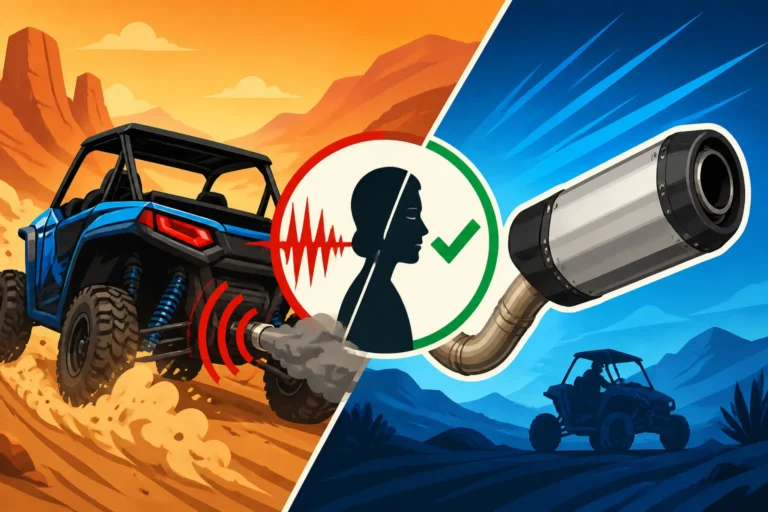
| Increased Exhaust Noise | Can indicate a damaged or missing spark arrester allowing free flow. | Inspect for damage; replace if broken or missing. Check [Nevada Sound Limits on Public Land]. | When noticed |
| Visible Sparks from Exhaust | Bright, glowing particles ejecting from the tailpipe. | Immediate action required! Spark arrester is failing; replace before riding. | Pre-ride/Daily |
Ultimately, the spark arrester is a small but mighty component that plays a monumental role in responsible OHV use. It's a testament to the fact that sometimes, the simplest solutions can prevent the biggest problems. Don't overlook it, don't neglect it, and always ensure it's in top working order before you head out to enjoy the trails and roads of beautiful Nevada.
Disclaimer
This article is for general informational purposes only and does not constitute professional advice. Laws, prices and regulations vary by location and change over time. Consult a qualified professional for guidance on your specific situation.