Where Nevada OHV Fees Actually Go
Paying for a Nevada OHV decal can leave riders wondering whether the money supports trails, goes to general state expenses, or pays for something else entirely. The short answer is that OHV registration revenue supports Nevada’s off-highway vehicle program, including projects that improve riding areas. Here’s how the money moves, what it can fund, and why the benefits may not show up at the trailhead where you ride.
From registration payment to OHV projects
Nevada’s OHV decal is more than proof that a machine is registered. For eligible off-highway vehicles, it also serves as the state’s riding permit. Registration payments are collected through the state’s OHV system, and revenue is directed toward the OHV program rather than functioning as a general-purpose trail pass purchased for one specific riding area.
That distinction matters. A rider does not pay a registration fee at Logandale Trails, for example, and receive a promise that the same payment will be spent there. Program money is used to support eligible OHV work around Nevada, with projects considered through the state’s funding process. A grant or improvement may be far from the location where an individual rider bought a decal.
The Nevada DMV’s OHV Section handles registration administration, while the Nevada Commission on Off-Highway Vehicles has a role in deciding how program funding supports OHV-related projects. The administrative work and the project decisions are connected, but they are not the same job: processing an application is different from selecting a trail project for funding. For more on that division, see Why the Commission Spends What the DMV Collects and The Nevada DMV OHV Section.
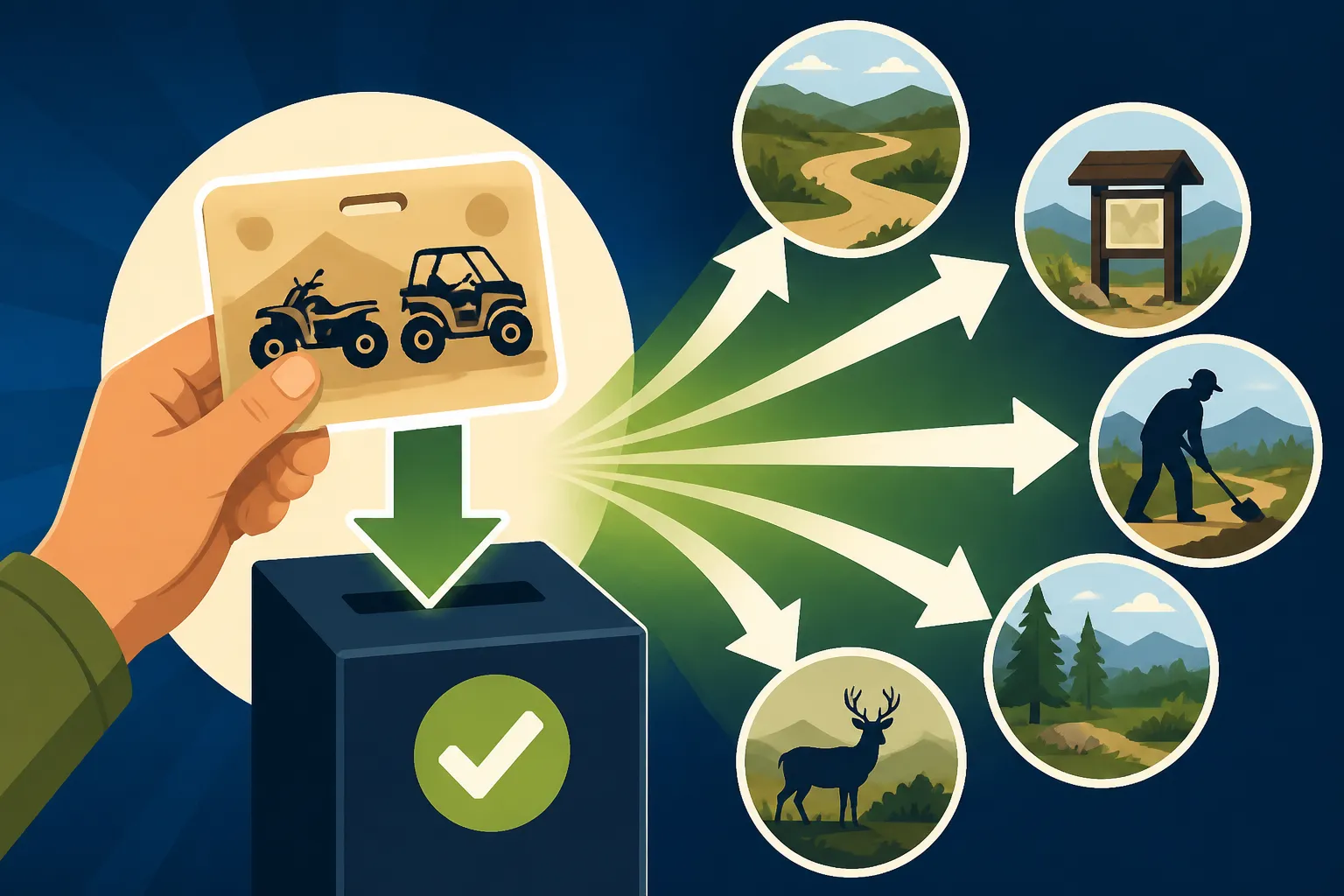
In practical terms, the funding process can turn registration revenue into grants for work such as trail planning, signs, trailhead improvements, maintenance, and rider education. Projects must fit program requirements and be approved through the appropriate process. That means revenue does not automatically become a trail repair the moment a rider pays.
| Where the money enters the system | What happens next | What riders may see |
|---|---|---|
| A Nevada OHV registration payment | Revenue supports the state OHV program | Funding available for eligible OHV work |
| Program administration | Registration and program responsibilities are handled | Applications processed and projects coordinated |
| Grant consideration | Proposed projects are reviewed for eligibility and funding | Approved projects may receive support |
| Project delivery | A recipient carries out the approved work | Signs, facilities, planning, maintenance, or education |
For a broader breakdown of eligible uses, see Nevada OHV Registration Fees Pay For and Nevada OHV Grant Program Explained. These related topics can help clarify why a particular project qualifies and how the grant side of the program works.
What OHV funding can support
OHV projects are not limited to building new trails. A riding area may need signs that make routes easier to understand, planning work to identify suitable routes, or improvements that help manage visitor use. Existing riding areas can also need maintenance and repairs. In some cases, a project may focus on education or responsible riding rather than a physical trail improvement.
That range of possible work explains why the benefit of registration revenue can be hard to spot on a casual visit. A new sign is visible. Planning, coordination, and other behind-the-scenes work may not be. And even when a project produces a visible improvement, it may be completed by a public agency, local organization, or other eligible project partner rather than by the agency that processed a rider’s payment.
Possible results include:
- Route signs and wayfinding: Signs can help riders identify routes, understand restrictions, and stay on open routes.
- Trail and area planning: Planning can help managers determine where riding is appropriate and how to manage use over time.
- Facilities: A project may improve visitor facilities or services that support an OHV area.
- Maintenance and restoration: Work may address wear, damage, or other management needs at a riding area.
- Education: Programs can explain safe riding, responsible use, and how to follow area rules.
The exact projects funded depend on the state program’s rules and decisions. It is safer to think of the decal as supporting a statewide OHV system than as buying a guaranteed improvement at a favorite trailhead. For a site-specific example, Where Nevada Registration Dollars Built Restrooms and Grants That Built the Logandale Facilities discuss how program funding can contribute to on-the-ground improvements.
This also helps explain why two riders may have different impressions of the value. One might regularly use an area with improved signs or facilities. Another might ride a remote route where funding has gone toward planning, management, or a project elsewhere. The decal supports a program across Nevada; it is not a fee earmarked for each rider’s chosen destination.
What the decal fee does not necessarily cover
Registration revenue and riding-area charges are not always the same thing. A Nevada OHV decal does not automatically cover every cost associated with visiting a recreation area. Some places may have separate access or use requirements, and federal land managers may have their own rules for special events or other activities. Check the specific area’s current information before travelling.
Likewise, possessing a decal does not mean every route is open to OHVs. Riders still need to follow land-manager rules, closures, signs, and restrictions. Registration is one part of being ready to ride, not a substitute for checking where travel is allowed. Nevada’s Registration Decal as Your Permit explains the decal’s role, while Nevada Rules for Riding Federal Land covers the separate need to follow federal land rules.
A payment also does not mean the closest project to the point of purchase receives the money. The grant process is based on the program’s requirements and project decisions, not a direct transfer from each registration counter to a nearby trail. That can make the funding connection feel less immediate, especially for riders who mostly use one area.
If you want to understand why a particular location has a separate fee, ask the land manager what that charge covers. Do not assume it is part of the OHV registration system, or that registration revenue pays for all local operations. Different charges can support different services and may be managed by different organizations.
How riders can follow the funding trail
The most useful way to assess OHV spending is to look for project information rather than expecting a simple receipt that names a trail. Grant announcements and program materials can identify the project, recipient, purpose, and location. That information offers a clearer picture of how the system turns registration revenue into work riders can use.
When you check a project, look for a few details:
- The project location: Is the work at a riding area you use, or somewhere else in Nevada?
- The stated purpose: Is it for facilities, signs, planning, maintenance, education, or another eligible need?
- The project partner: Which agency or organization will carry out the work?
- The timing: Has the project been approved, started, or completed? Funding approval does not always mean work is already visible.
- The funding source: Does the description identify OHV program support, or does it refer to a separate source of money?
A project can take time to move from proposal to finished work. Planning, approvals, coordination, and construction schedules all affect when riders see a result. If a grant is approved but the site looks unchanged, that alone does not show where the money went; the project may still be in progress or may involve work that is not immediately visible.
Riders can also make the registration system easier to understand by keeping the decal and registration documents current, and by following the area’s rules. That does not direct money to a preferred trail, but it supports a system intended to serve OHV use responsibly. To learn about the fee and funding relationship in more detail, see What Trail Money Comes Out of a Decal Sale and Nevada Fees That Fund Trail Work.
For a practical trip, treat the decal as one required part of preparation, then check the destination separately for closures, access conditions, and any additional requirements. Keep proof of registration secure and accessible. A small waterproof document pouch—available from outdoor retailers or Amazon—can help protect papers from dust and moisture, but it does not replace checking the rules before you ride.
The main takeaway is straightforward: Nevada OHV fees support a statewide program, and approved projects can turn that support into planning, maintenance, signs, facilities, and education. The benefit is real but not necessarily immediate, visible at every site, or tied to the place where a rider bought a decal.
Disclaimer
This article is for general informational purposes only and does not constitute professional advice. Laws, prices and regulations vary by location and change over time. Consult a qualified professional for guidance on your specific situation.