Walking Through Form OHV-012
It’s a tale as old as time for many off-highway vehicle (OHV) enthusiasts in Nevada: the thrill of a new ATV or UTV purchase is quickly followed by the daunting task of navigating state paperwork. That stack of forms can feel like a mountain range steeper than any trail you've ever conquered. But fear not, because when it comes to registering and titling your machine in the Silver State, one form stands out as the ultimate gatekeeper: Form OHV-012. This guide is your trail map, designed to walk you through every critical section and common pitfall of this essential document, making your journey from paperwork to playtime a smooth ride.
What Even Is Form OHV-012 and Why Do You Need It?
The Purpose Behind the Paperwork
Form OHV-012, officially titled the "Application for Registration and Title, Off-Highway Vehicles," is essentially your OHV's official introduction to the state of Nevada. It's the primary document used to apply for both a title (proof of ownership) and a registration decal (permission to operate on designated public lands). Many new OHV owners, particularly those who've recently moved to Nevada or are purchasing a machine privately, often feel a wave of confusion when faced with official forms. The good news is that OHV-012 is designed to be comprehensive, covering a wide array of scenarios to ensure your quad, dirt bike, or side-by-side is properly documented.
Think of it this way: just as your car needs a title and registration to drive on paved roads, your OHV needs them to legally explore Nevada's vast network of trails, dunes, and open riding areas. This form collects all the vital data – details about you, your machine, and how you acquired it – allowing the state to issue the necessary legal documents. Without a properly completed and submitted OHV-012, your machine won't get that all-important decal, which law enforcement and park rangers will be looking for. It helps the Nevada Commission on Off-Highway Vehicles (NCOHV), which manages the program, maintain an accurate record of OHVs, which is crucial for everything from managing trail funds to preventing theft and ensuring compliance with riding regulations.
When OHV-012 Becomes Your Go-To Form
You'll find yourself reaching for Form OHV-012 in several key situations. The most common scenario is after you've just purchased an OHV. If you bought a brand-new machine from a licensed Nevada dealer, they will often take care of this paperwork for you as part of their service. This is one of the many conveniences of [Registering Through a Nevada Dealer]. However, if you're buying a used ATV privately in Nevada, or if you're bringing an OHV into Nevada from another state after moving, the responsibility falls squarely on your shoulders. It also applies if you've been fortunate enough to inherit an OHV, or if you're trying to get a title and registration for an older machine that has somehow gone unregistered for years.
Nevada has a specific timeline for getting this done. You generally have [Nevada's Thirty-Day Registration Deadline] from the date of purchase or when you establish residency to submit your completed OHV-012. Missing this crucial window can lead to extra fees, specifically [Nevada's $10 Late Fee on an Expired OHV Decal], which nobody wants to pay. Imagine you've just bought that incredible new UTV from a private seller in Pahrump, eager to hit the trails around Logandale. You get it home, and then realize you're not entirely sure how to make it legal. That's precisely when Form OHV-012 becomes your guide. It's the official application to secure your registration decal, a visible sign to rangers at popular spots like [Riding Nellis Dunes on an Expired Decal] that you are compliant and ready to ride. Whether it's a first-time registration, a change of ownership, or bringing in a machine from out of state, this form is the cornerstone of the process.
A Step-by-Step Breakdown of Form OHV-012
Section by Section: What to Fill Out
Navigating a government form can feel like decoding an ancient scroll, but by breaking down Form OHV-012 section by section, it becomes much more manageable. You can usually find the most current version of this form on the NCOHV website.
- Section 1: Applicant Information. This section is all about you, the owner. You'll need to provide your full legal name (as it appears on your driver's license), your current physical address (no P.O. Boxes, please!), a separate mailing address if applicable, your Nevada driver's license number, and your contact phone number and email. Accuracy is paramount here; any discrepancies with your official ID can cause delays.
- Section 2: Vehicle Information. This is where your OHV details come into play. You'll specify the year, make (e.g., Can-Am, Polaris, Kawasaki), model (e.g., Maverick X3, RZR Pro R, Brute Force 750), and the crucial Vehicle Identification Number (VIN). Seriously, triple-check the VIN! A single incorrect digit can lead to your application being rejected. You'll also need to identify the vehicle type (ATV, UTV, dirt bike), engine size in cubic centimeters (cc) – noting that [Machines Under 70cc and Why They Skip Registration] – and indicate whether it's new or used, along with the purchase date.
- Section 3: Ownership Information. This is a critical part that documents how you came to possess the OHV. You'll select the method of acquisition (e.g., purchase, gift, inheritance) and provide the full name and address of the previous owner or the dealership. If it was a private sale, make sure you have the seller's information handy. This section will almost certainly require supporting documentation, such as a bill of sale. A well-drafted bill of sale, perhaps one you can create and customize through a platform like LawDepot, will explicitly detail the transfer of ownership and is invaluable here.
- Section 4: Liens (if applicable). If your OHV is financed, the lienholder (the bank or credit union that lent you the money) will be listed here. They typically hold the title until your loan is paid in full. If you own the machine outright, you can simply mark this section as "N/A."
- Section 5: Declaration and Signature. Finally, you'll sign and date the form, declaring that all the information provided is true and correct to the best of your knowledge. Read this section carefully before signing, as providing false information can have legal repercussions.
It’s completely understandable if this feels like a lot. Each piece of information, however, serves a vital purpose in establishing a clear and legal record of your OHV. Taking your time and being meticulous here will save you considerable frustration down the line. If you encounter a field you're genuinely unsure about, it’s always better to seek clarification from the NCOHV rather than guessing.
Gathering Your Supporting Documents
Completing Form OHV-012 is a significant step, but it’s rarely enough on its own. You'll need to compile a set of supporting documents that serve as proof for the information you've provided. These are your crucial pieces of evidence.
- Proof of Ownership: This is the cornerstone of your application.
- For a brand-new machine, you’ll typically present the Manufacturer’s Statement of Origin (MSO) or Manufacturer’s Certificate of Origin (MCO).
- For a used machine, you'll need the previous title, properly signed over to you by the seller. If you're [Buying a Quad With No Paperwork at All], you'll face significant challenges and may need to consult the NCOHV for specific guidance on how to establish ownership through other means, such as a notarized bill of sale and other supporting evidence.
- Bill of Sale: Even if you have a signed title, a bill of sale is almost always required, particularly for private party sales. It documents the purchase price, which is essential for calculating sales tax (if applicable). Ensure your [What a Nevada ATV Bill of Sale Should Carry] is detailed, including the full VIN, names of buyer and seller, and the sale date. Using a template from a reputable service like LawDepot can help ensure your bill of sale is comprehensive and legally sound.
- VIN Inspection: If you're bringing an OHV into Nevada from another state, or if the VIN on your current documents is illegible or questionable, a VIN inspection will be required. It’s crucial to understand that [The VIN Inspection Nevada DMV Will Not Do]. You'll need to have a licensed Nevada OHV dealer or a sworn law enforcement officer (such as a sheriff's deputy or Nevada Highway Patrol trooper) physically inspect your machine and verify the VIN.
- Payment: You'll need to include payment for the applicable registration and titling fees. These fees can vary based on whether you opt for a one-year or three-year registration period, and whether your machine is a resident or out-of-state vehicle. Research the current [Cost to Title an ATV in Nevada] and [Nevada OHV Registration Fee for Three Years] beforehand to ensure you send the correct amount.
- Personal Identification: A photocopy of your valid Nevada driver's license or state ID is typically required.
Here's a useful table summarizing the key documents for different scenarios:
| Scenario | Required on Form OHV-012 | Key Supporting Documents |
|---|---|---|
| New Machine from NV Dealer | Sections 1-5 | MSO/MCO, Bill of Sale, Payment |
| Used Machine from NV Private Seller | Sections 1-5 | Signed-Over Nevada Title, Bill of Sale, Payment, ID Copy |
| Out-of-State Machine Moving to NV | Sections 1-5 | Out-of-State Title/Registration, Bill of Sale, VIN Inspection, Payment, ID Copy |
| OHV Acquired as a Gift | Sections 1-5 | Previous Title (signed over), Gift Letter, Payment, ID Copy |
| Inherited OHV | Sections 1-5 | Death Certificate, Probate Documents, Previous Title (if any), Payment, ID Copy |
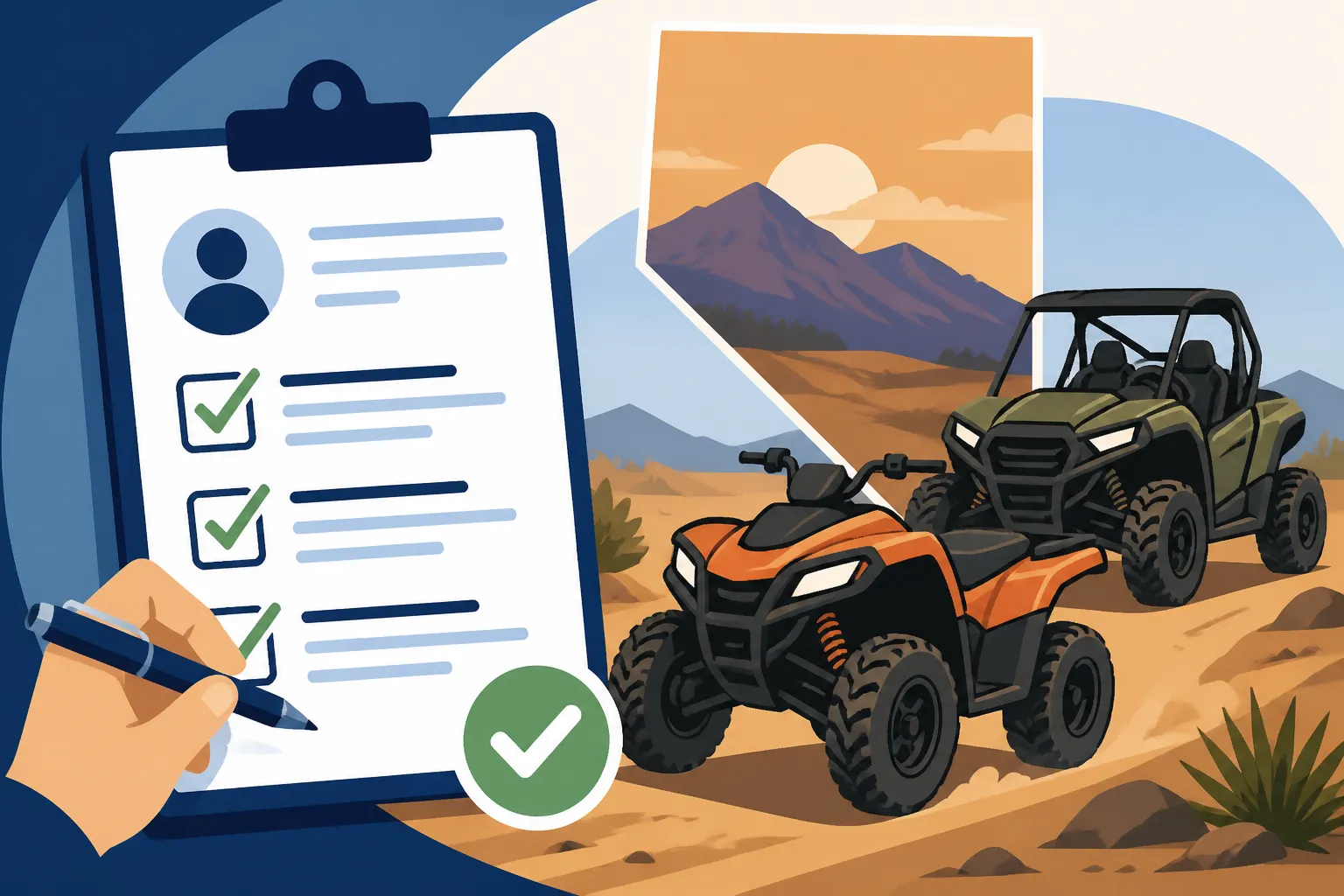
Remember, you are responsible for meticulously gathering and submitting all these documents. This might feel like a mini-quest, but having a clear [Nevada OHV Registration Paperwork Checklist] will help ensure you're fully prepared.
Common Pitfalls and How to Avoid Them
What Happens If You Make a Mistake?
Even with the best intentions, mistakes can happen when filling out official forms. It's incredibly easy to transpose a number in a VIN, overlook a signature line, or mistakenly use an outdated version of the form. The most common, and often most frustrating, consequence of an error on Form OHV-012 is delay. Your application will almost certainly be returned to you, often with a letter detailing the necessary corrections. This means more waiting, potentially missing out on prime riding weekends, and the added hassle of resubmitting everything. For instance, if the VIN you write on the form doesn't precisely match the one on your MSO or title, the NCOHV can't process it. While you're dealing with the resubmission, your friends might be enjoying [Riding Logandale Trails on an Arizona OHV Decal] or exploring other fantastic destinations, and your machine will remain grounded.
Another significant pitfall revolves around insufficient proof of ownership. If your bill of sale is incomplete, or if the previous title hasn't been properly endorsed and signed over to you, the NCOHV cannot legally transfer ownership. This can lead to a bureaucratic tangle, especially if the previous owner is now difficult to contact or uncooperative. Imagine scribbling a quick bill of sale on a scrap piece of paper for a private purchase; if it lacks crucial details like the full VIN, purchase price, or contact information for both parties, your application could be rejected, leaving you in a tricky situation. Using a robust, legally sound document template, such as those available through LawDepot, can explicitly outline the transfer of ownership and prevent these headaches. Furthermore, submitting an application for an out-of-state machine without a proper VIN inspection will also guarantee a rejection, putting a halt to your plans to explore Nevada's vast [Riding BLM Land in Nevada].
Tips for a Smooth Submission
To minimize the chances of your OHV-012 application turning into a frustrating boomerang, here are some invaluable tips for a smooth and successful submission:
- Always Use the Latest Form: Before you start, always download the most current version of Form OHV-012 directly from the Nevada Commission on Off-Highway Vehicles (NCOHV) website. Forms are updated periodically, and an outdated version is an instant rejection.
- Read All Instructions Thoroughly: Before you even pick up a pen, read the entire form and its accompanying instructions carefully. Highlight anything that's unclear and seek clarification before filling it out.
- Fill Out Completely and Legibly: Use blue or black ink. Print clearly and neatly, or type the information if the form allows for electronic completion before printing. Do not leave any required fields blank. If a section truly doesn't apply to your situation (e.g., no lienholder), write "N/A" (Not Applicable) to show you deliberately addressed it, rather than just skipping it.
- Double-Check All Numerical Data: VINs, purchase dates, dollar amounts – scrutinize every number you enter. It's a great idea to have another person review the form; a fresh pair of eyes can often spot errors you might have overlooked.
- Ensure Proper VIN Inspection (If Required): If your situation calls for a VIN inspection, confirm it's completed by an authorized professional – either a licensed Nevada OHV dealer or a sworn law enforcement officer. Ensure their signature, title, and badge/dealer number are clearly visible.
- Organize and Copy Your Documents: Attach all supporting documents neatly. Before you send anything, make photocopies of everything for your personal records. This small step can be a lifesaver if your application gets lost or if there's a dispute later on.
- Confirm All Fees: Verify the exact amount for your registration and titling fees, as these can change. Sending an incorrect payment amount (either too much or too little) will inevitably delay the processing of your application. Research the costs for options like [Nevada OHV Registration Fee for One Year] versus a longer term.
- Submit Promptly: Remember the [Nevada's Thirty-Day Clock After a Purchase]. Don't wait until the last minute! Get your paperwork submitted well within that timeframe to avoid late fees and unnecessary stress.
- Consider Dealer Assistance: If you're purchasing a new OHV, letting the dealer handle the paperwork is often the easiest route. They are experts in the process and can ensure everything is submitted correctly, even if it includes a small [What Nevada's $2 Dealer Submission Fee Pays For].
By diligently following these steps, you'll significantly increase your chances of a quick and successful registration, getting that all-important decal on your machine so you can hit the incredible trails and dunes of Nevada without a second thought.
Beyond the Form: What Comes Next?
The Waiting Game: Processing Your Application
Once you've meticulously completed Form OHV-012, gathered all your supporting documents, and submitted your application to the Nevada Commission on Off-Highway Vehicles (NCOHV), the waiting period begins. It’s natural to feel a blend of relief and eager anticipation as you await your shiny new decal and title. While the NCOHV strives for efficiency, there isn't an exact, fixed timeline for processing. Processing times can fluctuate based on the volume of applications they're receiving. For instance, you might experience slightly longer waits during peak riding seasons or immediately after major holidays when many new machines are purchased.
It’s completely understandable to feel impatient during this phase; you've done your part and are ready to legally explore Nevada’s vast wilderness. Many applicants report receiving their decal and title within a few weeks, though it's not unheard of for it to take a bit longer in certain situations. If you become concerned about the status of your application, you can typically contact the NCOHV directly. They usually have a dedicated OHV section within the Nevada DMV, or a specific department you can reach out to. For more generalized information on what to expect, looking up [Nevada OHV Registration Processing Times] can give you an idea of current estimates. Remember to keep copies of your submitted form and all supporting documents readily accessible, just in case you need to refer to them when inquiring about your application's progress.
Keeping Your Registration Up-to-Date
Successfully completing the initial registration with Form OHV-012 is a significant achievement, but it's not the end of your administrative responsibilities. Your Nevada OHV registration, much like your street-legal vehicle's registration, requires periodic renewal. When you first register your machine, you'll generally have the choice between a one-year or a three-year decal. Many riders find the three-year option to be more convenient and cost-effective in the long run, as it offers a slight discount and reduces the frequency of renewals. Details on this choice can often be found when considering [One-Year or Three-Year Nevada Decal: Which to Buy] or information specific to [Nevada's $60 Three-Year Decal].
As your OHV's registration expiration date approaches, the NCOHV typically sends out a renewal reminder notice to your registered mailing address. This highlights the importance of ensuring your contact information is always current with them. Missing this reminder could mean an expired decal, which is the last thing you want when heading out for a ride at [Sand Mountain's 4,795 Acres]. Renewing your registration is usually a much simpler process than the initial application. It can often be done online, by mail, or sometimes in person at a designated NCOHV office. The process for [Renewing a Nevada OHV Decal] typically just requires your decal number and the appropriate payment. If you've moved since your last registration, it's critical to update your address promptly to ensure you receive all future notices. Riding with an expired decal can lead to fines and citations from law enforcement, so staying on top of your renewals is absolutely essential for continued, worry-free enjoyment of Nevada’s incredible OHV trails.
Disclaimer
This article is for general informational purposes only and does not constitute professional advice. Laws, prices and regulations vary by location and change over time. Consult a qualified professional for guidance on your specific situation.