The Higher Nevada Title Fee for a Machine Out of State
So, you've just moved to our beautiful Silver State, maybe from California, Arizona, or Utah, and you've brought your beloved ATV or UTV with you, ready to hit those epic trails. You're probably thinking it'll be a simple process to get it legal here, maybe just transfer a registration or something, right? Well, friend, I'm here to gently let you know that while it's totally doable, Nevada has a specific way of handling out-of-state machines that often catches new residents by surprise, particularly when it comes to the title fee. This guide is going to walk you through exactly why that fee is higher and how to navigate the process without pulling your hair out.
Understanding Nevada's OHV Titling Process for New Residents
Bringing your off-highway vehicle (OHV) into Nevada when you're a new resident isn't just a quick change of address on some paperwork. Nevada wants to ensure every machine operating within its borders is properly accounted for and contributing to the state's robust OHV program. This often involves a fresh start, especially on the titling side, which is a bit different from simply renewing an existing registration within the state.
Why Your Out-of-State Machine Isn't Just a Simple Transfer
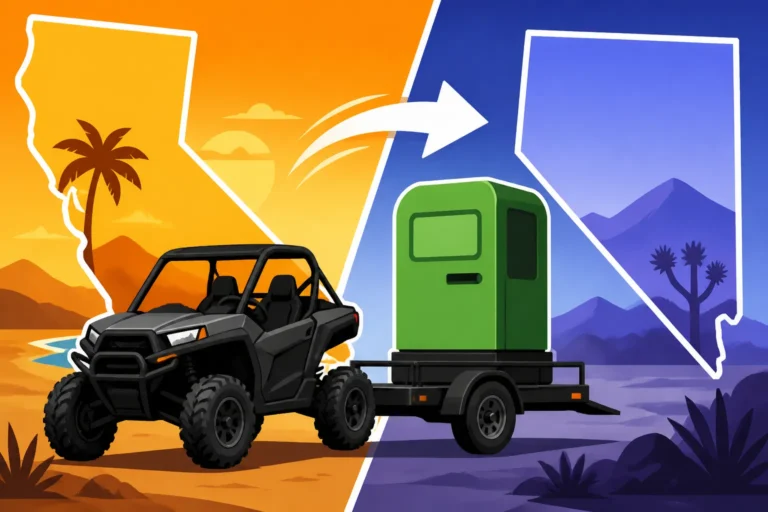
When you move here with an OHV that's currently titled in another state, Nevada treats it almost like a brand-new titling event, even if you've owned the machine for years. Think of it less as a "transfer" of your old state's title and more as applying for a new Nevada title. This isn't just about bureaucracy; it's about establishing Nevada as the primary record-keeper for your machine. Your old state might just have a registration sticker or a very basic ownership document, but Nevada takes titling seriously for both ownership verification and to ensure everyone is pitching in for our incredible trail systems. It ensures that when you eventually sell it, the chain of ownership is clear and verifiable right here in Nevada.
The Standard Nevada Title Fee Versus the Out-of-State Premium
This is where the rubber meets the road, or should I say, the sand meets the tire. You'll find that there's a base fee for titling an OHV that has already been titled in Nevada. This is the fee a local might pay if they just bought a used quad from their neighbor, already registered in the state. However, if your machine is coming in from outside Nevada, the fee for that initial title application is going to be higher. It's not usually a massive difference, but it's enough to make you scratch your head if you're not expecting it. This isn't a sales tax – that's a whole other conversation if you bought it recently – but a specific titling cost associated with establishing the vehicle's first Nevada title. It's a one-time thing when you first bring it in, but it's crucial to budget for.
To give you a clearer picture, here's a general comparison of how Nevada distinguishes these fees:
| Scenario | Title Fee Implication |
|---|---|
| New OHV (Nevada Dealer) | Standard Nevada title fee, often handled by the dealer |
| Used OHV (Nevada Private) | Standard Nevada title fee (if already titled here) |
| OHV From Out of State | Higher initial Nevada title fee |
| Duplicate Nevada Title | A separate, lower fee for a replacement |
The key takeaway is that bringing a machine from outside the state incurs a distinct, higher fee for that initial titling. For a full breakdown of all the costs involved, including the registration portion, you might want to read [Nevada Title Costs Compared With Registration].
The Rationale Behind the Higher Fee
It can feel a bit unfair to pay more just because you moved, right? I totally get that. It feels like an extra hurdle when you're already dealing with the chaos of relocating. But there's actually a pretty good reason why Nevada has this specific fee structure in place for out-of-state OHVs, and it ultimately benefits all of us who love to ride here.
Funding Nevada's OHV Program and Trail Systems
One of the primary reasons for the higher titling fee on out-of-state machines is to directly contribute to the funding of Nevada's robust Off-Highway Vehicle program. Nevada takes its trails seriously, and maintaining thousands of miles of riding areas, creating new ones, installing signage, and managing access isn't cheap. The fees collected, including those from titling, go into a dedicated fund managed by the [The Nevada Commission on Off-Highway Vehicles]. This money is then distributed for things like trail maintenance, safety education, and enforcement.
When you bring a machine from another state, especially one that might not have the same level of OHV funding or reciprocal agreements, Nevada considers this a new entry into its system. The higher fee ensures that new additions to the state's OHV population immediately contribute to the infrastructure they'll be using. It's part of the collective effort to keep our trails open and awesome. You can learn more about how your dollars are spent by checking out [Where Nevada OHV Registration Money Goes] and [What Nevada's OHV Registration Fees Pay For]. It's nice to know your money is going back into the trails you love.
Ensuring Proper Ownership and Combatting Theft
Beyond funding, the titling process, especially for vehicles crossing state lines, serves a critical function in verifying legitimate ownership and preventing theft. An out-of-state title application triggers a more thorough check of the vehicle's history and its Vehicle Identification Number (VIN). This helps to ensure that the machine isn't stolen and that there's a clean chain of ownership, protecting both you as the new owner and future buyers.
The detailed VIN inspection, which is mandatory for out-of-state machines, is a key part of this. It's not just a quick glance; it's a careful verification that the VIN on the machine matches the paperwork. This diligence helps to keep stolen machines off our trails and ensures that when you eventually get your Nevada title, it's solid and uncontestable. For anyone buying a used machine, whether in state or out, always check the VIN before you buy!
Navigating the Titling Paperwork for an Out-of-State OHV
Alright, let's talk brass tacks: the paperwork. It can feel like a mountain, especially when you're dealing with moving logistics on top of it all. But breaking it down into manageable steps makes it a lot less daunting. The key is to be prepared and have everything in order before you head to the DMV or a dealer.
Essential Documents You'll Need to Gather
The state of Nevada requires a specific set of documents to title an OHV that's coming from out of state. You absolutely need to have these in hand. Here’s a rundown of the typical requirements:
- Your Previous State's Title: This is paramount. Nevada needs proof of ownership from where the machine was last legally titled. Make sure it's the original, not a copy, and that it's properly signed off if you just acquired the machine. If you don't have it, getting a duplicate from the original state DMV should be your first step.
- Bill of Sale: Even if you've owned the machine for ages, a bill of sale can be crucial, especially if there's any ambiguity in the title or if the original state didn't issue titles for OHVs (some states don't). If you need a solid, legally sound bill of sale, services like LawDepot offer templates that can help you draft one quickly and correctly, ensuring all necessary details are included. This is especially useful if you acquired the machine informally or lost the original bill of sale.
- Nevada OHV Title and Registration Application (Form OHV-001): You'll need to fill this out completely. There are different versions of this form depending on your specific situation, so make sure you grab the correct one for an out-of-state vehicle.
- Proof of Identity: Your driver's license or state ID.
- Proof of Nevada Residency: A utility bill, rental agreement, or other official document showing you live here now.
For a comprehensive list, you can always refer to the [Nevada OHV Registration Paperwork Checklist] or dive into the specifics of [Walking Through Form OHV-012] which is often used for new applications.
The All-Important VIN Inspection
This is a step you absolutely cannot skip for an out-of-state OHV, and it's a frequent point of confusion for new residents. Nevada requires a physical verification of your machine's Vehicle Identification Number to ensure it matches your title and application forms.
Here's the kicker: [The VIN Inspection Nevada DMV Will Not Do]. That's right, the DMV itself doesn't perform these inspections for OHVs. So, where do you go?
- Licensed Nevada OHV Dealers: Many authorized OHV dealerships in Nevada are certified to perform VIN inspections. This is often the most convenient option, as they are familiar with the process and paperwork. They usually charge a small fee for this service. If you're wondering which ones can help, check out [Which Dealers Can Inspect a VIN in Nevada].
- Sworn Law Enforcement Officer: You can also ask a certified law enforcement officer (like a Sheriff's deputy or Nevada Highway Patrol trooper) to conduct the inspection. This can sometimes be a bit trickier to arrange due to their schedules and priorities, but it's a valid option. They will typically fill out a specific verification form (often part of the OHV-001 application) after comparing the VIN on your machine to your documentation. For more on this, look up [Asking a Sworn Officer to Verify a VIN].
Make sure you get the proper form filled out and signed by the inspector. It's a critical piece of the puzzle for your titling application.
Potential Pitfalls and How to Avoid Them
Moving to a new state is stressful enough without running into unexpected issues with your OHV paperwork. Believe me, I've seen it all, from folks missing crucial deadlines to those who simply can't find their old state's title. Being aware of these common snags can save you a lot of headache and potentially some extra cash.
The 30-Day Clock and Late Fees
Nevada is pretty clear about its deadlines when it comes to getting your OHV registered and titled after a purchase or after becoming a resident. There’s a [Nevada's Thirty-Day Registration Deadline] that starts ticking. If you fail to submit your complete application and fees within that timeframe, you're going to face a late fee. And let me tell you, those late fees add up! Specifically, [Nevada's $10 Late Fee on an Expired OHV Decal] applies, and it's something easily avoided with a little planning.
My advice? As soon as you establish residency, or as soon as you purchase an OHV, make titling and registration a top priority. Don't let that 30-day window close on you. Gather your documents, get that VIN inspection, and head to the DMV or your dealer promptly.
Dealing with Lost Titles or Incomplete Paperwork from the Previous State
This is a surprisingly common problem. Maybe your old state didn't issue formal titles for ATVs, or perhaps you bought the machine privately years ago and the original title is long gone or improperly signed. This can bring your Nevada titling process to a screeching halt.
If you don't have a clear, properly signed title from your previous state, your first step needs to be contacting the Department of Motor Vehicles or equivalent agency in that state. You'll likely need to apply for a duplicate title or a proof of ownership document from them. This can take time, so start this process as soon as you realize you're missing something crucial. For situations where a seller couldn't find a title or there was no paperwork at all, it gets even more complicated, as discussed in [Buying a Quad With No Paperwork at All]. Always try to get that original state title if at all possible. If you are creating your own bill of sale to clarify ownership history, remember that services like LawDepot can provide templates that help ensure all critical details are included.
Distinguishing Between Registration and Titling
It's easy to conflate "registration" and "titling," but in Nevada, they are two distinct processes, each with its own fees.
- Titling is about establishing legal ownership of your OHV in Nevada and creating a permanent record of that ownership. This is the part that involves that higher, one-time fee for out-of-state machines. Once you have a Nevada title, it's yours until you sell the machine.
- Registration is the annual (or three-year) process of getting your OHV decal, which allows you to legally operate it on public lands and designated trails. This is the fee you'll pay regularly to keep your machine current.
You'll need both to legally ride here. The higher fee we're discussing today is specifically for the initial titling. After that, your annual renewals will be the standard registration fee. Understanding this distinction can help you budget and prepare for the appropriate paperwork.
Bringing Your OHV to Nevada: A Step-by-Step Guide
Okay, you're ready to tackle this! Let's break down the process of getting your out-of-state OHV legally titled and registered in Nevada into a clear, actionable roadmap. Follow these steps, and you'll be hitting the trails in no time.
Step 1: Secure Your Paperwork
Before you do anything else, gather every single piece of ownership documentation you have for your OHV. This includes:
- The original title from your previous state, properly signed off if you just acquired the machine. If you don't have it, stop here and contact that state's DMV to get a duplicate. Trust me, you don't want to proceed without it. [What an OHV Title Looks Like] can help you confirm you have the right document.
- A comprehensive bill of sale, especially if you recently bought the OHV or if the title from your previous state is minimalist. Make sure it clearly identifies the buyer, seller, OHV (including VIN), purchase price, and date. If you need to create one, a legal document service like LawDepot can provide a template to ensure it meets common legal standards.
- Your Nevada driver's license or ID, and proof of your Nevada residency (like a utility bill).
Having everything organized will make the rest of the process much smoother.
Step 2: Get That VIN Inspected
With your paperwork in hand, the next crucial step is getting your OHV's VIN verified. Remember, the Nevada DMV offices don't do this for OHVs themselves.
- Locate a Licensed OHV Dealer: Use the information from [Which Dealers Can Inspect a VIN in Nevada] to find a dealership near you that offers this service. Call ahead to confirm their hours and fees.
- Contact Law Enforcement: Alternatively, you can contact your local Sheriff's office or Nevada Highway Patrol to inquire about a VIN inspection. Be prepared that they may have limited availability for this. [Asking a Sworn Officer to Verify a VIN] provides more context here.
The inspector will compare the VIN on your machine to the one on your previous state's title and your application form. They will then sign off on the appropriate section of your Nevada OHV Title and Registration Application (Form OHV-001). Don't leave without that signature!
Step 3: Complete the Application Forms
Now it's time to fill out the official Nevada forms. You'll primarily be working with the Nevada OHV Title and Registration Application (Form OHV-001). Be sure to choose the correct version that applies to an out-of-state machine being titled for the first time in Nevada. You can usually download these from the Nevada DMV website, or pick them up at a DMV office or a licensed dealer.
- Read Carefully: Go through each section of the form diligently. Missing a signature or a piece of information can lead to delays.
- Be Accurate: Double-check all vehicle information (VIN, make, model, year) against your previous title.
- Declaration of Value: You'll need to declare the value of your OHV, which is used for calculating any applicable sales tax if you purchased it recently.
It might feel like a lot, but taking your time here prevents future headaches. [Why Nevada Has Five Registration Applications] illustrates the different scenarios these forms cover.
Step 4: Head to the DMV (or a Dealer)
With your previous state's title, bill of sale, completed and VIN-inspected Nevada OHV application, and your ID, you're ready to submit everything and pay the fees.
- Visit a Nevada DMV Office: This is the most common route. Be prepared for potential wait times, especially if you go during peak hours. Bring all your original documents.
- Go Through a Licensed OHV Dealer: Many licensed OHV dealers in Nevada can process your titling and registration paperwork directly. This can be a huge time-saver and is often much more convenient than waiting at the DMV. They typically charge a small processing fee for this service, but it's often well worth it. For more on this option, read [Registering Through a Nevada Dealer].
You'll pay the higher initial titling fee for your out-of-state machine, along with the standard registration fees. Once processed, you'll eventually receive your official Nevada OHV title certificate in the mail and your registration decal.
What to Expect After Titling and Registering
Congratulations! You've navigated the sometimes-tricky waters of bringing your OHV into Nevada. Now that the hard part is over, let's talk about what comes next and your ongoing responsibilities as a Nevada OHV owner.
Receiving Your Nevada Title and Decal
After you've submitted all your paperwork and paid the necessary fees, the DMV will process your application. You won't walk out with your physical title certificate that day; it will be mailed to you. This title is a crucial document that proves legal ownership of your OHV in Nevada, so keep it in a safe place. You'll need it if you ever sell the machine or if you apply for a duplicate.
In addition to the title, you'll receive your Nevada OHV decal. This is the sticker you apply to your machine, typically on the left side or rear, as outlined in [Left Side or Rear: Where the Decal Goes]. This decal serves as your proof of current registration and also indicates that your OHV has a valid Nevada title. [What a Nevada OHV Decal Actually Proves] is that you're legal to ride on designated trails and public lands throughout the state. It's not just a sticker; it's your permit to explore.
The Ongoing Responsibility: Renewals and Compliance
Getting your OHV titled and registered initially is a big step, but it's not a one-and-done deal. Just like with your car, you'll have ongoing responsibilities to keep your OHV legal and safe on Nevada's trails.
- Annual or Three-Year Renewals: Your OHV registration decal will expire, usually either one year or three years after its issuance, depending on which option you chose (and paid for) during your initial application. You'll receive a renewal notice, but it's ultimately your responsibility to track the expiration date. You can learn more about this by reading [Renewing a Nevada OHV Decal]. Renewing is generally a much simpler process than the initial titling, often possible online or by mail.
- Staying Compliant with OHV Laws: Beyond registration, remember that Nevada has a set of rules and regulations for OHV operation, including age restrictions, helmet laws, and designated riding areas. Always familiarize yourself with these laws to ensure a safe and legal riding experience. Respect the land, respect other riders, and enjoy everything our amazing state has to offer!
Navigating the Nevada OHV titling process for an out-of-state machine might seem like a bit of a curveball at first glance, especially with that higher initial fee. But by understanding the "why" behind it – funding our trails, ensuring ownership integrity – and breaking down the "how" into clear steps, you'll find it's a perfectly manageable process. Gather your documents, get that VIN inspected, and soon enough, you'll have your Nevada title and decal, ready to explore the incredible desert landscapes and mountain trails that make riding here so unique.
Disclaimer
This article is for general informational purposes only and does not constitute professional advice. Laws, prices and regulations vary by location and change over time. Consult a qualified professional for guidance on your specific situation.