The VIN Inspection Nevada DMV Will Not Do
You've just bought that shiny new (or new-to-you) off-highway vehicle, and you're ready to hit the Nevada trails! The excitement is palpable. But then, as you gather your paperwork for registration, you hit a snag: the Nevada DMV needs a VIN inspection, but when you call them, they tell you they don't do them for OHVs. It's a common point of frustration, leaving many riders scratching their heads and wondering where to go next. This guide is here to demystify that process, explaining precisely why the DMV isn't your stop for an OHV VIN inspection and, more importantly, who can help you get on the trail legally.
Understanding Nevada's Off-Highway Vehicle Registration Process
Getting your off-highway vehicle (OHV) registered in Nevada should be a straightforward path to adventure, but sometimes the bureaucracy can feel like hitting a sand dune in two-wheel drive. The initial wave of excitement after purchasing your ATV or UTV often crashes against the rocks of necessary paperwork, and one of the most perplexing requirements for many new owners is the VIN inspection. It's an essential step, yet the traditional place you'd expect to get such a service – the Department of Motor Vehicles – isn't equipped to handle it for off-road machines.
The Initial Hurdles for New OHV Owners
Picture this: you've just brought home your dream side-by-side or quad. Maybe you scored a great deal on a used ATV from a private seller, or perhaps you splurged at a dealership on a brand-new UTV ready for the desert. Your mind is already on the vast expanses of the Nevada wilderness, imagining the dusty trails of Logandale or the towering dunes of Sand Mountain. You know you need to get it registered, so you start looking into what's required. You discover you'll need your title, a bill of sale (especially if it was a private party purchase), the proper application form, and critically, a VIN inspection.
This is where the first hurdle often appears. Many new owners naturally assume the DMV is a one-stop shop for all vehicle-related services. After all, they handle car registrations, driver's licenses, and, yes, VIN inspections for passenger cars. It seems logical that your OHV would follow a similar path. However, when you inquire about getting your off-road machine inspected there, you're met with a polite but firm "we don't do those." It can be disheartening, creating confusion right at the start of your ownership journey. It's essential to understand that while the DMV is central to the overall [Registering an ATV in Nevada] process, its role in specific OHV services is sometimes distinct from its traditional functions.
Why a VIN Inspection Is Crucial for OHV Registration
So, if the DMV isn't doing it, why is a VIN inspection such a big deal anyway? Simply put, a VIN inspection is a critical safeguard for everyone involved. For you, the owner, it solidifies your legal claim to the machine. For the state, it helps prevent fraud, theft, and ensures that the vehicle being registered is indeed what its paperwork claims it to be. This step verifies the machine's unique identity, much like a fingerprint for a person.
The primary purpose of a VIN inspection is to verify ownership and deter theft. Every ATV and UTV has a unique Vehicle Identification Number (VIN) stamped on its frame, sometimes in multiple locations. This number links the physical machine to its legal documentation, such as the title or a bill of sale. Without a proper inspection, it would be far too easy for stolen machines to be registered under false pretenses. The inspector will carefully compare the VIN on your machine to the VIN listed on your title or other proof of ownership to ensure they match perfectly. This meticulous cross-referencing is a fundamental layer of protection for you and the broader OHV community.
Beyond theft prevention, a VIN inspection helps confirm the vehicle's identity and type for proper classification. Sometimes, especially with older machines, custom builds, or vehicles imported from out of state, the documentation might not perfectly reflect the actual vehicle. The inspector can identify discrepancies, ensuring that the make, model, year, and even the basic type of OHV (ATV, UTV, dirt bike) align with the paperwork you're submitting. This clarity is vital for accurate registration and ensuring that the correct fees are applied, helping the state manage its OHV recreation programs effectively. Without this verification, there could be all sorts of mix-ups, making it difficult to properly track and regulate off-highway vehicles in the state. [Titling an Off-Highway Vehicle in Nevada] also hinges on this verification, as the title is the ultimate proof of ownership.
The DMV's Stance: Why They Don't Perform OHV VIN Inspections
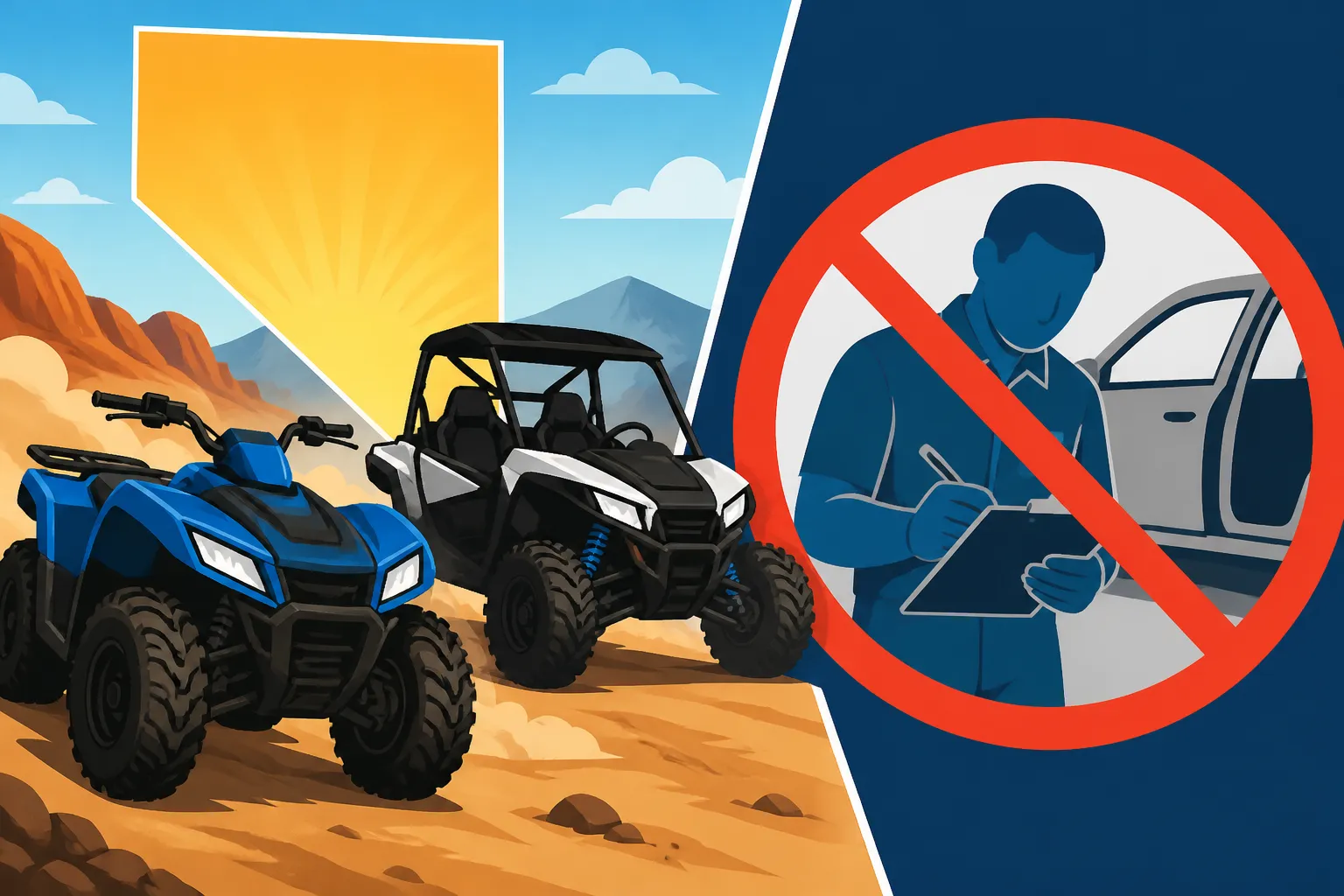
It might seem counterintuitive that the state's motor vehicle department doesn't handle all vehicle inspections. After all, isn't an OHV still a "motor vehicle"? While true in a broad sense, the Nevada DMV's specific operational scope and expertise are primarily geared toward on-road vehicles. This distinction is crucial to understanding why you won't find a DMV employee with a clipboard ready to inspect your quad.
Staffing, Equipment, and Specialized Knowledge Gaps
One of the biggest reasons the Nevada DMV doesn't perform OHV VIN inspections comes down to practical limitations: their staff, equipment, and training are simply not set up for it. Think about the typical DMV employee. Their expertise lies in the regulations and specific components of cars, trucks, and motorcycles designed for paved roads. They're trained to look for things like proper lighting for highway use, emission control systems, and other features that are largely irrelevant or entirely different for off-highway vehicles.
Off-highway vehicles, whether they're roaring sport quads or utilitarian side-by-sides, have unique characteristics. Their VINs might be located in harder-to-reach places on the frame, sometimes requiring a bit of crawling around or even minor disassembly on certain models. DMV facilities are not equipped with lifts or specialized tools for off-road machines, nor are their inspection lanes designed to accommodate the varied sizes and configurations of OHVs. Moreover, the staff typically lack the specific knowledge to differentiate between various OHV types, identify common off-road modifications, or understand the nuances of non-road vehicle construction. Asking a DMV inspector, whose daily routine involves sedans and pickups, to accurately inspect a heavily customized buggy or a specialized racing ATV would be outside their wheelhouse and frankly, inefficient for the agency.
Legislative Mandates and Agency Scope
Beyond practical limitations, there's a legal and organizational framework that defines the DMV's responsibilities. The Nevada Revised Statutes (NRS) clearly delineate the scope of various state agencies. While the DMV has a role in processing OHV registrations, their direct involvement in vehicle inspections, particularly for off-road vehicles, is not explicitly mandated. The legislative intent has typically directed the detailed inspection process for OHVs to other entities better suited for the task.
The creation and ongoing support of the Nevada Commission on Off-Highway Vehicles (NCOHV) further illustrates this separation of duties. The NCOHV is responsible for promoting safe and responsible OHV recreation, managing trail grants, and generally overseeing OHV policy in the state. While the DMV hosts the "OHV Section" that handles the administrative processing of registrations, renewals, and decals, this section acts more as a clearinghouse for paperwork rather than a hands-on inspection facility. Their expertise is in document verification and database management, not physical vehicle examination. This division allows each agency to focus on its core competencies, ensuring that OHV safety and compliance are addressed by those with the most relevant experience and resources. It means that while you'll submit your completed inspection forms to the DMV, the actual physical inspection itself is performed by external, specialized entities. This helps explain [Why Nevada Issues a Decal and Not a Plate] for OHVs – it reflects a different regulatory approach than road vehicles.
Who Can Perform a Nevada OHV VIN Inspection?
Okay, so the DMV is out. That's the bad news. The good news is that there are authorized and capable parties who absolutely can perform your Nevada OHV VIN inspection. Knowing who these individuals are, and when to approach each one, is key to moving forward with your registration. It saves you time, frustration, and ensures you get the right eyes on your machine.
Licensed Nevada OHV Dealers: Your Go-To Option
For most Nevada OHV owners, particularly those who purchase a new or used machine from a dealership, a licensed OHV dealer is your primary and often easiest option for a VIN inspection. These businesses are specifically set up to sell, service, and, yes, inspect off-highway vehicles. They have the expertise, the knowledge, and often the forms right there on site to complete the process efficiently.
Licensed Nevada OHV dealers are intimately familiar with all types of off-road vehicles. Their technicians and sales staff regularly handle ATVs, UTVs, and dirt bikes, making them experts in locating VINs, understanding different manufacturers' stamping methods, and identifying specific models. When you take your machine to an authorized dealer, you're tapping into a resource that understands the nuances of OHV construction and identification. They know precisely what the state requires for an OHV VIN inspection and are equipped to complete the necessary paperwork accurately. This expertise extends to [Which Dealers Can Inspect a VIN in Nevada], making them a reliable choice.
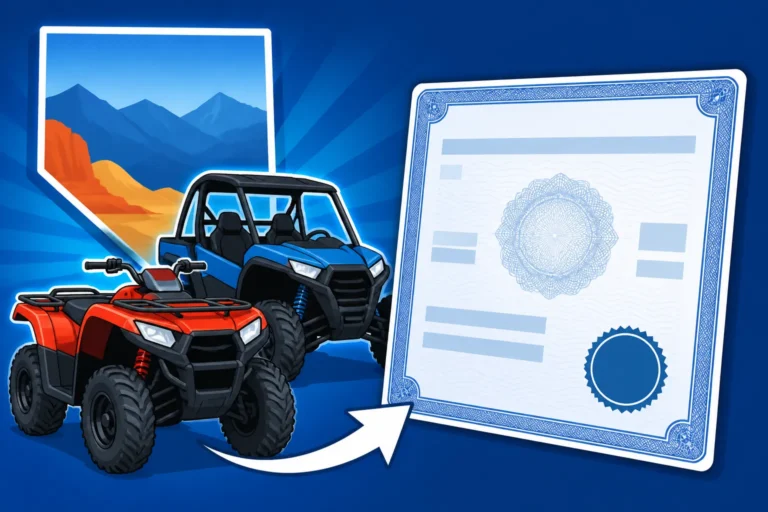
The process at a dealership is typically straightforward. You'll bring your OHV along with its title or bill of sale. A qualified member of their staff will physically inspect the vehicle, compare the VIN stamped on the frame to your ownership documents, and then complete the official Nevada OHV VIN Inspection Certificate (Form OHV-002, or a similar state-approved form). This form will then be signed by the authorized inspector, providing the crucial piece of documentation you need to complete your [Nevada OHV Registration Paperwork Checklist] at the DMV. While there might be a small fee for this service (as it takes their time and resources), it's generally a smooth and efficient way to get this critical step done.
Sworn Law Enforcement Officers: An Alternative for Certain Situations
What if you're not near a licensed OHV dealer, or your machine isn't easily transportable to one? This is where a sworn law enforcement officer can become your alternative. While less common for routine inspections, county sheriffs, city police officers, and Nevada Highway Patrol troopers are authorized to perform VIN verifications. This option is particularly useful for individuals in rural areas, those with non-operational machines, or if you simply can't find an accessible dealer.
The process of [Asking a Sworn Officer to Verify a VIN] typically involves contacting your local law enforcement agency's non-emergency line or visiting their station to inquire about a VIN inspection. Be prepared to bring your OHV and all its associated ownership documents (title, bill of sale, etc.) to a designated location, or in some cases, an officer might be dispatched to your residence if the vehicle cannot be moved. The officer will then conduct a physical inspection, verifying the VIN on the machine against your paperwork, and sign off on the appropriate state form. It's important to be polite and patient, as these officers have many duties, and an OHV VIN inspection might need to be scheduled around their other calls.
While law enforcement officers are authorized, there can be some limitations. Their primary training is not specifically in OHV mechanics or identification, so while they can verify numbers, they might not have the same specialized knowledge as an OHV dealer regarding obscure VIN locations or particular model details. Availability can also be a factor; in smaller towns, it might be easier to get an officer to assist, while in larger cities, you might face longer wait times. Nevertheless, it's a valid and important alternative, ensuring that even remote owners or those with specific logistical challenges can still meet the VIN inspection requirement for registration.
Navigating the VIN Inspection Process
Now that you know who can perform the inspection, let's walk through what the process actually entails. Being prepared can make all the difference, turning a potential bureaucratic headache into a quick checkmark on your path to trail adventure. From gathering your documents to knowing what the inspector is looking for, a little forethought goes a long way.
Preparing Your OHV for Inspection
Before you even think about calling a dealer or law enforcement, you need to get your off-highway vehicle ready. This isn't about giving it a wash, though a clean machine never hurts! It's primarily about making the VIN readily accessible and having all your paperwork in order. The Vehicle Identification Number is almost always stamped directly onto the frame of the machine. Its exact location can vary wildly between manufacturers and models. On ATVs, it's often on the lower left side of the frame near the footpeg or front wheel, or sometimes on the steering neck. For UTVs, it could be on the frame near one of the wheel wells, under a seat, or even in the engine compartment. Take some time to locate your VIN before the inspection appointment. Consult your owner's manual if you're having trouble.
Once you've found the VIN, ensure it's clean and clearly visible. Years of dust, mud, and trail grime can obscure it, making the inspector's job difficult. A quick wipe-down with a rag might be all it takes. If the VIN is in a particularly tight spot, think about how you can best present it to the inspector – perhaps even having a flashlight handy. Beyond the physical machine, gathering all your necessary documentation is paramount. This includes the original Certificate of Title (if you have one), the bill of sale, especially if you recently bought the machine from a private seller, and any other proof of ownership you possess. It’s a good idea to have a clear and detailed [What a Nevada ATV Bill of Sale Should Carry] for any private purchases, as this document is crucial for proving the transfer of ownership and verifying the VIN.
The Inspection Itself: What the Inspector Looks For
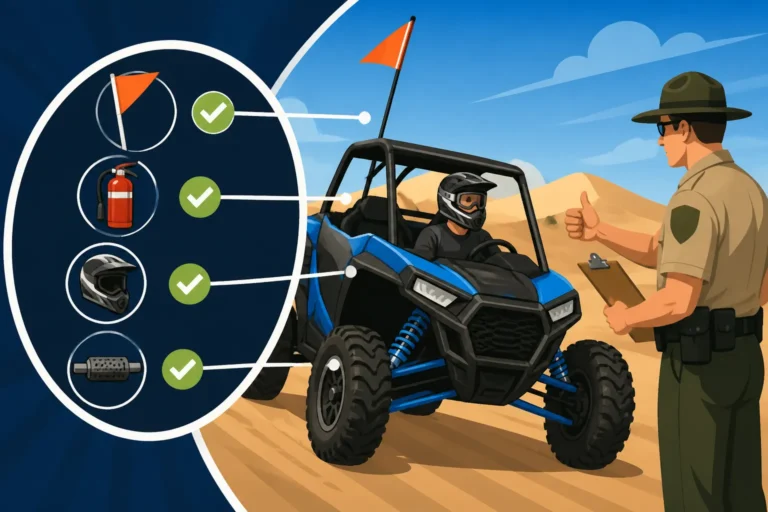
When the authorized inspector (be it a dealer technician or a law enforcement officer) arrives or you bring your machine to them, they will perform a thorough, albeit quick, examination. The core of the inspection is a direct comparison: they will meticulously match the VIN stamped on your off-highway vehicle's frame to the VIN printed on your ownership documents. This is a critical step to ensure that the machine you're registering is the same one legally described on your title or bill of sale. Any discrepancy, even a single digit, can halt the process and require further investigation.
Beyond simply matching numbers, the inspector will also be looking for any signs of tampering or alteration to the VIN. This is a crucial measure against stolen vehicles. If the VIN appears to have been scratched, altered, or replaced, it will raise a red flag. They will also verify the basic descriptive information of the machine, such as its make, model, and year, to ensure it aligns with the documentation. While they won't typically perform a mechanical inspection for roadworthiness (because, remember, it's an off-highway vehicle), they will confirm the general type of machine. If you've used a template for your bill of sale, perhaps from a resource like LawDepot, ensure all fields related to the VIN and vehicle description are accurately completed to avoid any misunderstandings during this verification step.
After the Inspection: What Happens Next
Once the inspection is complete and successful, the authorized inspector will complete and sign the official Nevada OHV VIN Inspection Certificate. This document is your golden ticket to the next step of registration. It confirms that a qualified individual has visually verified the VIN on your machine and found it to match your ownership papers, with no signs of tampering. Make sure you get the original signed document, as a photocopy might not be accepted by the DMV.
With your freshly signed VIN inspection certificate in hand, you're now ready to submit your full registration packet to the Nevada DMV. This packet will typically include your completed registration application (Form OHV-001 or OHV-003, depending on your situation), the original or certified copy of your title (or the completed title application if you're titling it for the first time), your bill of sale, and now, your VIN inspection certificate. Always double-check your [Nevada OHV Registration Paperwork Checklist] before heading to the DMV to ensure you haven't missed anything. Remember, the DMV's role here is administrative – they're processing the paperwork that you have provided, including the verification performed by someone else. Once all documents are submitted and fees are paid, you'll soon receive your Nevada OHV decal, signaling that you're legal to ride the trails.
Common Challenges and Troubleshooting
Even with the right information, the VIN inspection and registration process can sometimes throw curveballs. Old machines, out-of-state purchases, or simply misunderstandings can lead to delays. Being aware of these potential pitfalls and knowing how to troubleshoot them can save you a lot of grief and ensure your journey to the trails stays on track.
Missing or Illegible VINs
One of the trickiest situations you might encounter is a missing or illegible VIN. This is particularly common with older off-highway vehicles that have seen many years of hard use, rust, or damage. The VIN, being stamped on the frame, can become obscured by paint, corrosion, or physical deformation. Discovering that your machine's VIN is unreadable can feel like a dead end, but rest assured, there are procedures in place to handle these situations, even if they add an extra layer to the process.
If you cannot find or clearly read the VIN, your first step should be a thorough cleaning of the suspected VIN areas. Use a wire brush or fine sandpaper to carefully remove any rust or paint, but be extremely cautious not to damage the underlying numbers. If, after all your efforts, the VIN remains illegible or is clearly missing, you'll need to explain this to your chosen inspector (dealer or law enforcement). They will note the issue, and you'll likely need to apply for a VIN assignment from the Nevada DMV. This process, which usually involves paying [What the $2 VIN Assignment Fee Buys], means the DMV will issue a new, unique VIN to your machine and provide a small metal plate to affix to it. This ensures that every OHV on Nevada trails has a traceable identity, even if its original VIN has vanished with time and wear. It's a testament to Nevada's commitment to tracking these machines, even when their history is a bit murky.
Out-of-State Purchases and Their Unique Inspection Needs
Buying an OHV from a neighboring state like Arizona, Utah, or California is incredibly common for Nevada residents. The vast off-road culture across the Southwest often means finding the perfect machine might require a road trip. However, these out-of-state purchases often come with their own specific set of VIN inspection and registration requirements, adding a layer of scrutiny to ensure everything is legitimate. The state wants to be absolutely sure that the vehicle wasn't stolen from another state and that its previous title or registration is valid.
When you're [Registering an Out-of-State Machine in Nevada], the VIN inspection becomes even more crucial. The inspector will not only verify the VIN on the machine against the out-of-state title but will also closely examine the title itself for any signs of alteration or irregularity. Different states have different title formats, and an experienced inspector will be familiar with these variations. It's also important to have a complete and accurate bill of sale, especially if the machine was purchased privately. Resources like LawDepot can provide customizable bill of sale templates that can be adapted to ensure all necessary details are captured, protecting both buyer and seller. Having all your paperwork in pristine order and being able to clearly trace the machine's ownership history from the previous state will greatly assist in a smooth inspection and registration process.
Dealers Charging for Inspections and Why
It's a common question: if a dealer is helping me register, why do they charge a fee for the VIN inspection? It’s important to understand that while dealers are authorized to perform these inspections, it's a service that requires their time, expertise, and resources. Unlike the state DMV, which is a government entity funded by taxes and registration fees, a private dealership operates as a business. They incur costs for staffing, maintaining their facilities, and staying compliant with state regulations.
Therefore, it's perfectly legitimate for a licensed OHV dealer to charge a fee for conducting a VIN inspection. This fee compensates them for the time their trained personnel spend physically examining your machine, verifying the VIN, and accurately completing the required state forms. Think of it like any other service they provide, whether it's an oil change or a tire repair. The fee isn't arbitrary; it covers their operational expenses and ensures they can continue to offer this valuable service to the OHV community. This is distinct from [What Nevada's $2 Dealer Submission Fee Pays For], which is a separate administrative fee that some dealers might charge for handling the submission of your completed registration paperwork to the DMV on your behalf. Always ask about any inspection fees upfront so you know exactly what to expect before you bring your OHV in.
Ensuring a Smooth Nevada OHV Registration
Beyond the VIN inspection, a smooth OHV registration process in Nevada requires a holistic approach. It's about being diligent with your paperwork, understanding deadlines, and thinking about long-term compliance. Avoiding common pitfalls can save you from unnecessary fines, delays, and a lot of frustration when you're just eager to get out and ride.
The Importance of Accurate Paperwork
Paperwork, paperwork, paperwork. It might be the least exciting part of owning an OHV, but it's arguably the most critical for legal and hassle-free riding. The Nevada DMV is a stickler for accuracy and completeness, and for good reason. Every piece of information on your registration application, title application, bill of sale, and VIN inspection certificate needs to be correct and consistent. Even a small typo or a missing signature can lead to your application being rejected, sending you back to square one.
Before you submit anything, take the time to meticulously double-check every form. Ensure all VINs match across all documents, names are spelled correctly, addresses are up-to-date, and all required fields are filled out. If you're using a bill of sale for a private purchase, consider using a reputable template from a service like LawDepot. These templates are designed to include all the legally necessary information, reducing the chance of oversight. Imagine arriving at the DMV, waiting in line, only to be told you missed a signature or a box. It's frustrating, to say the least! By being thorough upfront, you save yourself precious time and multiple trips, getting you one step closer to [Buying a Used ATV Privately in Nevada] without future headaches.
Timing Your Registration and Avoiding Delays
Nevada has specific timelines for registering your newly acquired off-highway vehicle, and it's essential to respect them. Ignorance of these deadlines won't spare you from the consequences, which can include late fees and even citations if you're caught riding an unregistered machine. The state generally gives you [Nevada's Thirty-Day Registration Deadline] from the date of purchase to complete the registration process. This means securing your VIN inspection, gathering all documents, and submitting them to the DMV within that window.
Don't procrastinate! While 30 days might seem like ample time, getting an inspection scheduled, especially with a busy dealer or an available law enforcement officer, can take a few days. Then you need to account for potential DMV processing times. If you miss this deadline, you could be hit with [Nevada's $10 Late Fee on an Expired OHV Decal] or registration. This isn't just about avoiding a small fee; it's about staying legal. Riding an unregistered OHV, even if you just bought it, can lead to more significant fines if encountered by law enforcement on public lands. Be proactive, schedule your inspection early, and submit your paperwork well within the 30-day grace period to ensure continuous compliance and peace of mind.
Beyond Registration: Ongoing Compliance
Getting your initial registration and decal is a significant achievement, but it's just the beginning of your journey as a responsible OHV owner in Nevada. Off-highway vehicle registration isn't a one-and-done affair; it requires ongoing attention to remain compliant. Your Nevada OHV decal isn't just a sticker; it’s proof that you’ve met the state’s requirements, and it has an expiration date.
You'll need to remember to [Renewing a Nevada OHV Decal] periodically. Nevada offers both one-year and three-year registration options, so make a note of your decal's expiration date in your calendar. The state typically sends out renewal reminders, but these can sometimes get lost in the mail or overlooked. Proactive renewal prevents lapsed registration and avoids those pesky late fees. Furthermore, understand [What a Nevada OHV Decal Actually Proves]. It's not just a registration, but also serves as your de facto trail permit for most public lands in Nevada. Keeping your registration current ensures you always have the legal right to enjoy the fantastic trail systems and open riding areas across the state. Using a service like LawDepot to organize and store digital copies of your ownership documents and registration records can be a smart move, giving you easy access to proof of ownership should you ever need it, whether for renewal or in the event of a lost physical document.
| Inspection Service Provided By | Best For | Typical Scenarios | What to Bring | Potential Cost |
|---|---|---|---|---|
| Licensed OHV Dealer | Most OHV owners, new or used machines | New purchases, transfers of ownership, out-of-state machines | OHV, Title/Bill of Sale, ID | Dealer service fee (check upfront) |
| Sworn Law Enforcement Officer | Remote areas, non-operational machines, specific circumstances | Inaccessible dealers, unique VIN situations, rural locations | OHV, Title/Bill of Sale, ID | Usually no fee (check locally) |
| Nevada DMV (for OHVs) | N/A – they do not perform these inspections | NOT APPLICABLE | N/A | N/A |
Disclaimer
This article is for general informational purposes only and does not constitute professional advice. Laws, prices and regulations vary by location and change over time. Consult a qualified professional for guidance on your specific situation.