Riding the Street in Mesquite
Oh, the dream of just hopping on your UTV from your rental home in Mesquite and cruising straight to the trailhead! It sounds idyllic, doesn't it? But then reality hits, and you start wondering, "Is that even legal? What are the rules here in Mesquite, specifically?" It's a common frustration, especially when you see other riders seemingly doing it, but you're not sure if they're following the rules or just getting lucky. This guide is here to clear up that confusion, diving deep into how you can legally and safely ride your ATV or UTV on the streets of Mesquite, Nevada, without getting sideways with local law enforcement.
Mesquite's Unique Stance on OHV Street Riding
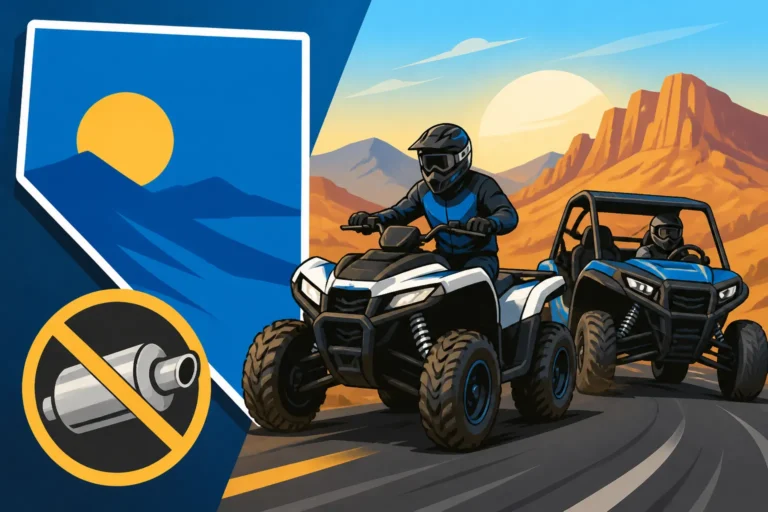
Mesquite, Nevada, truly stands out in the landscape of off-highway vehicle (OHV) friendly communities. While many cities, even those in prime riding country, have stringent ordinances that push OHVs onto trailers the moment they approach city limits, Mesquite has a reputation for being much more accommodating. This isn't just a rumor; it's often a deliberate choice by the city to embrace the OHV lifestyle, recognizing the economic and recreational benefits that riders bring.
However, "accommodating" doesn't mean "anything goes." It means there are specific rules and designated routes you must understand and follow. Mesquite has, in many ways, carved out a niche as an OHV destination where riders can experience a blend of convenience and adventure. Imagine being able to ride directly from your hotel or a local restaurant to the vast network of desert trails that surround the city. This level of access is a huge draw for the OHV community, but it's critically important to remember that this privilege comes with responsibilities. Cities like Mesquite, unlike the much larger urban centers of Las Vegas or Reno, often have a different philosophy when it comes to integrating recreational vehicles into their street networks. This local flexibility is often enabled by state law, which gives counties and cities some leeway in regulating OHV use on their minor roads, provided they don't conflict with core state statutes.
The ability to ride directly from town to trail is a game-changer for many, eliminating the hassle of loading and unloading a machine from a trailer, finding parking at a crowded trailhead, or dealing with expensive fuel costs for a tow rig. It transforms a day of riding into a seamless experience, allowing you to maximize your time on the dirt. This open-minded approach by Mesquite is what sets it apart, offering a genuine benefit to the riding community that often feels restricted in other areas. But remember, this convenience relies entirely on riders understanding and respecting the local framework that makes it possible.
Navigating Nevada's "Large ATV" Rules within Mesquite
The foundation of street legality for OHVs in Mesquite, and indeed across much of Nevada, rests squarely on the state's definition of a "large ATV." This isn't just a casual term; it's a specific classification under [What Nevada's NRS 490.043 Counts as a Large ATV]. Essentially, Nevada law differentiates between traditional ATVs (quads) and larger utility terrain vehicles (UTVs or side-by-sides) for the purposes of street use. For your machine to even be considered for street riding, it generally needs to be a UTV with either four seats or a truck bed. This distinction is vital because, unfortunately for quad riders, a two-seat sport quad almost universally [Why a Two-Seat Sport Quad Fails Nevada's Test] to meet this "large ATV" criteria for street legality.
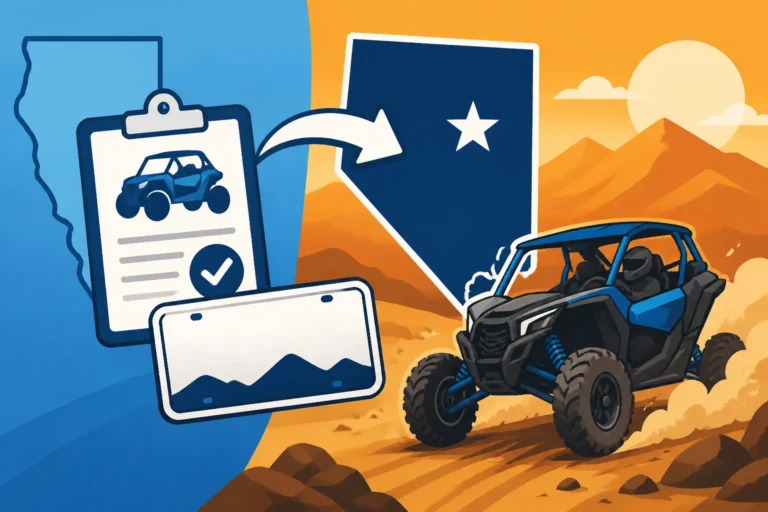
Once your machine falls into the "large ATV" category, you then need to secure the special [Nevada's Large All-Terrain Vehicle Decal]. This decal is what officially designates your UTV as street-legal for approved roads. But here's where Mesquite's local touch comes in: while the state sets the broad framework, individual counties and cities get to decide which of their minor county roads are open to these registered large ATVs. Mesquite has taken advantage of this flexibility, actively designating certain city streets as open for OHV travel. These designated routes often serve as crucial connectors, allowing riders to transition from the city proper directly to the extensive network of Bureau of Land Management (BLM) trails and other off-highway areas surrounding Mesquite. It's not a free-for-all across every street, but rather a thoughtfully planned system of thoroughfares.
When you're riding in Mesquite, it's not enough to just have the right decal; you must also be aware of the specific streets that are open to OHVs. You'll often see signage indicating these designated routes. This is where the local ordinance comes into play, expanding upon the state’s general guidelines to create a practical, navigable network for riders. Additionally, the state's famous "2-mile rule" for crossing state highways still applies even within Mesquite's more permissive environment. This means that while you might be able to ride on a designated city street, if that street crosses a major state route, you are typically limited to traveling no more than two miles along or across that state route to connect to another designated OHV path. Understanding this nuance is key to truly enjoying Mesquite's street access without running afoul of the law. Local riders often know these routes like the back of their hand, allowing them to ride [Riding to the Trailhead, Not to the Store] with ease. This combination of state-level classification and local-level designation is what makes [Mesquite and Its Reputation for Open Streets] possible, but it requires diligent homework from the rider to stay compliant.
Mandatory Equipment and Rider Credentials for Mesquite Roads
So, you've got a UTV that qualifies as a "large ATV" and you're ready to hit Mesquite's designated streets. That's a great start, but it's only half the battle. Just like any other vehicle on a public road, your UTV needs to meet specific equipment standards to be considered street legal in Nevada, regardless of how OHV-friendly Mesquite might be. This isn't just about safety; it's about compliance with state law, which Mesquite's local ordinances build upon.
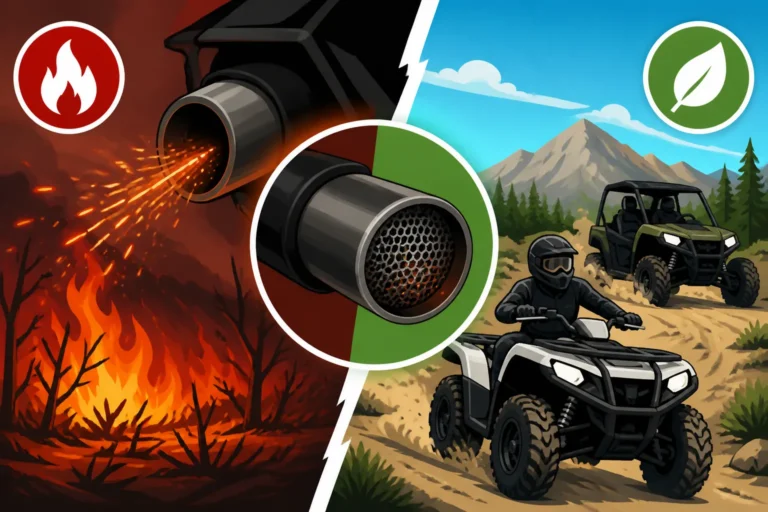
The [Nevada Street Legal UTV Requirements] are comprehensive. Your machine must be equipped with working headlights that are visible for at least 500 feet, taillights, and a functional stop lamp that illuminates when you hit the brakes. Reflectors are also a must, positioned on the front and rear, and often the sides. You'll need a horn, capable of being heard from a distance, to signal your presence to other drivers. Mirrors are critical for visibility; most UTVs will need both a left-hand side mirror and an interior rearview mirror, or two exterior mirrors. Of course, if your UTV came with seat belts, they must be worn by all occupants. Furthermore, your exhaust system needs a spark arrester to prevent wildfires – a non-negotiable in the dry Nevada climate – and a muffler that keeps noise levels within legal limits. Many riders turn to aftermarket solutions like those from SuperATV for these compliance items, easily adding mirrors, horns, or even full turn signal kits to meet the criteria.
Beyond the machine itself, the person behind the wheel also has requirements. To legally operate a UTV on any public road in Nevada, including Mesquite's designated streets, you must possess a valid driver's license. [Nevada Driver's License Rules for UTV Road Use] are clear on this point; a learner's permit won't cut it. While there are rules for younger riders on off-road trails, the public road environment is held to the same standards as any other motor vehicle. When it comes to passengers, remember that anyone riding in your UTV on public roads must be seated in a designated seating position and wear a seatbelt, if available. [Kids in the Back Seat of a Side-by-Side] also need to be appropriately restrained, just as they would be in a regular car.
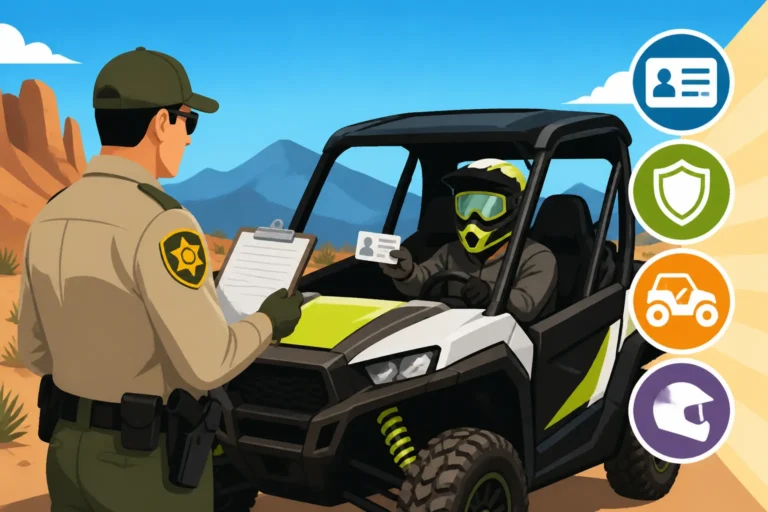
Finally, and this is a big one, liability insurance is absolutely mandatory. Nevada law, specifically [Liability Insurance Nevada Requires Under NRS 485.185], dictates that any motor vehicle operated on public roads must be covered by a minimum level of liability insurance. This isn't just a good idea; it's a legal requirement that protects you and others in the event of an accident. When you’re pulled over, whether by a Mesquite city police officer or a county sheriff, they'll check for this proof of insurance, your driver's license, and your large ATV decal. Ensuring you have all these ducks in a row before you even think about hitting the pavement is non-negotiable for a hassle-free ride.
Practical Considerations and Responsible Riding in Mesquite
Now that we’ve covered the legalities and equipment, let's talk about actually riding your UTV on the streets of Mesquite. It’s an awesome experience to be able to ride from your lodging straight to the dirt, but it comes with a responsibility to operate safely and respectfully within the community.
First and foremost, safety is paramount. Even on designated OHV routes in Mesquite, you are sharing the road with cars, trucks, and other conventional vehicles. UTVs handle differently than cars, often having higher centers of gravity and different braking characteristics. Always drive defensively, assume other drivers might not see you, and obey all traffic laws, including speed limits, stop signs, and signals. Use your turn signals (another common SuperATV upgrade) and hand signals to clearly communicate your intentions. Being highly visible is key, so consider bright colors for your machine and riding gear, especially if riding during dawn or dusk.
Next, know your routes. Mesquite might be OHV-friendly, but that doesn't mean every street is fair game. Before you head out, familiarize yourself with the city's designated OHV routes. Many local businesses or visitor centers might have maps, or you can check the city’s official website for ordinances and maps of approved roads that connect to the surrounding BLM land. Sticking to these routes avoids potential fines and keeps the peace with residents. Remember, the goal is to ride to the trailhead, not to cruise through residential neighborhoods or shopping centers where OHVs are not permitted.
Always have your paperwork on hand. When you're stopped by law enforcement—and it happens, especially if they're checking for compliance—you’ll need your valid driver’s license, your UTV’s registration, and proof of insurance. It's a good practice to keep these documents in a waterproof bag or container, as dusty trails and unexpected weather can easily damage paper. [Keeping Paperwork Dry in a Dusty Machine] is a small step that can save a big headache. [Carrying a License on a County Road Ride] is just as important as it is in your regular vehicle.
Respect for residents and the environment goes a long way in maintaining Mesquite’s OHV-friendly status. This means keeping noise to a minimum, especially in residential areas. Avoid creating excessive dust near homes, and always stick to marked trails and routes once you leave the paved roads. Remember that many people live and work in Mesquite, and courteous riding helps ensure that these privileges aren't revoked.
Finally, understand what to expect from law enforcement. If you’re pulled over by a Mesquite police officer or a county deputy, remain calm and cooperative. They are typically checking for the appropriate [Applying for a Nevada Large ATV Decal], valid driver's license, and proof of insurance, along with required equipment like mirrors and a horn. They’ll be looking for the street-legal components on your machine. [What a Nevada Trooper Looks For on a County Road] isn't much different than what any other law enforcement officer would look for: compliance and safety. Having all your documentation in order and your machine properly equipped will make any stop quick and uneventful, allowing you to get back to enjoying your ride. Mesquite is truly a fantastic place for OHV enthusiasts, and by following these guidelines, you can contribute to a positive riding environment for everyone.
Disclaimer
This article is for general informational purposes only and does not constitute professional advice. Laws, prices and regulations vary by location and change over time. Consult a qualified professional for guidance on your specific situation.