Riding Sand Mountain on a Utah OHV Sticker
A Utah OHV sticker may be enough for a Sand Mountain ride, but it depends on the machine’s registration status and how long it is in Nevada. The key is not simply where you live: Nevada’s exception applies to an OHV registered or certified in another state and located in Nevada for a limited period. Here’s how to check whether your trip fits.
Does a Utah OHV sticker let you ride Sand Mountain?
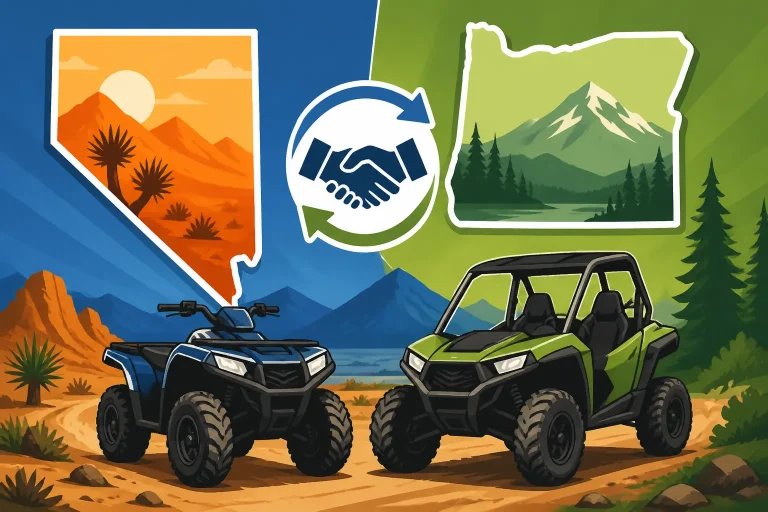
It can, if the sticker represents a valid Utah registration or certification and your machine meets Nevada’s out-of-state exception. According to Off Road Nevada, an OHV registered or certified in another state does not need Nevada registration if it is located in Nevada for not more than 15 days.
That rule is about the machine’s status and time in Nevada. A Utah address, Utah driver’s license, or Utah plate on a tow vehicle does not by itself establish that the OHV qualifies. The useful question is whether your particular machine is currently registered or certified in Utah, and whether it will remain in Nevada within the exception’s time limit.
A sticker on the machine is helpful evidence, but don’t rely on appearance alone if you’re unsure whether it is current or what type of authorization it represents. Check the Utah paperwork and, if the status is unclear, confirm with the appropriate registration office before heading out. Nevada’s reciprocity details are also covered in Nevada Reciprocity With Utah and Riding Nevada on a Utah Registration.
| Your situation | What to check |
|---|---|
| Current Utah registration or certification, short Nevada visit | According to Off Road Nevada, the exception applies when the out-of-state OHV is located in Nevada for not more than 15 days. |
| Utah sticker is expired, missing, or its status is uncertain | Confirm that the machine is currently registered or certified in Utah; don’t assume an old decal proves current status. |
| The machine will be in Nevada beyond the exception | According to Off Road Nevada, Nevada registration is required outside the exception. |
| You’re unsure whether a sticker counts as registration or certification | Verify what the Utah document represents and ask Nevada’s DMV OHV Unit if you still have a question. |
This is a registration question, not a blanket guarantee that every Utah OHV sticker is accepted in every circumstance. Nevada’s stated exception refers to vehicles registered or certified in another state. If your Utah paperwork does not clearly show that, get an answer before riding rather than trying to settle the issue at a trailhead.
For a visitor-oriented overview, see Do Nonresidents Need a Nevada OHV Decal?. If you are planning a longer stay, Nevada’s 15-Day Window for Out-of-State Machines explains the time limit in more detail.
How the 15-day Nevada exception works
The exception turns on how long the OHV is located in Nevada, not just how long you personally ride it. If you bring the machine into Nevada, leave it there while traveling elsewhere, and return later, don’t assume the days you were away automatically make the situation exempt. The rule supplied by Off Road Nevada describes the machine as being located in Nevada for not more than 15 days; ask the Nevada DMV OHV Unit how to count your circumstances if the schedule is close or complicated.
A practical way to avoid confusion is to record when the machine arrives and when it leaves. Keep that information with the Utah registration or certification. It is especially useful if you are traveling with a group, sharing a trailer, or leaving an OHV at a Nevada property between rides.
Do not confuse the time limit with a 15-day riding allowance that starts each time you unload the machine. The available rule says the vehicle must be located in Nevada for no more than 15 days. It does not describe repeated resets for each ride or each visit to a different riding area. If your plans involve multiple stops or a longer stay, ask the DMV OHV Unit to confirm how the exception applies before you rely on it. You can also read When a Visitor’s 15 Days Start Counting and What a Visitor Does After 15 Days in Nevada.
If the vehicle will be in Nevada longer than the exception allows, plan on Nevada registration rather than assuming the Utah sticker will remain sufficient. According to Off Road Nevada, annual OHV registration costs $20.00 as of November 2026. The relevant registration process and paperwork can depend on the machine and your circumstances, so confirm the current requirements with the Nevada DMV before sending an application or making travel plans. Nevada OHV Registration and Proof of Ownership is useful if you need to understand what documents support your registration status.
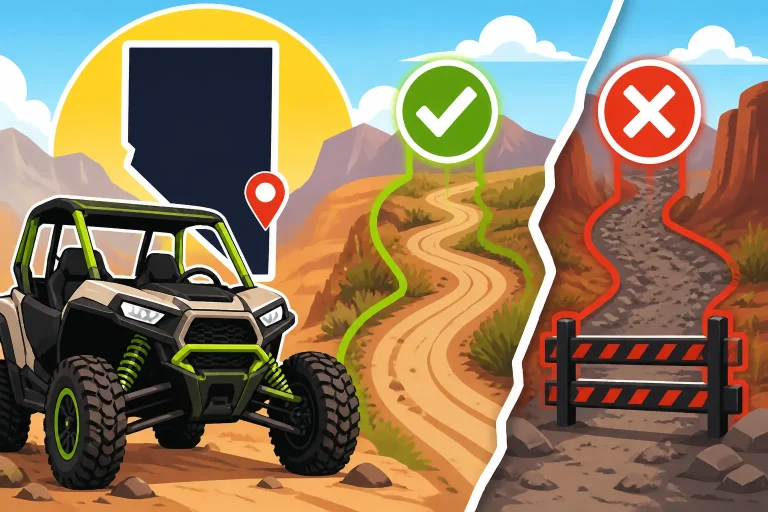
Also keep the distinction clear between the OHV’s registration and any other site-specific requirements. Having an accepted registration does not establish that a route is open, that a particular area has no separate access conditions, or that your machine can use every trail. Before departure, check current access information and local conditions. For Sand Mountain planning, Sand Mountain Day Use Hours and Nevada Trail Closures to Check Before You Go are relevant next steps.
What to check before you leave for Sand Mountain
A quick paperwork check at home can prevent an avoidable delay once you arrive. Gather the documents that establish what the Utah sticker means, then make sure the dates and identifying information match the machine you plan to ride.
Use this checklist:
- Confirm the Utah authorization is current. Check the registration or certification document, not just the decal’s appearance. Make sure it belongs to the OHV you are bringing.
- Check the Nevada timeline. Work out how long the machine will be located in Nevada. According to Off Road Nevada, the exception applies only when that period is not more than 15 days.
- Keep proof with the machine. Carry the Utah registration or certification paperwork where it can be produced if asked. A clear photo can be useful as a backup, but do not treat it as a substitute for required original documents unless the relevant agency confirms that it is acceptable.
- Match the paperwork to the vehicle. Check that the vehicle identification details on the documents correspond to the machine. If you cannot establish that connection, resolve it with the Utah issuing authority or Nevada DMV before traveling.
- Check the route and area separately. Registration does not answer whether a particular route is open or appropriate for your machine. Review current local information and stay on designated routes and trails. OFF-ROAD Nevada advises OHV users to stay on designated routes to help limit the spread of weeds.
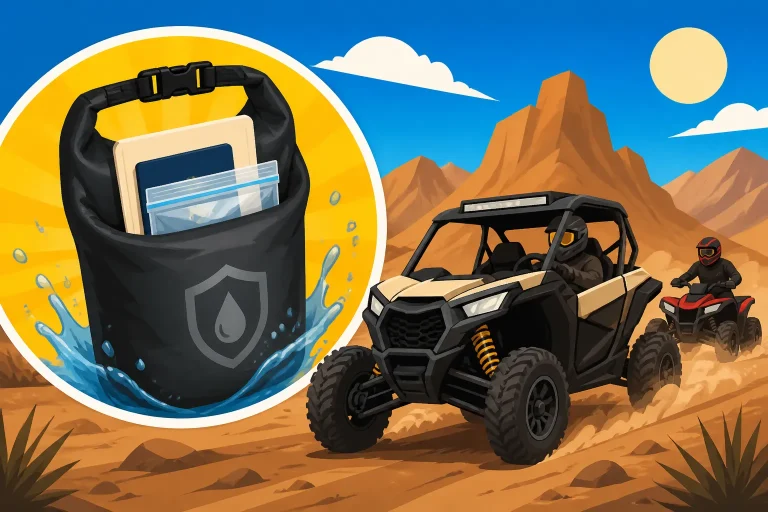
- Make the paperwork easy to protect. Dust, water, and repeated handling can make documents hard to read. A sealed document pouch can help keep copies together; if you shop for one on Amazon, choose a size and closure that fit your papers and riding gear.
If you are riding in desert habitat, be alert before moving your machine. OFF-ROAD Nevada advises users to look underneath their tires for desert tortoises before moving an OHV. It also says desert tortoises are protected as a threatened species under the federal Endangered Species Act, and that harassing or harming one is illegal. Staying on designated routes helps reduce the risk of disturbing wildlife and damaging sensitive areas.
Sand Mountain itself is only one part of the planning. Consider where you will park, how you will transport the OHV, and what you will do if paperwork or access conditions differ from what you expected. Keep registration documents accessible without leaving them loose in dust or exposed to weather. For riding-area practices, Staying on Sand Mountain’s Marked Trails can help you prepare.
If your trip exceeds the exception or your status is unclear
If the OHV will be in Nevada longer than the allowed period, or you cannot verify that its Utah sticker reflects current registration or certification, do not assume the exception applies. Contact the Nevada DMV OHV Unit before the trip and ask what Nevada registration or documentation is needed for your exact situation. The DMV OHV Unit’s registration-information phone number is 775.684.4381, according to the Nevada Off-Highway Vehicles Program.
For a vehicle that needs Nevada registration, Off Road Nevada says registration must be completed within 30 days of purchase from a dealer or private party. That purchase deadline is separate from the out-of-state visitor exception: it does not extend the time an out-of-state OHV may be located in Nevada without Nevada registration. If your visit is approaching the exception’s limit, get instructions early rather than relying on a last-minute application.
The Nevada DMV says registration and title processing may experience a backlog taking up to 30 days. That makes it sensible to ask about the process well before travel if your machine needs to be registered, rather than assuming paperwork will be resolved immediately. Nevada OHV registrations are handled through the DMV OHV Unit by mail, according to the Nevada Off-Highway Vehicles Program.
If you are comparing your options, the main point is straightforward: a valid Utah registration or certification may allow a short visit under Nevada’s out-of-state exception, but the sticker should be supported by current paperwork and the machine must meet the time limit. When either part is uncertain, verify the details with the agencies before riding. That is more reliable than treating a decal by itself as proof that every Nevada requirement has been met.
Sources
- Off Road Nevada — Frequently asked questions about off-highway vehicle registration in Nevada | Off Road Nevada (checked November 3, 2026)
- Nevada Off-Highway Vehicles Program — Off-Road Nevada | OFF-ROAD Nevada (checked November 3, 2026)
- Department of Motor Vehicles — Register your Off-Highway Vehicle | Off Road Nevada (checked November 3, 2026)
Disclaimer
This article is for general informational purposes only and does not constitute professional advice. Laws, prices and regulations vary by location and change over time. Consult a qualified professional for guidance on your specific situation.