Carrying Documents in a Dry Bag
A torn registration card, a phone with a dead battery, or a document soaked in a sudden storm can turn a simple Nevada ride into a paperwork problem. A small dry bag helps keep essential proof readable and within reach. Here’s what to carry, how to organize it, and why a phone photo is useful backup—but not a substitute for checking what proof is accepted.
What to Carry on a Nevada ATV or UTV Ride
The right documents depend on your machine, how it is registered, and where you are riding. For a typical ride, start with the paperwork that shows the machine is properly registered or otherwise allowed to operate. Add identification and any documents relevant to your particular trip.
Nevada’s OHV registration decal also serves as the state’s riding permit. That does not mean the decal is the only item you should have with you. A registration card or other proof of registration can help explain the machine’s status during a check. The decal itself should be attached where required and kept legible. For background on the relationship between registration and riding authorization, see Nevada’s Registration Decal as Your Permit.
| Document or item | Why it may matter | Practical way to carry it |
|---|---|---|
| Registration card or other proof of registration | Helps show the machine’s registration status | Keep the original flat in a sealed inner sleeve |
| Photo identification | Helps confirm who is operating or responsible for the machine | Carry it separately from the vehicle documents |
| Out-of-state registration or decal information | May help establish the machine’s status as a visitor vehicle | Carry current registration proof and check Nevada’s visitor rules |
| Title or bill of sale | Useful for ownership questions, but not a replacement for registration proof | Carry a copy when relevant; store the original safely at home |
| Rental paperwork | Can identify the rental machine and explain the renter’s responsibilities | Keep the agreement or required rental documents accessible |
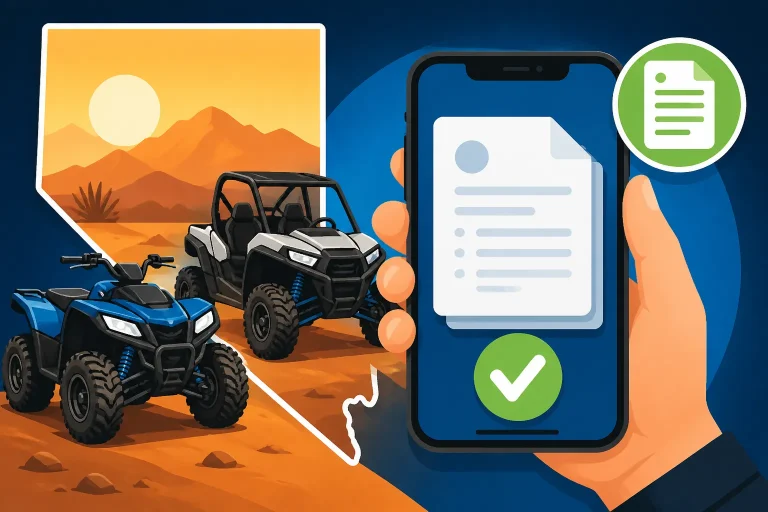
| Phone photo of documents | Useful backup if a paper copy is lost or damaged | Save offline and protect access to the phone |
Not every rider needs every item in the table. A rental customer, a Nevada resident, and a visitor riding a machine registered elsewhere may have different paperwork. Before leaving, check which requirements apply to your situation. Nevada OHV Registration Paperwork Checklist can help you identify the documents relevant to a Nevada registration.
For visitors, do not assume that a decal or registration from another state automatically settles every question. Reciprocity and exemptions can depend on the machine and the rider’s circumstances. Review Nevada OHV Reciprocity With Other States and Nevada’s 15-Day Window for Out-of-State Machines, then confirm current requirements before your trip.
A title and a registration card serve different purposes. The title is generally an ownership document; registration proof relates to the machine’s permission to operate under the applicable rules. For that reason, carrying a title alone may not answer a registration question. If you are unsure which documents apply, check the relevant state information before you ride rather than relying on a seller’s explanation or a document you happened to find in the glove box.
How to Pack Documents in a Dry Bag
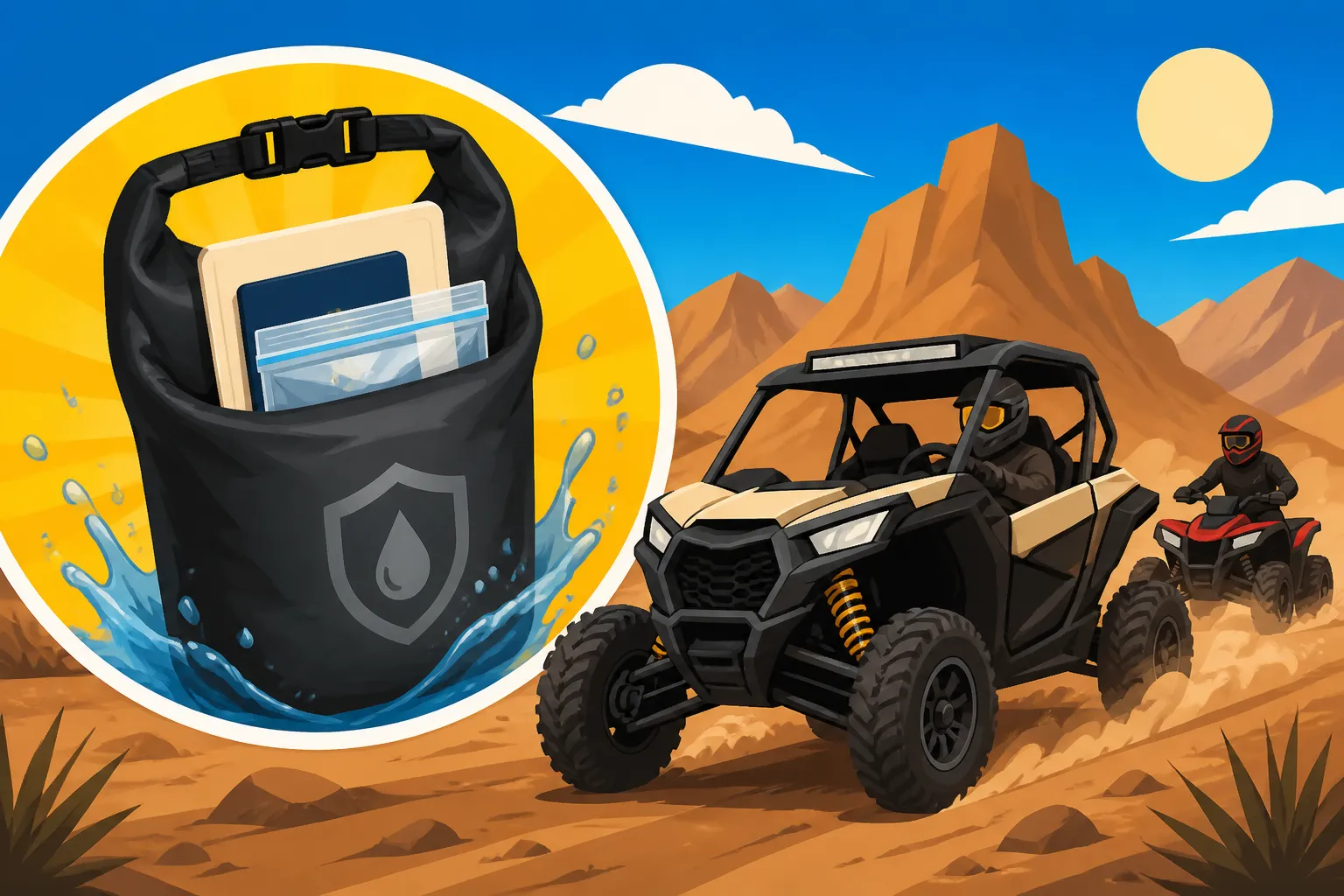
A dry bag is useful because desert riding can expose paperwork to dust, water crossings, sweat, spilled drinks, and rough handling. It does not need to be large. A compact bag that fits the documents without folding them sharply is usually easier to manage than a loose collection of papers in a seat pocket.
Choose a bag that closes securely and is easy to open with the gloves you normally wear. A roll-top style can be practical, but the closure only works if it is rolled and fastened correctly. Test it at home with a paper towel inside before trusting it with documents. If the bag leaks during the test, replace it or use an additional sealed sleeve inside.
A simple packing routine:
- Check the paperwork before you leave. Make sure the registration information is current and belongs to the machine you are taking. Confirm that the required decal is attached and readable.
- Protect the paper individually. Put the registration card or document in a clear, sealable sleeve before it goes into the dry bag. This gives you a second layer of protection if the outer bag gets wet or dusty.
- Keep the papers flat. Avoid folding them around tools, keys, or other hard objects. Creases can make a card harder to read, while loose items can damage it.
- Separate essentials from extras. Put the most relevant documents in an easy-to-reach inner pocket or sleeve. Keep a title or other ownership record separate if you decide it is useful to carry.
- Close the bag carefully. Remove excess air if the design calls for it, roll the opening as directed, and fasten the buckle or closure fully.
- Store it where it stays put. Secure the bag in a compartment or attach it to the machine using a reliable anchor point. Do not leave it loose where it can fall out on rough terrain.
- Check it during the ride. After a water crossing, heavy dust, or a stop where the bag was opened, make sure the closure is still secure and the documents remain dry.
A dry bag is not a safe for valuables. Avoid leaving it in plain sight when the machine is unattended, and do not put your only set of keys, cash, phone, and all paperwork together. If the bag is lost, you do not want every useful item to disappear at once.
Amazon is one place riders may look for small dry bags or document sleeves, but focus on the closure, size, and attachment method rather than a product label. A bag that is awkward to open or difficult to secure can be less useful than a simpler one that you can access without spreading papers across the machine.
Keep the documents away from fuel, sharp tools, and hot parts. A compartment may seem like the obvious place to store them, but heat, vibration, and debris can still cause problems. If the machine has no secure storage, a compact bag attached to a stable point or carried in a zipped riding pack can work. Make sure it cannot interfere with controls, movement, or a passenger.
Paper Copies, Phone Photos, and Roadside Checks
A phone photo is a helpful backup, particularly if paper gets wet or misplaced. Photograph both sides of the document if relevant, check that the text is legible, and save the image somewhere that can be opened without cell service. A photo stored only in a cloud account may be inaccessible in a remote area with no connection.
However, a photo should not be treated as a guaranteed replacement for any required physical document. What an officer or ranger will accept can depend on the document and the applicable rules. Keep the original paper proof with you when required, and use the photo as a backup rather than a reason to leave the original at home. Photos of Paperwork on Your Phone and Proving Registration Without the Card address the difference between useful backup and accepted proof.
Before a ride, take a moment to check that the phone is charged and the document image is easy to find. A screenshot or a clearly named album can be quicker to open than searching through a large camera roll. Use a passcode and consider privacy: your document image may contain personal information, so do not leave it open on the screen when you hand your phone to someone.
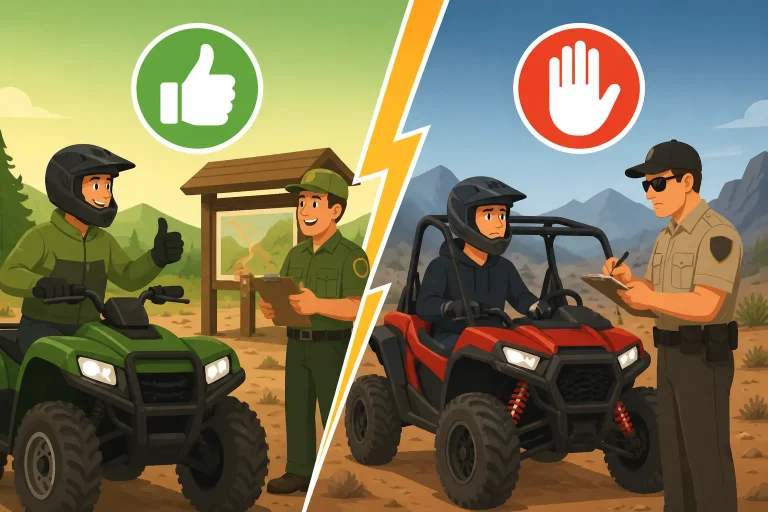
If someone asks to see paperwork, stay calm and retrieve it without rummaging through loose gear. Tell the officer or ranger what you have, then show the relevant document. Do not assume that every check is limited to the registration card. Depending on the location and the reason for the stop, the person checking may also ask about the machine, its decal, or whether the route is open to OHV use. What Rangers Accept as Proof explains why it is sensible to carry clear, accessible documents rather than relying on memory or a phone with no signal.
The paperwork does not make an otherwise closed route legal. Riders still need to confirm where they may operate, particularly on public land where routes, closures, and boundaries matter. See Nevada Rules for Riding Federal Land when planning a ride beyond a developed riding area.
A Pre-Ride Paperwork Check That Takes a Minute
Build the document check into the same routine as checking fuel, tires, lights, and safety gear. It is easier to catch a missing card at home than at a trailhead or during a roadside stop.
Use this short checklist:
- Confirm that the machine’s registration or other riding authorization is current and applies to that machine.
- Check that the decal is attached as required, visible, and readable.
- Put the relevant paper proof in a protective sleeve and then into the dry bag.
- Save a clear phone image for backup and make sure it is available offline.
- Carry identification and any rental documents that apply to the ride.
- Confirm visitor requirements if the machine is registered outside Nevada.
- Secure the dry bag so it cannot shift, fall out, or interfere with operation.
- Recheck the closure after opening the bag or riding through water or heavy dust.
If a document is missing, damaged, or does not match the machine, pause and resolve the issue before riding. A blurry photo or a card for a different vehicle may not help when someone needs to verify the machine’s status. If the original registration card is lost, find out how to replace it and what proof can be used in the meantime rather than assuming a phone image will be sufficient.
The goal is not to carry every paper connected to the machine. It is to protect the documents that are relevant, keep them easy to reach, and have a backup that still works when service is unavailable. A small, well-secured dry bag and a quick pre-ride check can prevent a wet or misplaced card from becoming the focus of the day.
Disclaimer
This article is for general informational purposes only and does not constitute professional advice. Laws, prices and regulations vary by location and change over time. Consult a qualified professional for guidance on your specific situation.