Sand Mountain Day Use Hours
Sand Mountain Recreation Area is generally open 24 hours a day, so riders do not usually need to arrive within a set daily gate schedule. That does not mean every facility, fee station, or riding area is available at all hours: temporary closures, habitat protections, weather, and posted rules can affect access. Here’s how to plan around the hours that matter.
Sand Mountain day-use hours at a glance
Is Sand Mountain open all day and night?
Sand Mountain Recreation Area, east of Fallon, is generally accessible 24 hours a day rather than operating like a staffed park with fixed opening and closing times. Riders may arrive early, stay into the evening, or camp overnight, subject to current access rules and any temporary closures.
The important distinction is that access to the recreation area is not the same as every service operating around the clock. A fee station, restroom, or other facility may have different arrangements, and services may be limited. Check posted notices when you arrive, and confirm current conditions before setting out from Fallon.
| What you’re checking | Practical takeaway |
|---|---|
| General area access | Generally open 24 hours, subject to closures and posted restrictions |
| Riding after dark | Do not assume every route or activity is permitted at night; follow signs and safety rules |
| Fee collection | Check current instructions at the site before riding |
| Restrooms and services | Facilities may not be staffed or available continuously |
| Camping | Overnight stays have their own rules; confirm the designated camping arrangements |
If your plans depend on arriving late, do not treat “open 24 hours” as a promise that every service will be available. Arrive prepared to follow the site’s fee instructions and manage without staffed help. The overview in [Sand Mountain Day Use Hours] is useful for the broad question, while [Sand Mountain's Six Vault Toilets] can help you plan around basic facilities.
What “day use” means at Sand Mountain
“Day use” can sound as if visitors must leave at dusk, but that is not necessarily what the term means at a recreation area. It commonly describes access for people using the site during a visit, as distinct from overnight camping arrangements. At Sand Mountain, check the current signs and fee information to understand which access applies to your trip.
That distinction matters if you plan to ride until late, return to camp, or meet friends who are arriving at different times. A day-use payment or instruction may cover a particular kind of visit, but it should not be assumed to include camping or every activity. Read the site information for the visit you are actually making.
Plan your arrival and riding time
Choosing a time to arrive
The area’s broad access hours give you flexibility, but your arrival time still affects how smoothly the day goes. Reaching the area from Fallon during daylight makes it easier to find the turnoff, follow posted directions, unload safely, and get oriented before you ride. If you are towing, give yourself extra time to park and secure your trailer without rushing.
For a dawn start, prepare in town the night before: fuel the tow vehicle and machine, pack water, and organize helmets, eye protection, and documents where you can reach them. For a late arrival, bring lighting that helps you unload without blinding other visitors. A headlamp or work light can be useful at camp, but it is not a substitute for the lighting and equipment required for riding after dark.
Sand Mountain’s scale also affects timing. A quick stop to look at the dunes can turn into hours of riding, especially when your group has different experience levels or keeps regrouping. Decide on a meeting point and a return time before anyone heads out. If you are new to the area, [Sand Mountain for a First Dune Trip] offers related planning considerations.
Riding into the evening
Being able to access an area at night does not automatically mean that every trail, route, or riding activity is allowed after dark. Follow posted restrictions, use equipment appropriate for night riding, and stay within routes open to your machine. Reduced visibility makes dune faces, other riders, and changing terrain harder to judge, so a route that feels familiar in daylight can become risky after sunset.
If your group is considering an evening ride, make the decision before people are tired or low on fuel. Agree on a turnaround time, keep the group together, and avoid pushing into unfamiliar terrain just to squeeze in one more run. If someone in the group is new to dunes, staying close to a known meeting area is often more sensible than exploring farther away as light fades.
Do not rely on a phone screen as your only navigation plan. Download maps before leaving reliable service and carry a backup plan for regrouping. onX Offroad can help you review a route and save map information for offline use, but it should complement—not replace—current signs and official access information. [Sand Mountain's 23 Miles of Marked Trail] is another helpful topic if you want to understand the marked riding network.
Check fees, facilities, and closures before you go
Confirm the fee and access instructions
Hours and fees are separate questions. Even if the recreation area is accessible at any hour, visitors still need to follow current fee instructions and use the correct access option for their visit. Do not assume that a past visit, a friend’s recollection, or an old online post reflects today’s arrangements.
Before leaving Fallon, check the latest information for Sand Mountain and bring a payment method suited to the instructions provided. When you arrive, look for signs at the entrance and fee area before unloading. If the instructions are unclear, pause and resolve the question rather than heading out and hoping it will be fine later.
The cost and pass options can change, so check current details directly before travel. If you are comparing a short visit with a longer stay, [Sand Mountain's $40 Weekly Pass] and [Sand Mountain's $90 Annual Pass] are relevant topics, but use current site information to confirm what applies. Do not assume a day-use arrangement includes overnight camping.
Facilities, water, and overnight plans
A 24-hour access window is less useful if your group arrives without enough water or has not planned for limited services. Sand Mountain is a desert destination, and visitors should bring the water, food, fuel, and basic supplies they expect to need rather than counting on a nearby source. Conditions can feel especially demanding during hot weather or when wind and sand make a ride more tiring than expected.
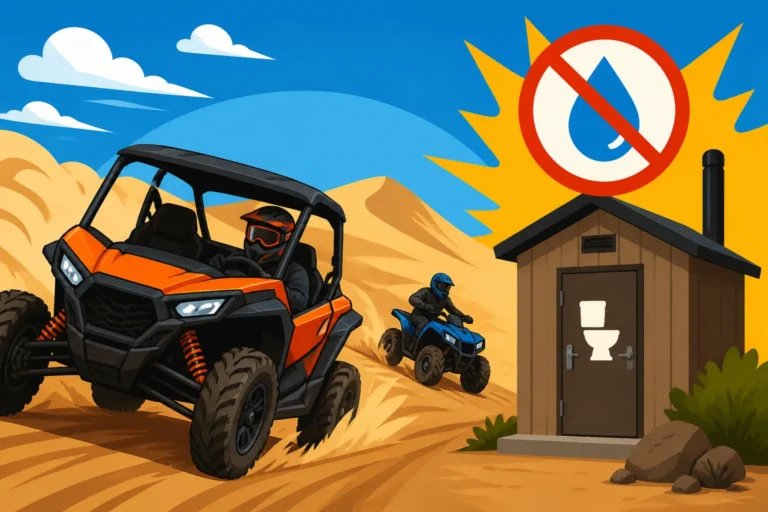
Restrooms may be available, but facilities should not be treated as a staffed visitor center. Plan for the possibility that no one is on site to answer questions or help with a problem. The practical details in [Vault Toilets and No Water at Sand Mountain] can help set expectations, and [Camping at Sand Mountain Without Water] is useful if your visit includes an overnight stay.
If you intend to camp, verify where camping is allowed and how the current rules apply. A group arriving late should also have a clear plan for parking and setting up without disturbing other visitors. Keep lights directed toward your own camp, keep noise considerate, and leave the site clean.
Temporary closures and changing conditions
Access can change because of temporary management actions, weather, road conditions, habitat protections, or other safety concerns. A general statement about normal operating hours cannot tell you whether a particular route or part of the area is open on the day you arrive. Check for notices before driving out and again at the site.
Pay particular attention to restrictions around protected habitat and marked routes. Dune landscapes may look wide open, but not every patch of sand is necessarily available for riding. Stay on authorized routes and respect closures even when other tracks appear to cross a restricted area. For trip preparation, see [Sand Mountain's 4,795 Acres] and [Nevada Trail Closures to Check Before You Go].
onX Offroad may be useful for reviewing your planned route and keeping a saved map available offline, especially when service is unreliable. Still, map layers can differ from current signs or temporary notices. Treat posted restrictions and official land-management information as the authority for where you may ride.
A practical schedule for your Sand Mountain visit
Before leaving Fallon
Sand Mountain lies east of Fallon, with access from US 50 and Sand Mountain Road. Before departure, check your route, confirm current access and fee instructions, and make sure your machine and tow vehicle are ready. [Getting to Sand Mountain on Nevada's US 50] can help with route planning, while [Where to Fuel Before Sand Mountain] is useful if you need to plan a fuel stop.
Pack more water than you expect to drink, along with food, sun protection, eye protection, and a basic repair and first-aid kit. Tell someone your plan if you are riding beyond the immediate staging area. If you use onX Offroad, download the map ahead of time and make sure you know how to access it without a signal. Keep a separate plan for meeting your group if riders get split up.
At the site and on the way out
Once you arrive, read the signs before unloading and confirm that your planned activity is allowed. Set a meeting point that everyone can identify, and agree on when the group will return. If you are staying overnight, check the camping rules rather than assuming that open access alone settles where you can sleep.
Before leaving, pack out your trash, check that you have all your gear, and take a moment to make sure your machine is ready for the drive back. If you are riding near dusk, allow time to regroup and load safely in adequate light. For a busier trip, [Sand Mountain on a Holiday Weekend] covers additional planning points.
The short answer is that Sand Mountain is generally accessible around the clock, but your actual visit still depends on current access notices, fee instructions, facility availability, and rules for where and when you ride. Check those details before you go, then plan your arrival and return around your group’s experience, daylight, and desert conditions.
Disclaimer
This article is for general informational purposes only and does not constitute professional advice. Laws, prices and regulations vary by location and change over time. Consult a qualified professional for guidance on your specific situation.