Nevada Rules for Riding During Fire Season
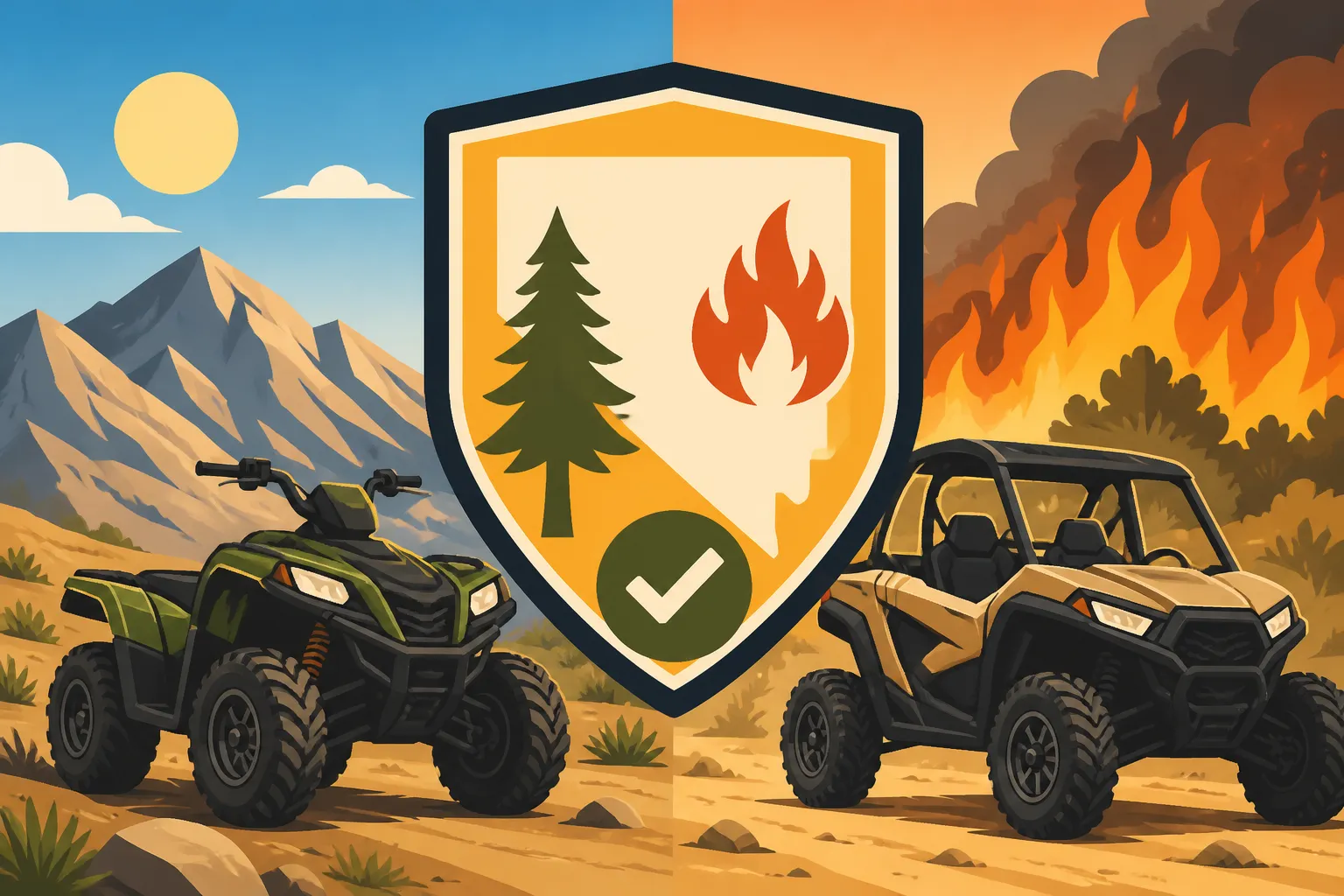
Nevada’s fire season does not mean every trail closes at once, but restrictions can change quickly and differ from one piece of land to the next. The hard part is knowing whether your route is open and what rules apply to your machine. Check the current land-manager notices before you leave, then ride in a way that avoids starting a fire.
Fire season is not one statewide closure
Nevada does not have one simple fire-season rule that automatically closes every ATV and UTV route on the same date. Risk and restrictions vary with weather, vegetation, land ownership and local conditions. A route may be open while a nearby area is closed, and the same trail may be subject to a new restriction after a period of hot, dry or windy weather.
The rules can come from different authorities. A ride might cross federal land, state land, county roads or private property, each with its own closures and access requirements. A state or local fire restriction may also apply more broadly than a single trail notice. Do not assume that a route is open just because it appears on a map, you rode it recently, or a parking area is accessible.
Restrictions may limit particular activities rather than close all riding. Depending on the order and location, they can restrict campfires, smoking, welding, target shooting or other activities that can cause sparks. Some orders may close routes or prohibit vehicle use in specified areas. The wording matters: a ban on off-road travel does not necessarily mean the same thing as a full area closure, and a trail closure should not be treated as permission to ride another route through the same restricted area.
| What to check | Why it matters | What to do |
|---|---|---|
| Route or area closure | A closure can prohibit entry, even if the trail looks passable | Confirm the exact boundary and dates with the land manager |
| Fire restriction order | Restrictions may ban specific activities or types of equipment | Read the current order rather than relying on a general fire-danger sign |
| Route designation | Open routes can be limited to signed roads or trails | Stay on routes authorized for your vehicle |
| Machine requirements | Equipment rules may include a spark arrester or other conditions | Verify the applicable land-manager and local requirements |
| Conditions on the ground | Smoke, wind, dry vegetation or a new fire can change access quickly | Be ready to turn around or cancel the ride |
Before choosing a route, read Nevada Fire Restrictions That Close Trails and Nevada Trail Closures to Check Before You Go. Those topics help explain why a familiar destination can have different access rules from one visit to the next. For public land, also review Nevada Rules for Riding Federal Land and contact the responsible field office if the notice is unclear. Calling a BLM Field Office Before a Ride is useful when a posted order does not make it obvious which road or trail is affected.
Check restrictions for the exact route
A broad search for “fire restrictions in Nevada” is a starting point, not a final answer. Identify the trailhead, the route you plan to ride and the land crossed along the way. Then check the current notices from the relevant land manager and local fire authority. If the route crosses more than one jurisdiction, check each one.
Look for more than a headline. A notice may name a specific recreation area, road, trail network, district or boundary. It may also distinguish between a temporary closure and a restriction on certain activities. Read the order itself, including maps and dates, rather than relying only on a search result, a social media post or an old screenshot. If you cannot confirm that the route is open, choose a different destination or postpone the trip.
A practical pre-ride process:
- Pin down the route. Write down the trailhead and planned roads or trails. A general destination name may cover several areas with different rules.
- Check the responsible land manager’s current alerts. Look for fire restrictions, closures, access notices and route changes.
- Check local notices. County and fire-authority information can matter, especially where a ride uses county roads or reaches a community.
- Read the boundaries. Confirm whether the notice applies to your trail, the surrounding area, or only certain activities.
- Recheck before departure. A restriction can change between planning and riding. Recheck if the weather turns hot or windy, or if officials report a nearby fire.
- Save a way to verify the notice offline. Cell service may be absent at the trailhead. Keep the relevant map or order available, but remember that a saved copy can become outdated.
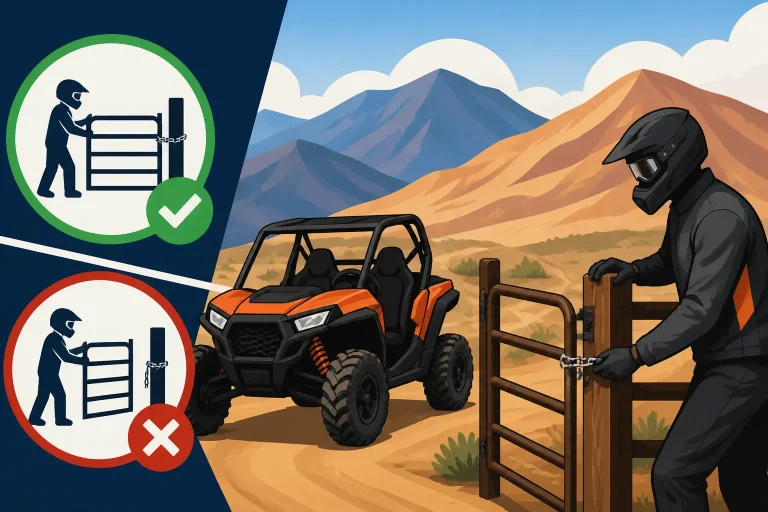
Do not use the absence of a gate or barrier as proof that an area is open. A closure can be posted at a different entrance, and not every route has a physical barrier. Likewise, a route shown as open on an older map may have been closed later. Follow signs and official directions on the ground, and do not move, pass or ride around a barricade.
If you encounter smoke or a new fire, leave the area by a safe, open route and report what you can to emergency services or the responsible land manager when it is safe to do so. Do not ride toward the smoke to investigate, and do not block access for responding vehicles. If wind shifts or visibility falls, stop and reassess rather than continuing into uncertain conditions.
Reduce the chance your machine starts a fire
Restrictions are only part of the picture. A machine can create a fire risk even when the route is open, particularly where dry grass, brush or other vegetation is close to a hot exhaust or moving parts. A careful equipment check and a few changes in how you park and ride can reduce that risk.
Before leaving, check that the exhaust system is in good condition and that any required spark-arresting equipment is installed and maintained. A damaged or modified exhaust may not meet the rules for a specific area. Do not assume that one requirement applies everywhere; consult the current notice and applicable vehicle rules. For more detail, see Nevada Spark Arrester Requirement.
Also inspect the machine for loose or damaged components, fuel leaks and debris packed near the exhaust or engine. Remove dry grass and other material from hot areas before riding. If you carry fuel, secure it properly and follow the rules for your location; Nevada Rules for Carrying Fuel Cans covers the issue in more detail. A fuel leak, damaged wiring or an exhaust problem is a reason to repair the machine before riding, not something to monitor on the trail.
On the ride:
- Keep to the open, designated route. Do not cut across dry vegetation or ride around a closure.
- Avoid parking over dry grass or brush. Choose a cleared, stable surface where the machine’s exhaust cannot contact vegetation.
- Do not idle unnecessarily over combustible material. If you stop, consider what is beneath and around the machine.
- Watch for debris collecting near hot components, especially after riding through grass or brush.
- Do not discard cigarettes, matches or other items that can ignite dry vegetation.
- Follow any restriction on campfires, stoves, smoking or equipment use. Do not infer that a permitted activity is safe in every spot.
- Carry a suitable vehicle-rated fire extinguisher where it is secure and accessible, and know how to use it. A compact extinguisher sold through retailers such as Amazon can be one option, but check its suitability for your machine and keep it maintained.
An extinguisher is a backup, not permission to ride into a closed area or take chances around dry fuel. If a fire is beyond your ability to control immediately, move away and contact emergency services. Personal safety comes first.
Make a plan that can change
Fire conditions can shift during a ride. Wind may pick up, smoke may obscure a route, or officials may close an area while you are out. Plan a conservative route with a clear way back, and agree with your group that anyone can call for a turnaround without pressure to continue.
Share the plan with someone who is not riding with you, including your intended trailhead and expected return. Carry enough water, fuel and basic recovery equipment for the route, but do not let supplies encourage you to push through a closure or deteriorating conditions. In remote areas, cell service may be unreliable, so arrange a communication option appropriate to the trip.
If you reach a closure sign or find that the route is blocked, stop before entering the restricted area. Turn around using an open route and do not assume a side road is a legal detour. If you cannot identify a safe, authorized alternative, end the ride. The same approach applies when an order is unclear: pause and verify with the land manager rather than guessing.
Finally, distinguish between seasonal caution and a legal restriction. Dry weather alone does not necessarily close a trail, but it is a reason to check current conditions closely and ride with extra care. Conversely, a route that appears safe can still be legally closed. The best decision comes from combining current official notices with what you see on the ground.
Disclaimer
This article is for general informational purposes only and does not constitute professional advice. Laws, prices and regulations vary by location and change over time. Consult a qualified professional for guidance on your specific situation.