Do Nonresidents Need a Nevada OHV Decal?
One of the biggest head-scratchers for folks planning a trip to Nevada with their off-highway vehicles, whether it's an ATV, UTV, dirt bike, or even a snowmobile, is figuring out the whole registration decal situation. You're coming from out of state, your machine is likely registered back home, and you just want to hit our incredible trails without getting hassled. This guide is going to walk you through exactly when a nonresident needs a Nevada OHV decal, how reciprocity works, and what to do if you find yourself needing to register your machine here.
The Basics: Nevada's Nonresident OHV Exemption
It's a common fear: loading up the side-by-side for a trip to Logandale Trails or Sand Mountain, only to wonder if you're going to get a ticket the moment your tires touch Nevada dirt. Thankfully, Nevada understands that visitors want to enjoy our vast open lands, and the state has a system in place that often makes it easy for nonresidents to ride here without jumping through extra hoops. This system hinges on a crucial exemption that many riders aren't fully aware of, or perhaps misinterpret.
What the Exemption Covers
Nevada's off-highway vehicle laws, specifically NRS 490.082, offer a significant relief for visitors. If your ATV, UTV, or other off-highway vehicle is legally registered in your home state, you typically don't need a separate Nevada OHV decal to ride here. This applies if your home state has a comparable OHV registration program and you're actively complying with it. The key is that your machine must have a current, valid registration or permit from your state or even another country. This means if your state requires an OHV sticker and you have one, you're usually good to go for a short visit. This exemption is designed to encourage tourism and make it simple for riders from places like California with their green sticker program, or Arizona with its OHV decal, to come enjoy our expansive trail systems without needing to double register. It recognizes the administrative burden and expense of requiring every single visitor to obtain a new decal for a brief stay.
The logic behind this is straightforward: if you're already contributing to an OHV program in your home state that funds trail maintenance and safety initiatives, Nevada isn't going to ask you to pay again for a short recreational visit. It's a nod to the reciprocal nature of how states often handle these things. So, before you stress about another layer of paperwork, first confirm that your machine is indeed properly registered and decaled in your home state, and that your state's program is similar in scope to Nevada's. You'll find that for most recreational users coming for a vacation, this covers their needs perfectly.
The 15-Day Limit Explained
Now, while the exemption is generous, it's not open-ended. Nevada's law specifies a [Nevada's 15-Day Window for Out-of-State Machines]. This means your out-of-state registered machine can operate on Nevada's public lands for a period not exceeding 15 consecutive days. Think of it as a grace period for vacationers. If you're coming for a long weekend, a week-long desert adventure, or even a two-week escape, your existing out-of-state registration is usually sufficient.
It's crucial to understand "consecutive days." This isn't 15 days spread out over a year, but rather 15 days from the moment your machine starts operating on Nevada public land until the 15th day ends. For example, if you arrive in Mesquite on a Friday and hit the trails, that Friday counts as day one. You can ride all weekend, through the next week, and the week after that, but once you hit the 16th consecutive day, your out-of-state registration no longer grants you legal access under this exemption. This rule is in place to distinguish between genuine visitors and those who might be trying to avoid registering their machines in Nevada for longer periods. It means that while you can certainly come back multiple times throughout the year, each visit is subject to its own 15-day clock. So, if you're planning an extended stay or frequent trips, you'll need to pay close attention to this limit.
What Happens After 15 Days
What happens if you, a nonresident, decide to stay and ride for longer than the 15 consecutive days allowed by the exemption? Well, at that point, your machine is no longer considered exempt under Nevada law. To continue riding legally on public lands in Nevada, your off-highway vehicle will need to display a valid Nevada OHV decal. This transition from exempt visitor to requiring local registration is a critical point for many who fall in love with Nevada's riding opportunities and extend their stays or make frequent visits.
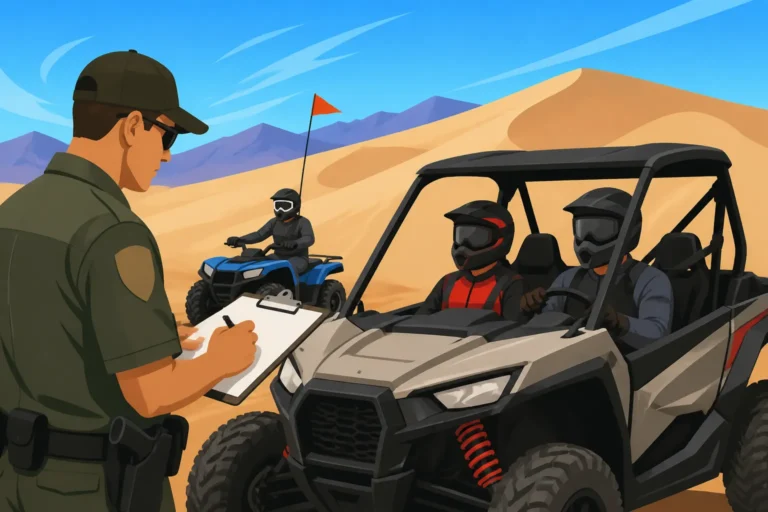
If a law enforcement officer, such as a BLM ranger or a county deputy in places like Nye County or Lincoln County, encounters you riding a nonresident machine without a Nevada decal beyond that 15-day limit, you could face penalties. This typically means a citation for operating an unregistered OHV, which comes with a fine. It’s not a pleasant way to end a fun day of riding. This also applies if your home state doesn't have a comparable registration program, or if your machine isn't registered there at all. In those cases, the 15-day exemption doesn't apply from the start, and you'd need a Nevada decal immediately. The state's system is designed to fund trail maintenance and public safety here, and once you become a more "permanent" user of our trails, they expect you to contribute to that system.
Understanding Reciprocity and Out-of-State Registrations
Reciprocity is a fancy word for "we'll honor your valid registration from another place." It's fundamental to how states manage things like driver's licenses and vehicle registrations across borders. For OHVs, it means that if your home state has a legitimate registration program for off-highway vehicles, Nevada will generally recognize that registration for a limited time. This makes travel and recreation between states much smoother for riders.
How Nevada Views Other State Decals
Nevada generally extends reciprocity to other states with established OHV registration programs. This means if you're riding in from California with a current Green Sticker, from Arizona with their OHV decal, or from Utah with a valid OHV registration, Nevada will honor those for your 15-day visit. The underlying assumption is that your home state's registration serves a similar purpose to Nevada's: tracking ownership, funding trails, and promoting safe riding. It’s not about checking if every single nuance of the law is identical, but rather if the spirit of registration is being met. [Nevada OHV Reciprocity With Other States] is a huge benefit, preventing riders from having to buy multiple decals just to cross a state line for a few days of riding.
However, it's important to remember that not all states have mandatory OHV registration for all types of machines or for all lands. If your home state doesn't require registration for your specific type of OHV, or if you simply haven't registered it there (even if required), then Nevada's reciprocity won't apply to you. In such cases, your machine would not be considered legally registered "out of state," and you would need to obtain a Nevada decal to ride here, regardless of how long you plan to stay. Always carry proof of your home state's registration with you, as rangers and deputies often check for it, especially at popular spots like Sand Mountain or during events at Amargosa Big Dune.
The Importance of a Valid Out-of-State Registration
For the nonresident exemption to apply, your machine must have a valid, unexpired registration from your home state. This isn't just about having a sticker; it's about being able to prove it. A valid registration usually means you have a current decal affixed to your machine in the proper location, and you have the corresponding registration card with you. Just like you carry your driver's license, carrying your OHV registration card is crucial. Law enforcement officers, whether at a trailhead check or a roadside stop in Nye County, will often ask for this documentation.
If your home state's registration is expired, or if you're riding a machine that was never registered in your home state but should have been, the nonresident exemption goes out the window. In these scenarios, you're essentially operating an unregistered OHV in Nevada, which can lead to citations. It's a common mistake that riders make, assuming that just because they're from out of state, they're automatically exempt. No, the exemption hinges on valid out-of-state registration. So, before you pack up and head to the Silver State, double-check that your registration in your home state is current and that you have all the necessary paperwork handy. You wouldn't drive your car across state lines with an expired plate, so apply the same logic to your ATV or UTV.
Riding from Border States into Nevada
Nevada shares borders with some amazing riding states, and it's common for riders to cross these lines to experience different terrains. California, Arizona, Utah, and Idaho are all popular points of origin for riders heading to Nevada's dunes and trails. The reciprocity rules are especially relevant here. For example, if you're coming from Southern California, your valid [Riding Nevada on a California Green Sticker] is your ticket to riding in places like Nellis Dunes for up to 15 consecutive days. Similarly, riders coming from Phoenix or other parts of Arizona can rely on their [Riding Nevada on an Arizona Decal] for the same duration.
| Bordering State | Typical OHV Registration | Nevada Reciprocity (15 Days) | Notes |
|---|---|---|---|
| California | Green Sticker | Yes | Must be current and properly displayed. |
| Arizona | OHV Decal | Yes | Must be current and properly displayed. |
| Utah | OHV Decal | Yes | Must be current and properly displayed. |
| Oregon | OHV Permit/Sticker | Yes | Must be current and properly displayed. |
| Idaho | OHV Sticker | Yes | Must be current and properly displayed. |
| Other States/Canada | Various | Yes | Must have a comparable, valid OHV registration program. |
This table illustrates the general principle. The expectation is that you have followed your home state's laws. For riders frequently crossing the line near Mesquite or near Laughlin, understanding these rules is paramount. It ensures you can enjoy the vast public lands without fear of a penalty. Remember, the goal is to make riding accessible and enjoyable, but also safe and responsible, with proper funding for the trails we all love. If you plan to go from Logandale to Valley of Fire, your out-of-state decal will be recognized for a short period on the designated connector routes, assuming your home state registration is current.
When a Nevada Decal Becomes Necessary for Nonresidents
While the nonresident exemption is a huge relief for many, there are definitely situations where a Nevada OHV decal becomes a non-negotiable requirement, even for someone who doesn't consider themselves a full-time Nevada resident. It's about how long you're staying, the status of your machine's registration elsewhere, and whether you're trying to integrate more permanently into the Nevada OHV scene. Ignoring these triggers can lead to unnecessary trouble.
Establishing Residency or Long-Term Stays
The 15-day clock is pretty clear. If you find yourself in Nevada for more than 15 consecutive days with your OHV, then your machine is no longer exempt. This often happens if you're here for an extended work project, spending a whole season at a cabin, or perhaps you've fallen in love with the state and decided to officially move here. When you change your residency to Nevada, you are then subject to all of Nevada's registration and titling laws for OHVs. This means you’ll need to officially [Registering an Out-of-State Machine in Nevada].
The process of establishing residency involves more than just how long you've been here; it's also about your intent. If you've started receiving mail here, changed your driver's license, or have other indicators of residency, then your OHV will be treated like any other Nevada-owned machine. Even if you're maintaining an out-of-state driver's license but keeping your machine here at a cabin for months at a time, you've likely exceeded the intent of the nonresident exemption. At this point, you're expected to contribute to Nevada's OHV program through registration fees, just like any other local rider. It's about being fair to all users of our trails and ensuring that the funds needed for maintenance and management are collected locally.
Machines Without Any Registration
Perhaps the most straightforward reason a nonresident needs a Nevada decal is if their machine isn't registered anywhere else. This could be due to several reasons: maybe your home state doesn't require OHV registration at all, or perhaps you purchased a used machine privately and haven't gotten around to registering it yet in any state. Some machines, particularly older ones or those under a certain engine size (like some [Machines Under 70cc and Why They Skip Registration]), might be exempt in their home state from registration requirements. However, if that home state doesn't have a comparable OHV registration system, or if your machine simply falls outside of their requirements and therefore isn't registered, then it has no valid out-of-state registration for Nevada to honor.
In these cases, the 15-day exemption does not apply. You are expected to register your off-highway vehicle in Nevada from day one of operating it on public lands here. This also applies to machines that might be considered "homebuilt buggies" or other custom fabrications that may not fit neatly into typical registration categories in other states. If you're bringing a machine to ride Nevada that has no paper trail or active registration anywhere, you absolutely need to obtain a [Nevada's $20 OHV Decal and What It Covers] before hitting the trails. Otherwise, you're risking a citation for riding an unregistered machine.
Avoiding Fines and Hassles
The easiest way to avoid any headaches, fines, or uncomfortable conversations with law enforcement is to be prepared and understand the rules. For nonresidents, this means knowing your status. Are you within the 15-day window with a valid out-of-state registration? Great! Carry your paperwork. Are you staying longer, or is your machine unregistered elsewhere? Then it's time to get a Nevada decal. The fines for operating an unregistered OHV can quickly overshadow the relatively low cost of a Nevada decal. Plus, getting a ticket can put a real damper on your vacation.
Consider a scenario where you're out riding near Winnemucca Dunes or exploring the trails around Ely, and a deputy or ranger pulls you over for a routine check. If your paperwork isn't in order, you could be facing a fine and potentially even having your machine impounded in more severe or repeated cases. It's far better to spend a small amount of time and money upfront to ensure legal compliance. Not only does it protect you from penalties, but it also means you're contributing to the upkeep of the very trails you're enjoying. These funds often go directly back into trail signage, maintenance, and facility improvements, which benefits all riders, residents and nonresidents alike. When in doubt, it’s always better to play it safe and register, rather than risk a run-in with the law.
How to Get a Nevada OHV Decal as a Nonresident (If Needed)
If you've determined that you, as a nonresident, need to obtain a Nevada OHV decal—whether because you're staying longer than 15 days, your machine isn't registered elsewhere, or you've decided to establish residency—the process isn't overly complicated, but it does require attention to detail. It's largely similar to how a Nevada resident would register their OHV, but with specific considerations for out-of-state machines.
The Application Process
Getting a Nevada OHV decal involves submitting an application and supporting documents to the Nevada DMV. You'll typically use Form OHV-001, the "Application for Registration/Title of an Off-Highway Vehicle." This form will ask for details about your machine, your personal information, and how you acquired the OHV. For out-of-state machines, you'll need to specify that on the form, indicating that it's an initial registration in Nevada. You can submit this application either in person at a Nevada DMV office, or often, through a licensed Nevada OHV dealer. Many dealers offer this as a service, streamlining the process, especially if you're also having them perform a [Nevada OHV VIN Inspection Requirements].
The important thing is to ensure every field on the form is accurately completed. Errors or omissions can lead to delays in processing, sending you back to square one. Take your time, read the instructions carefully, and if you're unsure about a section, it's always best to ask for clarification from the DMV or a reputable dealer before submitting. While many people prefer to handle paperwork themselves, submitting it through a dealer can sometimes speed things up, as they are familiar with common pitfalls and requirements.
Required Paperwork and Proof
This is where many people can get tripped up. For a nonresident registering an OHV in Nevada, you'll need to provide solid proof of ownership. This typically includes the original title from the state where the OHV was previously titled, or a valid bill of sale if a title wasn't issued or is unavailable. If you bought the machine privately, a clear and comprehensive bill of sale is critical. For instance, you might use a template from a service like LawDepot to ensure your bill of sale includes all necessary details, such as the full names and addresses of both buyer and seller, the date of sale, purchase price, and a complete description of the OHV, including the VIN.
In addition to proof of ownership, you'll generally need:
- Identification: A valid government-issued ID, like your driver's license.
- VIN Inspection: For machines that have never been titled or registered in Nevada, a VIN inspection is required. This must be performed by an authorized Nevada OHV dealer or a sworn law enforcement officer. The [The VIN Inspection Nevada DMV Will Not Do] highlights the fact that the DMV itself doesn't do these, so planning ahead for this step is crucial.
- Fees: There will be fees for the decal and potentially for titling, especially if the machine is coming from a state that didn't issue titles for OHVs, or if you want to apply for a Nevada title at the same time.
Make sure you have all these documents ready and, if necessary, multiple copies. Missing even one piece of paperwork can lead to your application being rejected, which means more waiting and frustration.
Where to Submit Your Application
Once you have all your forms filled out and supporting documents gathered, you have a few options for where to submit your application for a Nevada OHV decal:
- Nevada DMV Full-Service Offices: You can visit any full-service Nevada DMV office. Locations exist in cities like Las Vegas, Reno, Henderson, and Carson City. Be prepared for potential wait times, especially during peak hours. Bringing all your paperwork in a neat folder can help make the process smoother. They will process your application, collect fees, and issue your decal if everything is in order.
- Authorized Nevada OHV Dealers: Many licensed OHV dealers in Nevada are authorized to process registrations and issue decals. This can often be a faster and more convenient option, especially if the dealer also performed your VIN inspection. They are typically well-versed in the requirements and can help ensure your paperwork is correct before submission. This is often the preferred route for many, as it offers a one-stop shop for both inspection and registration.
- By Mail: In some cases, if you're not physically in Nevada or prefer to handle it remotely, you might be able to submit your application by mail. However, this is generally only for renewals or very specific circumstances, and initial registrations of out-of-state machines usually require an in-person visit due to the VIN inspection and verification of ownership documents. Always check the most current DMV guidelines for mail-in options, especially when dealing with a machine coming from outside the state.
Remember to keep copies of everything you submit for your records. Once approved, you'll receive your Nevada OHV decal, which you then affix to your machine as per the placement rules, and you'll be ready to legally hit all the fantastic trails Nevada has to offer. A properly drafted bill of sale, perhaps generated using a service like LawDepot, can be invaluable here for proving clear ownership when the machine originates from outside Nevada's titling system.
Disclaimer
This article is for general informational purposes only and does not constitute professional advice. Laws, prices and regulations vary by location and change over time. Consult a qualified professional for guidance on your specific situation.