When a Visitor’s 15 Days Start Counting
A Nevada riding trip can get confusing when the machine has another state’s registration: does the exemption start when you arrive, unload, or first ride? The key date is when the vehicle is brought into or located within Nevada. Here’s how to track that start, check whether the exemption fits, and plan before it runs out.
The 15-day clock starts with the vehicle
According to the Nevada Commission on Off-Highway Vehicles, a nonresident’s 15-day OHV registration exemption period begins on the date the vehicle is brought into or located within Nevada. The trigger is about the machine’s presence in the state, not the rider’s first day on a trail.
That distinction matters if you bring an ATV or UTV ahead of your own arrival, leave it at a Nevada property, or spend several days traveling before riding. If the machine is already in Nevada, its time there has started even if it is parked, still on a trailer, or waiting for the rest of your group.
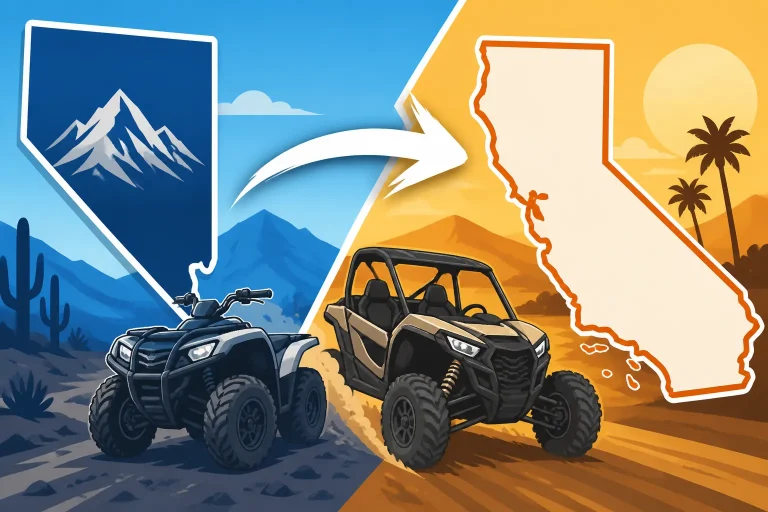
The exemption applies to an OHV registered or certified in another state and located in Nevada for not more than 15 days, according to Off Road Nevada. It is not a general grace period for any machine that happens to be visiting. If the vehicle has no out-of-state registration or certification, do not assume this exception covers it.
| Your situation | What to check |
|---|---|
| Your machine is registered or certified in another state | Confirm that its registration or certification is current and that the Nevada visit fits the exemption. |
| You brought the machine into Nevada before you arrived | Use the vehicle’s arrival date as the starting point. |
| The machine is parked or stored in Nevada | Do not treat storage as a pause in the exemption period. |
| The machine has no out-of-state registration or certification | The visitor exemption may not apply; check the Nevada registration requirements. |
| The machine may stay beyond the exemption period | Contact the DMV OHV Unit early about Nevada registration or another lawful option. |
Keep the arrival date somewhere easy to find. A note on your phone, a travel log, or a photo of a dated delivery or fuel receipt can help you remember when the machine entered the state. Those records do not replace registration, but they can make it easier to explain your timeline if questions come up.
The vehicle’s paperwork can help establish which machine you brought and where it is registered. For broader context on what out-of-state registration does and does not cover, see Nevada OHV Reciprocity With Other States and Do Nonresidents Need a Nevada OHV Decal?. If you are bringing a particular state’s sticker or registration, check the details for Riding Nevada on a California Green Sticker, Riding Nevada on an Arizona Decal, or Riding Nevada on a Utah Registration.
Check whether your machine qualifies
Before relying on the exemption, verify that the vehicle has the out-of-state registration or certification the rule calls for. A bill of sale, insurance card, or rental agreement is not automatically the same thing as vehicle registration. If your paperwork is unclear, ask the issuing state or Nevada’s OHV registration office rather than guessing.
The Nevada Off-Highway Vehicles Program covers several types of off-highway machines, including ATVs and side-by-sides. If you are traveling with more than one vehicle, check each machine’s paperwork and arrival date separately. One vehicle’s valid registration does not establish the status of another.
Also distinguish this visitor exemption from the deadline that applies after a purchase. Off Road Nevada says an OHV must be registered within 30 days of purchase from a dealer or private party. That purchase deadline is a separate rule; do not assume it extends the visitor exemption for a machine already in Nevada. If your trip involves a recent purchase, explain both the purchase date and the date the vehicle entered Nevada when you ask the DMV what applies.
A machine can be properly registered in its home state and still need attention before it is used in Nevada. Confirm that the registration is active and that the vehicle identification details match the machine. For more on the general visitor rule and its practical limits, see How Long an Out-of-State ATV Can Stay in Nevada and Nevada’s 15-Day Window for Out-of-State Machines.
If your trip will extend beyond the exemption, start checking your options well before the end of the window. The DMV says registration and title processing may experience a backlog taking up to 30 days. That does not change the exemption’s starting date, and it is not a reason to assume a pending application lets you ride without the required registration. Ask the DMV OHV Unit what to do for your circumstances and how to handle the machine while paperwork is being processed.
Plan before the exemption ends
The safest plan is to decide early whether the machine will leave Nevada within the exemption period or whether you need to arrange Nevada registration. Waiting until the last day can leave little room to resolve a paperwork problem, reach the right office, or understand what is allowed while an application is pending.
Nevada OHV registrations are handled through the DMV OHV Unit by mail, according to the Nevada Off-Highway Vehicles Program. The unit can answer registration questions at 775.684.4381. Contact it with the vehicle’s state of registration, its arrival date, and your expected departure date. If you recently bought the machine, have the purchase date ready too.
A practical decision process looks like this:
- Set the vehicle’s arrival date. Use the date it was brought into or located within Nevada, not the date you first rode it.
- Check the home-state paperwork. Confirm the machine is registered or certified in another state and that the record is current.
- Estimate how long the vehicle will remain. If the visit may exceed the exemption, ask the DMV about the next step before the window runs out.
- Keep the paperwork with the machine. Carry the registration documents and any information you may need to identify the vehicle.
- Recheck your plan if travel changes. A delayed departure or an extended stay can change whether the exemption still fits.
If you need Nevada registration, do not treat the normal purchase deadline as a substitute for the visitor rule. Off Road Nevada’s 30-day deadline applies to registration after purchase, while the visitor exception is tied to how long an out-of-state-registered or certified vehicle is located in Nevada. When both situations apply, get advice from the DMV rather than trying to choose whichever deadline gives you more time.
A Nevada decal is not the same thing as permission to ride anywhere. You still need to check where riding is allowed, whether routes are open, and what local restrictions apply. Nevada Trail Finder can help with route planning, and What a Visitor Does After 15 Days in Nevada explains the next question to resolve when a visit lasts longer than the exemption allows.
Common timing mistakes to avoid
The most common mistake is counting from the rider’s arrival instead of the vehicle’s. If a friend, transport company, or family member brings the machine into Nevada first, the relevant date is when the vehicle enters or is located in the state. Keep the date tied to the vehicle, not the person who owns it.
Another mistake is treating a parked machine as if it is outside the rule. The exemption concerns how long the vehicle is located in Nevada, so a break from riding does not, by itself, reset the clock. If you leave the machine at a cabin between trips, do not assume that time stops counting.
Do not rely on the idea that a weekend, a trail closure, or a mechanical breakdown automatically pauses the period. The Nevada Commission on Off-Highway Vehicles identifies the start date as the date the vehicle is brought into or located within the state. If an unusual circumstance affects your plans, ask the DMV how it applies rather than making a timing assumption.
Finally, avoid using a vague arrival estimate when you can keep a clear record. A dated note, travel receipt, or delivery record can help you track the timeline. Store the registration paperwork somewhere protected from dust and moisture; a small document pouch from Amazon may be useful, but keep the originals accessible and make sure any digital copy is readable.
The key takeaway is straightforward: the visitor exemption is measured from the vehicle’s presence in Nevada, not from the first ride. Confirm that the machine is properly registered or certified elsewhere, record when it entered the state, and contact the DMV well before the exemption period is over if your plans may run long.
Sources
- Off Road Nevada — Frequently asked questions about off-highway vehicle registration in Nevada | Off Road Nevada (checked November 3, 2026)
- Nevada Off-Highway Vehicles Program — Off-Road Nevada | OFF-ROAD Nevada (checked November 3, 2026)
- Department of Motor Vehicles — Register your Off-Highway Vehicle | Off Road Nevada (checked November 3, 2026)
Disclaimer
This article is for general informational purposes only and does not constitute professional advice. Laws, prices and regulations vary by location and change over time. Consult a qualified professional for guidance on your specific situation.