Nevada Supervision Rules for Young Riders
Nevada’s supervision rules for young riders can be easy to confuse with helmet laws, safety training and road-use rules. The key age cutoff is 16: a younger rider needs an adult accompanying them when operating an off-highway vehicle. Here’s how to apply that rule, prepare an appropriate machine and avoid assuming supervision makes every route or ride legal.
Nevada’s supervision rule for riders under 16
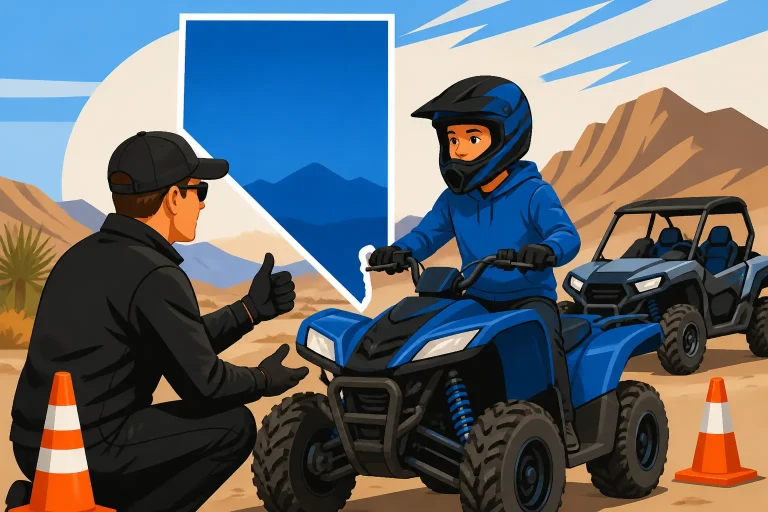
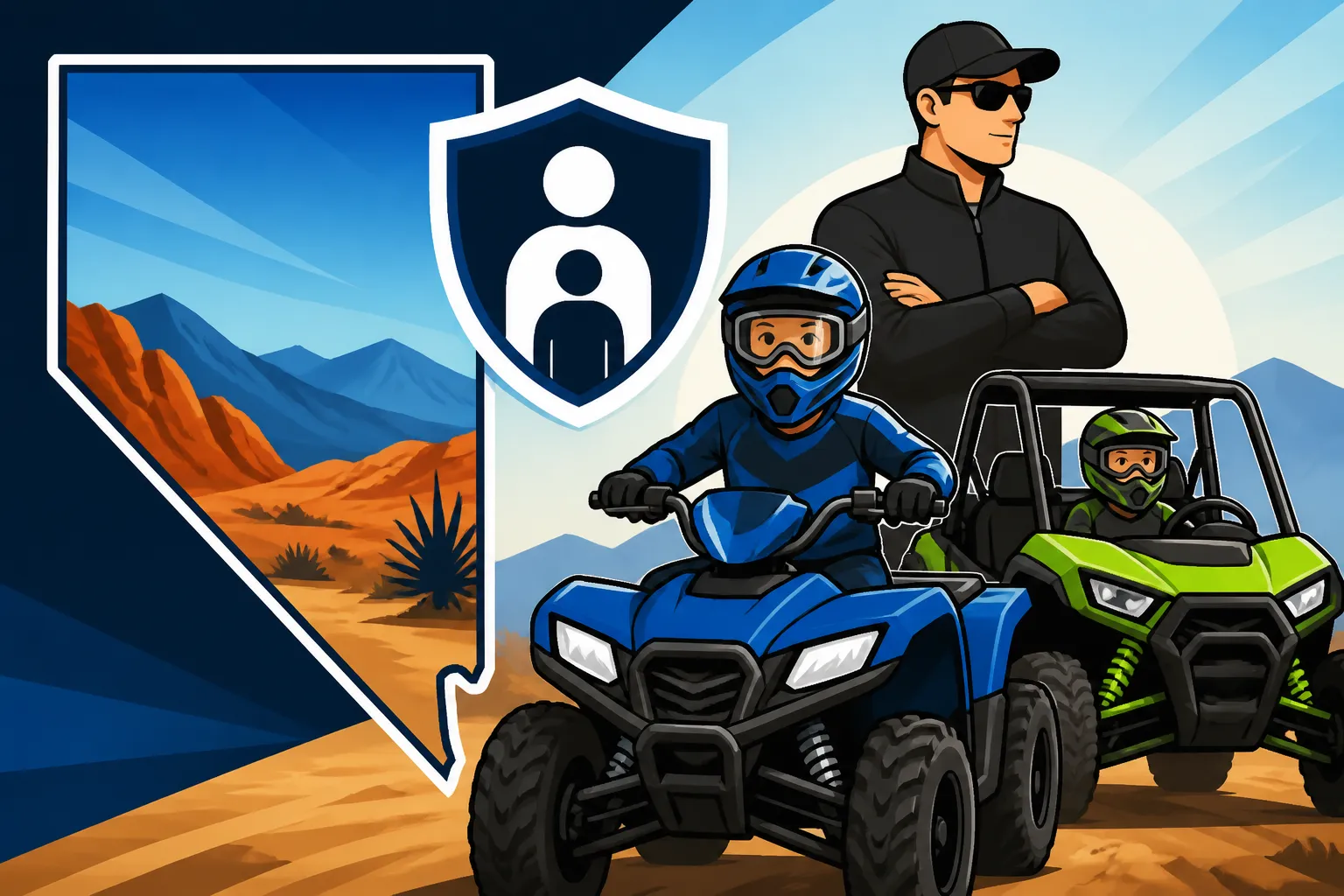
In Nevada, an OHV operator under 16 must be accompanied by an adult who is at least 18. In practice, plan for the adult to be a parent or guardian, or someone the parent or guardian has authorized to supervise the child. The responsible adult should be present for the ride, not simply reachable by phone or waiting somewhere else.
“Accompanied” is best treated as active supervision. Stay close enough to see how the young rider is handling the machine, recognize a problem and help promptly. A group ride where an adult is somewhere ahead or behind may not provide meaningful supervision, especially if riders separate at an intersection, dune or trail junction.
The law’s age cutoff does not mean every child under 16 can safely operate every machine. Legal supervision is only one part of the decision. A child still needs the physical size, judgment and skill to control the specific ATV or UTV, and the vehicle must be suitable for that rider. A large machine does not become appropriate just because an adult is nearby.
| Rider’s age | Supervision for off-highway operation | Helmet consideration |
|---|---|---|
| Under 16 | Must be accompanied by an adult age 18 or older | Riders under 18 must wear a helmet |
| 16 or 17 | The under-16 supervision rule no longer applies | Riders under 18 must wear a helmet |
| 18 or older | The under-16 supervision rule does not apply | Follow applicable helmet rules and use protective gear |
The table summarizes the basic age distinctions, not every rule that could apply to a machine or location. A land manager, event organizer or rental company may have additional requirements. For related age questions, see Nevada Minimum Age to Ride Off-Road and Nevada Rules for a Youth Machine on Public Land.
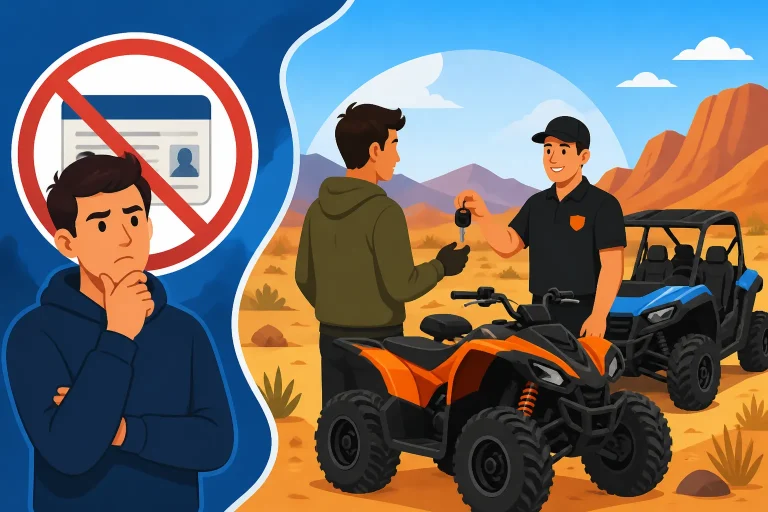
This supervision rule is separate from registration and reciprocity. A Nevada decal, an out-of-state registration or an exemption from a separate visitor permit does not remove the requirement to supervise a rider under 16. If you are bringing a machine across state lines, check Nevada OHV Reciprocity With Other States and Nevada Nonresident Riders in Nevada for the machine’s paperwork; apply the age and safety rules to the rider as well.
Helmets, training and choosing a machine
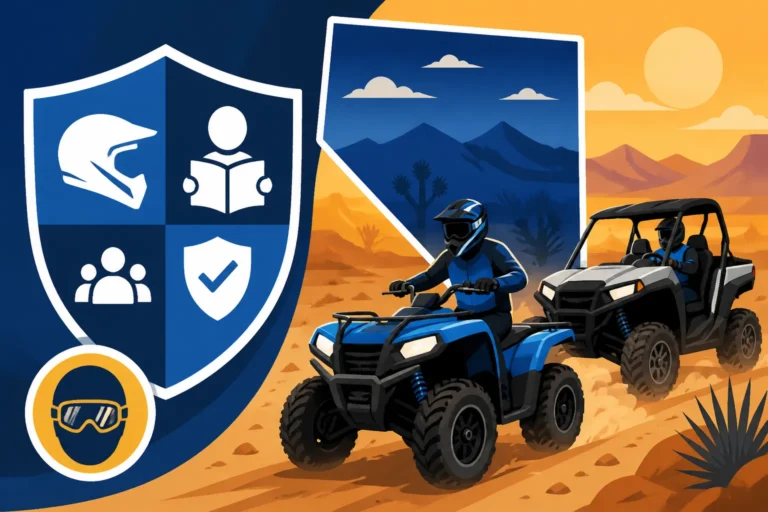
Nevada requires riders under 18 to wear a helmet when operating or riding as a passenger on an OHV. That includes riders who are old enough not to need adult accompaniment under the under-16 rule. In other words, turning 16 changes the supervision requirement, but it does not make a 16- or 17-year-old exempt from the helmet requirement.
A helmet should fit properly and be suitable for off-road riding. It needs to stay secure when the rider moves, without sliding around or obstructing vision. A parent should check the fit each time, particularly for a growing child. Goggles or other eye protection, gloves, long sleeves, long pants and sturdy footwear also help reduce common riding injuries, though they do not replace a helmet.
If shopping online, including through Amazon, check the helmet’s applicable safety certification, fit guidance and return policy rather than choosing by appearance alone. A helmet that is too large or worn incorrectly may not protect as intended. The same care applies to children’s protective equipment: confirm that it fits the rider now, not just that it is labeled for a particular age.
Nevada does not require every young OHV rider to hold a statewide safety-course certificate. That does not make training unnecessary. A child benefits from learning controls, braking, turning, terrain awareness and what to do if the machine stalls before riding on public land or in a busy riding area. A course or hands-on instruction can give a young rider a safer foundation than informal directions during a first trip. See Nevada Has No Mandatory Safety Course, Nevada ATV Safety Certificate for Minors and Hands-On Training for Riders Under 16.
Choose the machine based on the rider’s ability to operate it, not simply on the adult’s size or the family’s planned route. Before riding, the young person should be able to reach and use the controls, understand how the brakes and throttle respond, and stop the machine without help. Have them demonstrate basic control in a quiet, open area before joining other riders.
Useful checks before a child rides include:
- Read the owner’s manual and follow the manufacturer’s age and size guidance.
- Confirm that the rider can reach the controls and operate them while seated in a stable position.
- Make sure the child can stop, turn and respond to basic instructions.
- Start in a low-traffic area with manageable terrain, rather than on a steep dune or crowded trail.
- Reassess the machine and conditions as the ride changes; a child who is comfortable on flat ground may not be ready for loose sand, rocks or hills.
Adult supervision cannot make an unsuitable machine safe. Nor does a manufacturer’s recommended age automatically determine whether a ride is legal in every setting. Treat the vehicle label and manual as important safety guidance, then check the rules for the place where you plan to ride.
Where the rules apply and what supervision does not allow
The under-16 supervision rule is about operating an off-highway vehicle. It does not give a young rider permission to ride anywhere an adult can take them. Public land may have designated routes, seasonal closures, vehicle restrictions or other rules. A trail that is open to one type of machine may not be appropriate or open to another. Check current land-manager information before leaving the staging area.
The adult should also be familiar with the planned route and its hazards. A child may not recognize a closed route, a drop-off, soft sand or a fast-moving vehicle approaching from behind. Keep the ride within the young rider’s ability, agree on where the group will stop and regroup, and make sure the child knows to stop and wait if separated. For a broader look at land rules, see Nevada Rules for Riding Federal Land and Nevada Trail Closures to Check Before You Go.
Do not treat off-road supervision as permission to ride on a street, highway or county road. Road use can involve different age, licensing, equipment, insurance and route requirements. An adult riding alongside a child does not replace those requirements. Before considering any road section, check the specific rules for the vehicle and road; Nevada Rules for a Child Passenger on a Road covers a related but distinct situation.
Passengers need particular care. A child should not be carried on an ATV that is designed for one rider, and a child should never be placed on an adult’s lap as a substitute for a proper passenger seat. For a UTV, follow the manufacturer’s seating and restraint instructions. Make sure each passenger has an appropriate seat and restraint, and confirm that the child can remain properly positioned during the ride. Road passenger rules may differ from off-highway rules, so do not assume a child who can ride as a passenger off-road can do so on a road.
Rental rules may be stricter than the general state rule. A rental business can set its own minimum driver age, require an adult to sign paperwork or restrict who may operate the machine. Those conditions are not replaced by a parent’s permission or by the fact that Nevada allows supervised under-16 OHV operation. If renting, ask the operator directly about the child’s age, passenger status and whether the rental is guided or self-driven. See Nevada Rules for Riding a Rented ATV for more on rental-specific requirements.
A practical supervision plan for the ride
A useful supervision plan starts before the machine is unloaded. Decide who is responsible for the young rider, which machine they will use, where the group will go and what conditions mean it is time to stop. An adult who has not reviewed the route or does not know the machine’s controls may be present without being prepared to supervise effectively.
Before starting, walk through a short safety check with the child:
- Identify the throttle, brakes, engine stop control and any gear selector.
- Confirm the rider knows how to stop and what to do if they lose control or the machine stalls.
- Check the helmet and protective equipment, then adjust them before the ride begins.
- Agree on a simple signal to stop, regroup or ask for help.
- Explain that the child must stay with the supervising adult and stop if they lose sight of them.
Start slowly and watch the rider’s behavior, not just whether they can keep up. Fatigue, excitement, dust and changing terrain can affect a child’s concentration. If the rider is struggling to control the machine, ignoring instructions or becoming tired, take a break or end the ride. A planned destination is not a reason to push a child beyond their ability.
Keep enough space between machines to reduce dust and allow room to brake. Avoid placing a young rider at the back of a long group where an adult may not notice a problem, or at the front where they may feel pressure to keep pace. On unfamiliar terrain, the supervisor should be able to see the child and communicate clearly. If the route requires the group to split or pass through a difficult section, pause and decide how the adult will maintain supervision before proceeding.
Carry the essentials for the route, including water, a basic first-aid kit and a way to contact help when possible. Conditions in Nevada can change quickly with heat, wind, dust or poor visibility. A child’s pace may be slower than an adult’s, so allow time for breaks and avoid planning a ride that depends on everyone maintaining a fast pace. For preparation advice, see Carrying Water for a Desert Ride and Nevada Trail Etiquette on Shared Dunes.
For visiting families, handle the paperwork question separately from the supervision question. Check whether the machine’s registration or decal is accepted for the intended ride, then check the land access rules and any event or rental conditions. An adult accompanying a young rider does not make an expired decal valid, open a closed route or authorize travel on a road where OHVs are not allowed. Keeping those questions separate makes it easier to spot what still needs attention before the trip.
Disclaimer
This article is for general informational purposes only and does not constitute professional advice. Laws, prices and regulations vary by location and change over time. Consult a qualified professional for guidance on your specific situation.