Nevada Rules for a Child Passenger on a Road
It's an exciting prospect, isn't it? Imagining your little ones experiencing the thrill of a Nevada off-highway adventure right there with you. But when it comes to riding with child passengers on the actual roads, even just to get to the trailhead, things can get surprisingly complicated and often frustratingly unclear. This guide is here to untangle the web of Nevada's rules, helping you understand exactly when and how your child can legally and safely be a passenger in your ATV or UTV on designated public roads.
The Core Challenge: Road Rules vs. Off-Road Freedom
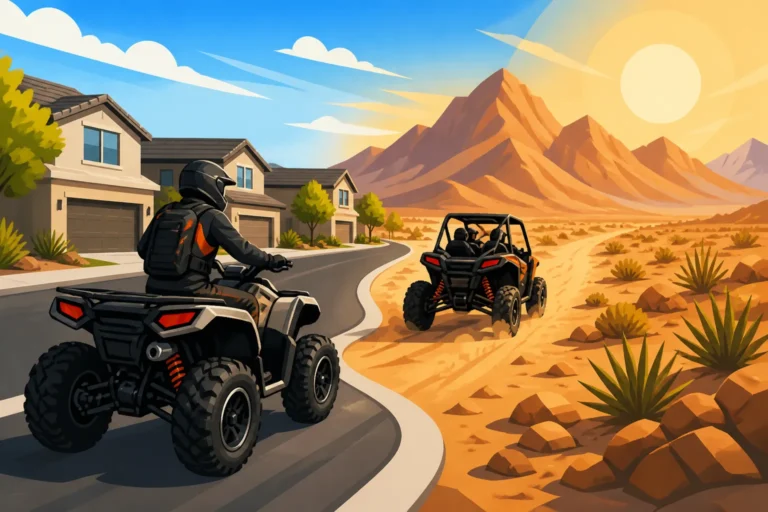
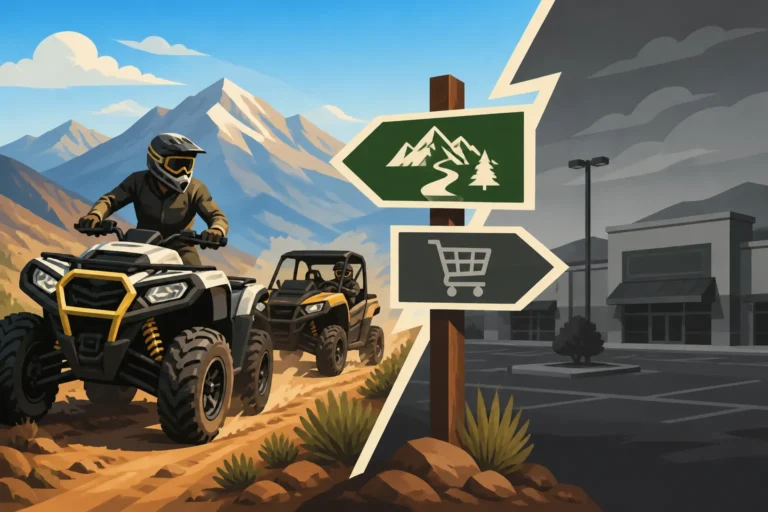
You've probably spent countless hours enjoying the vast expanses of Nevada's public lands with your family. Out in the dirt, the rules often feel a lot more flexible, focusing on common sense and direct supervision. You might have your side-by-side packed with kids, enjoying the desert landscape. But the moment those tires touch paved or graded county roads, even just for a short stretch, you're entering a whole new regulatory landscape. This shift from the freedom of the trail to the structure of road laws can feel like a real buzzkill, especially when you’re just trying to bridge a gap between riding areas. The rules are designed for safety, yes, but they don't always align with how we envision our family outdoor experiences.
Why Road Rules Are Different for OHVs
Think about it: off-road, you're navigating natural terrain, often at lower speeds, and in an environment where other traffic is minimal. Your focus is on the trail itself, avoiding obstacles, and managing the machine's capabilities. It's a dynamic, exciting, and inherently less structured environment. When you're off-road, you can often adapt on the fly, making judgment calls that prioritize the safety of your passengers based on the immediate conditions.
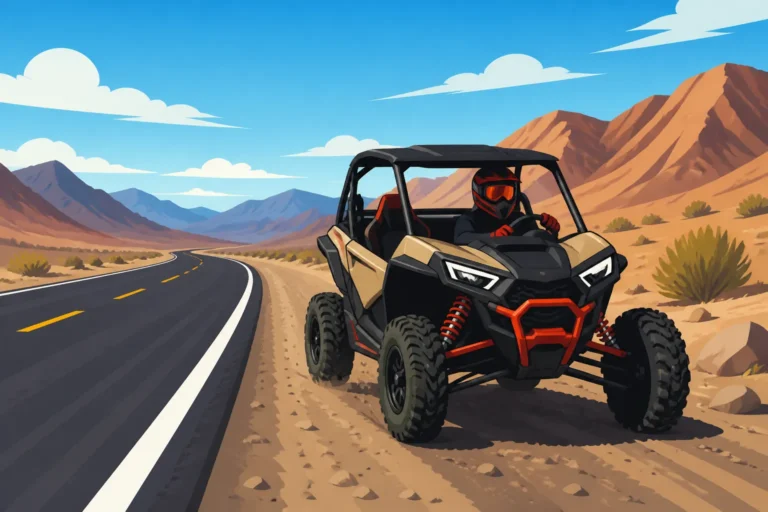
However, once you roll onto a public road, even a dusty county road, you're sharing that space with other vehicles – cars, trucks, even semi-trucks – that operate under an entirely different set of expectations and speeds. The risks are amplified, and the state, therefore, imposes much stricter regulations, particularly concerning minors. The Nevada DMV and law enforcement are less interested in your personal judgment calls and more in compliance with specific statutes that govern vehicle equipment, operator licensing, and passenger safety. It's not about stifling fun, but about fitting OHVs into a system designed primarily for cars and trucks, which is where the friction often comes in for OHV enthusiasts.
Distinguishing ATV from UTV for Passenger Rules
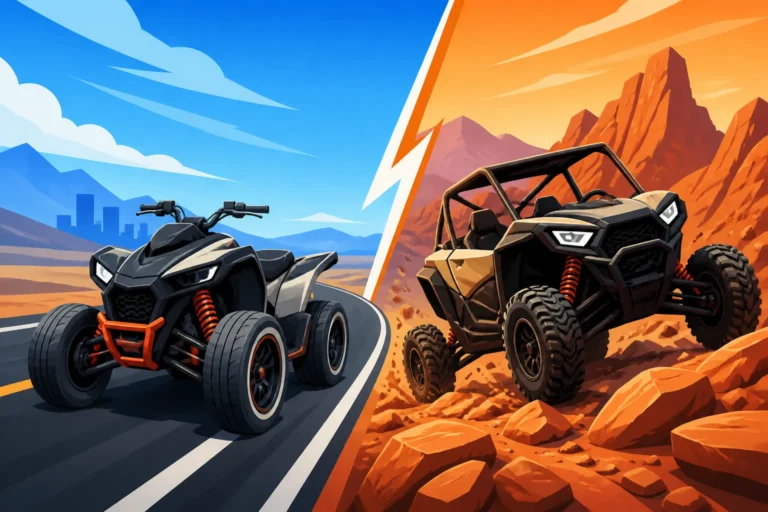
This is a critical distinction, and it's one that trips up a lot of riders. When people say "ATV," they often mean "any off-road machine." But legally in Nevada, an ATV (All-Terrain Vehicle) is generally defined as a motorized vehicle designed for off-highway use, having three or more wheels, and designed to be ridden by a single operator. This "single operator" part is key. True ATVs – your traditional quads – are not designed to carry passengers, and therefore, carrying a child passenger on a public road in a traditional ATV is almost universally prohibited and incredibly unsafe. Trying to squeeze a child onto the seat behind you on a quad for a road section is a recipe for disaster and a guaranteed ticket.
UTVs, or Utility Terrain Vehicles, also known as side-by-sides, are a different story. These machines are explicitly designed with multiple seats, often bench-style or bucket seats, and are equipped with factory seat belts. They are closer in design to a car or truck, making them the only type of OHV that might be legally equipped and operated to carry child passengers on designated Nevada roads. So, if you're thinking about taking your child on a road section in an OHV, you're almost exclusively talking about a UTV, and it still needs to meet very specific criteria.
Nevada's Definition of a "Large ATV" and Its Impact on Children
Before you even think about putting a child in your UTV for a road trip, you need to understand Nevada's "Large ATV" designation. This isn't just a casual term; it's a specific legal category under Nevada Revised Statutes (NRS 490.043) that dictates which off-highway vehicles can even consider operating on minor county roads. If your machine doesn't meet this definition, then carrying any passenger, let alone a child, on a public road is a non-starter, regardless of how many seats it has.
What Qualifies as a "Large ATV" in Nevada
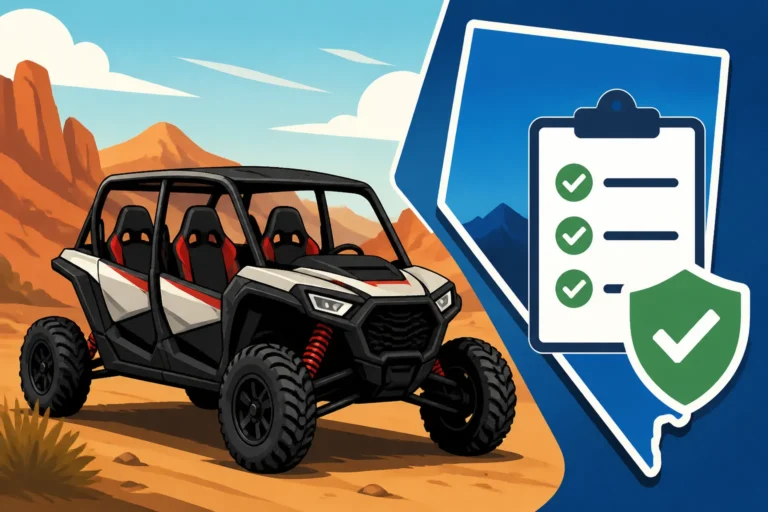
Nevada law is quite particular about what counts as a "Large ATV." To simplify, for your UTV to even have a chance at legal road use with passengers, it must meet one of two primary criteria: it has at least four seats or it has a truck bed. This distinction is paramount. A side-by-side like a Polaris RZR XP 4 1000, which has four factory seats, could qualify. Similarly, a utility-focused UTV like a Can-Am Defender or a Polaris Ranger, which comes with a cargo bed, would also generally meet this part of the definition.
The intent behind this definition is to distinguish machines that are more stable and designed to carry more than just a driver, from those that are not. The four-seat requirement implies a more substantial chassis and seating designed for multiple occupants, while the truck bed implies a utility machine often used on ranches or for work, which may have occasion to travel short distances on roads. It’s a very practical, if somewhat arbitrary, cutoff. You can find more detail on this by reading [What Nevada's NRS 490.043 Counts as a Large ATV]. Without meeting one of these two conditions, your machine is simply not eligible for the "Large ATV" decal, and thus cannot legally carry passengers on any public road, even for a short hop.
Why a Standard Quad or Two-Seat UTV Doesn't Qualify
This is where many enthusiastic riders hit a roadblock, literally and figuratively. Most sport quads, by their very nature, are designed for a single rider and absolutely do not qualify under the "Large ATV" definition. They lack both the multiple seats and the truck bed. Attempting to carry a child on a sport quad on a public road is not only illegal but extremely dangerous due to the vehicle's design and dynamics.
Even many two-seat UTVs, popular for sport riding or smaller utility tasks, also fall short of the "Large ATV" requirement. While they have two seats, they don't have four seats, nor do many of the sportier two-seaters come with a full truck bed. This means that if you own a two-seat Polaris RZR XP 1000 or a Can-Am Maverick X3, you won't be able to get the "Large ATV" designation, and therefore you cannot legally take your child as a passenger on Nevada county roads. It’s a bitter pill to swallow for families who bought a two-seater thinking it would be enough for road access to trails. It essentially means that for road-legal passenger transport, you need a larger, usually more utility-focused, or a four-seat recreation UTV. This crucial detail often surprises people and highlights the need to understand the nuances of the law before planning a road trip with your little co-pilot.
Age, Seating, and Restraint Requirements for Child Passengers
Once your UTV is properly registered as a "Large ATV" and you're riding on an approved road, the next layer of complexity comes with specific rules for child passengers. Nevada takes child safety seriously, and while the exact statutes for OHVs aren't always as detailed as for passenger cars, the principles are clear: safety first, and adherence to common sense and best practices is paramount.
Minimum Age for Child Passengers in a Large ATV on Roads
Nevada law, specifically NRS 490, dictates that a child under 8 years of age and weighing less than 80 pounds must be secured in an approved child restraint system when riding in a vehicle on a public highway. While this statute is primarily aimed at cars and trucks, it applies to any "vehicle" operating on a public highway, which would include a "Large ATV" operating legally on a county road. This immediately presents a challenge for many UTVs.
Most UTVs are not designed to accommodate traditional child car seats or booster seats safely. The seat belts are typically adult-sized, and the mounting points for child restraint systems simply aren't present. While some aftermarket solutions exist, their safety in an OHV collision on a public road isn't held to the same stringent standards as in a passenger car. For this reason, many families choose to err on the side of caution and wait until their child is older and heavier before considering them as a passenger on any public road section, even in a "Large ATV." If your child needs a specific car seat for their age and weight, a UTV on a public road might not be the right place for them. You also need to consider that even if the child meets the general age requirement, maturity is a huge factor. Can they follow instructions? Will they keep their hands and feet inside the vehicle at all times? These are non-negotiable for road safety.
Seat Belts and Child Restraint Systems in OHVs
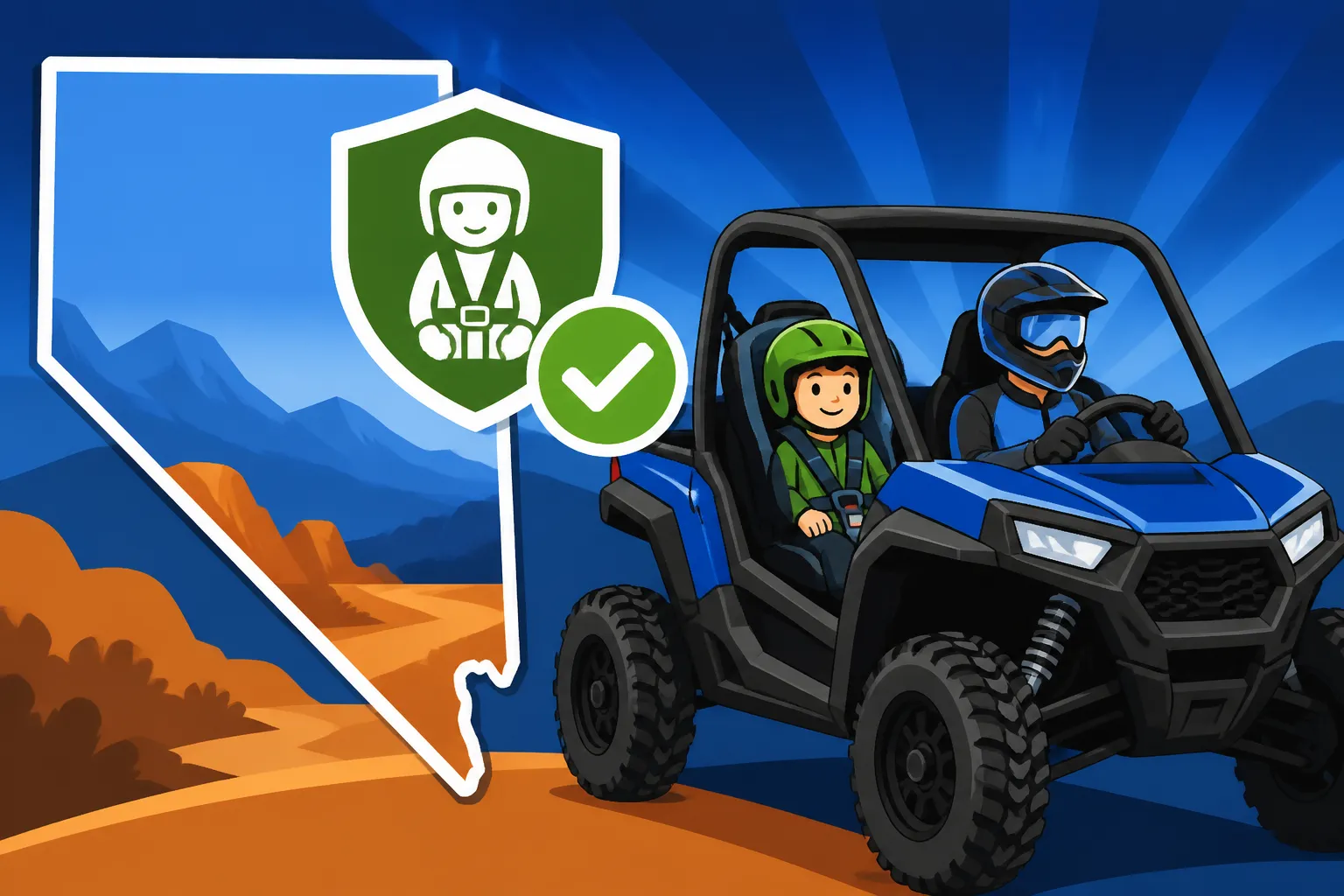
When riding in a "Large ATV" on a public road, every occupant, including children, must use the factory-installed seat belts. This is non-negotiable. However, as mentioned, the typical three-point seat belts in a UTV are designed for adults. They may not fit a small child correctly, potentially riding too high on the neck or too low on the abdomen, which can be more dangerous than helpful in a sudden stop or collision.
Unlike passenger vehicles, there are no specific state-mandated child restraint systems for OHVs. This doesn't mean you can ignore the problem; it means you are responsible for ensuring your child is safely secured. Aftermarket harness systems are popular for off-road use, offering better retention than standard seat belts. However, when operating on a road, the legal requirement often reverts to the factory seat belts, and the implications of using aftermarket restraints on a public highway should be carefully considered and, ideally, researched with local law enforcement or the DMV. For any modifications or additions, always prioritize safety and check compliance. You can learn more about general seat belt rules for UTVs by looking into [Nevada Seat Belt Rules in a Side-by-Side].
The Role of Helmets for Child Passengers
Nevada's helmet laws for OHVs are primarily focused on the operator and passengers of traditional ATVs (quads) or motorcycles. For occupants inside a UTV (side-by-side) on public roads, a helmet is not generally required by law. However, this is a point where legal requirements often diverge from best safety practices. While a UTV provides a roll cage and seat belts, it's still an open-air vehicle that can be involved in high-speed incidents.
For children, especially, wearing a properly fitting helmet is a layer of protection that should be strongly considered, regardless of legal mandates. Head injuries are a significant risk in any vehicle accident. Given the potential for unexpected bumps, rapid stops, or even a rollover in an off-highway vehicle, ensuring your child wears a helmet, even as a passenger in a UTV, is a prudent decision for their well-being. It adds a measure of reassurance that you've done everything possible to protect them. The general rules about helmets for passengers are discussed in [Nevada Helmet Rules for Passengers].
Designated Roads and Supervision for Young Riders
Even if your UTV qualifies as a "Large ATV" and your child meets the age and seating requirements, you can't just drive anywhere. Nevada has very specific rules about where these machines can operate on public roads, and this directly impacts where you can legally take your child.
Where Child Passengers Can Legally Ride on Nevada Roads
The primary rule is this: "Large ATVs" with proper decals are generally permitted only on minor county roads and designated OHV routes. They are explicitly banned from state highways (like US 95 or I-80) and many city streets, especially in larger municipalities like Las Vegas, Reno, or Henderson. The "minor county road" definition can be a bit fuzzy, but generally refers to less-traveled, often unpaved or poorly maintained roads that are under county jurisdiction and not part of the state highway system.
Local county ordinances also play a massive role. Some counties might be more permissive, while others might ban OHVs from all county roads unless specifically designated. For instance, Washoe County has its own ordinances that restrict OHV use on many county roads, while rural counties might be more open. This means you need to do your homework for the specific area you plan to ride. Never assume a road is open; always verify before you venture out with your child. Knowing which roads are truly open for [Nevada County Roads Open to UTVs] is crucial.
Supervision Requirements for Young Operators and Passengers
While your child might be a passenger and not operating the UTV, their presence still means you, as the adult operator, carry a heightened responsibility. Nevada law requires direct supervision for any rider under 16 years of age who is operating an OHV. While this specifically addresses operators, the spirit of the law extends to the safety of minor passengers. As the driver, you are entirely responsible for the safe operation of the vehicle and the well-being of all occupants.
This means not only ensuring your child is properly restrained but also maintaining vigilance, adjusting your driving to ensure their comfort and safety, and being prepared for any situation. You need to be the responsible adult, setting a clear example of safe riding practices. The rules around [Nevada Rules for Riders Under 16 on Roads] primarily apply to operators, but the overarching principle of adult supervision for minors in an OHV is always a factor for law enforcement.
Practical Considerations and Safety Recommendations
Beyond the letter of the law, there are many practical steps you can take to make the experience safer and more enjoyable for your child when riding a "Large ATV" on a Nevada road. Common sense and proactive safety measures go a long way.
Preparing Your UTV for Child Passengers on Roads
Before you ever load up your kids for a road section, thoroughly inspect your UTV. Ensure all seat belts are in excellent working order, free of frays or damage. If your UTV has doors, make sure they latch securely and cannot accidentally open. Consider adding a half-windshield or full windshield to protect children from road debris, dust, and wind blast, which can be intense even at lower speeds. Mirrors are also essential for road safety, allowing you to monitor traffic behind you.
While not strictly required for passengers in a UTV, a robust roll cage is a fundamental safety feature. Aftermarket accessories, such as a sturdy roof or side nets, can add an extra layer of perceived security, though it's important to remember that these are for containment rather than impact absorption on roads. When considering any aftermarket part, like those from SuperATV, always prioritize safety and ensure they enhance, rather than detract from, the vehicle's structural integrity or legal compliance for road use. Check the general [Nevada Equipment List for Road-Legal UTVs] for more ideas, though not all items are strictly for passenger safety.
Communicating Safety Rules to Children
Kids are naturally curious and excitable, especially in a UTV. Before every ride, particularly if it involves a road section, have a clear and calm conversation with them about the rules. Emphasize the importance of keeping their hands, arms, and feet inside the vehicle at all times. Explain that while it might feel different from riding off-road, these road sections require them to stay seated, quiet, and attentive.
Reinforce that the driver needs to focus and that distractions can be dangerous. Make it a routine, so they understand the expectations. You can even make it a fun "co-pilot checklist" game to help them remember. This not only reinforces safety but also teaches them responsibility and respect for the rules, which are valuable lessons both on and off the trail.
Always Prioritizing Off-Road for Family Fun
Ultimately, while understanding the rules for road travel with child passengers is important for those short transit sections, remember that the true joy and purpose of an OHV are found off-road. The regulations and inherent risks of public roads mean that if you're looking for family fun and extensive riding with your children, the vast network of Nevada's trails and designated off-highway areas remains the safest and most enjoyable environment.
Roads are for getting to the adventure, not necessarily for being the adventure itself, especially with kids in tow. Focus your family riding on places like Logandale Trails, Nellis Dunes, or the expansive BLM lands where the rules are designed for OHV recreation, and your children can experience the freedom and excitement of off-road riding in a more controlled and appropriate setting. Save the road portions for necessity, and keep the main event for the dirt.
| Feature / Scenario | Traditional ATV (Quad) | Two-Seat UTV | Four-Seat UTV or UTV with Truck Bed (Large ATV) |
|---|---|---|---|
| Passenger on Paved Roads | Generally NO (single-rider) | NO (not "Large ATV") | YES (if designated "Large ATV" & on minor county roads) |
| Child Passenger (Age/Weight) | N/A | N/A | Age/weight considerations apply (e.g., child restraint laws) |
| Seat Belt Requirement | N/A | YES (off-road only) | YES (factory belts, on-road & off-road) |
| Helmet Requirement (Child Passenger) | N/A | Generally NO (in UTV) | Generally NO (in UTV), but recommended |
| Road Decal Required | NO (cannot be road-legal for passengers) | NO (cannot be road-legal for passengers) | YES ("Large ATV" decal) |
| Primary Use with Child Passengers | N/A (single-rider) | Off-road trails/areas only | Off-road trails/areas, limited road transit (if legal) |
Disclaimer
This article is for general informational purposes only and does not constitute professional advice. Laws, prices and regulations vary by location and change over time. Consult a qualified professional for guidance on your specific situation.