Carrying Water for a Desert Ride
A Nevada desert ride can turn uncomfortable fast when the route takes longer than planned, the temperature climbs, or a machine gets stuck far from the trailer. Carrying enough water means planning for the whole group, protecting your supply from heat and leaks, and keeping some reserve for delays—not just bringing a bottle for the ride you expect to have.
Plan your water for the ride you might have
Estimate needs by rider, time, and conditions
There is no single amount of water that suits every rider or every Nevada ride. A short morning loop near a trailhead is different from several hours on exposed sand, where sun, exertion, and heat can make drinking more important. Your needs also depend on your health, pace, clothing, and how accustomed you are to riding in hot weather.
Start with the expected time away from your vehicle, then consider how that estimate could change. A route may take longer because of soft sand, navigation mistakes, mechanical trouble, a group member who needs a break, or a slow-moving rider. If you are planning a ride near Sand Mountain, for example, allow for time spent climbing, regrouping, and getting back to the staging area—not only the time you expect to spend moving.
Use experience from similar rides as a starting point, not a guarantee. Notice how much you and your passengers actually drink on a comparable ride, and adjust for hotter conditions, greater effort, or a longer route. If someone in the group has a medical condition or takes medication that affects hydration, they should follow advice from their healthcare professional rather than relying on a general riding rule.
Build in a delay reserve
A useful plan assumes that something may go wrong. The group might stop to help a rider, wait out a dust storm, or take an unplanned detour. Your water reserve is for that extra time, not for making a longer route feel safe when the planned supply is already marginal.
For each rider, work out the expected amount for the planned outing and then add a separate reserve. Keep that reserve identifiable and avoid treating it as a convenient extra drink for the first part of the ride. On a group trip, do not assume that one person’s spare supply can cover everyone: a leak, a separated group, or a machine problem could leave the extra water out of reach.
Plan around the least-prepared or most vulnerable person in the group. Children, new riders, passengers, and anyone who is not used to desert heat may need more frequent breaks and closer attention. A route that is manageable for experienced adults can become a poor choice if the group has limited water, little shade, or no reliable way to turn back.
Match the plan to the route and season
Nevada’s riding conditions vary substantially by location and time of year. Open dunes and exposed desert tracks offer little protection from direct sun, while elevation, wind, and a cooler morning can make conditions feel deceptively mild before the day heats up. Use the forecast and local conditions to decide whether to shorten the ride, start earlier, or postpone it. The guide to Nevada Desert Riding in Summer Heat offers more context for thinking through hot-weather outings.
Route choice matters, too. A familiar ride near a developed staging area is not the same as a longer trip with few easy exits. Before setting out around Sand Mountain: Nevada’s Great Basin Dune or exploring Logandale Trails Outside Las Vegas, consider where you can safely turn around, how far you are from your vehicle, and whether the whole group has enough water for a delay.
| Planning factor | What to consider | Practical adjustment |
|---|---|---|
| Ride duration | Time away from the vehicle, including stops | Add a reserve for delays and slower travel |
| Heat and sun | Forecast, exposure, shade, and time of day | Reduce the route or ride during cooler hours |
| Effort | Soft sand, hills, pace, and repeated climbs | Carry more than you would for an easy loop |
| Group | Passengers, children, experience, and individual needs | Plan for the rider who needs the most support |
| Exit options | Distance to the trailhead or a safe turnaround | Shorten routes with few practical exits |
| Water access | Whether any reliable refill point is actually available | Treat carried water as essential; do not assume a refill |
Choose a water-carrying setup that works on an ATV or UTV
Keep drinking water easy to reach
Water that is buried under tools or packed in a hard-to-open container may as well be back at camp when you are hot and dusty. Carry a personal drinking supply where you can reach it during a safe stop. A hydration pack can make frequent sips convenient, while bottles or a larger jug can be easier to inspect, refill, or share at the vehicle.
Each option has trade-offs. A hydration pack can be comfortable for a rider who wants hands-free access, but its hose and bite valve need to stay clean and in working order. Bottles are simple and easy to count, though they may be awkward to reach while wearing riding gear. A UTV can usually accommodate a larger group supply, but that central supply does not replace water each occupant can reach without unpacking the machine.
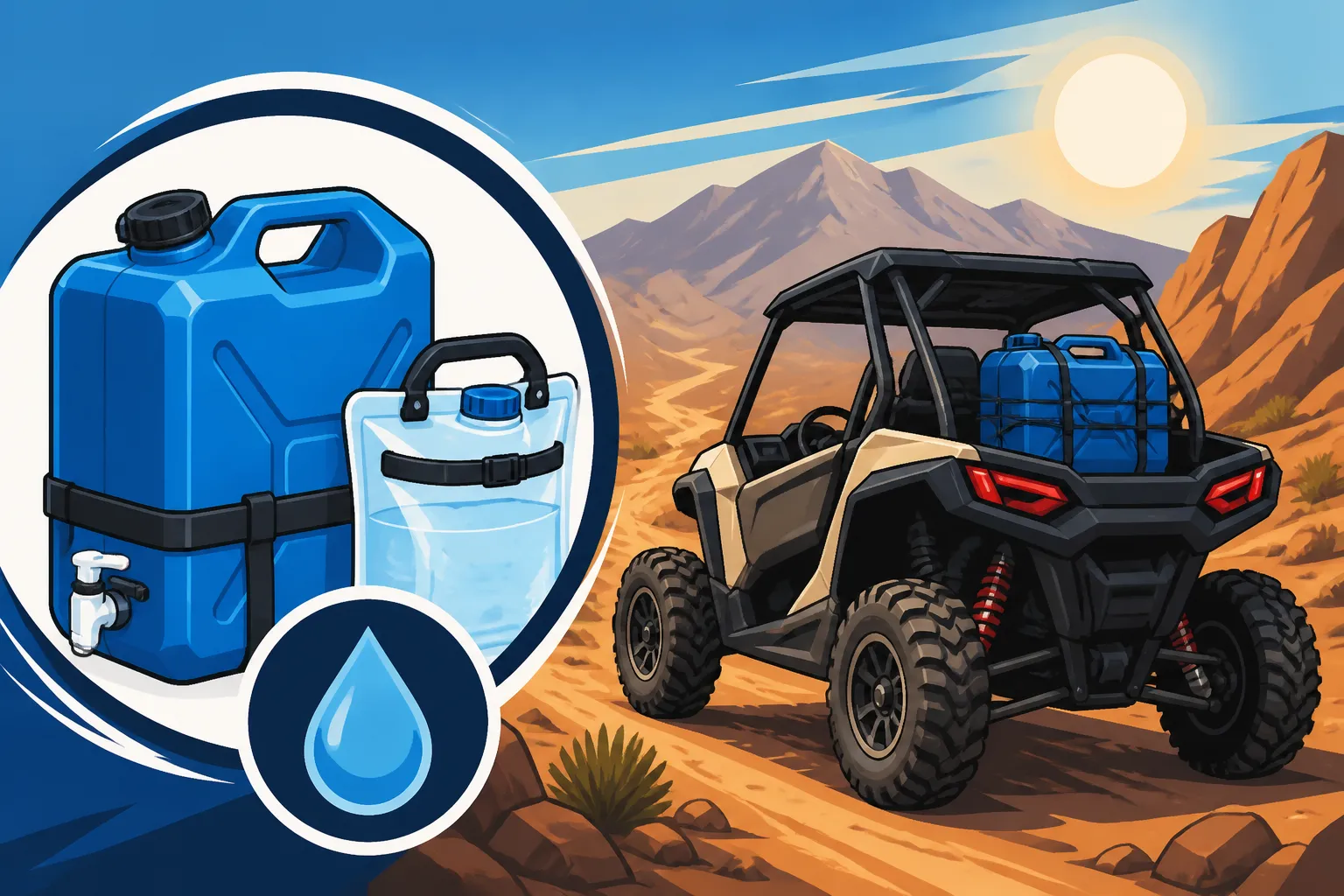
Try the setup before a long ride. Check that a pack does not interfere with your helmet, neck brace, seat belt, or riding posture. Make sure bottles will not roll under pedals or become loose during a bumpy section. In a side-by-side, secure larger containers so they cannot shift during a sharp turn or rollover.
Protect the supply from heat, dust, and damage
A water container in direct sun can become unpleasantly warm, and a loose cap or cracked bottle can leave you with less than you planned. Place water in a shaded, stable part of the machine when possible, and keep a small personal supply separate from the main reserve. Insulated containers can help water stay more comfortable to drink, but insulation does not make a container leak-proof or protect it from being crushed.
Dust is another practical nuisance. Keep drinking openings covered, and avoid setting caps or bite valves down on gritty surfaces. Before leaving, check that every lid closes fully and that any hydration-pack hose is connected. A quick leak check at home or the staging area can prevent discovering a soaked gear bag halfway through the ride.
Use clean containers intended for drinking water, and wash and dry them after the trip. Pay attention to the hose and mouthpiece on a hydration system, where residue can collect. If water tastes or smells unusual, or a container has been contaminated, do not count it as usable drinking water.
Divide water into personal supplies and a shared reserve
A simple way to avoid confusion is to give each rider an individual supply, then carry a separate group reserve. That makes it easier to notice who has been drinking and keeps one person from accidentally using the water intended for a delay. Label containers in a mixed group, especially when people bring similar bottles or packs.
Keep the reserve secured and accessible. If it is buried beneath a cooler, recovery gear, and luggage, it may be difficult to reach when you need it quickly. In a UTV, decide who is responsible for checking the group supply before departure. On a quad, distribute the load carefully and follow the machine manufacturer’s guidance for carrying cargo; avoid attaching containers where they can affect control or become a snag hazard.
If someone becomes separated from the group, they should still have water with them. A shared jug in the lead machine is not useful to a rider who is no longer with that machine. For more on planning beyond the water itself, see Water and Fuel Planning in Nevada and Breaking Down Far From the Trailhead.
Drink regularly and recognize when the plan is failing
Take safe, regular breaks
Do not wait until everyone feels exhausted to stop. Use planned breaks to drink, regroup, check on passengers, and reassess the route. When conditions are hot, a shade break may be difficult to find, so choose rest stops thoughtfully and avoid stopping in a place that creates a traffic or visibility hazard.
Drink during breaks and as needed while riding, but never try to drink from a bottle or manage a hydration hose in a way that distracts you from controlling the machine. Pull over safely first. A passenger should not be expected to handle the group’s water plan while also dealing with dust, rough terrain, or an uncomfortable ride.
Pay attention to how the whole group is doing, not just your own thirst. A rider may become quiet, irritable, unusually tired, or less coordinated before they say they are struggling. Frequent check-ins make it easier to notice a change early and decide to turn back while the group can still do so safely.
Treat heat illness as an emergency, not a reason to push on
Headache, dizziness, nausea, unusual weakness, and heavy fatigue can be warning signs that someone is not coping well with the heat. Stop the ride, move the person to shade if it is safe, loosen unnecessary gear, and begin cooling them. Do not leave them alone or insist they continue to the next checkpoint.
Confusion, fainting, seizures, or very abnormal behavior are especially serious signs. Contact emergency services and follow the dispatcher’s instructions. If the person is confused or unconscious, do not force water into their mouth; they may not be able to swallow safely. A drink is not a substitute for emergency care when someone may have a serious heat-related illness.
Your route plan should include a way to call for help if cell service is unavailable. Check Cell Coverage on Nevada Trails before you leave and consider whether your group needs a satellite communication device on a remote outing. This is also a reason to tell someone where you are riding and when you expect to return.
Turn back before the reserve becomes the plan
The point of a water reserve is to cover unexpected delay, not to justify continuing once the group is running low. If someone has already used most of their supply, a container has leaked, or the ride is taking longer than expected, reassess early. Turning around can feel disappointing, especially after driving out to ride, but it is better than making a hot return trip with little water left.
Use route information to set a clear turnaround point before the ride begins. A downloaded map can help the group understand where it is and identify a practical route back, but it cannot replace water or sound judgment. Riders who use onX Offroad can prepare a map before leaving service, then check the route and exit options during a safe stop. Keep a second map or route reference where practical in case a phone battery fails.
If the group’s water situation changes, adapt the ride rather than trying to preserve the original plan. onX Offroad may help you orient yourself, but the most important decision is whether the group can safely continue. On a remote ride, a shorter route with a comfortable reserve is a better plan than reaching a scenic destination and having no margin for the return.
Make water part of the pre-ride routine
Use a repeatable departure check
A consistent check helps prevent the easy-to-miss problems: a nearly empty pack, a loose cap, or a shared jug that was never loaded. Before each ride, confirm that every person has their own drinking supply, the reserve is present, and containers are secure. Ask passengers and children directly whether their water is within reach rather than assuming someone else has packed it.
Check the route and weather together. A route that makes sense in mild conditions may need to be shortened if the day is hotter than expected or the group leaves later than planned. Use Nevada Trail Maps Worth Downloading to support your route planning, and prepare offline navigation before heading into an area where reception may be limited. onX Offroad can be one part of that preparation, alongside a backup route reference and a clear plan for turning back.
A practical departure check can look like this:
- Confirm each rider has an accessible personal supply.
- Check the group reserve and make sure it is secured.
- Inspect caps, hoses, valves, and containers for leaks or damage.
- Review the expected ride time, conditions, and turnaround point.
- Tell someone outside the group where you plan to ride and when you expect to return.
- Reassess if the ride starts late, conditions worsen, or a rider feels unwell.
Refill and reset after every ride
After returning, refill the containers rather than leaving the job for the next morning. Wash bottles and hydration components, let them dry thoroughly, and inspect them for cracks, worn seals, or damaged hoses. Replace equipment that no longer closes securely. A container that worked on the last ride is not automatically ready for the next one.
Make a brief note about what worked. Did the group use more water than expected? Was the reserve hard to reach? Did the pack rub against a helmet or make riding uncomfortable? These small observations help you adjust your setup for a future trip to Nellis Dunes, Nevada’s Free Dune Ride or a longer backcountry outing.
Finally, do not let navigation tools create a false sense of security. onX Offroad can help with route awareness, but maps cannot guarantee an open route, a safe exit, cell coverage, or water along the way. Check local conditions, carry what the group needs, and be willing to shorten the ride when the circumstances call for it.
Disclaimer
This article is for general informational purposes only and does not constitute professional advice. Laws, prices and regulations vary by location and change over time. Consult a qualified professional for guidance on your specific situation.