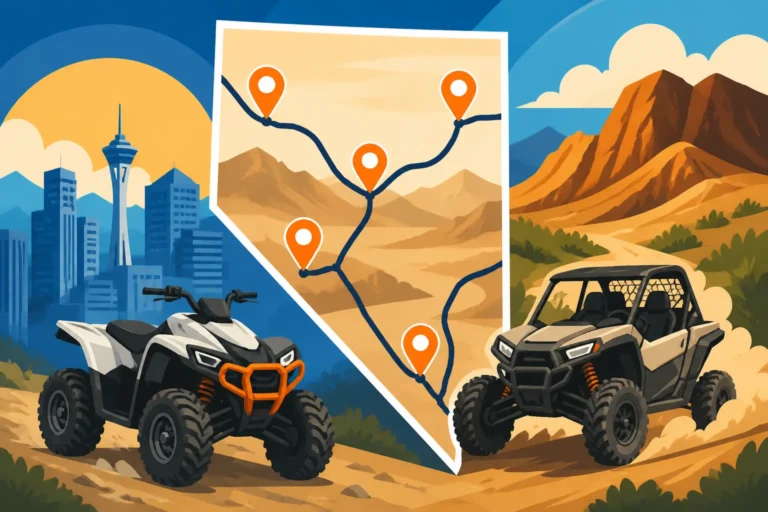
Las Vegas City Limits and OHV Routes
Picture this: you've just moved to or are visiting the vibrant Las Vegas area, and you've got your trusty ATV or UTV with you, itching to hit the desert trails. But then reality sets in – the confusing web of city limits, county roads, and state laws makes it incredibly difficult to figure out where you can actually legally ride your off-highway vehicle (OHV). It’s a common frustration, feeling like you’re constantly guessing, or worse, risking a hefty fine. This guide is here to untangle that knot, walking you through the definitive rules and practical realities of navigating Las Vegas city limits with your OHV, so you can spend less time worrying and more time riding safely and legally.
The Harsh Reality of Riding OHVs Within Las Vegas City Limits
Let's just get this out of the way upfront: if you envision cruising your quad or side-by-side down the Las Vegas Strip, or even through residential neighborhoods to get to a local gas station, you're going to be disappointed. And likely ticketed. The dream of riding directly from your hotel or home to the nearest desert trail often bumps up against strict local ordinances that prioritize public safety and peace.
Why Street Riding is Mostly a No-Go
The truth is, Las Vegas, like most densely populated urban centers across Nevada, has stringent laws prohibiting the operation of off-highway vehicles on city streets, sidewalks, and any public right-of-way not specifically designated for them. These rules aren't arbitrary; they stem from very real concerns. Imagine the chaos if hundreds of ATVs and UTVs were mixed with regular car traffic – the speed differentials, the lack of traditional safety features like turn signals or mirrors on many machines, and the sheer volume of vehicles would create a nightmare scenario for accidents.
Beyond safety, there are significant quality-of-life issues at play. OHVs, especially those with aftermarket exhausts, can be incredibly loud. Residents living in quiet neighborhoods don't appreciate the roar of engines late at night or early in the morning. Dust, exhaust fumes, and the potential for property damage also contribute to the push for strict enforcement. The city has a responsibility to its residents to maintain a certain level of peace and order, and allowing unrestricted OHV access on urban streets simply doesn't align with that goal. This is why you'll find [Nevada Cities That Require Designated OHV Routes] – and sometimes, those routes are just not present within the core city.
The "Designated Route" Exception and Its Limitations
Now, you might have heard whispers of "designated routes" where OHVs can legally operate. It's true that Nevada law does allow for cities and counties to create specific pathways for off-highway vehicles. However, it’s critical to understand what this usually means for a major city like Las Vegas. Within the dense urban and suburban sprawl of Las Vegas itself, general-purpose designated routes for recreational OHV use are incredibly rare, if they exist at all. Don't expect to see signs pointing you down main thoroughfares or through residential blocks as an "OHV route."
Typically, if a city or county designates a route, it's for a very specific and limited purpose – for instance, a short connector road to access a major trailhead on the outskirts of town, or a utility access road that happens to be open to OHVs. These routes are almost always outside of bustling commercial districts or quiet residential zones. The idea is to provide practical access for riders to reach the backcountry, not to facilitate joyriding through town. For most Las Vegas residents, this means the "designated route" exception offers little to no practical benefit for daily riding from home. It's a key distinction that often leads to confusion and, unfortunately, citations for riders unfamiliar with the very localized nature of these rules.
Getting Your OHV to the Trails: Your Only Real Option in Las Vegas
Given the tight restrictions within Las Vegas city limits, the most crucial takeaway for any OHV enthusiast is this: to enjoy the incredible desert riding opportunities surrounding the city, you must accept that getting your machine to the trails will almost always involve trailering. This might seem like a hassle, but it's the safest, most legal, and ultimately most responsible way to engage with the sport in this region.
The Necessity of Trailering Your Machine
Unless your home or lodging is literally adjacent to an approved trailhead (which is highly unlikely within Las Vegas city limits), you’re going to need a truck, SUV, or other tow vehicle equipped with a hitch, and a sturdy trailer. This can add a layer of logistical planning, cost, and storage considerations that some new riders might not anticipate. You'll need to think about where to park your trailer when not in use, how to load and unload your machine safely, and how to properly secure it for transport.
Using high-quality tie-downs is non-negotiable; you don't want your precious machine shifting or, worse, falling off your trailer on the freeway. Many riders turn to reliable aftermarket brands for their trailering needs, and a company like SuperATV offers a range of durable straps and equipment designed to keep your OHV secure. This investment in proper trailering gear isn't just about protecting your machine; it's about ensuring the safety of everyone else on the road. Embrace the trailer as your portal to adventure; it’s the gateway to the vast Nevada desert, allowing you to bypass all the urban restrictions and get straight to the fun.
Popular Riding Areas Accessible from Las Vegas
Once you’ve got your trailering strategy down, a whole world of incredible off-road riding opens up within a reasonable drive of Las Vegas. The area boasts some truly iconic and diverse landscapes perfect for OHV exploration.
One of the closest and most popular spots for dune riding near the city is [Nellis Dunes and the Las Vegas Skyline]. Located just northeast of Las Vegas, it's a fantastic place for a quick ride, offering open dunes and trails. It's close enough for a morning or afternoon trip, making it highly accessible. Another gem, a bit further out but absolutely worth the drive, is [Logandale Trails Outside Las Vegas]. Situated near the stunning Valley of Fire State Park, Logandale offers a completely different experience with its challenging rocky trails, washes, and picturesque red rock formations. It's a designated OHV area with marked trails, vault toilets, and even some camping spots.
Beyond these well-known spots, vast stretches of Bureau of Land Management (BLM) land surround Las Vegas. While you can't just drive onto any piece of desert, many areas are open to OHV use. Always check with the local BLM field office for specific rules, maps, and any temporary closures, especially during sensitive seasons for wildlife or fire restrictions. These areas provide endless opportunities for exploration, from wide-open desert to technical rock crawling, ensuring that every type of rider can find their perfect adventure. Remember, these designated areas are where your registration decal truly pays off, as the funds help maintain and improve these riding opportunities.
Nevada's "Large ATV" Designation and Limited Road Use Exceptions
You might have heard about Nevada's specific laws that allow some OHVs on certain roads. While this is true, it's a very nuanced set of rules, and it rarely, if ever, applies to riding within the main urban areas of Las Vegas. It's a critical distinction to understand to avoid accidentally breaking the law.
Understanding Nevada's Specific Road Use Laws for OHVs
Nevada Revised Statute (NRS) 490.043 defines what the state considers a "Large All-Terrain Vehicle" (Large ATV). This designation is crucial because it’s the key to any limited on-road use. Essentially, to qualify as a Large ATV, the machine must be a UTV that has either four or more seats or a utility bed. This immediately rules out virtually all sport quads and many two-seat UTVs. So, if you're riding a two-seat RZR or a traditional quad, this exception probably doesn't apply to you.
Even if your machine meets the "Large ATV" definition, getting a special decal for road use isn't a free pass to drive anywhere. The state allows Large ATVs on "minor county roads" for specific purposes – primarily to access trailheads or to cross short stretches of paved road (up to 2 miles) where a trail connects on either side. These county roads are typically unpaved, less traveled routes in rural areas. The [Nevada Large ATV Decal Cost] is an additional fee, and it signals that your machine has met the state's requirements for this very limited road use.
To qualify for this decal and legally use these minor county roads, your Large ATV must also be equipped with specific street-legal features. This includes headlights and taillights visible from 500 feet, a working stop lamp, reflectors, a horn, mirrors, and a spark arrester. Many aftermarket companies, like SuperATV, offer kits and individual components to help you equip your UTV with these necessary items, ensuring you meet the legal requirements. You'll also need a valid driver's license and proof of liability insurance, just like you would for a regular vehicle.
Why This Rarely Applies Within Las Vegas
It's tempting to think that if your UTV qualifies as a "Large ATV" and you've equipped it properly, you can now drive it on city streets in Las Vegas. Unfortunately, this is almost never the case. The state law for Large ATVs on minor county roads is precisely that: it applies to county roads, specifically minor ones. Las Vegas city ordinances, like those in many urban municipalities, typically supersede these state-level exceptions when it comes to roads within the city's jurisdiction.
What this means is that even if your UTV could legally travel a short distance on a gravel county road out near, say, Caliente or Pioche, it would still be illegal to drive it on a paved street in downtown Las Vegas or through a suburban neighborhood. Cities have the authority to create their own ordinances regarding vehicle use within their boundaries, and Las Vegas has exercised that authority to restrict OHV traffic for the reasons we discussed earlier (safety, noise, etc.). It’s similar to how [Washoe County Ordinance 1507] or other local rules can create specific carve-outs or outright bans that go beyond the general state statutes. Always assume that if you're inside a major city's limits, the default rule is "no OHVs on the street" unless you see very clear, specific signage indicating a designated OHV route. When in doubt, it's always safer to trailer your machine.
Consequences and Best Practices for Las Vegas OHV Enthusiasts
Riding an off-highway vehicle in and around Las Vegas offers unparalleled excitement and access to breathtaking desert landscapes. However, failing to understand and adhere to the local regulations can quickly turn a fun day into a costly nightmare. Being a responsible rider means knowing the rules, respecting the land, and preparing for the unique challenges of the Nevada desert.
Penalties for Illegal OHV Use
The law enforcement agencies in and around Las Vegas, including the Las Vegas Metropolitan Police Department (LVMPD) and sheriff's deputies in surrounding Clark County, are well aware of the regulations regarding OHV use. They actively enforce these rules, and the penalties for illegal operation can be severe. If you're caught riding your ATV or UTV on a prohibited street or sidewalk within city limits, you could face significant fines. These aren't just minor tickets; they can range from several hundred dollars to much higher amounts, depending on the specific violation and whether it's a repeat offense.
Beyond monetary fines, your OHV could be impounded. This means your machine is towed away, and you'll incur impound fees, daily storage fees, and potentially other administrative costs to get it back. The total cost of retrieving an impounded vehicle can easily run into the thousands of dollars, far outweighing the convenience of a short, illegal ride. In some cases, depending on the nature of the violation or any associated reckless behavior, you could even face misdemeanor charges. It's a harsh reality, but knowing the potential consequences, as highlighted in topics like [Nevada Tickets for Riding Where You Should Not], should strongly encourage riders to stick to the legal and designated riding areas.
Being a Responsible Rider in and Around Las Vegas
To truly enjoy the off-roading experience near Las Vegas, it all comes down to being a knowledgeable and responsible rider. First and foremost, always prioritize education. Take the time to understand where you can and cannot ride. This means not just knowing state laws but also specific county and city ordinances. Before heading out, especially to a new area, check the websites of the Bureau of Land Management (BLM), which manages much of the public land around Las Vegas, and relevant county websites for any current [Nevada Trail Closures to Check Before You Go] or restrictions. A quick [Calling a BLM Field Office Before a Ride] can save you a lot of trouble.
Secondly, respect the land and its inhabitants. Stick to marked trails and designated riding areas. Going off-trail can damage sensitive ecosystems, disturb wildlife, and contribute to erosion. Always practice Leave No Trace principles: pack out everything you pack in, and leave the environment as you found it. This also includes respecting private property; if an area is fenced or clearly marked as private, stay out.
Finally, prepare for the desert environment. The Nevada desert is beautiful but unforgiving. Always carry plenty of water, especially during the hotter months. Tell someone where you're going and when you expect to return. Ensure your machine is in good working order, and carry basic tools, a first-aid kit, and a communication device (cell service can be spotty in remote areas). Wearing appropriate safety gear – helmets, goggles, gloves, long sleeves, and sturdy boots – is non-negotiable for your protection. Many riders invest in robust protection and accessories from companies like SuperATV to enhance their safety and machine durability in rugged terrain. By combining knowledge, respect, and preparedness, you can ensure your Las Vegas OHV adventures are memorable for all the right reasons.
Las Vegas OHV Use: Legal vs. Illegal Scenarios
To help clarify, here’s a quick overview of common scenarios you might encounter when riding your OHV in the Las Vegas area:
| Scenario | Legality in Las Vegas City Limits | Best Practice |
|---|---|---|
| Riding from your home to a gas station | Illegal | Trailer your machine to a designated riding area. |
| Cruising on the Strip or main city streets | Illegal | Absolutely avoid. High fines and impoundment risk. |
| Riding on sidewalks or bike paths | Illegal | Reserved for pedestrians and bicycles. |
| Driving a Large ATV (UTV) on a minor county road outside city limits (e.g., to a trailhead) | Potentially Legal (with proper decal and equipment) | Ensure your UTV meets Large ATV definition, has required equipment (horn, mirrors, lights from SuperATV, etc.), and you have the special decal, license, and insurance. Verify road status with county. |
| Trailering your OHV to Nellis Dunes | Legal | Park your tow vehicle and trailer in designated parking areas at the dunes. |
| Riding at Logandale Trails | Legal | Stick to marked trails. Check BLM for any closures or special rules. |
| Riding on open BLM land (where permitted) | Legal | Research specific areas for current rules. Always carry maps and be prepared. |
| Crossing a major highway (e.g., US 95) | Illegal (unless at a designated crossing point) | Use caution. Many highways prohibit OHV crossings except at specific, marked locations. |
Disclaimer
This article is for general informational purposes only and does not constitute professional advice. Laws, prices and regulations vary by location and change over time. Consult a qualified professional for guidance on your specific situation.