Reno Streets and Where OHVs Cannot Go
It's incredibly frustrating when you've got your ATV or UTV all prepped for a ride, but then you realize that navigating the streets of Reno to get to the trails is a whole different beast. You just want to get from point A to point B, or maybe grab a quick bite after a dusty session, but the rules around riding off-highway vehicles on city roads can feel like a confusing maze of restrictions. This guide is here to clear up that confusion, specifically diving into Reno's rules and showing you exactly where your OHV can and cannot go within the city limits and surrounding Washoe County.
Understanding Nevada's OHV Street Legal Landscape
When you first get into the world of ATVs and UTVs, it's easy to assume that if you have registration and maybe some lights, you're good to go on any road. But Nevada, and particularly cities like Reno, have very specific distinctions between a vehicle designed for the dirt and one designed for pavement. This isn't just about what you think is safe; it's about deeply rooted legal definitions and local ordinances that prioritize public safety and traffic flow.
The Core Challenge: Why Most OHVs Aren't "Street Legal"
The biggest hurdle for most ATV and UTV owners is the fundamental difference between an Off-Highway Vehicle (OHV) and a traditional street-legal car or truck. OHVs are built for rugged terrain, tight turns, and challenging obstacles – not for smooth asphalt at higher speeds alongside passenger cars. They typically lack many of the safety features legally mandated for street use, like specific types of headlights, turn signals, DOT-approved tires, and crash-test ratings designed for road collisions. You might have a beefy SuperATV bumper on your side-by-side, but that's for trail protection, not meeting road safety standards.
It’s a common source of frustration: you've invested good money in a powerful machine, you see others driving golf carts on some streets, and you wonder why your capable UTV can't just run a quick errand. The reality is that the state, and local governments, view these machines primarily as recreational off-road vehicles. Trying to force them into a street-legal mold often involves significant, expensive modifications that still might not meet all the specific requirements, especially in stricter jurisdictions. This distinction is crucial for understanding why you can't just cruise down Virginia Street on your quad.
The "Large ATV" Exception and Why It Matters (or Doesn't) in Reno
Nevada law, specifically NRS 490.043, does carve out an exception for what it calls a "Large All-Terrain Vehicle." This isn't just any big quad or side-by-side; it has a very specific definition. To qualify, a machine must be "designed by the manufacturer for the purpose of carrying a driver and three or more passengers, or a driver and an operator with a truck bed." Think of those larger, multi-passenger utility side-by-sides with actual cargo beds, not your typical two-seat sport model.
If your machine does fit this narrow definition, it might be eligible for a special decal that allows limited road use on specific county roads, but not typically within incorporated city limits without further local designation. This is where many riders get confused. They hear about the "Large ATV" decal and assume their two-seat RZR or sport quad qualifies. Unfortunately, the vast majority of recreational ATVs and UTVs do not meet these criteria. So, while this exception exists statewide for certain conditions, for most Reno residents with their favorite off-road machines, it's a distinction that often doesn't apply to their specific vehicle or desired riding locations within the city. If you're curious, you can learn more about [What Nevada's NRS 490.043 Counts as a Large ATV].
Reno's Specific Rules: Navigating Washoe County Ordinances
Beyond the general state statutes, individual counties and cities in Nevada have the power to enact their own ordinances regarding OHV use on local roads. This is where Reno and Washoe County step in with rules that further restrict where you can ride. It’s not enough to know state law; you absolutely have to understand your local rules to avoid a costly ticket or even having your machine impounded.
Washoe County Ordinance 1507 and Its Impact
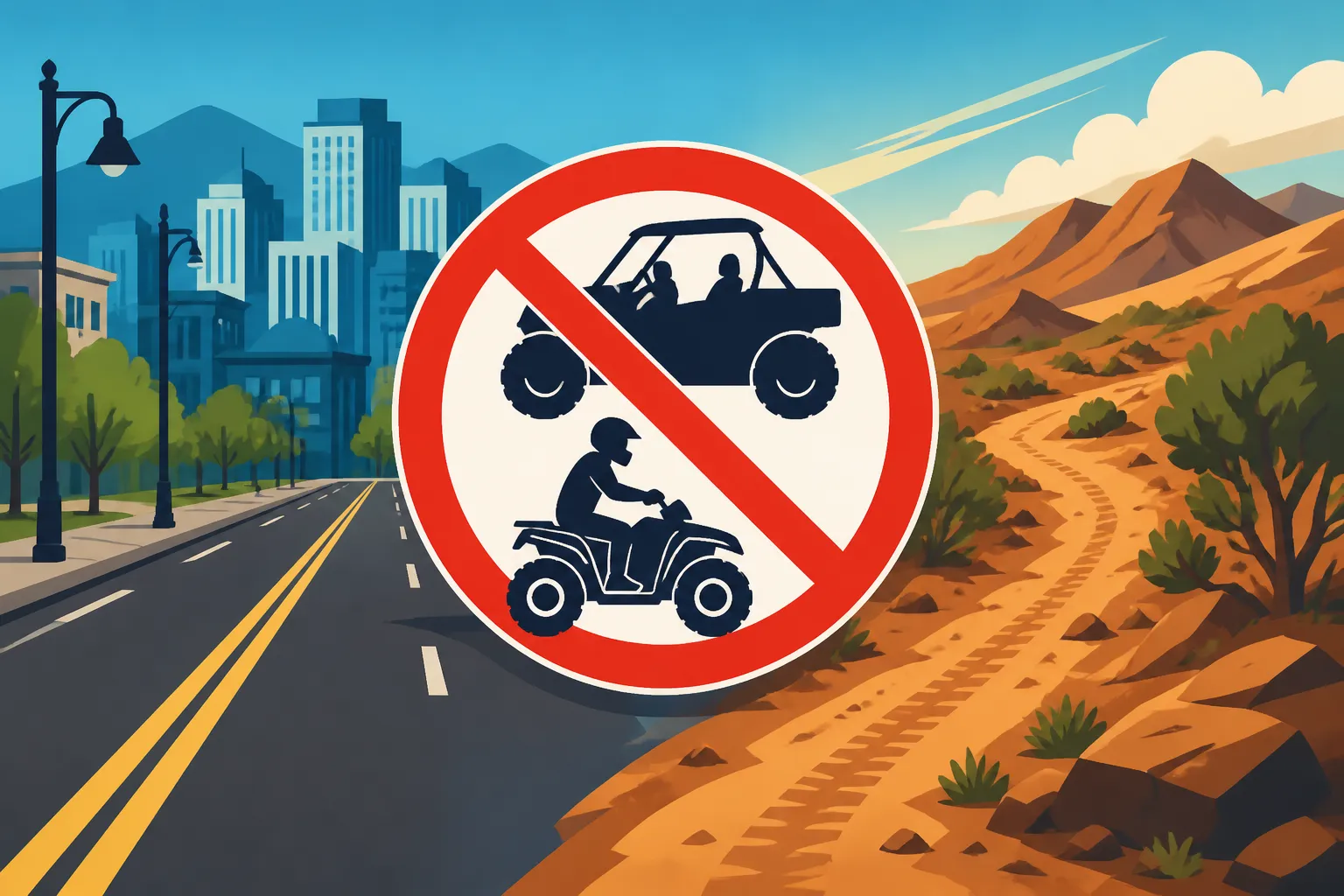
For residents of Reno, the primary hurdle is Washoe County Ordinance 1507. This ordinance specifically addresses the operation of OHVs within the county's jurisdiction, and critically, it largely prohibits their use on paved roads, streets, and highways within incorporated areas like Reno. This means that even if your machine met the "Large ATV" definition for state purposes, this local ordinance would still likely prevent you from riding it on most streets in Reno. The intent is clear: to keep recreational off-road vehicles off busy city streets where they can pose a safety hazard to other motorists, pedestrians, and themselves.
This ordinance impacts everyone from the casual rider who wants to quickly pop down to the gas station to the enthusiast hoping to connect a series of trails that require a short paved segment. The takeaway here is that Reno and Washoe County have taken a definitive stance against general OHV street use. Knowing about [Washoe County Ordinance 1507] is paramount for any local rider. Trying to plead ignorance will not work with a Washoe County Sheriff's deputy or a Reno Police officer.
Designated Routes and the Scarcity of Open Roads
Some cities in Nevada, particularly those with a strong OHV tourism focus or a more rural character, have designated specific routes where OHVs are permitted to travel. Think places like Mesquite, which has a reputation for being more open to OHVs on certain streets. However, Reno, being a larger, more urbanized area, has very few, if any, designated routes that permit OHV travel within its city limits. This means that unlike some smaller towns, you can't rely on finding clearly marked roads where you're allowed to connect from your home to a trailhead.
The scarcity of designated routes can be a huge source of frustration for riders. You look at a map, see a patch of public land just a few miles away, but realize there's no legal way to get there without loading your machine onto a trailer. This makes trailering your OHV to designated riding areas not just a recommendation but often a strict necessity. While other counties might have [Which Nevada County Roads Qualify for ORVs], Reno typically does not offer this flexibility within its main urban footprint. It underscores the importance of planning your outings carefully and understanding that urban centers prioritize traditional vehicle traffic.
Practical Advice for Reno OHV Enthusiasts
Given the strict rules in Reno and Washoe County, it's crucial to adopt practices that keep you legal and safe. Nobody wants a ticket or, worse, an accident, simply because they weren't clear on the local regulations. Being informed and prepared is your best defense.
When You Can (and Cannot) Cross Pavement in Reno
Nevada state law allows registered OHVs (those with the state decal, which you can read about in [What a Nevada OHV Decal Actually Proves]) to cross a paved highway at an angle, and even to ride along the shoulder or use the pavement for up to two miles to connect to another trail, but only if there isn't a local ordinance prohibiting it. This is a critical nuance often overlooked by riders. In Reno and Washoe County, Ordinance 1507 largely overrides this state-level flexibility within city limits.
This means you can't simply hop onto a Reno street for a couple of miles, even if you're trying to get to a trail. The 2-mile rule is more applicable in unincorporated, rural county areas that haven't enacted specific prohibitions. Inside Reno, the expectation is that OHVs are transported to designated riding areas via trailer. The idea of "riding to the trailhead" is generally not a viable or legal option if that trailhead requires significant travel on paved Reno roads. Always assume that if you're on a paved road within Reno's city limits, you're likely operating your OHV illegally, unless you're on private property.
Avoiding Tickets and Unwanted Encounters
The consequences of riding your OHV illegally on Reno streets can range from a significant fine to having your machine impounded. Law enforcement in Washoe County and Reno are well aware of the ordinances and will enforce them. Officers are trained to spot OHVs on inappropriate roads, and they won't hesitate to issue citations. The best way to avoid these unpleasant encounters is simple: don't do it.
Instead, invest in a good trailer and properly secure your OHV for transport. Load your quad or UTV onto the trailer at home, drive to a designated off-road area, and then unload and enjoy your ride. This approach not only keeps you legal but also protects your machine from unnecessary wear and tear on pavement, which OHV tires and suspension aren't designed for. Always check the current Washoe County Sheriff's Office and Reno Police Department websites for the most up-to-date information on enforcement practices, as rules can occasionally be tweaked. Remember that checking [What a Washoe County Deputy Checks First] might save you a headache.
| Aspect | Street-Legal Vehicle (Car/Truck) | Typical OHV (ATV/UTV) | Reno/Washoe County Rules |
|---|---|---|---|
| Primary Use | Public roads, highways, daily transport | Off-road trails, dunes, recreational areas | Prohibited on most public paved roads within incorporated areas. |
| Safety Equipment | DOT tires, airbags, crumple zones, advanced lighting, full enclosure | Knobby tires, roll cages (UTV), basic lights, no airbags | Local ordinances override state "2-mile rule" for most OHVs. |
| Registration/Plating | Vehicle registration, metal license plate, title | OHV registration decal, title (check [Titling an Off-Highway Vehicle in Nevada]) | Decal allows off-road use; does NOT grant street legality in Reno. |
| Driver's License | Standard driver's license required | Driver's license not required for off-road use (age limits apply) | Standard driver's license required for any legal street use. |
| Insurance | Mandatory liability insurance | Not always mandatory for off-road use (check [Insurance and Nevada OHV Registration]) | Mandatory if ever used on public roads, even briefly or legally elsewhere. |
| Road Travel in Reno | Generally permitted | Generally prohibited by Washoe County Ordinance 1507 | Best practice: Trailer your OHV to designated off-road areas. |
Looking Beyond Reno: Where You Can Ride Your OHV in Nevada
While Reno's city streets are largely off-limits for OHVs, Nevada is a massive state with incredible opportunities for off-road adventure just a short drive away. Don't let the city's restrictions deter you from enjoying your machine; instead, use it as an opportunity to discover some truly epic riding spots.
Nearby OHV Parks and Trail Systems
The beauty of living in or near Reno is your proximity to vast expanses of public land, perfect for OHV recreation. Just outside the immediate urban sprawl, areas like Peavine Mountain offer miles of dirt roads and trails, albeit with varying degrees of difficulty and terrain. Further out, places like the Winnemucca Dunes to the north or areas near Lovelock provide open riding areas that feel a million miles away from city traffic.
You don't have to go far to find legitimate riding. The key is to transport your machine to these areas. Research local Bureau of Land Management (BLM) maps and forest service regulations to find legal access points and trail systems. Many of these areas are where your Nevada OHV registration truly pays off, funding trail maintenance and facilities. You can get more ideas by exploring resources like [Nevada's Dune Riding Areas Compared] or learning about [The Nevada Commission on Off-Highway Vehicles] and their work. Don't forget to check for local trail closures or restrictions before you head out, especially during fire season.
Exploring Options for Outfitting Your Machine
Even if your OHV won't be hitting Reno's streets, that doesn't mean you can't enhance your off-road experience. Many riders invest in upgrades to make their machines more capable, durable, and comfortable for the trails they can ride. This is where companies like SuperATV come in handy, offering a massive array of aftermarket parts designed specifically for off-road performance.
Thinking about rock crawling near Peavine? You might consider a SuperATV lift kit for more ground clearance, or heavy-duty A-arms for increased strength. Planning long desert runs? A larger fuel tank, a high-quality spare tire carrier, or enhanced lighting for night riding could be on your list. These types of upgrades focus on improving your machine's ability to handle the challenging and diverse terrain Nevada offers, ensuring you get the most out of your off-road adventures, exactly where they're meant to happen. Remember, these modifications are for enhancing your off-road capability and safety, not for making your machine street-legal in Reno.
Disclaimer
This article is for general informational purposes only and does not constitute professional advice. Laws, prices and regulations vary by location and change over time. Consult a qualified professional for guidance on your specific situation.