Spark Arresters on Nevada Roads
Riding your ATV or UTV in Nevada is an incredible experience, offering vast open landscapes and breathtaking trails, but when it comes to taking your machine on paved county roads, things can get a little murky. Many riders assume that once they have their registration or a "Large ATV" decal, they're good to go, only to find out there's a crucial piece of equipment they overlooked: the spark arrester. This often-misunderstood component is not just for preventing wildfires on the trail; it's a non-negotiable requirement for legal road use in the Silver State, and deputies are checking for it.
Understanding the Spark Arrester: More Than Just a Muffler
Before we dive into Nevada's specific regulations, let's make sure we're all on the same page about what a spark arrester actually is and why it's such a big deal. It's easy to dismiss it as just part of the exhaust, but its function is incredibly important, especially in the dry, fire-prone landscapes of Nevada.
What Exactly Is a Spark Arrester and How Does It Work?
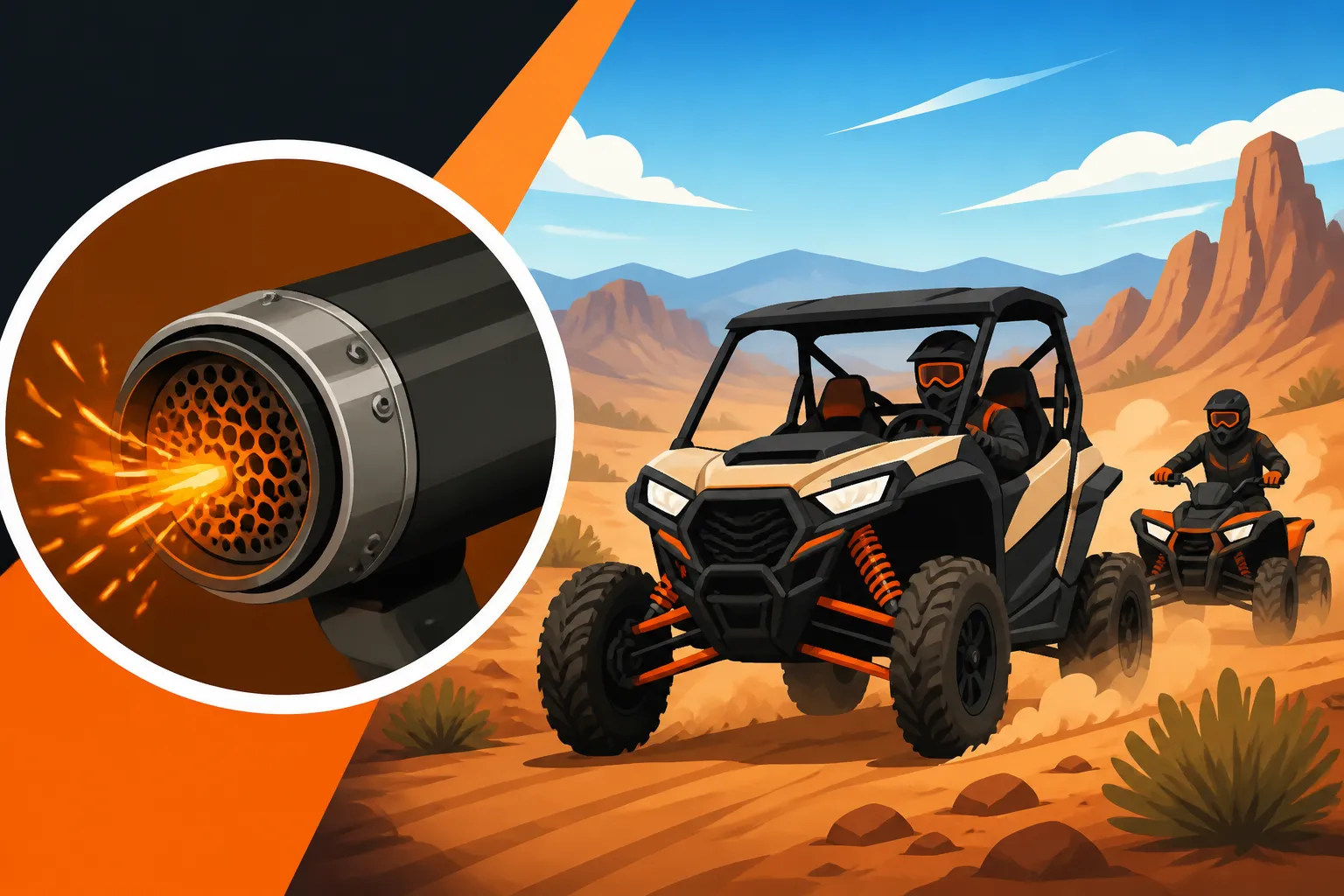
Think of a spark arrester as a tiny, highly effective filter for your exhaust system. When your ATV or UTV's engine runs, it produces hot exhaust gases, and sometimes, very small, incandescent carbon particles (sparks) can be expelled along with these gases. If these sparks land on dry vegetation, they can easily ignite a wildfire. This is where the spark arrester comes in. It's a device, typically built into the muffler or added as an aftermarket component, designed to trap or cool these hot carbon particles before they leave the exhaust pipe. Most commonly, they use a screen or a series of baffles to create a labyrinth that forces exhaust gases to change direction, causing heavier sparks to hit the internal surfaces and cool or get trapped.
It's not just about noise, although a properly functioning spark arrester is often part of an exhaust system designed to meet sound regulations as well. The primary goal is fire prevention. You might be running a powerful aftermarket exhaust system from a brand like SuperATV, and while these can offer performance benefits, you must ensure they either come with an integrated, compliant spark arrester or have a port for one to be added. Don't assume that because your machine is relatively new or sounds "stock" that it's automatically compliant; always verify the spark arrester status.
Why Nevada Cares So Much About Sparks (Fire Prevention)
Nevada is a state largely covered by arid and semi-arid terrain, making it incredibly susceptible to wildfires. The dry grasses, brush, and trees can ignite from the smallest spark, turning a pleasant ride into a devastating environmental and safety hazard. A single spark from an unarrested exhaust system can cause a blaze that destroys thousands of acres, threatens homes, and endangers lives. This isn't just a theoretical risk; it happens every year, and off-highway vehicles, along with other equipment, have been identified as sources of ignition.
Because of this very real danger, both federal and state land management agencies, as well as the Nevada Department of Motor Vehicles (DMV), take spark arrester requirements very seriously. These regulations are not arbitrary; they are a direct response to the ecological and economic damage caused by wildfires. When you ride a machine without a compliant spark arrester, you're not just risking a ticket; you're risking being responsible for a major disaster. This is why you'll often see signs at trailheads reminding riders of these rules, and why law enforcement patrols, including local deputies and BLM rangers, make it a point to check for this essential piece of equipment.
Nevada's Specific Rules for Spark Arresters on Roads
Navigating the rules for riding your OHV on Nevada roads can be tricky, as there are specific conditions your machine must meet beyond just having a registration decal. One of the most important, yet often overlooked, is the requirement for a compliant spark arrester. This isn't just an off-road rule; it absolutely applies when you're traversing paved surfaces.
The Legal Mandate for Road-Legal OHVs
Nevada Revised Statute (NRS) 490.060 clearly states that no person shall operate an off-highway vehicle unless it is equipped with a spark arrester that is approved by the U.S. Forest Service (USFS). This applies across the board, whether you're on a designated trail, public land, or a county road where OHV use is permitted. For your machine to be considered "road-legal" under Nevada's [Nevada Street Legal UTV Requirements] or to be granted a [Nevada Large ATV Decal Cost] allowing limited road use, having a USFS-approved spark arrester is fundamental. It's part of the essential [Nevada Equipment List for Road-Legal UTVs]. Without it, even if you have all your other ducks in a row – the right registration, insurance, and the special decal – your machine isn't legally equipped for the pavement.
This isn't just a minor technicality; it’s a critical safety and environmental regulation. Lawmakers understand that even a brief stint on a paved road, especially one adjacent to dry brush or grassland, carries the risk of fire ignition. Therefore, they’ve extended the spark arrester requirement to all operational scenarios, including the limited road access granted to OHVs. So, if you're planning to ride from your house to the trailhead, or to utilize the [Nevada's 2-Mile Limit on Paved Highway] rule to get into town for gas, your spark arrester must be in place and functioning correctly.
Distinguishing Road Use from Off-Road Requirements
Here's the thing: the spark arrester requirement itself doesn't fundamentally change whether you're on-road or off-road in Nevada. It's a constant. The confusion often arises because some riders associate spark arresters primarily with "dirt riding" or "forest service land." However, Nevada's statutes make no such distinction for the requirement of the device itself. If your machine is running, it needs a USFS-approved spark arrester. The difference truly comes down to other equipment requirements.
For instance, when riding off-road on BLM land, you might not need mirrors, turn signals, or a horn. But if you transition onto a county road, you'll suddenly need those, along with adequate headlights and taillights visible from a certain distance. However, the spark arrester remains a constant necessity in both environments. So, don't think that just because you're on blacktop for a few miles, you can bypass this critical component. The same federal standards (SAE J350 or other approved methods) that apply to a spark arrester on a remote trail also apply when you're cruising down a permitted county road around, say, Logandale. The law focuses on the potential for ignition, which exists regardless of the riding surface.
How Law Enforcement Checks for Compliance
When a Nevada deputy or a BLM ranger stops an OHV for a compliance check, especially if it's operating on a county road, they're looking for a specific set of items. Besides checking your [Nevada Driver's License Rules for UTV Road Use], insurance, and registration, they will absolutely cast an eye toward your exhaust system. What they're looking for is evidence of a USFS-approved spark arrester. This usually comes in the form of a stamp or a label directly on the muffler or the spark arrester itself. It will often say "USFS Approved" or "SAE J350," sometimes with an identification number.
A common scenario: you're riding your side-by-side on a county road, maybe heading to a popular riding area like Sand Mountain. A patrol officer might pull you over, not necessarily because you did anything wrong, but simply to perform a routine compliance check. They know that many riders inadvertently skip these details. If they don't see that stamp, or if your exhaust appears modified in a way that bypasses the arrester, you could be facing a citation. They might even use a special tool to probe the exhaust to confirm the presence of a screen. Remember, the goal of these checks isn't just to write tickets; it's to enforce fire safety and ensure everyone on Nevada's trails and roads is doing their part to protect the environment. [What a Nevada Trooper Looks For on a County Road] often includes checking for this essential device.
Ensuring Your OHV Meets Nevada's Spark Arrester Standards
It's one thing to know that a spark arrester is required, but it's another to actually ensure your specific off-highway vehicle meets Nevada's standards. This isn't always as straightforward as it sounds, especially with the wide variety of machines and aftermarket modifications available.
Identifying a USFS-Approved Spark Arrester
The key phrase here is "USFS-approved." This isn't just any screen or baffle system you can rig up in your garage. A USFS-approved spark arrester has been tested and certified to meet specific performance criteria under SAE J350 or equivalent standards. When you purchase a new ATV or UTV, especially from a reputable dealer, it almost certainly comes equipped with a USFS-approved spark arrester from the factory. The manufacturer knows this is a baseline requirement for selling machines that can legally operate on public lands.
To verify, you'll need to locate your muffler or the spark arrester insert. Look for a stamped or etched marking that explicitly states "USFS Approved," "SAE J350," or displays a specific USFS identification number. This mark is usually found on the body of the muffler, near the exhaust outlet, or on the end cap. If you have an aftermarket exhaust, such as one from SuperATV, it's crucial to confirm that their system or the specific insert you installed also carries this approval. Don't assume an aftermarket exhaust, even a high-quality one, automatically includes a compliant spark arrester unless it's explicitly stated and marked. If you can't find a clear marking, consult your owner's manual or the manufacturer's website. If you're buying a used machine, this is one of the first things you should check.
Options for Adding or Upgrading a Spark Arrester
What if your machine doesn't have a compliant spark arrester, or if you've installed an aftermarket exhaust that removed the original? You have a few options. The simplest, if you have a compatible muffler, is often to purchase and install an aftermarket spark arrester insert. These are typically metal screens or baffle systems designed to fit into the end of your exhaust pipe. Brands like SuperATV offer various universal or model-specific spark arrester inserts that meet USFS requirements. Make sure to get one that is explicitly USFS-approved and designed for your specific exhaust diameter.
Another option, especially if your muffler is old, damaged, or completely non-compliant, is to replace the entire muffler assembly with one that has an integrated USFS-approved spark arrester. This might be a stock replacement part or an aftermarket performance muffler that still includes the necessary fire suppression. When upgrading your exhaust for performance or sound, always prioritize USFS compliance if you plan to ride on public lands or Nevada's permitted roads. Trying to modify an existing non-compliant exhaust system to become compliant is generally not recommended unless you are using certified components from a reputable manufacturer, as homemade solutions rarely meet the stringent testing requirements.
DIY vs. Professional Installation Considerations
For many riders, installing a spark arrester insert is a relatively straightforward DIY task. It usually involves removing a few bolts or screws from the exhaust end cap, sliding in the new insert, and reassembling. If you're comfortable with basic hand tools and following instructions, you can likely handle this yourself. Always refer to the manufacturer's instructions for the specific spark arrester you're installing to ensure it's done correctly and securely. A loose spark arrester is not only ineffective but can also fall out during a ride.
However, if you're replacing an entire muffler, dealing with complex exhaust systems, or are simply unsure about the process, it's always wise to seek professional help. A qualified ATV/UTV mechanic or a dealership service department can ensure the spark arrester is installed correctly, securely, and that your entire exhaust system is compliant. They can also advise you on the best options for your specific machine and riding needs. While a professional installation might cost a bit more upfront, it offers peace of mind that the job is done right, reducing your risk of fines and, more importantly, wildfire ignition. Plus, they can confirm the USFS stamping and provide documentation if needed.
The Risks and Consequences of Non-Compliance
Ignoring the spark arrester requirement isn't just a minor infraction; it carries significant risks, from immediate financial penalties to long-term environmental and legal liabilities. In Nevada, where wildfires are a constant threat, enforcement is taken seriously.
Financial Penalties and Citations
Let's not beat around the bush: getting caught without a USFS-approved spark arrester on your OHV in Nevada, whether you're off-road or utilizing permitted road sections, can lead to a hefty fine. While specific amounts can vary by jurisdiction and officer discretion, these are generally not cheap tickets. Think hundreds of dollars, not tens. A deputy performing a routine check could issue a citation under NRS 490.060. These fines are often comparable to other significant violations, reflecting the seriousness with which the state views fire prevention.
Beyond the initial fine, you could also face additional costs. Depending on the situation, you might be required to fix the issue on the spot or within a certain timeframe, which could involve purchasing and installing a new spark arrester. If you're stopped far from home, this could mean trailering your machine home, cutting your ride short, and incurring unexpected expenses. It’s far cheaper and less disruptive to ensure compliance before you even head out. Ignoring something as simple as a spark arrester can quickly turn a fun day of riding into a very expensive lesson.
Environmental Impact and Personal Liability
The financial penalty is one thing, but the potential environmental impact and your personal liability are far more severe. If your machine, operating without a compliant spark arrester, ignites a wildfire, the consequences can be catastrophic. You could be held personally responsible for the costs associated with fighting the fire, which can quickly run into the millions of dollars. Imagine a fire that sweeps across public lands, destroying forests, wildlife habitat, and even threatening private property – all because of a single spark from your exhaust.
The legal ramifications can extend beyond civil liability. In some cases, if negligence can be proven, you could face criminal charges related to arson or reckless endangerment, depending on the severity of the fire and the specific laws applied. This isn't hyperbole; land management agencies are aggressive in pursuing those responsible for igniting wildfires, and they have dedicated investigation teams. The cost to society and the environment of a major wildfire is incalculable, and you do not want to be the person responsible. This highlights why adhering to rules like [Nevada Rules for Riding During Fire Season] and ensuring your spark arrester is functional is so crucial.
Roadside Stops and What a Deputy Looks For
When you're stopped on a county road in Nevada while riding your OHV, especially if you're taking advantage of the limited road use laws, a deputy will be looking for a very specific set of things. This isn't just about speed or erratic driving. They're often conducting compliance checks for street legality. [What a Nevada Trooper Looks For on a County Road] includes your registration, driver's license, proof of insurance, and the various equipment requirements for road use.
Among those equipment checks, your exhaust and spark arrester are high on the list. A common scenario: you’ve just filled up your tank at a gas station along a permitted county road and are heading back to the trails. A deputy might pull you over. They'll ask for your paperwork, check your [Nevada Large ATV Decal Cost] if applicable, and then visually inspect your machine. They’ll look for the USFS stamp on your muffler. If it’s missing, illegible, or if your exhaust clearly looks modified without an apparent arrester, you’re likely in trouble. They might even ask you to start your machine to listen to the [Sound Limits and Aftermarket Exhaust] and verify the spark arrester's presence. Getting pulled over for this, even if you weren't speeding, is a real possibility and entirely preventable.
Maintenance and Best Practices for Your Spark Arrester
Just having a spark arrester isn't enough; it needs to be properly maintained to remain effective and compliant. Like any other part of your ATV or UTV, it experiences wear and tear, and neglecting it can lead to problems down the road – both literally and figuratively.
Regular Inspection and Cleaning for Optimal Performance
Over time, carbon deposits and exhaust residue can build up on the screen or baffles of your spark arrester. This buildup can reduce its effectiveness, restrict exhaust flow, and even diminish engine performance. A clogged spark arrester can cause your machine to run hotter, lose power, and potentially lead to other mechanical issues. It's a common issue that many riders overlook.
Therefore, regular inspection and cleaning are crucial. How often depends on how much you ride and the type of fuel you use, but a good rule of thumb is to check it every 20-50 hours of operation, or at least once a riding season. To clean it, you'll typically need to remove the spark arrester insert from the muffler. Once removed, you can use a wire brush to scrub away carbon deposits. For stubborn buildup, some mechanics recommend soaking the insert in a carbon cleaner solution, but always check the manufacturer's recommendations first. Ensure it's completely dry before re-installing to prevent rust. This simple maintenance step not only keeps you compliant but also helps your machine run more efficiently.
When to Replace Your Spark Arrester
A spark arrester, particularly the screen-type, isn't meant to last forever. Intense heat, vibration, and the corrosive nature of exhaust gases can cause the screen to degrade, tear, or warp over time. Once the screen is compromised, it loses its ability to effectively trap sparks, rendering it non-compliant and a fire hazard.
You should consider replacing your spark arrester if you notice any visible damage to the screen, such as holes, tears, or significant deterioration. If the internal baffles are bent or broken, it's also time for a replacement. Even if there's no visible damage, if you consistently find excessive carbon buildup that's difficult to clean, it might be a sign that the arrester is no longer functioning optimally or that your engine is running rich. When in doubt, it's safer to replace a questionable spark arrester with a new, USFS-approved unit. Aftermarket options from companies like SuperATV can be a good source for replacements that meet the necessary standards.
Beyond the Spark Arrester: Other Essential Road Equipment
While the spark arrester is a non-negotiable for any OHV use in Nevada, remember that riding on county roads comes with a host of other specific requirements. Simply having a spark arrester isn't enough to make your machine "street legal." You'll need to ensure your ATV or UTV meets the [Nevada Street Legal UTV Requirements] for other essential equipment. This includes:
- Headlights and Taillights: Must be visible from at least 500 feet.
- Stop Lamp: A working brake light.
- Reflectors: Often required, although some taillights can substitute.
- Horn: An audible warning device.
- Mirrors: Rearview mirrors on both sides, or at least one on the left.
- Muffler: In addition to the spark arrester, the muffler must keep noise within legal limits. For more on this, see [Nevada Muffler Rules for Road Riding].
- Driver's License and Insurance: You'll need a valid driver's license and proof of liability insurance.
- Large ATV Decal: If your machine qualifies as a "Large ATV" (e.g., UTVs with certain dimensions or seating), you'll need the specific decal from the DMV for limited road use.
Ignoring any of these components can lead to citations and make your brief ride on the pavement a very unpleasant experience. Always perform a thorough pre-ride check of all your safety and compliance equipment, especially if you plan on [Riding to a Trailhead Instead of Trailering] on a county road. Ensure everything is in good working order and clearly marked where applicable. This comprehensive approach is key to safe and legal riding in the diverse landscapes of Nevada.
Disclaimer
This article is for general informational purposes only and does not constitute professional advice. Laws, prices and regulations vary by location and change over time. Consult a qualified professional for guidance on your specific situation.