Headlights and Taillights Visible 500 Feet
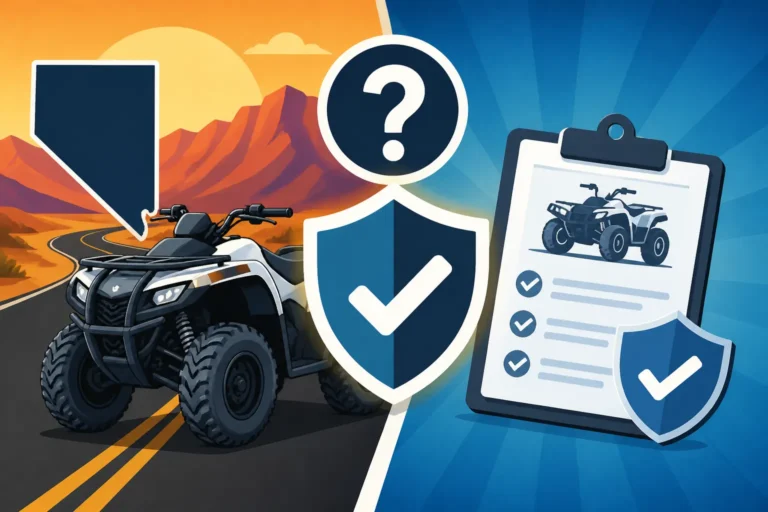
Trying to figure out exactly what it takes to legally ride your ATV or UTV on Nevada's roads can feel like navigating a maze blindfolded. You've got your awesome machine, the open desert is calling, but then you hit a paved section and wonder, "Can I actually be here?" This guide is all about cutting through that confusion, focusing specifically on the crucial lighting requirements—like those headlights and taillights visible from 500 feet—and what it truly means to make your off-highway vehicle compliant for limited road use in the Silver State.
Understanding Nevada's "Large ATV" Designation for Road Use
Before we dive into the nitty-gritty of lighting, it's absolutely vital to grasp that Nevada doesn't just let any ATV or UTV cruise on its roads. The state has a very specific definition for what qualifies as a "Large All-Terrain Vehicle" (Large ATV) for limited road use, and if your machine doesn't meet it, no amount of fancy lights will make it street legal. Many riders get frustrated when they find out their sport quad or even some smaller UTVs just don't make the cut, even if they've bought all the "street legal" accessories.
What Makes a Machine a "Large ATV" in Nevada?
This is where the rubber meets the road, quite literally. Nevada Revised Statutes (NRS) 490.043 outlines what the state considers a Large ATV. Essentially, it needs to be designed to travel on four or more wheels, have a width greater than 50 inches, weigh less than 2,500 pounds, and have a non-straddle seat. But here's the kicker: it must also have a truck bed or the ability to carry four or more passengers. This last part is often the deal-breaker for many two-seat sport UTVs or any traditional ATV. For instance, your two-seat performance UTV, while wide and heavy, likely won't qualify if it doesn't have that four-seat capacity or a dedicated truck bed. It's a key distinction that catches many off-road enthusiasts by surprise. You can read more about [What Nevada's NRS 490.043 Counts as a Large ATV].
Think about it: many modern side-by-sides like a Polaris RZR XP 1000, while incredibly capable off-road, often only seat two people and lack a true "truck bed" in the traditional sense, even if they have a small cargo area. On the other hand, machines like a Can-Am Defender or a Polaris Ranger, with their multi-seat configurations or dedicated dump beds, are much more likely to fit this description. The intent here is clearly to allow more utility-focused or family-oriented machines to traverse short road sections, not necessarily to transform every recreational vehicle into a street cruiser. It’s a hurdle that requires careful consideration of your specific machine's design.
Why Your Two-Seat Sport Quad Fails the Test
If you're rocking a classic sport quad, like a Yamaha YFZ450R or a Honda TRX450R, you might be wondering if you can just add some lights and mirrors and hit the road. Unfortunately, the answer for these machines is almost universally "no" when it comes to riding along public roads in Nevada. The primary reasons are simple: they are typically designed for a single rider (sometimes two-up, but not four or more passengers) and they completely lack a truck bed. This immediately disqualifies them from Nevada's "Large ATV" definition for road-legal status. It’s a frustrating reality for quad owners who see UTVs on the road and wish their machines could join them.
Even if you managed to get a VIN inspection and tried to jump through all the hoops, your traditional sport quad simply doesn't meet the foundational criteria. The law is quite clear on this point, and deputies enforcing these rules in areas like Washoe County or around Mesquite are well aware of the distinctions. You might be able to cross a highway, as we'll discuss later, but riding along it is a different story entirely. The state isn't trying to punish sport quad riders; it's simply defining a category of OHV that more closely resembles a compact utility vehicle for limited street use. [Why a Two-Seat Sport Quad Fails Nevada's Test] delves deeper into these specific exclusions.
The Critical 500-Foot Visibility Rule for Headlights and Taillights
Once you've confirmed your machine is a "Large ATV" by Nevada's standards, the next, and arguably most crucial, step for road legality is ensuring you meet the lighting requirements. This isn't just about having any lights; it's about having lights that are effective and visible from a specific distance. The 500-foot visibility rule for both headlights and taillights is non-negotiable and designed to ensure you're seen by other motorists, drastically reducing the risk of accidents, especially during dawn, dusk, or adverse weather conditions.
Nevada Headlight Requirements for Road Use
Nevada's law mandates that a Large ATV operating on a county road must have at least one headlight (though most UTVs come with two) capable of projecting a white light visible from a distance of 500 feet to the front. This isn't just for night riding; it applies any time visibility is low, or during the hours from a half-hour after sunset to a half-hour before sunrise. The stock headlights on many off-road machines are designed for trail illumination, not necessarily for meeting Department of Transportation (DOT) visibility standards for on-road use. You might find your factory lights are adequate, but it's worth checking their brightness and beam pattern.
Many riders find that upgrading their headlights is a necessary step. Aftermarket options from companies like SuperATV can offer DOT-approved lighting solutions that provide a much brighter, more focused beam pattern, ensuring you meet that 500-foot visibility mark without blinding oncoming traffic. It's not just about raw lumens; it's about how that light is cast. Properly aimed headlights are just as important as powerful ones. A light that's too high can blind others, while one that's too low won't provide the necessary visibility for you or make you easily seen by others. Consider the angle and adjustment carefully. For specific details, check out [Nevada Headlight Requirements for Road Use].
Nevada Taillight and Reflector Rules
Just as important as being seen from the front is being visible from the rear. Nevada law requires your Large ATV to have at least one taillight (again, most UTVs have two) that emits a red light visible from 500 feet to the rear. This taillight often integrates a stop lamp, which must also be visible from 500 feet when the brakes are applied. In addition to the taillight, your machine needs to have a red reflector on the rear, also visible from 500 feet when illuminated by another vehicle's headlights. This redundant system is in place for safety, ensuring that even if your electrical system fails, you still have some passive visibility.
Some stock taillights on off-road machines might be bright enough, but it's crucial to test them in various conditions. Sometimes, dust and dirt can significantly reduce their effectiveness, especially after a long day on the trails near places like Sand Mountain or Logandale. Cleaning your lights before hitting any paved sections is a small but important habit. If your machine doesn't have adequate reflectors, or if they're damaged, adding a compliant set is an easy and inexpensive upgrade. You'll want to ensure they are clean and unobstructed, just like your taillights. More information can be found in [Nevada Taillight and Reflector Rules].
Beyond Lights: Other Essential Road Equipment
While lighting is paramount, getting your Large ATV street-legal for limited use in Nevada involves more than just bright beams. Several other pieces of equipment are mandatory to ensure both your safety and compliance with state statutes. Missing even one of these components can result in a citation, turning what should be a convenient short road trip into a costly mistake.
The Stop Lamp a Nevada Road Machine Needs
Your taillight isn't the only rear-facing light you need. As mentioned, the stop lamp (or brake light) is a separate, critical component that signals to drivers behind you that you're slowing down or stopping. This lamp must emit a red light and be clearly visible from a distance of 500 feet to the rear. Most modern UTVs come equipped with integrated brake lights that operate automatically when the brake pedal is depressed. However, it's always wise to double-check their functionality.
Regularly test your stop lamp, especially if you've been riding in dusty or rough terrain, which can sometimes jostle wiring or cause bulbs to fail. Have a friend stand behind your machine and verify it illuminates brightly when you hit the brakes. If your machine's stock setup is dim or unreliable, consider an aftermarket upgrade. Many lighting kits available from retailers like SuperATV include robust, high-visibility stop lamps designed to meet DOT standards, ensuring you're safe and legal on Nevada's county roads.
Nevada Horn, Mirror, and Windshield Rules
Beyond lighting, there's a trio of other equipment that might seem minor but are legally required for a Large ATV on Nevada roads:
- Horn: Your machine must have a horn that is audible from at least 200 feet. This isn't just a courtesy; it's a safety device for alerting other drivers or pedestrians to your presence. Many UTVs come with a stock horn, but if yours doesn't, or if it's barely a peep, a simple aftermarket horn is an easy install. You can check out [Nevada Horn Requirement on a Road Machine] for more.
- Mirrors: You need at least one mirror, mounted to provide a clear view of the highway to the rear of your machine for at least 200 feet. While many UTVs come with a rearview mirror, side mirrors are often aftermarket additions. Having both a rearview and two side mirrors significantly improves your situational awareness, making road travel much safer. This is another area where a wide selection of aftermarket solutions exists. Detailed mirror requirements can be found in [Nevada Mirror Requirements for a Road UTV].
- Windshield: While not strictly required to be glass, your Large ATV must have a windshield. This windshield must be free of cracks or obstructions that impair the driver's vision. Many UTVs come with full or half windshields, but ensure it's clean and in good condition. If you often ride in dusty conditions, consider a windshield wiper kit or a material that's easy to clean on the go.
It's common for off-road machines to have minimal mirrors or a horn that's more of a toy than a warning device. Investing in quality, compliant accessories is part of the commitment to safely and legally sharing the road. These aren't just checkboxes for legality; they are vital tools for preventing accidents.
Navigating Nevada Roads: Where You Can and Can't Ride
Even with all the right equipment, you can't just take your Large ATV anywhere you please on Nevada's paved network. The state has specific rules about which roads are open to these machines, which are restricted, and how you can legally cross others. Understanding these distinctions is critical to avoiding fines and ensuring you stick to the permissible routes.
Nevada County Roads Open to UTVs
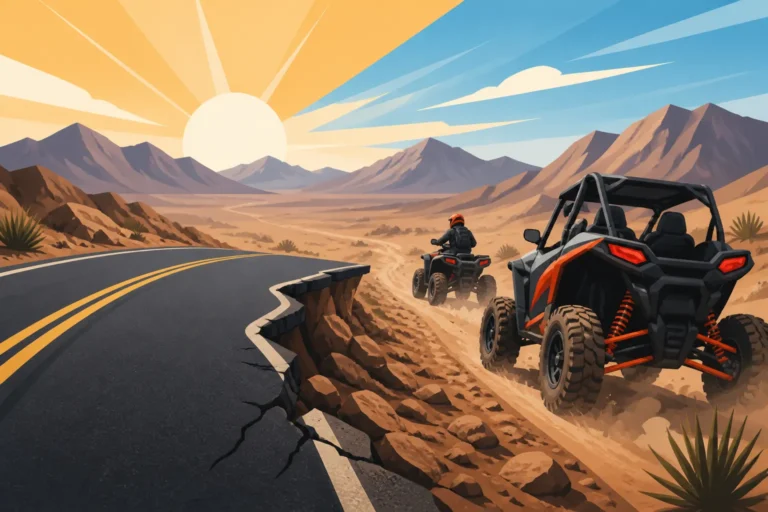
The good news is that Nevada allows Large ATVs to operate on certain designated county roads. These are typically minor county roads, usually unpaved or lightly paved, that connect communities or lead to popular trailheads. The idea is to provide riders with a way to access the backcountry without having to trailer their machines for every short distance. Areas surrounding popular riding spots like Logandale or those near Caliente often have these types of roads. However, it's not a blanket approval for all county roads. Individual counties retain the power to restrict or ban OHV use on certain roads through local ordinances.
Before you head out, it's always a good idea to check with the local county sheriff's office or the Bureau of Land Management (BLM) office for the specific area you plan to ride. For instance, [Washoe County Ordinance 1507] has specific rules regarding OHV use. What might be legal in one county might be prohibited in another. Getting familiar with local regulations can save you a lot of headache. Remember, these machines are meant to access trails, not to run errands across town unless that town has specific allowances like Mesquite's reputation for open streets. [Nevada County Roads Open to UTVs] offers a broader look.
Nevada Rules for Crossing a State Route and Interstate Ban
While riding along major state highways or interstates is strictly prohibited, Nevada law does allow Large ATVs to cross a paved state highway. This is often necessary to get from one section of an OHV trail to another, or to access a small town for fuel or supplies. The key here is the crossing: you must cross the highway at approximately a 90-degree angle, and you must yield to all other traffic. You cannot ride down the shoulder or in the ditch of a state highway to shorten your route, even for a short distance. That 2-mile limit is for county roads only, not state highways.
Interstate highways, on the other hand, are completely off-limits for any ATV or UTV, regardless of equipment or designation. You cannot ride on them, cross them, or even ride their shoulders. These are high-speed, high-volume roadways not designed for OHV traffic, and attempting to use them will almost certainly result in a serious citation and potential danger. [Nevada Interstate Highway ATV Ban] clarifies this critical restriction. Understanding the difference between a county road, a state route crossing, and an interstate is paramount for responsible riding.
Driver Requirements and Insurance for Road Use
Getting your machine equipped and knowing where to ride is only part of the equation. Nevada also has specific requirements for who can operate a Large ATV on public roads and what kind of financial responsibility they must carry. These rules are in place to ensure that anyone behind the wheel is qualified and that there's coverage in case of an accident.
The Driver's License Nevada Wants on Roads
If you're planning to ride your Large ATV on any public road in Nevada, you absolutely must possess a valid driver's license. This isn't just for safety; it's a legal requirement. Whether it's a standard Class C driver's license from Nevada or a valid license from another state, you need to have it with you. This makes sense: operating a vehicle on public roads, even limited ones, means you need to demonstrate basic driving competency and legal authorization. A standard OHV registration decal, which is distinct from a large ATV decal, does not grant you this privilege; it's specifically about road use.
This requirement also means that anyone under the legal driving age, even if they are skilled off-road riders, cannot operate a Large ATV on these designated roads. So, while your 14-year-old might be a pro on the trails at Sand Mountain, they cannot legally drive the UTV down a county road to get to the next section of trail, even if supervised. This is a common point of confusion and frustration for families who ride together. Always carry your physical driver's license, not just a photo on your phone, as deputies will request to see it during a stop. More on this can be found at [The Driver's License Nevada Wants on Roads].
Insurance Nevada Requires for Road Use
Just like any other motor vehicle operating on public roads, a Large ATV designated for limited street use in Nevada must carry liability insurance. This isn't optional; it's a legal mandate under NRS 485.185. The minimum liability coverage requirements are the same as for regular passenger vehicles: at least $25,000 for bodily injury or death of one person, $50,000 for bodily injury or death of two or more persons, and $20,000 for property damage. It’s crucial to understand that your off-road insurance policy might not cover road use, so you'll need to confirm with your insurance provider that your policy extends to legal street operation for a Large ATV.
Carrying proof of insurance, such as an insurance card, is also required. Deputies, especially in counties where OHV use on roads is common, like Lincoln or Nye, will ask for this during a roadside stop. Failing to have valid insurance can lead to significant fines and penalties, not to mention the financial burden if you're involved in an accident without coverage. Don't assume your existing ATV insurance is sufficient; verify that it specifically covers limited road use for your Large ATV. [Insurance Nevada Requires for Road Use] details the specifics.
Making Your Machine Road-Ready: A Checklist for Compliance
So, you've got a qualifying "Large ATV," you understand the rules, and you're ready to make it road-legal. This involves a practical checklist of items to install or verify on your machine. It's about ensuring every required component meets the visibility and functionality standards set by Nevada law.
Essential Equipment Checklist for a Nevada Road-Legal Large ATV
To help you keep track, here's a handy checklist of the mandatory equipment needed to operate your Large ATV on approved Nevada county roads. Remember, each of these items must be functional and meet the visibility or audibility standards we've discussed.
| Item | Requirement | Visibility/Audibility Standard | Notes |
|---|---|---|---|
| Headlights | At least one, typically two for UTVs | White light, visible 500 ft to the front | Must be properly aimed; consider DOT-approved aftermarket |
| Taillights | At least one, typically two for UTVs | Red light, visible 500 ft to the rear | Clean regularly, especially after dusty rides |
| Stop Lamp (Brake) | Integrated into taillight or separate | Red light, visible 500 ft to the rear when brakes applied | Ensure reliable activation with brake pedal |
| Reflectors | One red reflector on the rear | Visible 500 ft to the rear when illuminated | Supplement if needed; keep clean |
| Horn | Functional horn | Audible 200 ft | Test regularly |
| Mirrors | At least one, providing 200 ft view to the rear | Clear view of highway for 200 ft | Recommend both rearview and side mirrors for safety |
| Windshield | Present and free of vision-impairing cracks/obstructions | Clear vision for driver | Can be full or half; keep clean |
| Seatbelts | All seating positions must have functional seatbelts | For passenger and driver safety | Ensure all occupants are buckled up |
| Spark Arrester | Required for all OHV operation on public lands, implied for road use | Prevents fire hazards | Most stock machines have them; check for modifications |
| Muffler | Prevents excessive or unusual noise, no cutouts or bypasses | Limits noise pollution | Ensure stock or compliant aftermarket exhaust |
This isn't an exhaustive list of all possible accessories, but it covers the core legal requirements. Many riders also choose to add turn signals, even though they aren't explicitly mandated for Large ATVs under Nevada's specific statute for limited road use. However, having them significantly enhances safety and communication with other drivers.
The VIN Inspection Nevada DMV Will Not Do
Before you can apply for your "Large ATV" road decal, you’ll likely need a VIN inspection. This is a critical step to verify the vehicle's identity. But here’s the rub: the Nevada DMV itself will not perform this inspection for your OHV. This can be a source of major frustration for new owners. Instead, you'll need to turn to specific authorized entities to get this done. The good news is there are two primary options available.
Your first option is a licensed Nevada OHV dealer. Many dealers who sell ATVs and UTVs are authorized to conduct VIN inspections. This is often the most convenient route, as they are familiar with the paperwork and the machines themselves. You might also find that some powersports repair shops or even some automotive repair shops that specialize in off-road vehicles are authorized. The second option is to ask a sworn law enforcement officer, such as a deputy from the county sheriff’s office or a state trooper. They can verify the VIN as well. Just be aware that officers are busy and you might need to schedule an appointment or catch them at a time convenient for them. This step ensures your machine is properly identified and not stolen. For more information, check out [The VIN Inspection Nevada DMV Will Not Do] and [Finding a Licensed OHV Dealer for an Inspection].
Getting your machine ready for limited road use in Nevada is a commitment, but it opens up new possibilities for exploring the vast and beautiful landscapes of the state. Just make sure you understand the nuances, equip your ride properly, and always prioritize safety.
Disclaimer
This article is for general informational purposes only and does not constitute professional advice. Laws, prices and regulations vary by location and change over time. Consult a qualified professional for guidance on your specific situation.