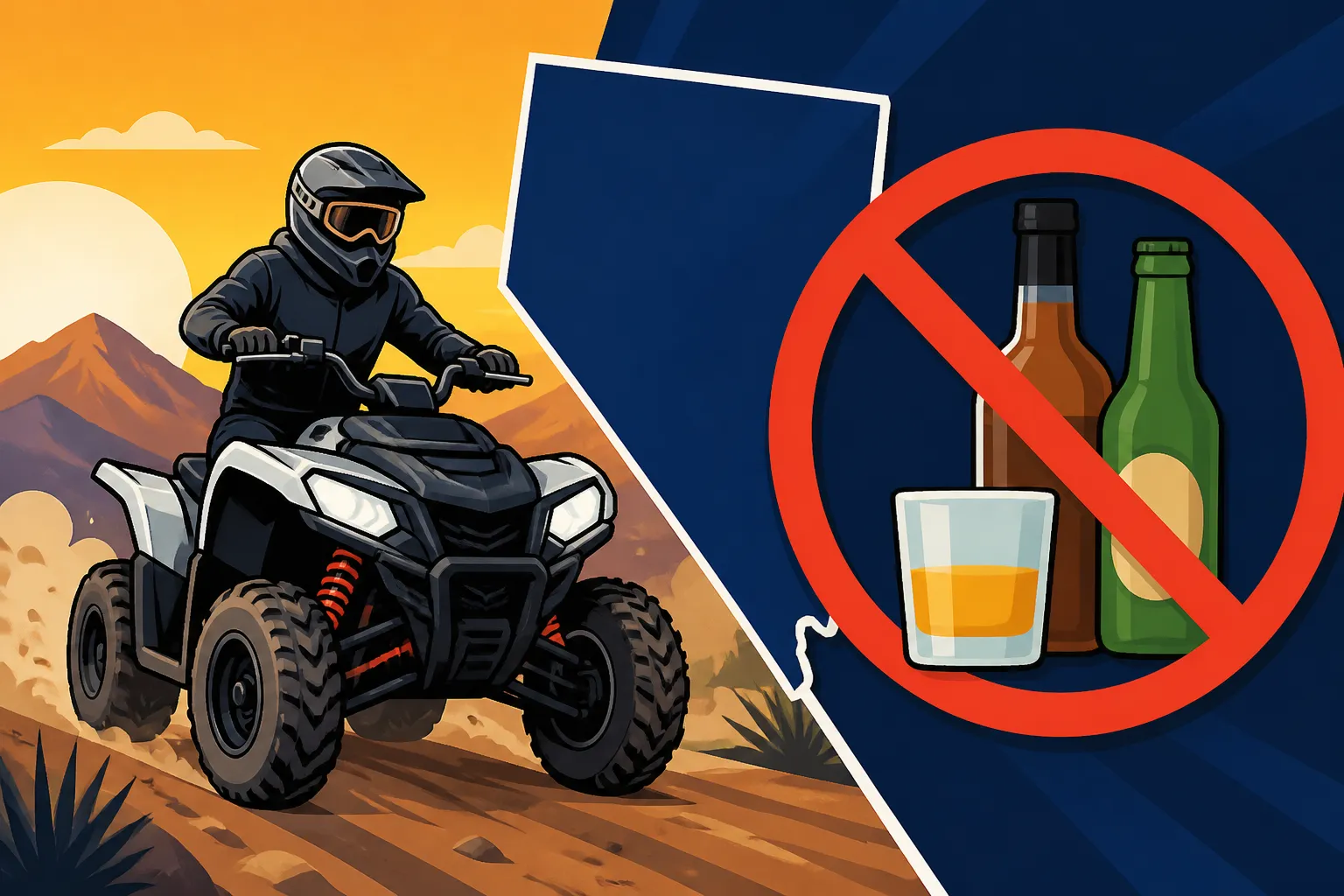
Nevada DUI Rules for ATV Riders
It's a beautiful day out in the Nevada backcountry, the dust is flying, and the engine is humming. You're out with friends, enjoying the vast open spaces, and maybe someone cracks open a cold one back at camp. It feels miles away from any city street, right? Many riders assume that because they're off the pavement, they're somehow exempt from traffic laws, especially when it comes to drinking. However, the sobering truth is that Nevada's DUI laws apply whether you're on a paved highway or deep in the remote desert on your ATV or UTV. This guide will walk you through the realities of Nevada's DUI laws for off-highway vehicle riders, the serious consequences of an OHV DUI, and how to stay safe and legal on every adventure.
Understanding Nevada's DUI Laws and Your OHV
It’s easy to think that once you’re off the asphalt and into the dirt, the rules of the road somehow fade away with the pavement. But that’s a dangerous misconception, and one that can land you in serious legal trouble. Nevada’s laws are clear: operating any motorized vehicle while impaired, regardless of where that vehicle is being operated, is against the law. This isn't just a technicality; it's a fundamental aspect of keeping everyone safe, whether they're driving a car, a truck, or a powerful off-highway machine.
Why DUI Laws Extend Beyond Paved Roads
You might scratch your head and wonder why a law designed for cars on streets would apply to your side-by-side tearing across a dry lakebed. The key phrase in Nevada's DUI statutes, like many states, is "operates a vehicle." It doesn't specify where that vehicle must be operated, only that it is being operated. An off-highway vehicle (OHV) like an ATV or UTV is absolutely classified as a vehicle under this law. This means that whether you're cruising on a county road, navigating a designated trail, or even just moving your machine around your campsite, if you're impaired, you're breaking the law.
Many riders are genuinely surprised by this. They might argue that the risks are different off-road, or that there's less traffic. While the environment is certainly different, the core risk of impaired judgment, slowed reaction times, and reduced coordination remains the same, if not amplified by the challenging terrain. Think about the precision needed to navigate rocky trails or steep dunes – impairment only makes these tasks more hazardous, not only for you but for any passengers or other riders in your group. It’s a bitter pill for some to swallow, especially those who see their off-road adventures as a complete escape from regulation, but it’s a critical piece of information for any Nevada OHV enthusiast. Law enforcement officers, whether it's a Nevada State Trooper, a county sheriff's deputy, or a BLM ranger, have the authority to enforce these laws on public lands, designated trails, and even some private property if there's a safety concern or public access. [What a Nevada Trooper Looks For on a County Road] can give you an idea of what they're generally checking for, and impairment is always high on that list.
What Constitutes Impairment in Nevada?
When we talk about impairment, most people immediately think of alcohol, and specifically, a blood alcohol content (BAC) of 0.08% or higher. This is indeed the legal limit for drivers aged 21 and over in Nevada, and it applies unequivocally to OHV operators as well. If your BAC is at or above this level, you are considered legally impaired, full stop. But here’s where it gets even broader: you can still be charged with a DUI if you're impaired to any degree by alcohol, even if your BAC is below 0.08%, if that impairment affects your ability to safely operate the machine. This is often referred to as "DUI less safe" or "actual physical control."
Beyond alcohol, Nevada's DUI laws also cover impairment from other substances, including marijuana, prescription medications, and illegal drugs. It doesn't matter if you have a medical marijuana card or a prescription for a powerful painkiller; if that substance impairs your ability to operate your ATV or UTV safely, you can face a DUI charge. The effects of these substances can be just as dangerous, if not more so, than alcohol when you're trying to navigate technical trails or respond quickly to changing terrain. So, before you even think about starting your engine, make sure your head is clear and your reactions are sharp. Remember, the goal is always a safe and enjoyable ride, and impairment undermines that entirely. You should also be aware of [Nevada Open Container Rules on an ATV], as these are often enforced in conjunction with DUI laws.
The Serious Consequences of an OHV DUI in Nevada
Getting a DUI on a paved road is a life-altering event, and many people unfortunately learn that the hard way. What sometimes isn't as widely known is that an OHV DUI carries the same severe penalties and long-term repercussions as a traditional vehicle DUI. It's not a "lesser" charge just because you were off-road. The state of Nevada takes impaired operation of any vehicle very seriously, and the consequences reflect that severity. It’s crucial for every rider to understand that a momentary lapse in judgment can lead to years of legal, financial, and personal hardship.
Legal Penalties: Fines, Jail Time, and License Revocation
Let's not sugarcoat it: the legal penalties for a DUI in Nevada are harsh, and they escalate with each subsequent offense. Even a first-time OHV DUI can result in significant fines that quickly add up when you factor in court costs, administrative fees, and mandated DUI school. Beyond the monetary hit, you're looking at mandatory jail time, which can range from a few days to six months, depending on the specifics of the case and whether there were any aggravating factors. The court may also require you to attend victim impact panels, community service, or alcohol and drug dependency evaluations.
Perhaps one of the most surprising consequences for many OHV riders is that an OHV DUI will almost certainly lead to the suspension or revocation of your standard driver's license. That's right – even if you were only riding an ATV and not your car, your ability to drive any vehicle on public roads can be taken away. This can wreak havoc on your daily life, impacting your commute to work, your ability to run errands, and your overall independence. Repeat offenders face even stiffer penalties, including longer jail sentences, higher fines, and the potential installation of an ignition interlock device on any vehicle you operate, which measures your BAC before allowing the engine to start. Navigating the legal system after a DUI is incredibly complex, so understanding [Nevada OHV Registration Paperwork Checklist] might seem unrelated, but having all your documentation in order is a good habit for any interaction with law enforcement.
The Long-Term Impact on Your Life and Riding
Beyond the immediate legal ramifications, an OHV DUI casts a long shadow over your life. Financially, your auto insurance rates for your car and truck will skyrocket, and some companies might even refuse to cover you. This can amount to thousands of extra dollars spent over several years. A DUI conviction is a permanent mark on your criminal record, which can impact future employment opportunities, especially in fields that require driving or a clean background check. It can also affect your ability to travel internationally, as some countries deny entry to individuals with DUI convictions.
For those who love to ride, the personal toll can be profound. You might lose the privilege to ride your machine in certain designated OHV areas, or even have your OHV seized. The sheer embarrassment and regret can be significant, damaging relationships with friends and family who witnessed or were affected by your poor judgment. The freedom and camaraderie that off-road riding offers can be severely curtailed, if not entirely lost. It's a stark reminder that responsible choices aren't just about avoiding a ticket; they're about preserving your lifestyle and your future. Think about all the planning that goes into a ride, like securing your gear or making sure you have [Carrying Documents in a Dry Bag]; all that preparation is wasted if you make one bad decision regarding impairment.
Avoiding an OHV DUI: Best Practices for Responsible Riding
The best way to deal with an OHV DUI is to prevent it from ever happening. Responsible riding isn't just about wearing a helmet or staying on designated trails; it's also about making smart choices before you even throw a leg over your quad or buckle into your UTV. It's about respecting the power of your machine, the challenges of the terrain, and the laws that are in place to keep everyone safe.
Planning Ahead: Designated Drivers and Alternative Transportation
The simplest and most effective strategy to avoid an OHV DUI is to separate drinking from riding entirely. If you know alcohol will be part of your camping trip or gathering, make sure you have a clear plan for transportation and operation of your OHV. This might mean having a designated sober driver for the truck and trailer that gets you to and from the riding area. If you're planning to camp, designate a specific time after which no one will be operating their machines, ensuring that anyone who consumes alcohol stays off their OHV. Many riders find that simply waiting until the end of the day, after all riding is done and machines are parked for the night, is the safest approach.
Consider the layout of your camp. If you're going to have a few drinks, ensure your OHV is completely powered down and out of reach, not just idling while you chat with friends. For those who frequently camp and ride, a clear "no riding after X hour" rule for the entire group can make a huge difference. There are plenty of fantastic places to enjoy [Nevada Rules for Riding a Dirt Road to Camp] responsibly, and that responsibility extends to how you handle alcohol.
Gear and Modifications for Safer Off-Road Fun
While no piece of gear can prevent you from making a poor decision regarding alcohol, focusing on equipping your OHV for maximum safety and visibility certainly contributes to a culture of responsible riding. A well-prepared rider is often a more mindful rider. For instance, ensuring your machine has excellent lighting, especially if you plan on [Nevada Rules for Riding After Dark] or want to ride in [Nevada OHV Areas That Allow Night Riding], can prevent mishaps that might otherwise put you in a precarious situation. Enhanced LED light bars and upgraded headlights from brands like SuperATV can dramatically improve visibility for you and make your machine more visible to others, reducing the risk of accidents that could draw unwanted attention.
Beyond lighting, consider other safety modifications. Stronger roll cages, high-quality seatbelts, and even upgraded braking systems contribute to a safer machine. A robust winch, perhaps from SuperATV, isn't just for getting unstuck; it's a critical safety tool that helps you assist others or recover your machine from a tricky spot without resorting to risky maneuvers or escalating a minor incident. Regular maintenance, fresh tires, and proper flag placement (especially in dune areas) all play a role in reducing hazards. When you invest in making your machine safer and more capable, you're investing in your own well-being and promoting a more responsible riding mindset, where the focus is on fun and safety, not risky behavior. Don't forget the basics like [Nevada Helmet Rules Off-Road Versus On-Road] – safety gear is always paramount.
What to Do if You're Pulled Over or Encounter Law Enforcement Off-Road
It's a scenario no one wants, but if you find yourself approached by law enforcement while on your OHV, especially if you've been drinking, knowing how to react can make a significant difference. Panic or confrontation will only escalate the situation and make things worse. Your best course of action is to remain calm, be polite, and understand your rights and responsibilities.
Knowing Your Rights and Responsibilities
If a law enforcement officer, whether it's a local deputy or a BLM ranger, signals you to stop while you're on your ATV or UTV, pull over immediately to a safe location. Turn off your engine, keep your hands visible, and wait for the officer to approach. Be polite and cooperative, but remember you are not obligated to answer questions that could incriminate you. If asked if you've been drinking, you can politely decline to answer.
You may be asked to perform field sobriety tests (FSTs). In Nevada, you have the right to refuse these roadside tests, but be aware that refusal can sometimes be used by the prosecution as evidence against you. However, refusing a chemical test (like a breathalyzer, blood, or urine test) after a lawful arrest under suspicion of DUI in Nevada comes with its own set of serious penalties due to the state's implied consent law. This means that by operating a vehicle in Nevada, you've implicitly consented to a chemical test if an officer has probable cause to believe you're impaired. Refusal to submit to a chemical test will lead to an automatic driver's license suspension, regardless of the outcome of any criminal charges. It's a complex legal area, so while cooperating respectfully is key, knowing your rights is equally important. [Nevada OHV Rules for Riding Federal Land] are enforced by federal agents like BLM rangers, who also adhere to state DUI laws.
The Importance of Legal Counsel
The moment you are arrested for an OHV DUI in Nevada, or even if you're just questioned extensively and feel you might be, your first priority after ensuring your safety should be to contact an attorney experienced in DUI defense. DUI laws, especially those involving OHVs, are incredibly complex, and navigating them without professional guidance can lead to far worse outcomes. An attorney can explain the charges against you, advise you on your rights, represent you in court, and work to protect your interests. They can challenge evidence, negotiate with prosecutors, and potentially help mitigate the severe penalties associated with an OHV DUI. Do not try to handle a DUI case on your own. The stakes are too high for your freedom, your finances, and your ability to continue enjoying your passion for off-road riding.
Here's a table summarizing the general types of penalties you might face for an OHV DUI in Nevada, though specific details vary by case and offense number:
| Offense Number | Potential Fines | Jail Time | License Impact | Other Penalties |
|---|---|---|---|---|
| 1st Offense | Significant | Mandatory | Suspension | DUI School, Victim Panel, Community Service |
| 2nd Offense | Higher | Extended | Longer Suspension | Ignition Interlock, Substance Abuse Treatment |
| 3rd/Felony | Very High | Prison | Revocation | Felony Record, Ignition Interlock, Extended Treatment |
Remember, this table is a general overview; actual penalties will be determined by the court based on many factors. Riding safely and soberly is always the best path forward to protect yourself and others on the trails. [Nevada Rules for Camping Beside Your Machine] often involves social gatherings, which is precisely why these rules are so important.
Disclaimer
This article is for general informational purposes only and does not constitute professional advice. Laws, prices and regulations vary by location and change over time. Consult a qualified professional for guidance on your specific situation.