When 2 Miles of Pavement Runs Out
Ah, the open desert, the call of the dunes, the endless trails… it's what draws so many of us to off-highway vehicles in Nevada. But then you hit a paved section, maybe you need to grab a quick snack from town, or you're trying to connect two epic trail systems, and suddenly, you're faced with Nevada's infamous 2-mile paved road rule for OHVs. It's a tricky line to walk, and if you’re wondering what exactly happens when those two miles run out, and how to stay on the right side of the law, you're in the right place. This guide will meticulously break down the nuances of navigating paved roads in Nevada on your ATV or UTV, helping you avoid a ticket and keep your adventures going strong.
Understanding Nevada's 2-Mile Paved Road Rule for OHVs
Let's get straight to it: Nevada law (specifically NRS 490.060) allows certain off-highway vehicles to operate on the extreme right-hand side of a paved highway for a distance not exceeding two miles. This rule was put in place to give riders a small window to access trailheads, cross roads, or grab a quick convenience item like fuel, rather than forcing them to trailer their machine for every tiny paved stretch. It sounds simple, right? Well, like most things involving regulations and fun, there are a few important caveats that can trip up even experienced riders.
What the 2-Mile Limit Actually Means
The core idea here is connectivity, not cruising. This isn't a license to take your UTV on a scenic drive through town. The "not exceeding two miles" is a hard limit, and it's meant for essential transitions. Think of it as a bridge, not a highway. For example, if you're riding a fantastic trail system and suddenly hit a county road that cuts it in half, the 2-mile rule might allow you to traverse that paved section to pick up the trail on the other side. Or perhaps you're out exploring near Logandale and realize your fuel is running low – the rule could allow you to ride the short distance to a gas station just off the trail, refuel, and immediately return to the dirt.
However, a common misconception is that this rule allows you to "just drive anywhere for two miles." It doesn't. You're expected to be actively using the road for its designated purpose: getting to or from an unpaved road or trail. It's not a grace period for joyriding on asphalt. Law enforcement officers are well aware of the intent behind this law, and they can usually spot someone who's pushing the limits or misinterpreting the spirit of the rule. They're looking for legitimate transitions, not people trying to make a quick run to the grocery store five miles away.
Who Qualifies for the 2-Mile Rule? (Hint: Not All Machines)
Here’s where many riders get snagged. The 2-mile rule doesn't apply to all OHVs. Nevada law is quite specific, defining what qualifies as a "large ATV" under NRS 490.043. Generally, this refers to side-by-sides (UTVs) and other multi-passenger off-road vehicles that meet certain criteria, such as having four or more wheels, a non-straddle seat, and often a truck bed or the capacity to carry four passengers. This is a critical distinction because your typical two-seat sport quad often doesn't fit the bill.
If you ride a sport quad, chances are it won't qualify for even the limited road use under this rule. [Why a Two-Seat Sport Quad Fails Nevada's Test] This means if you're on a single-rider or two-seater ATV, you're almost certainly not permitted on paved roads, even for that two-mile stretch, unless it's a designated crossing. It's frustrating, I know, especially when you see UTVs seemingly getting a pass. But the law draws a line based on vehicle design and capacity. Beyond the "large ATV" definition, there are also specific equipment requirements that your machine must meet to be considered "road legal" for even this limited use. We'll dive into those next, but the takeaway is: confirm your machine's classification before you even think about hitting the pavement.
Navigating Beyond the Two-Mile Threshold Safely and Legally
Once you understand the strict limitations of the 2-mile rule, the next step is planning how to manage your ride so you stay within those boundaries or avoid paved roads entirely. It's all about preparation and making sure your machine is properly equipped and documented for any potential paved sections you might encounter, even brief ones.
Transitioning Back to Designated Off-Highway Areas
The moment your two miles of pavement are up, or ideally, before they're up, you need to be off that paved surface. This means having a clear plan for your route. Don't just hope a dirt trail will magically appear at the 1.9-mile mark. It’s crucial to map out your ride in advance, identifying where paved sections begin and end, and pinpointing alternative dirt routes if a road transition looks dicey. This is where the saying "riding to the trailhead, not to the store" really comes into play. [Riding to the Trailhead, Not to the Store] You should be using these short paved segments to access or connect off-highway routes, not as a shortcut to get coffee on the other side of town.
For instance, if you're exploring the trails around Caliente, and you know there's a mile-long stretch of paved county road separating two fantastic dirt loops, you can leverage the 2-mile rule. However, you should identify the exact point where the dirt trail resumes and be prepared to transition off the pavement immediately. Trying to push it an extra half-mile "just to get a little closer" is a sure way to attract unwanted attention from law enforcement. Always err on the side of caution and prioritize getting back to designated off-highway terrain promptly.
The Importance of a Legal "Large ATV Decal"
Even if your UTV meets the physical definition of a "large ATV," you’re not clear to ride pavement until you’ve secured the proper registration and decal. Nevada does not issue traditional license plates for OHVs; instead, it provides a distinctive decal. For machines that qualify for limited road use, you'll need to apply for a [Nevada's Large All-Terrain Vehicle Decal]. This isn't just your standard OHV registration decal; it signifies that your machine has been inspected and meets the additional requirements for conditional road use.
Applying for this decal involves demonstrating that your UTV is equipped with all the necessary street-legal components. This means it's not just about having a UTV; it's about having one that's been specifically outfitted and approved. The process for [Applying for a Nevada Large ATV Decal] will require specific paperwork and a VIN inspection to ensure your machine meets all the criteria set out by the state. Without this specific decal prominently displayed, even a compliant UTV being ridden within the 2-mile limit can lead to a citation. It's a key piece of identification that tells law enforcement your machine is allowed this very specific, limited privilege. Don't confuse it with a standard vehicle license plate, as [Why Nevada Will Not Plate a Quad] makes clear—OHVs are fundamentally different in the eyes of the law.
Equipment Considerations for Road-Legal Use
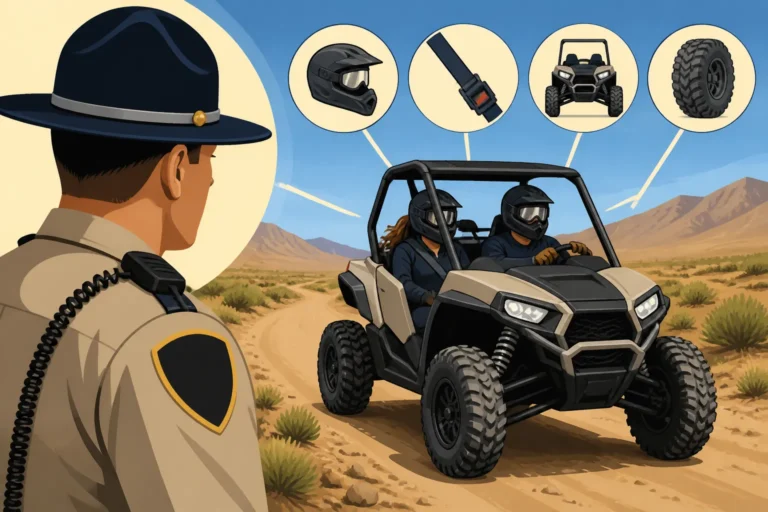
So, your machine fits the "large ATV" definition and you're ready to apply for that special decal. What exactly does it need to have? Nevada's requirements for a "road-legal" UTV, even for the 2-mile rule, are robust. You're essentially outfitting your off-road machine to meet minimum street safety standards. This includes:
- Headlights and Taillights: Visible from 500 feet. Many UTVs come with these, but ensure they are functioning correctly and meet visibility standards.
- Stop Lamp: A brake light that activates when you hit the brakes.
- Reflectors: Often integrated into taillights, but sometimes additional side reflectors are required.
- Horn: A working horn is essential for signaling.
- Mirrors: At least one rearview mirror (many riders opt for two for better visibility).
- Spark Arrester: A U.S. Forest Service-approved spark arrester to prevent wildfires.
- Muffler: An effective muffler system to keep noise levels within legal limits.
- Seat Belts: If your UTV has seats with seat belts, they must be worn.
- DOT-Approved Tires: While not always explicitly listed for the 2-mile rule, if you anticipate regular paved road crossings, DOT-rated tires are a smart investment for safety and legality.
Many aftermarket companies, like SuperATV, offer complete turn signal kits, rearview and side mirrors, horns, and even street-legal conversion kits that can help you meet these [Nevada Equipment List for Road-Legal UTVs]. Investing in quality accessories from reputable brands ensures you're getting components that are designed to meet regulatory standards and hold up to the rigors of off-road use. While your knobby tires are fantastic for gripping sand and rock, they wear quickly and perform poorly on pavement. If you're consistently using the 2-mile rule, consider a more road-friendly tire option, or at least be mindful of the added wear and reduced traction your off-road tires will experience on asphalt.
Consequences of Exceeding the Limit and Enforcement Realities
Pushing beyond that 2-mile limit, or riding an unqualified machine on pavement, isn't just a minor infraction. Law enforcement in Nevada takes OHV road use seriously, and the consequences can range from a hefty fine to impoundment of your machine. It's vital to understand the risks and how local agencies enforce these rules.
Fines and Penalties for Illegal Road Use
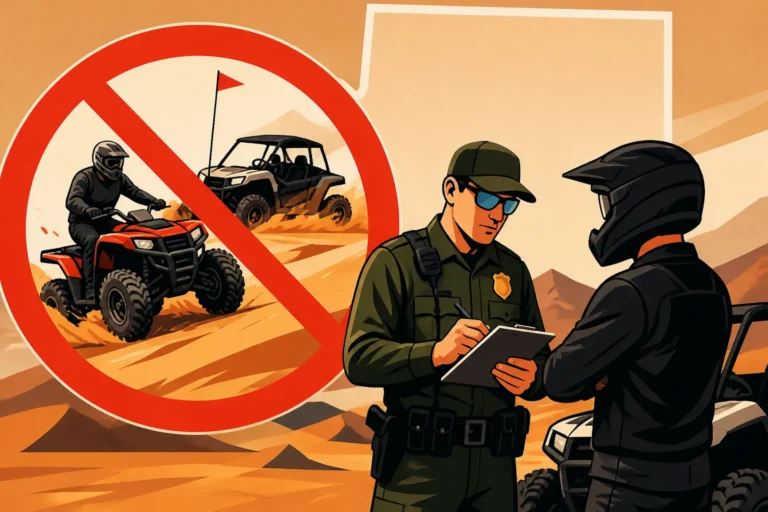
Let's not sugarcoat it: riding illegally on paved roads can be costly. If a deputy or ranger catches you exceeding the 2-mile limit, operating a machine that doesn't qualify as a "large ATV," or lacking the correct decal and equipment, you could be facing significant [Nevada Fines for No Large ATV Decal]. These fines are designed to be a deterrent, and they can easily ruin your day, not to mention your wallet. Beyond the monetary penalty, repeated offenses or particularly egregious violations could even lead to your machine being impounded, a logistical and financial nightmare that no rider wants to face.
Consider a scenario: you're out riding near Winnemucca and decide to "just take the paved road for a few more miles" to reach a diner you spotted. A Washoe County deputy, doing their rounds, spots your OHV on the main highway. They pull you over. The first thing [What a Nevada Trooper Looks For on a County Road] is typically proper registration and whether the vehicle meets the "large ATV" criteria for road use. If you've gone past your 2 miles, or your sport quad clearly doesn't qualify, you're looking at a citation. These aren't minor parking tickets; they can be several hundred dollars and come with points on your driving record, depending on the severity and specific violation.
Local Ordinances and Designated Routes
Adding another layer of complexity, many Nevada counties and cities have their own specific ordinances regarding OHV use on paved roads, which can be even more restrictive than state law. While the state provides the 2-mile framework, local jurisdictions have the authority to designate specific routes or, conversely, ban OHVs from certain roads entirely. This is why you'll often see signs in some areas prohibiting OHV travel on specific streets, even if they might otherwise fall under the state's 2-mile allowance.
For instance, [Nevada Cities That Require Designated OHV Routes] exist, meaning you can't just pick any road. [Washoe County Ordinance 1507] is a prime example of a local rule that further defines where and how OHVs can operate on county roads, often more strictly than state law. Conversely, some towns, like Mesquite, have a more open approach, with designated routes allowing for easier access to services and trails. Before heading out, it's absolutely crucial to check the local ordinances for the specific area you plan to ride. A quick call to the local sheriff's office or checking the county's website can save you a world of trouble. What's legal in Lincoln County might get you a ticket in Clark County.
Protecting Yourself: Documentation and Mindset
If, despite all your precautions, you find yourself pulled over by law enforcement on a paved road, how you handle the situation can make a difference. Always be polite, respectful, and cooperative. Just as you would in your car, be prepared to provide all necessary documentation. This includes your valid driver's license (yes, a license is required even for limited OHV road use), your OHV registration for your large ATV decal, and proof of liability insurance. [Carrying a License on a County Road Ride] is non-negotiable, and [Insurance and Nevada OHV Registration] is a must.
I always recommend carrying these documents in a waterproof bag or container, securely attached to your machine, because let's face it, off-road riding can be dusty, muddy, or even wet. Some riders even take photos of their documents on their phone as a backup, though physical copies are usually preferred. The goal is to clearly demonstrate that you've done everything within your power to comply with the law. By having all your ducks in a row, you not only improve your chances of a more lenient interaction but also reinforce the image of responsible OHV riders, which benefits the entire community.
Planning Your Ride to Stay Compliant
Responsible riding isn't just about knowing the rules; it's about proactively planning your trips to stay within them. For Nevada's paved road regulations, this means more than just a passing thought as you roll out of camp. It requires strategic route planning and considering all your options.
Mapping Your Route with Paved Sections in Mind
Before you even load your machine, sit down with a good map – or better yet, a GPS device or mapping app with detailed terrain information. Identify every single paved section you might encounter. Look for the roads you absolutely must cross or ride for a short distance to connect trails, and calculate those distances. The [Using the Nevada Trail Finder] website is an invaluable resource for this, offering maps and information on designated OHV routes throughout the state. It can help you identify legitimate, recognized trails and routes, minimizing your time on regulated pavement.
When you're mapping, specifically look for bypasses. Can you take a longer, all-dirt route around that paved county road instead of riding on it? Sometimes, a slightly longer off-road journey is far preferable to the risk of a ticket or a dangerous encounter with traffic on pavement. This also means planning for contingencies. What if the dirt connector you were counting on is suddenly closed? Having a backup plan or knowing where you can safely turn back is essential.
Trailering as a Primary Solution
Let's be realistic: for many rides, especially those involving significant distances between trail systems or access points that aren't immediately adjacent to dirt, trailering remains the most sensible and safest option. Yes, it can be a hassle to load and unload, and it adds to your travel time, but the peace of mind knowing you're fully compliant with all laws is priceless. Instead of trying to squeeze out every possible foot of the 2-mile rule, sometimes it's simply better to throw your UTV on a trailer and drive that paved section.
This is particularly true if you're venturing into unfamiliar territory or areas known for strict enforcement. The goal of OHV riding is to enjoy the outdoors, not to stress about legal technicalities on every paved turn. For longer trips, or when connecting areas like the Silver State Trail's various segments, trailering is almost always the go-to choice for avoiding any issues with paved roads. It minimizes your risk and maximizes your enjoyment of the actual off-highway experience.
Community and Local Knowledge
One of the best resources for navigating the complex world of OHV regulations is the riding community itself. Local OHV clubs are treasure troves of up-to-date information, local insights, and route suggestions. Members often know which paved roads are regularly patrolled, which areas have stricter local ordinances, and where the best and safest trail connections are. They can also provide advice on proper equipment and how to best utilize features from brands like SuperATV to enhance your machine's compliance and performance.
Don't be afraid to ask questions! Many communities have online forums or social media groups dedicated to local OHV riding. You can learn a lot from experienced riders about specific roads around popular areas like Sand Mountain, Logandale, or the Elko riding areas. However, always verify information with official sources (like county websites or the DMV OHV section) as laws and local rules can change. Respecting private property, being mindful of wildlife, and adhering to "Tread Lightly!" principles are also crucial elements of responsible riding that foster good relationships between the OHV community and local residents and authorities.
| Scenario | Legal Status (Nevada 2-Mile Rule) | Key Requirements | Potential Consequences |
|---|---|---|---|
| Riding a "Large ATV" (UTV) 1.5 miles on paved road to connect two dirt trails. | Generally Legal | Must be a "large ATV" (NRS 490.043), registered with large ATV decal, equipped (headlights, mirrors, etc.), <2 miles. | Minor, if all conditions met. |
| Riding a "Large ATV" (UTV) 3 miles on paved road to get gas in town. | Illegal | Exceeds 2-mile limit. | Fine, possible impoundment. |
| Riding a 2-seat sport quad 0.5 miles across a paved road to another trail. | Illegal | Sport quads typically do not qualify as "large ATVs" for paved road use. | Fine, possible impoundment. |
| Riding a "Large ATV" with standard OHV decal on paved road for 1 mile. | Illegal | Requires the specific [Nevada's Large All-Terrain Vehicle Decal] for road use. | Fine for improper registration. |
| Riding a "Large ATV" for 1 mile on a paved road with no mirrors or horn. | Illegal | Vehicle must be fully equipped with required safety features. | Fine for equipment violation. |
| Trailering an OHV on a paved road. | Legal | Standard vehicle and trailer laws apply; OHV itself is not being operated. | None related to OHV road use. |
Disclaimer
This article is for general informational purposes only and does not constitute professional advice. Laws, prices and regulations vary by location and change over time. Consult a qualified professional for guidance on your specific situation.