US 93 and the Roads You Cannot Ride Along
It's incredibly frustrating when you just want to get your off-highway vehicle (OHV) out on the trails, only to find yourself confused and worried about which roads you can legally use to get there. Nevada's rules for riding ATVs and UTVs on paved roads can feel like a tangled mess of regulations, especially when you see conflicting information or observe others seemingly bending the rules. This guide is here to untangle that knot, offering a clear, empathetic look at exactly where your OHV can and cannot go on Nevada's highways, focusing on those major routes like US 93 that are strictly off-limits, and explaining the limited exceptions.
Understanding Nevada's Paved Road Restrictions for OHVs
Let's be real: the dream of making your ATV or UTV truly "street legal" across the board in Nevada is, for most machines, just that – a dream. The state has very specific and often misunderstood rules about what constitutes a street-legal vehicle, and off-highway machines rarely fit the bill without significant, often impossible, modifications. This isn't just about getting a blinker kit; it's about the fundamental classification of your machine.
The "Street Legal" Myth: Why Most OHVs Don't Qualify
Many riders arrive in Nevada, or move here, having heard whispers of "street legal" ATVs or UTVs in other states. They might see machines with plates and turn signals back home and assume the same applies here. The reality in Nevada is quite different and can be a rude awakening. For the vast majority of ATVs and UTVs, they are classified as off-highway vehicles and are generally prohibited from operating on paved public roads. When folks talk about [Street Legal ATVs in Nevada: The Short Answer], it's almost always "no," with very narrow exceptions. This isn't to say your machine isn't capable; it's about how the law defines it. Your quad, even a large one, is designed for dirt, not asphalt.
The frustration comes from this disconnect: you've invested in a powerful, capable machine, and you just want to ride responsibly. But Nevada law draws a very firm line, viewing most OHVs as distinct from traditional street vehicles like cars or motorcycles. This means they don't meet the safety standards for highway use, and state statute reflects that. It's not about how fast your UTV can go or if you can install a horn; it's about its manufacturing classification and whether it can truly be titled and registered as a street-legal vehicle, which is a rare feat for typical OHVs here. This is a common point of confusion that often leads to misunderstandings with law enforcement.
Major Highways vs. County Roads: Drawing the Line
One of the biggest sources of confusion stems from not knowing the difference between a major state or federal highway and a minor county road. Many riders mistakenly believe that if a road is unpaved, it's fair game, or that if it's less traveled, it might be permissible. Unfortunately, the designation isn't about the surface or the traffic volume; it's about the legal jurisdiction and classification of the roadway. A major highway, like those numbered US routes or state routes, is fundamentally different in the eyes of the law from a minor county road, and the rules for OHVs vary drastically between them.
Nevada has specific definitions for what constitutes a "highway" versus other types of roads. While certain [Nevada County Roads Open to UTVs] might allow limited OHV travel if they meet specific criteria and local ordinances permit it, major thoroughfares are almost universally off-limits. This distinction is crucial for your safety and for staying on the right side of the law. Imagine trying to drive your UTV alongside semi-trucks on a busy highway – it's incredibly dangerous, and the law reflects that concern for everyone's safety. Understanding this legal boundary is your first step to responsible riding in Nevada.
Why Riding on US 93 Is a Big No-Go
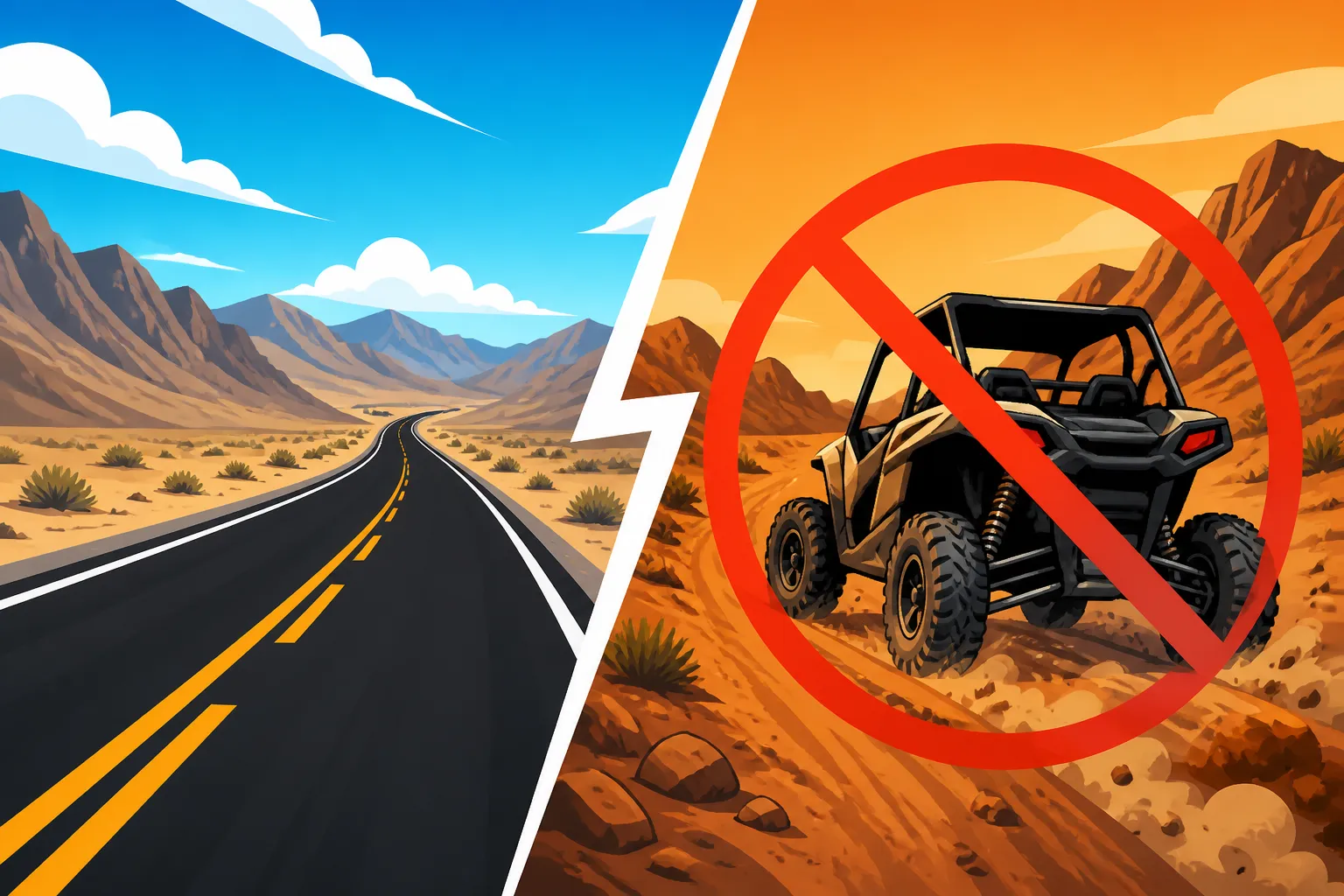
So, let's address the elephant in the room: routes like US 93, a major artery stretching through Nevada, are simply not for OHVs. There's no gray area here. You might be traveling between Pioche and Ely, or perhaps down towards Caliente, and think, "It's just a short stretch, and there's hardly any traffic." But Nevada's [Nevada Interstate Highway ATV Ban] and general highway statutes mean that these roads are strictly off-limits for your quad or side-by-side. Trying to ride along the shoulder or even quickly cross these roads in an unauthorized manner is a direct violation of state law and poses immense risks.
Deputies and state troopers are well aware of these rules, and attempting to use US 93 or other similar state/federal highways for OHV travel will almost certainly lead to a citation. These highways are designed for high-speed, multi-lane traffic, and OHVs simply do not belong there. The speed differential alone creates a dangerous situation, let alone the lack of appropriate safety features on most OHVs for such an environment. It's a hard truth, but essential to understand: when you're looking at a map and see a US route or a state route, plan your OHV adventure around it, not on it. Your safety and your wallet will thank you.
The Limited Exception: Nevada's Large ATV Decal
While the general rule is "no OHVs on paved roads," Nevada does have a very specific and limited exception for certain larger off-highway vehicles, which can obtain a special "Large ATV Decal." This isn't a free pass to drive anywhere, but it does allow for some restricted street use, primarily on designated county roads. It’s important to understand that this decal is not the same as a traditional vehicle license plate. It merely signifies that your machine might be allowed on some paved county roads under very specific conditions.
What Qualifies as a "Large ATV" in Nevada
So, what exactly does Nevada consider a "Large ATV" that can even be considered for this special decal? It's not just about engine size or how many people can sit in it. The law, specifically [What Nevada's NRS 490.043 Counts as a Large ATV], looks at very distinct physical characteristics. For a machine to qualify, it must be designed to carry more than one person, and it must either have a width of 50 inches or more, OR have a manufacturer's dry weight of 900 pounds or more, OR have a truck-like bed. This means that most traditional two-seat sport quads, despite their power, will not qualify because they typically lack the width, weight, or truck bed required. For example, a common two-seat sport quad often falls short of the width and weight requirements, and certainly doesn't have a bed, making it ineligible for this decal.
The intent behind this classification is to allow larger, more stable machines, typically side-by-sides or UTVs, some very limited road access where it makes sense for connecting trails or accessing amenities. Think about a utility-focused UTV, like a Polaris Ranger or a Can-Am Defender, which often comes with a bed and meets the size/weight criteria. These are the types of machines this decal is generally aimed at. It's a crucial distinction, as many riders mistakenly believe that any UTV can get this decal, but your specific machine needs to meet these strict dimensions and features to even apply.
The Strict Equipment Requirements for Road Use
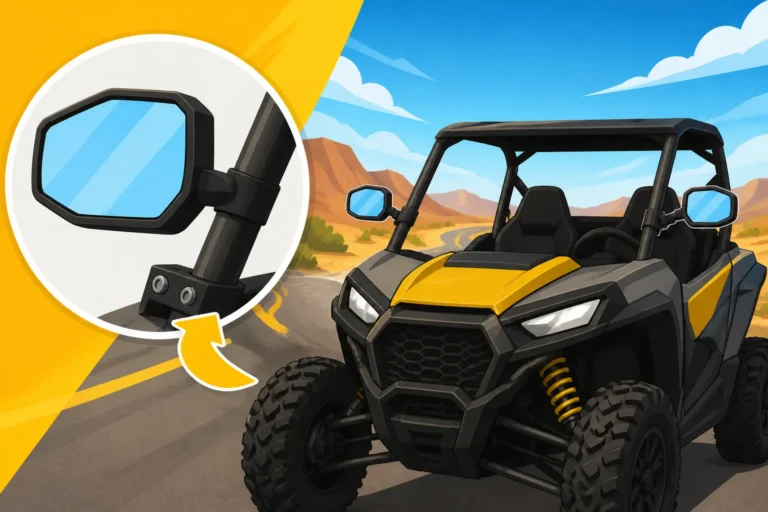
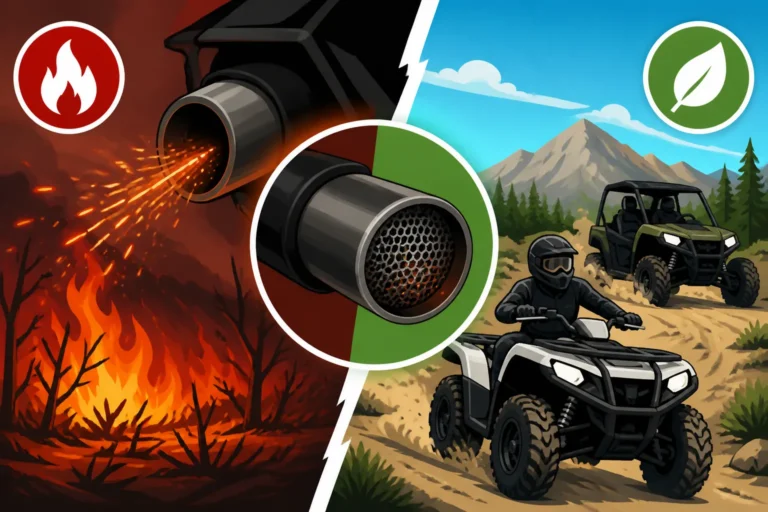
Even if your OHV qualifies as a "Large ATV" by Nevada's definition, obtaining the decal isn't just a rubber stamp. There's a stringent list of equipment your machine must have, much like a regular street vehicle, to be considered safe for any paved road use. This isn't optional; it's a legal mandate outlined in [Nevada Equipment List for Road-Legal UTVs]. You'll need working headlights and taillights that are visible for at least 500 feet, a brake light, a horn, a muffler, a spark arrester, and often mirrors on both sides. Some machines might also need turn signals, a windshield, and seatbelts for all occupants, depending on their design.
This is where companies like SuperATV really shine, offering a wide range of aftermarket parts designed to help UTV owners meet these requirements. From universal turn signal kits and DOT-approved glass windshields to side mirrors and horns, they provide components that can bridge the gap between an off-road beast and a conditionally road-ready machine. However, simply installing these parts isn't enough; they must be correctly installed and fully functional to pass inspection (if required) and satisfy a deputy during a roadside stop. It's not about making your machine look legal; it's about making it functionally compliant with all the safety standards for limited road travel. Don't cut corners here, as incomplete equipment will still lead to fines.
Where a Large ATV Decal Actually Lets You Ride
Here's the critical point about the Large ATV Decal: it doesn't mean you can now drive your UTV on every road in Nevada. Far from it. This decal specifically allows operation on designated "minor county roads" and for limited distances on other county roads. You absolutely cannot take a machine with a Large ATV Decal onto a federal highway like US 93, an interstate, or even many state routes. The primary purpose of this decal is to allow riders to legally connect trails, access fuel or food in small towns, or navigate short distances between private property and public lands.
The law even includes a [Nevada's 2-Mile Limit on Paved Highway] clause for certain situations, meaning you can only ride on specific county roads for a maximum of two miles to reach an OHV trail. This isn't a blanket rule for all roads, but it highlights the highly restrictive nature of this allowance. Furthermore, cities and counties have the power to create their own ordinances, sometimes designating specific routes or, conversely, [Nevada Counties That Ban OHVs on County Roads] entirely. So, even with a Large ATV Decal, you still need to know the local rules wherever you plan to ride. It requires homework, but it’s absolutely essential to avoid costly tickets and ensure your safety.
Navigating Local Ordinances and Designated Routes
Beyond state law, local rules add another layer of complexity to riding your OHV on paved roads in Nevada. What might be permissible in one county could be strictly forbidden just across the county line. This patchwork of regulations can be confusing, but understanding how cities and counties can create their own ordinances is key to legal and responsible riding.
Cities and Counties That Opt Out: Washoe County and Beyond
Nevada's state law allows for some flexibility at the local level. This means that even if your machine qualifies for a Large ATV Decal and meets all the equipment requirements, a specific city or county might have enacted its own ordinance to prohibit OHV use on any paved roads within its jurisdiction, or to designate very specific, limited routes. For example, [Washoe County Ordinance 1507] is a well-known example where strict rules limit OHV access on county roads. You can't just assume that because a road is a "minor county road" it's open season; you have to check the local ordinances.
This is where the frustration often builds for riders. You might be visiting from a more permissive area or just passing through, and suddenly find yourself in violation without realizing it. It requires proactive research: before you head out, especially to a new area, make sure to check the specific county and city ordinances for OHV use. A quick call to the local sheriff's department or county office can save you a lot of headache and potential fines. Ignoring these local rules, even unknowingly, can lead to your ride being cut short and an expensive lesson learned.
The Role of Designated Routes in Urban Areas
In more populated areas, or even smaller towns that see significant OHV traffic, some cities and counties may choose to create specific "designated routes" where OHVs are permitted to travel on paved surfaces. These are often marked roads that allow riders to access trailheads, reach gas stations, or connect to other legal riding areas. However, these are rare and typically very clearly signed. The absence of a sign designating a route for OHVs should always be interpreted as "no OHVs allowed."
[Nevada Cities That Require Designated OHV Routes] will usually have very clear signage indicating where OHVs are allowed. For instance, some areas around Mesquite have a reputation for being more open, but even there, riders must be vigilant about understanding the specific routes. These routes are usually carefully chosen to minimize conflict with regular vehicle traffic and pedestrian safety. You can't just pick any street; you must stick to the routes explicitly designated for OHV use. This system is designed to provide some convenience for riders while maintaining public safety and order within urban environments.
Riding to the Trailhead: The 2-Mile Pavement Limit
One of the most common reasons riders want to use paved roads is simply to get from their campsite or staging area to the actual trailhead without having to trailer their machine. Nevada law offers a very narrow window for this specific scenario with its [Nevada's 2-Mile Limit on Paved Highway]. This rule allows an OHV to operate on a paved highway for a distance of up to two miles only to access an unpaved OHV trail or riding area, or to cross a paved highway from one unpaved area to another. This is not a general permission slip; it's a very specific exception.
It’s easy to misunderstand this rule and think it applies to any paved road for any reason. But remember, this is about getting to the dirt, not to the store or to your buddy’s house. And critically, this 2-mile limit primarily applies to minor county roads, not major state or federal highways. Even within this 2-mile window, all other rules apply: your machine must be registered, and if it's a "Large ATV" utilizing that decal, it must meet all the equipment requirements. This exception exists for convenience and access, but it is not an invitation to treat paved roads as part of your regular trail system.
Crossing Paved Highways and Interstates
Sometimes, it's unavoidable: your trail system might be bisected by a paved road, or you need to get from one side of a highway to another. Nevada's laws are very strict about how and when an OHV can interact with these paved routes, particularly major ones. It’s important to know the rules, not just for legality but for your personal safety in what can be very dangerous situations.
Legal Crossings: When and How
If you find yourself needing to cross a paved highway, whether it's a state route or a minor county road, there's a right way and a wrong way to do it. The legal way to cross a paved highway, as detailed in [Nevada Rules for Crossing a State Route], generally requires you to do so at a right angle (as directly perpendicular to the road as possible), safely, and at an intersection or designated crossing point if available. You must yield to all oncoming traffic, just as you would if you were walking or riding a bicycle across the street. The key is to minimize your time on the paved surface and to cross only when it is absolutely safe to do so.
This isn't an opportunity to "drive" on the road for a short distance; it's strictly a crossing. You should stop, look both ways, and proceed only when you have a clear and sufficient gap in traffic. Be aware that this rule primarily applies to state routes and county roads. For federal highways like US 93, a safe and legal crossing is often harder to find due to higher speeds and traffic volume, and sometimes the only legal crossing might be an underpass or overpass designed for other vehicles. Always prioritize safety over convenience.
The Absolute Ban on Interstate Riding
Let's make this crystal clear: you cannot, under any circumstances, ride your ATV or UTV on an interstate highway in Nevada. There is an [Nevada Interstate Highway ATV Ban] that is absolute. This means no riding on the main lanes, no riding on the shoulders, and no riding on the entrance or exit ramps. Interstates are high-speed, controlled-access highways designed for vehicles capable of maintaining high speeds and operating safely within that environment. Your OHV simply does not belong there, and attempting to ride on an interstate is not only illegal but extremely dangerous.
The consequences for violating this ban are severe, including substantial fines, impoundment of your vehicle, and potentially even criminal charges, depending on the circumstances. Law enforcement takes this very seriously because of the inherent danger posed to both the OHV rider and other motorists. So, if your trail map shows an interstate, understand that it's a hard barrier you must go around or over, typically by trailering your machine. There are no exceptions, no "short cuts," and no "two-mile limits" when it comes to Nevada's interstate highways.
Safety Considerations for Road Crossings
Even when making a legal crossing, safety must be your absolute top priority. Paved roads, especially busy ones, are inherently dangerous for OHVs. Your machine is smaller, slower, and often less visible than regular street vehicles. Here are some critical safety considerations:
- Visibility: Ensure your headlights and taillights are on, even in daylight. Consider adding a safety flag or reflective elements to your machine, especially if you have a SuperATV whip light, to make yourself more visible to approaching traffic.
- Awareness: Always assume other drivers don't see you. Scan for traffic well in advance, and listen for approaching vehicles.
- Speed: Cross quickly and efficiently, but don't accelerate recklessly. Maintain control of your machine.
- Group Riding: If riding in a group, cross one at a time, allowing the lead rider to ensure the path is clear for the next. Don't try to cross as a massive convoy.
- Gear: Always wear your helmet, goggles, and appropriate riding gear. While not all of it is mandated for off-road riding, it's cheap insurance if you have an incident on pavement.
- Conditions: Be extra cautious in low light, adverse weather, or on roads with poor visibility due to curves or hills. Sometimes, it's safer to find an alternate route than to attempt a risky crossing.
Penalties and Enforcement: What a Deputy Looks For
Ignoring Nevada's OHV road rules isn't just a theoretical transgression; it carries real consequences. Law enforcement officers actively patrol areas, and they are well-versed in the distinctions between legal and illegal OHV road use. Understanding what a deputy looks for can help you avoid costly tickets and keep your riding adventures positive.
Fines for Illegal Road Use
The penalties for operating an OHV illegally on Nevada's paved roads can range from moderate fines to significant costs, including impoundment. If you're caught riding on a major highway like US 93, or even an unpermitted county road, you could face tickets for unregistered operation, illegal road use, and potentially other infractions if your machine lacks required equipment. [Nevada Fines for No Large ATV Decal] or other violations can quickly add up, turning a fun day into a very expensive one. These fines are designed not just to punish, but to deter dangerous behavior on public roads.
Beyond the initial ticket, there could be impoundment fees, storage fees, and administrative costs to get your machine back. This can sometimes cost hundreds, even thousands of dollars, far outweighing the convenience you thought you were gaining by riding a short distance on the pavement. The message is clear: the state takes these regulations seriously, and enforcement is a priority, especially in areas where OHV use is prevalent or where complaints from residents are common.
Common Misconceptions and Costly Mistakes
One of the biggest misconceptions is that if you're only going a "short distance," it's probably fine. As we've discussed, the 2-mile limit is highly specific and doesn't apply everywhere. Another mistake is believing that because your OHV has a horn or aftermarket lights (perhaps from a SuperATV kit), it's automatically street legal. This isn't true; those are just components of meeting the requirements for a Large ATV Decal, which itself is a limited permit.
Riders also mistakenly think that if a road is dirt or gravel, it's always an "off-highway" road. However, many gravel roads are still legally classified as county roads and fall under the same restrictions. [What a Nevada Trooper Looks For on a County Road] includes checking the road classification, not just its surface. These assumptions can be costly. Always verify the road classification and local ordinances rather than relying on guesswork or what you think might be permissible. When in doubt, it’s always better to err on the side of caution and trailer your machine.
Roadside Stops and What Paperwork You Need
If you are pulled over by law enforcement while operating your OHV on a paved road, a deputy will be looking for specific items and documentation. First and foremost, they'll check for your Nevada OHV registration decal, and if applicable, the Large ATV Decal. Your machine must have its [Nevada OHV Decal Placement Rules] correctly followed, making it visible. They'll also ask for your driver's license (if you're on a road where a license is required, like those that allow Large ATVs) and proof of ownership. If you're riding a Large ATV on a county road, they'll also be checking for all the required equipment – working lights, horn, mirrors, etc.
It's a good idea to keep all your registration and ownership paperwork, along with any relevant decals or permits, in a waterproof bag on your machine. Be polite and cooperative with the officer, and answer their questions truthfully. Understanding the rules, carrying the correct documentation, and having your machine properly equipped for any allowed road use can make a significant difference in the outcome of a roadside stop. It's about demonstrating that you're a responsible rider who understands and respects the laws designed to keep everyone safe.
| Scenario | Legality on Paved Roads | Key Requirement / Action |
|---|---|---|
| Riding on US 93 or other major State/Federal Highway | Absolutely Illegal | Trailer your machine; do not attempt to ride. |
| Riding on a Minor County Road (General ATV/UTV) | Generally Illegal (unless Large ATV Decal/Ordinance) | Check local ordinances; most ATVs are prohibited. |
| Riding on a Minor County Road (Large ATV Decal) | Conditional (2-mile limit, designated routes) | Must have Large ATV Decal, all equipment, and follow local rules. |
| Crossing a State Route | Permitted at right angle, safely, yielding traffic | Minimize time on pavement, yield to all vehicles. |
| Crossing an Interstate | Absolutely Illegal | Do not attempt to cross an interstate; use designated overpasses/underpasses by car. |
| Riding to Trailhead (within 2 miles) | Permitted on specific county roads, specific purpose | Must be registered, equipped (if Large ATV), and directly accessing a trail. |
| Riding in a City/Town | Generally Illegal (unless specifically designated route) | Check city ordinances; look for explicit OHV route signage. |
Disclaimer
This article is for general informational purposes only and does not constitute professional advice. Laws, prices and regulations vary by location and change over time. Consult a qualified professional for guidance on your specific situation.