DOT Tires on a Machine That Rides Dunes
The dream of hitting Nevada's legendary dunes, like Sand Mountain or Nellis, often clashes with the practical reality of needing to traverse a county road to get there, or perhaps just cruise into town for a bite. This common dilemma leaves many off-road enthusiasts scratching their heads, wondering if there’s a single tire solution that can conquer both the soft, shifting sands and the hard, unyielding asphalt. This guide dives deep into the world of DOT-approved tires and whether they can truly serve as your ultimate dual-purpose solution for both thrilling dune rides and legal road use in the Silver State.
The Allure and Challenge of Nevada's Dunes
Nevada's vast, open landscapes are a paradise for off-highway vehicle (OHV) enthusiasts, with its iconic sand dunes drawing riders from all over. But the very sand that makes these areas so exhilarating also presents a unique challenge for your machine's tires.
The Unique Demands of Sand Riding
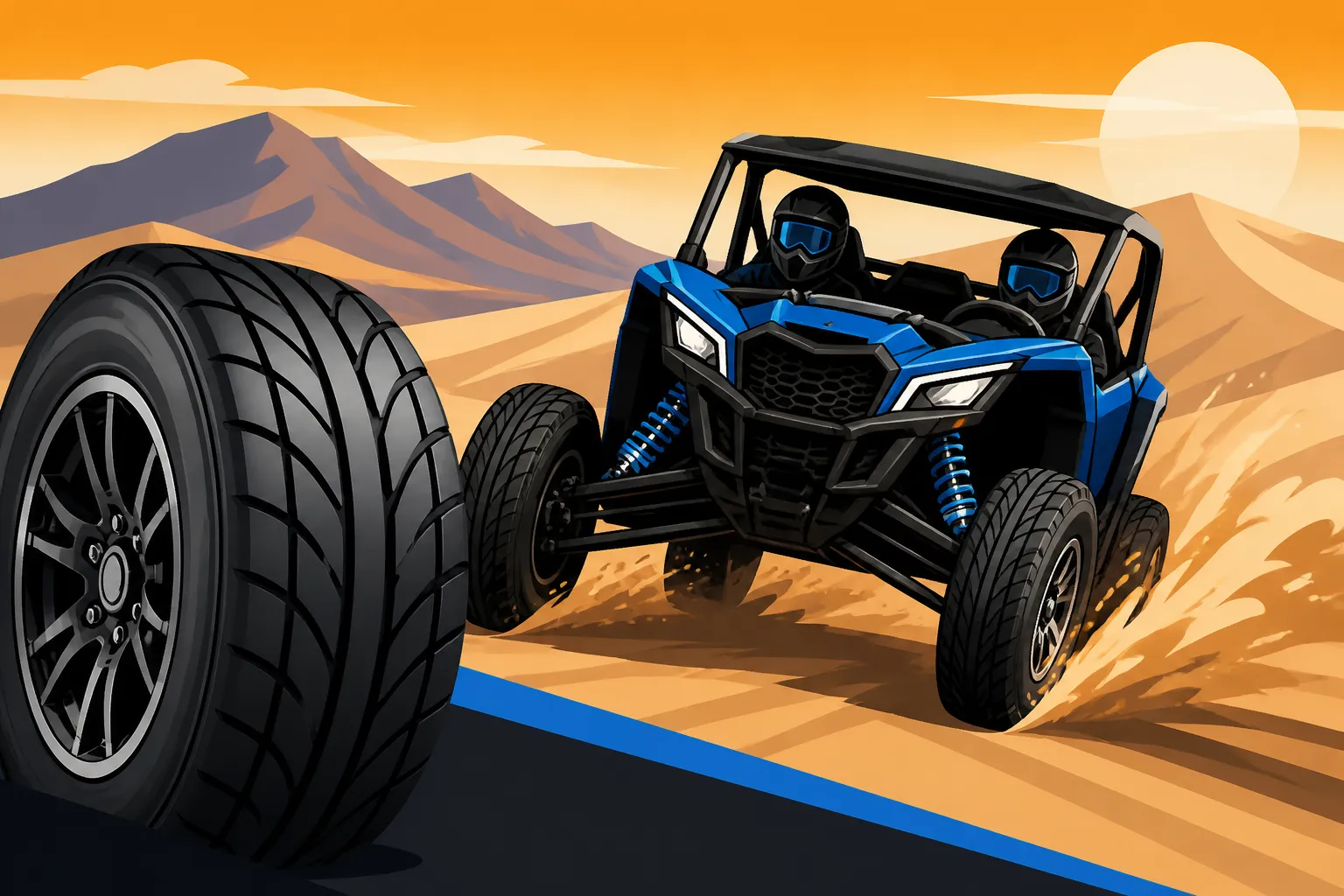
Riding on soft sand is a completely different beast than tearing down a rocky trail or cruising a hard-packed dirt road. In sand, traction isn't about biting into the ground; it's about flotation and propulsion. Your tires need to stay on top of the sand as much as possible to avoid digging in, which can quickly bog down your machine and drain your fuel tank. This is why dedicated sand tires, often called paddle tires, are the undisputed champions of dune riding. They feature large, scoop-like paddles that dig into the sand and propel your machine forward, giving you that incredible climbing power and exhilarating acceleration up a dune face.
Think about trying to run across a sandy beach versus walking on a paved sidewalk. On the beach, your feet sink, and you expend a lot more energy for less forward movement. Paddle tires are designed to "swim" through that sand efficiently. They are typically lighter, with a softer compound, and designed for maximum grip in loose terrain. The sidewalls might not be as robust as those on an all-terrain tire, as sharp rocks aren't usually a concern in pure sand environments.
Popular Nevada Dune Spots
Nevada boasts some incredible dune systems that offer endless hours of riding enjoyment. Each spot has its own character, but they all share that soft, powdery sand that demands specific tire characteristics.
- Sand Mountain: Located near Fallon, [Sand Mountain: Nevada's Great Basin Dune] is arguably Nevada's most famous dune. It's a massive, crescent-shaped dune over 600 feet tall, offering miles of open riding. The sand here is generally very soft and deep, making paddle tires almost a necessity for serious climbing and high-speed runs. Rangers at Sand Mountain will also check your paperwork, so make sure your machine is properly registered.
- Nellis Dunes: Just outside Las Vegas, [Nellis Dunes and the Las Vegas Skyline] provides a convenient and expansive riding area for locals and visitors alike. While not as towering as Sand Mountain, Nellis Dunes still offers plenty of challenging sandy bowls and rolling hills perfect for UTVs and ATVs. The sand consistency is similar, requiring good flotation and traction.
- Amargosa Big Dune: Further south, near Beatty, you'll find Amargosa Big Dune, another impressive sand feature. It's known for its steep faces and challenging climbs.
These environments are where dedicated sand tires truly shine, optimizing performance and reducing strain on your vehicle. However, the moment you leave the sand and hit a hard surface, those paddles become a liability. They wear down extremely fast, offer poor handling, and can even be dangerous on pavement.
Navigating Nevada's Roads with Your OHV
The desire to ride on county roads or even cross highways legally is a common one for OHV owners. Nevada offers some provisions for this, but it comes with a strict set of rules, and tire choice is a big part of it.
Understanding Nevada's Street Legal Landscape
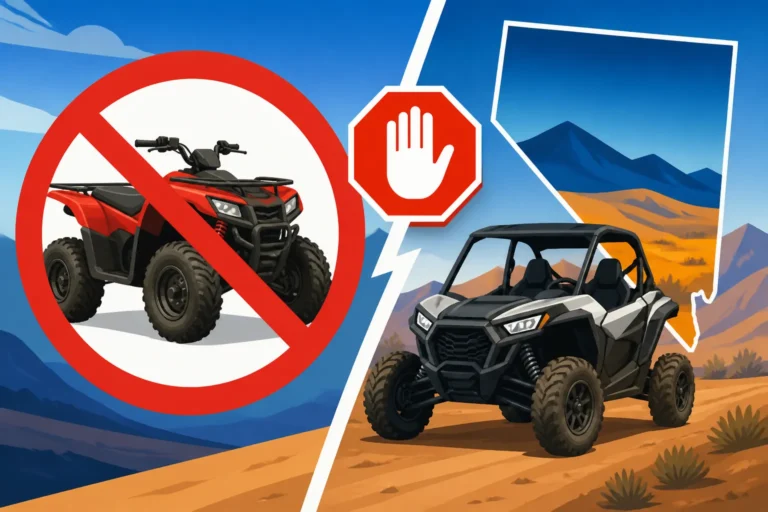
Unlike some states that allow full street legal conversion for ATVs and UTVs, Nevada has a more specific classification for off-highway vehicles that can be operated on certain public roads. This is generally through the "Large ATV" designation, which primarily applies to utility task vehicles (UTVs) or side-by-sides. A "Large ATV" must meet specific criteria, including having at least four wheels, a curb weight between 900 and 2,000 pounds, a width of 50 to 80 inches, and non-straddle seating. Your typical sport quad, with its straddle seating and usually narrower stance, won't qualify.
If your machine fits the "Large ATV" definition, you can apply for a special decal that allows limited road use on designated county roads, but generally not on state or federal highways (except for crossing them). This decal signifies that your machine is equipped with the necessary safety features for road travel. Understanding [Nevada Street Legal UTV Requirements] is crucial here, as is knowing [What Nevada's NRS 490.043 Counts as a Large ATV].
Even with this designation, there are often limitations on how far you can ride on pavement, such as [Nevada's 2-Mile Limit on Paved Highway] in certain areas, and many cities and counties have their own ordinances restricting OHV access on local streets. For example, cities like Las Vegas and Henderson have strict rules about where OHVs can and cannot operate.
The Role of DOT-Approved Tires
A non-negotiable requirement for any OHV seeking to gain limited street-legal status in Nevada is having Department of Transportation (DOT) approved tires. This isn't just a suggestion; it's law. What does "DOT-approved" actually mean for a tire?
Essentially, a DOT certification signifies that the tire has met minimum safety standards set by the U.S. Department of Transportation. These standards cover aspects like tread depth, construction durability, and load capacity, ensuring the tire is safe for highway speeds and conditions. When you look at a tire, you'll see "DOT" stamped on the sidewall, often followed by a series of letters and numbers indicating the manufacturing plant and date.
For road use, these tires are essential for several reasons:
- Safety: They are designed to handle the stresses of pavement, including higher speeds, braking, and cornering, which non-DOT off-road tires (like pure paddle tires) are not.
- Durability: DOT tires use compounds and construction methods that can withstand the abrasion of asphalt and maintain integrity over extended road use. Paddle tires, by contrast, would quickly wear down and potentially delaminate on pavement.
- Legal Compliance: Without DOT-approved tires, your OHV simply cannot meet the criteria for a Nevada Large ATV decal or any other form of legal street operation. A deputy performing a roadside stop will check for this, along with your [Nevada OHV Decal Placement Rules] and other required safety equipment like headlights, taillights, and mirrors.
So, while your paddle tires are fantastic for the sand, they instantly disqualify your machine from any form of legal road access in Nevada. This is where the dilemma truly begins for the multi-faceted rider.
The Compromise: DOT Tires for Dune and Road
The idea of having one set of tires that performs admirably on both soft sand and hard pavement is a tempting one, but it's important to approach this with a realistic perspective: it's always a compromise.
Pros and Cons of Using DOT Tires in Sand
Let's break down what you can expect if you try to hit the dunes with your DOT-approved all-terrain or even hybrid tires.
Pros:
- Road Legality: This is the primary benefit. If your OHV is a Large ATV and otherwise street-legal, DOT tires mean you can legally traverse those short stretches of county road or highway crossings required to get to your riding area, or even run into a nearby town for supplies. This is often more convenient than trailering your machine everywhere.
- Versatility: You avoid the hassle of swapping tires every time you change terrain. For riders who enjoy a mix of hard-packed trails, rocky terrain, and occasional sandy washes, a good DOT all-terrain tire offers reasonable performance across the board.
- Durability on Mixed Terrain: DOT tires are generally built tougher to handle various surfaces, including rocks and gravel, which you might encounter on approach roads to dunes or on surrounding desert trails.
Cons:
- Reduced Performance in Soft Sand: This is the biggest drawback. No matter how aggressive a DOT tire is, it will never perform as well as a dedicated paddle tire in deep, soft sand. You'll experience reduced climbing power, slower acceleration, and your machine will have to work much harder to move through the sand. This means more throttle, more stress on the engine and drivetrain, and significantly worse fuel economy. You'll likely find yourself digging in more often, requiring more effort to get unstuck.
- Increased Risk of Getting Stuck: With less flotation and traction, you're at a higher risk of getting bogged down in soft spots, especially on inclines or when trying to navigate tricky sections of the dunes.
- Compromised Handling: While better on hardpack, a general-purpose DOT tire won't offer the same predictable, floaty feel that paddle tires provide in the sand. You might feel more "darty" or less stable, especially at speed.
- Faster Wear on Pavement for Aggressive DOTs: While DOT-approved, some of the more aggressive all-terrain or mud-terrain style DOT tires designed for off-road prowess will still wear faster on pavement than a tire with a more road-oriented tread pattern.
Choosing the Right DOT Tire for Dual-Purpose Use
If you're committed to the dual-purpose tire strategy, the key is to look for DOT-approved tires that lean towards an aggressive all-terrain or even a "hybrid" design. These tires attempt to bridge the gap between hard-surface performance and off-road capability.
Here’s what to look for:
- Aggressive Tread Pattern: Seek out tires with deep, widely spaced lugs. While not paddles, these larger voids can still offer some bite in loose sand and help with self-cleaning. Brands like Maxxis, ITP, and GBC offer good options in this category. Companies like SuperATV also provide a range of DOT-approved tires, some specifically designed with aggressive, open tread patterns that aim to maximize off-road grip while still meeting the legal requirements for road use. Their "Warrior" or "Intimidator" lines, for instance, are often popular choices for riders looking for a versatile, robust tire that can handle a variety of challenging terrains, including some sand, while maintaining their DOT certification.
- Flotation (Width and Air Pressure): Consider a slightly wider tire if your machine allows, as more surface area can aid in flotation on sand. Crucially, pay attention to air pressure. You'll likely want to run lower pressures in the sand than on pavement to increase the tire's footprint and improve flotation. Just remember to air back up when you hit the road!
- Robust Sidewalls: Even if you're primarily thinking about sand, robust sidewalls are always a good idea for overall durability on mixed terrain. Rocks and debris can pop up unexpectedly, even on the fringes of dune areas.
- "Desert" or "Baja" Rated Tires: Some manufacturers produce tires specifically designed for desert racing, which are DOT-approved and built to handle high speeds over varied, often sandy and rocky, terrain. These can be a fantastic compromise if you're frequently riding in areas with mixed conditions.
It’s about finding the best all-around performer that meets the legal requirements for your machine's potential road use while still offering acceptable, albeit compromised, fun in the sand. Remember, the more you optimize for one extreme, the more you sacrifice on the other.
Practical Considerations and Alternatives
Deciding on the right tire setup involves more than just performance—it’s about logistics, cost, and personal riding style.
The Reality of Swapping Tires
For many serious dune enthusiasts who also want the option of legal road access, the most practical solution isn't a single "do-it-all" tire, but rather two separate sets: dedicated paddle tires for the dunes and a set of DOT-approved all-terrain tires for everything else.
- Convenience vs. Performance: Swapping tires can be a chore, requiring extra wheels, storage space, and the physical effort of changing them out. However, this offers the best of both worlds: uncompromised performance and safety on the dunes, and legal, comfortable riding on the road. Many riders have a dedicated "dune setup" that they swap onto their machine when heading to Sand Mountain or Nellis.
- Cost: Investing in two sets of wheels and tires is a significant expense upfront. However, it can potentially save you money in the long run by extending the life of both sets (paddles aren't wearing on pavement, and your road tires aren't being shredded in deep sand unnecessarily).
- Tools and Expertise: You'll need the right tools (a good jack, lug wrench, possibly an impact driver) and some mechanical savvy to swap tires efficiently.
If you plan to frequently switch between hardcore dune riding and road-legal excursions, having separate wheel and tire sets is often the superior choice for maximizing your riding experience and safety in both environments. This way, you can equip specialized tires, like a set of SuperATV's specific all-terrain DOT tires for your road and trail adventures, and then easily switch to dedicated paddles for pure dune days.
Other Essential Gear for Nevada Riding
Beyond tires, remember that Nevada road legality for Large ATVs involves a host of other requirements, and safe dune riding has its own best practices.
- Required Road Equipment: If you're going for a Large ATV decal, you'll need functional headlights, taillights, a stop lamp, at least one mirror (typically a rear-view mirror), and a horn. Don't forget [Nevada Headlight Requirements for Road Use] and [Nevada Mirror Requirements for a Road UTV]. Helmets are also required for any rider under 18 years old on public roads, and strongly recommended for all riders. Check [Helmet Rules on Nevada Roads] for specific details.
- Dune Safety Gear: When riding in dunes, a safety whip and flag are mandatory. This helps other riders see you, especially when cresting a dune. Ensure your flag is properly visible above your machine.
- Paperwork: Always carry your [Nevada OHV Registration Paperwork Checklist] and proof of ownership. For road use, you'll need your driver's license and proof of liability insurance.
- Preparedness: Nevada's desert can be harsh. Carry plenty of water, tools, a first-aid kit, and a communication device. Cell service is spotty in many remote areas, so a satellite messenger is a wise investment.
Ultimately, the decision to use DOT tires for both dunes and roads depends on your priorities. If maximum performance in sand is paramount, then dedicated paddles are the way to go, even if it means trailering your machine to the dunes. If convenience and limited road access are your main concerns, and you only do occasional, less aggressive dune riding, then a good set of aggressive DOT-approved all-terrain tires might be the acceptable compromise you're looking for. Just know that it is a compromise, and adjust your expectations accordingly when hitting the deep sand.
Disclaimer
This article is for general informational purposes only and does not constitute professional advice. Laws, prices and regulations vary by location and change over time. Consult a qualified professional for guidance on your specific situation.