Nevada Rules on Riding Into Town for Fuel
There's nothing quite like the freedom of tearing through the Nevada desert on your ATV or UTV, but that freedom can quickly turn to frustration when the fuel gauge starts inching towards empty and the nearest gas station is just a short, paved hop away. You glance at the road, then at your machine, and a million questions race through your mind: Can I just ride it down the street? Will I get a ticket? This guide is here to untangle the often-confusing web of Nevada's off-highway vehicle (OHV) laws, specifically addressing the burning question of whether you can legally ride your dirt-loving machine into town for essential services like fueling up.
The Navigational Tightrope: Understanding Nevada's Road Rules for OHVs
It’s a common scenario: you’re deep into an epic ride, miles from your truck and trailer, and suddenly, the low fuel light flashes. The gas station sign gleams invitingly from a highway exit just a mile or two down the road. It seems like such a short distance, a quick dash, but Nevada's laws aren't always intuitive when it comes to mixing off-road machines with paved roads, especially when "town" is involved. The key here is understanding the subtle, yet critical, distinctions in the law.
The Elusive 2-Mile Rule and Designated Routes
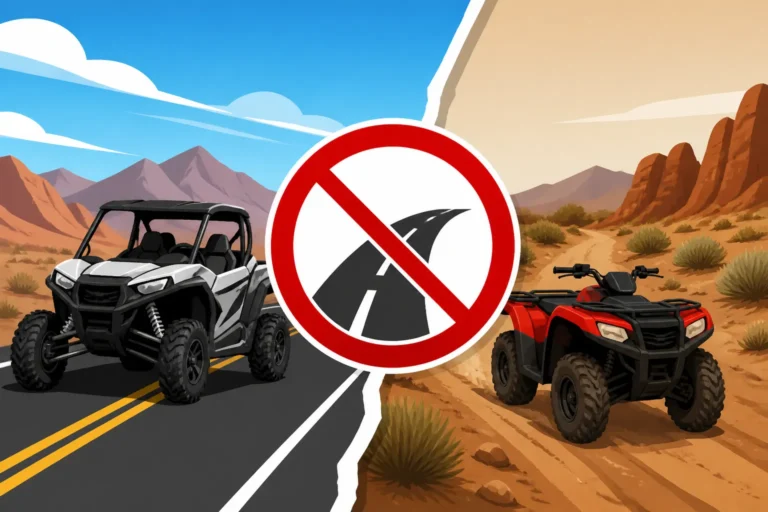
Many riders have heard whispers of a "2-mile rule" in Nevada, and it does exist, but it's often misinterpreted. Nevada Revised Statute (NRS) 490.060 generally allows an OHV to operate on a highway for a distance of no more than two miles to cross the highway or to get to an OHV trail or riding area. This isn't a blanket permission slip to ride into town for a latte or a tank of gas. It's specifically for transition, to connect trail segments, or to safely cross a paved road. The intent is to facilitate access to unpaved riding areas, not to integrate OHVs into urban traffic. For example, if your trail ends at one side of a highway and continues on the other, you can use that 2-mile window to get across. Or if your campsite is just off a highway and a dirt trail starts 1.5 miles down, you might be able to ride that short stretch. But thinking of it as a pass to cruise to the nearest convenience store is where riders often run into trouble. This rule is truly meant for crossing or accessing, not for purposeful travel into a populated area. You can find more detail on this specific nuance in [Nevada's 2-Mile Limit on Paved Highway].
When a "County Road" Isn't Just a County Road
Another area of confusion arises with the term "county road." In many rural parts of Nevada, countless unpaved, gravel, or even sparsely paved roads are technically county roads. Nevada law often permits OHVs on "minor county roads," especially those that are mostly used for accessing public lands or rural residences. These are often the kind of roads where you might encounter more dust than asphalt, and where local traffic consists mostly of other off-road enthusiasts or ranchers.
However, as you approach a town or incorporated city, even if the road maintains its "county road" designation, the rules can drastically change. The moment a road enters a populated area, passes streetlights, or runs alongside businesses and homes, it often falls under specific municipal ordinances that strictly prohibit OHV use. This means that a county road that was perfectly legal to ride on five miles out of town can become illegal the second you cross an imaginary line into city limits. This distinction is vital because a deputy or city police officer in a populated area is going to enforce different rules than a BLM ranger out in the middle of nowhere. It's not about the county, but about the urban or rural context of the road.
City Ordinances and Local Restrictions
This is perhaps the biggest hurdle for riders hoping to fuel up in town. While state law provides some general guidance, individual cities and counties in Nevada have the authority to enact their own ordinances regarding OHV use on local streets. For example, major metropolitan areas like Las Vegas, Reno, and Henderson generally prohibit OHVs on their paved streets, with very few exceptions for designated routes. Even smaller, seemingly OHV-friendly towns often have specific rules. Mesquite, for example, is known for being somewhat open to OHVs, but even there, there are specific zones and routes. You can't just expect to roll up to the local grocery store without potentially facing a ticket. These local rules can be incredibly strict, and ignorance of them is rarely an excuse that will get you out of a fine. Always remember that local ordinances can, and often do, supersede the general state allowance for minor county roads when it comes to riding within town limits. It’s crucial to understand that [Nevada Cities That Require Designated OHV Routes] are the exception, not the rule, and many cities actively keep OHVs off their streets.
Gearing Up for the Pavement: Essential Equipment for Nevada Road Use
If you do find yourself on a legally permissible road segment, even for that quick 2-mile transition or on an approved minor county road, your OHV still needs to meet certain equipment standards to be compliant. This isn't just about safety; it's about avoiding a citation for lacking required gear. Many off-road machines, fresh from the dealer, might not have all these components, so it's a good idea to assess your machine before you venture anywhere near pavement.
The Basics: Lights, Horn, and Mirrors
Nevada law specifies several key pieces of equipment for any OHV operating on a paved road, even for a short distance. You'll need:
- Headlights and Taillights: Your machine must have at least one headlight that can illuminate persons and vehicles for 500 feet, and at least one taillight visible from 500 feet to the rear. This isn't just for night riding; it's a general requirement for road use.
- Stop Lamp: A working stop lamp (brake light) is essential. It must be visible from 500 feet to the rear when activated.
- Horn: A horn capable of emitting sound audible from 200 feet is required. This is for signaling other vehicles and pedestrians, a crucial safety feature.
- Mirrors: You need at least one mirror, located to provide a clear view of the highway to the rear for at least 200 feet. Many aftermarket options exist for side-by-sides, and even some ATVs can be fitted with handlebar-mounted mirrors.
- Reflectors: Often overlooked, but important. Either a taillight that meets specific reflective standards or separate rear reflectors are needed.
Making sure your machine is up to snuff can involve adding aftermarket parts. Companies like SuperATV offer a wide range of accessories, from turn signal kits and mirrors to full street-legal kits, that can help bring your UTV or ATV into compliance with these requirements. You can explore [Nevada Equipment List for Road-Legal UTVs] to get a clearer picture of what's needed.
Tires, Spark Arresters, and Mufflers
Beyond the basic lighting and signaling, other components also play a role:
- Tires: While Nevada law doesn't explicitly mandate DOT-approved tires for OHVs on limited road use, it's always a good idea if you plan to touch pavement. Standard knobby off-road tires can wear quickly and handle poorly on asphalt, especially at higher speeds or in wet conditions.
- Spark Arrester: This is critical, and often required for all OHV use on public lands anyway. A properly functioning spark arrester prevents sparks from your exhaust from igniting dry vegetation, a real concern in the Nevada desert.
- Muffler: Your machine must have a muffler in good working order to prevent excessive or unusual noise. There are sound limits in place, and overly loud exhaust systems can attract unwanted attention from law enforcement, even on what might otherwise be a legal stretch of road.
It's about being a responsible rider, not just meeting the bare minimum. Installing a high-quality exhaust system with a spark arrester from a reputable brand like SuperATV can help you stay compliant and reduce your environmental impact.
What About a License Plate and Insurance?
This is where many riders get confused, especially when they hear about "street legal" conversions. For the vast majority of ATVs and UTVs, Nevada does not issue a traditional license plate for general street use. The state only registers OHVs with a decal, which is for off-road use. If you see a UTV with a regular license plate in Nevada, it's likely been registered as a "Large All-Terrain Vehicle" (more on that below), a different classification entirely, or it might be plated out of state, which comes with its own set of issues regarding Nevada reciprocity.
However, if you are operating your OHV on any public road where motor vehicles are allowed, even briefly, you are generally subject to liability insurance requirements. This means you should have proof of insurance. Getting caught without it can lead to significant fines. Always carry your proof of insurance, whether on paper or digitally on your phone, to avoid issues. Learn more about [Does Nevada Require ATV Insurance on Roads?].
The "Large ATV" Conundrum: A Different Category of Street Legality
The term "street legal" is thrown around a lot in the OHV community, but in Nevada, it has a very specific and limited meaning, primarily revolving around the "Large All-Terrain Vehicle" designation. This is where most standard ATVs and even many popular UTVs fall short.
Understanding Nevada's "Large All-Terrain Vehicle" Definition
Nevada Revised Statute (NRS) 490.043 defines a "Large All-Terrain Vehicle" quite precisely. To qualify, an OHV must meet several criteria:
- Size and Weight: It must be at least 48 inches wide but not more than 70 inches wide, and weigh at least 900 pounds but not more than 2,400 pounds.
- Seating/Cargo: This is the big one. It must either:
- Have four or more wheels and four or more seats; OR
- Have four or more wheels, at least two seats, and a cargo box or bed that measures at least 35 inches by 35 inches.
- Equipment: It must be equipped with all the road-safety equipment mentioned earlier (headlights, taillights, stop lamp, horn, mirrors, muffler, spark arrester).
If a machine meets all these criteria, it can apply for a special "Large ATV" decal and, critically, it must then carry liability insurance and be operated by a licensed driver. This decal allows it to be used on designated county roads, which are typically minor, rural roads. It does not automatically grant access to all paved streets within city limits. It's important to understand [What Nevada's NRS 490.043 Counts as a Large ATV] to see if your machine even qualifies for this special designation.
Why Your Sport Quad Won't Qualify
This is a common disappointment for riders of traditional sport quads or even many two-seat recreational UTVs. A two-seat sport quad, no matter how many mirrors or lights you bolt onto it, simply does not meet the "four or more seats" or "two seats plus large cargo box" requirement. It's designed for nimble, high-performance off-road riding, not for utility or passenger transport in the way the "Large ATV" definition implies. This means your sport quad, almost without exception, cannot be made "street legal" under Nevada's Large ATV statute. This is a critical distinction that many riders miss, leading to frustration and potential legal issues. For a deeper dive into this specific limitation, check out [Why a Two-Seat Sport Quad Fails Nevada's Test].
The Reality of Riding for Fuel
So, circling back to the original question: Can you ride into town for fuel? For most conventional ATVs and two-seat UTVs, the answer is almost universally no, unless the town has extremely rare and specific designated OHV routes that lead directly to a gas station and your machine meets all the general road equipment requirements for that brief trip.
Even for a machine that does qualify as a "Large ATV" and has the appropriate decal, the ability to ride into town for fuel is still highly dependent on local ordinances. While a Large ATV decal allows use on designated county roads, this designation usually applies to rural, unpopulated stretches. Most incorporated cities will still have ordinances prohibiting even Large ATVs on their main thoroughfares. You might be able to ride a designated route to a trailhead, but not typically to the grocery store or gas station within city limits. The spirit of the law, even for Large ATVs, is more about accessing trail systems and rural areas, not about daily urban commuting. This is why the advice is usually [Riding to the Trailhead, Not to the Store], rather than riding to town amenities.
Avoiding the Ticket: Penalties and Smart Riding Practices
The consequences of misinterpreting Nevada's OHV laws can range from an inconvenient warning to a hefty fine, or even having your machine impounded. It’s far better to be informed and prepared than to face a deputy on the wrong side of the law.
Fines and Consequences
Riding an OHV where it's not permitted, especially on paved city streets, can result in citations for several offenses:
- Operating an unregistered OHV: If your machine isn't registered for off-road use, or if you're operating an out-of-state machine beyond its reciprocity period, you're looking at a ticket.
- Operating an OHV on a prohibited highway or street: This is the most direct violation for riding into town.
- Lacking required equipment: No headlight, no horn, no mirrors – each of these can be a separate violation.
- No proof of insurance or driver's license: If required for the specific road segment, these omissions will also lead to fines.
- Reckless operation or other traffic violations: Once you're on a paved road, you're generally subject to all traffic laws, and any unsafe riding will be treated just like a car violation.
Fines for these infractions can quickly add up, easily costing hundreds of dollars. It's a costly lesson to learn when all you wanted was a splash of fuel. For details on potential monetary penalties, look at [Nevada Tickets for Riding Where You Should Not] and [Nevada Fines for No Large ATV Decal].
Best Practices for Fueling Up
Given the complexities, what’s a responsible rider to do when the tank runs low miles from the trailer?
- Plan Ahead: This is your best defense. Know your machine's range and plan your routes with fuel stops in mind. Look at maps for towns with designated OHV routes to fuel stations, or better yet, plan to carry extra fuel.
- Carry Extra Fuel: A small, approved fuel can strapped securely to your machine is often the safest and most legal way to extend your range. It eliminates the need to risk riding on prohibited roads. SuperATV, for instance, offers various storage solutions and fuel can mounts perfect for securing extra gas.
- Trailer to Town: If you absolutely need to access services in an incorporated town, the safest and most legal option is to trailer your OHV in. Unload it at a designated staging area if one exists, or simply perform your errands with your OHV securely on the trailer.
- Utilize OHV-Friendly Communities: Some smaller, very rural towns in Nevada are more lenient or have specific allowances for OHVs on certain streets. Communities near major trail systems, like parts of Mesquite or areas around Logandale, might have more relaxed rules or designated routes for access. But this is the exception, not the rule, and requires advance research. You might be able to access [Riding County Roads Legally in Nevada] but entering the main town areas often has different rules.
- Park and Walk: If you're on a legal county road and a store or gas station is just out of bounds in town, consider parking your machine on the legal side of the line and walking the rest of the way. It's inconvenient, but far better than a ticket.
When in Doubt, Ask
The biggest takeaway is: don't guess. If you're unsure about the legality of riding your OHV on a specific road or into a particular town, take the time to find out.
- Check Local Ordinances: Many city and county websites post their municipal codes online. Look for sections related to "off-highway vehicles," "all-terrain vehicles," or "motor vehicles" on public streets.
- Contact Local Authorities: Reach out to the local sheriff's office, police department, or even the BLM field office for the area you plan to ride in. They can provide specific guidance for their jurisdiction.
- Consult Trail Maps: Reputable OHV trail maps often indicate restricted areas or designated routes. Websites like the Nevada Trail Finder can be incredibly helpful for planning.
Ultimately, Nevada provides incredible opportunities for OHV recreation, but enjoying those trails safely and legally means respecting the rules of the road, even for a quick trip into town for fuel. It’s all about being prepared and understanding the difference between riding out on the open desert and navigating paved thoroughfares. For those interested in extended off-road adventures that might involve camping, understanding [Nevada Rules for Riding a Dirt Road to Camp] is also highly relevant.
| Feature / Category | Typical ATV/2-Seat UTV (Off-Road) | Nevada "Large ATV" (Special Designation) | Fully Street-Legal Car/Truck |
|---|---|---|---|
| Primary Use | Off-road recreation, trails, dunes | Rural designated county roads, some access to trails | All public roads, highways, city streets |
| NV Registration | OHV Decal (required for public lands) | OHV Decal + "Large ATV" endorsement | Standard Vehicle Plates & Registration |
| License Plate | No | No (Decal acts as identifier) | Yes |
| Min. Equipment | Spark arrester, muffler (often headlights/taillights for safety) | Headlights, taillights, stop lamp, horn, mirrors, spark arrester, muffler | Full DOT compliance (lights, mirrors, airbags, etc.) |
| Driver's License | No (for off-road) | Yes | Yes |
| Insurance Req. | No (for off-road) | Yes (liability for road use) | Yes (liability) |
| Access to City Paved Streets | Generally No (unless specific ordinance) | Generally No (unless specific ordinance/designated route) | Yes |
| Access to Minor County Roads | Often Yes (check local ordinances) | Yes | Yes |
| Crossing a Highway (2 Miles) | Yes (under specific conditions) | Yes (under specific conditions) | N/A (already street legal) |
| Riding into Town for Fuel | Generally No, high risk of citation | Generally No, high risk of citation | Yes |
Disclaimer
This article is for general informational purposes only and does not constitute professional advice. Laws, prices and regulations vary by location and change over time. Consult a qualified professional for guidance on your specific situation.