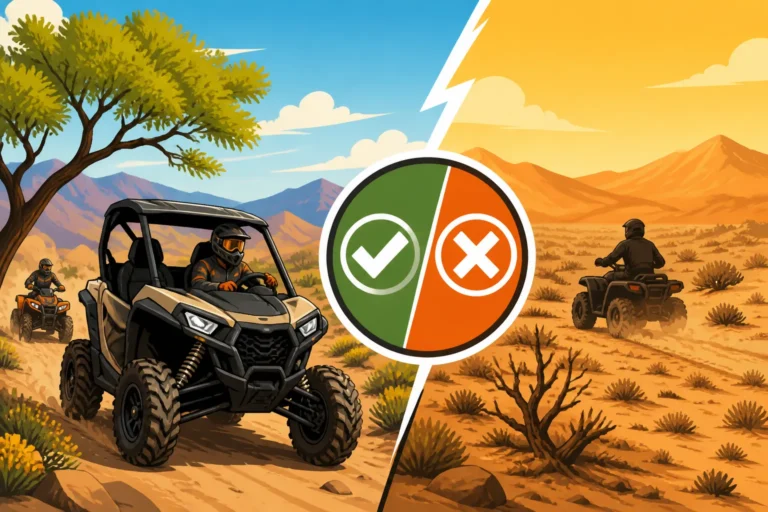
Does a Four-Seat RZR Pass Nevada’s Seating Test?
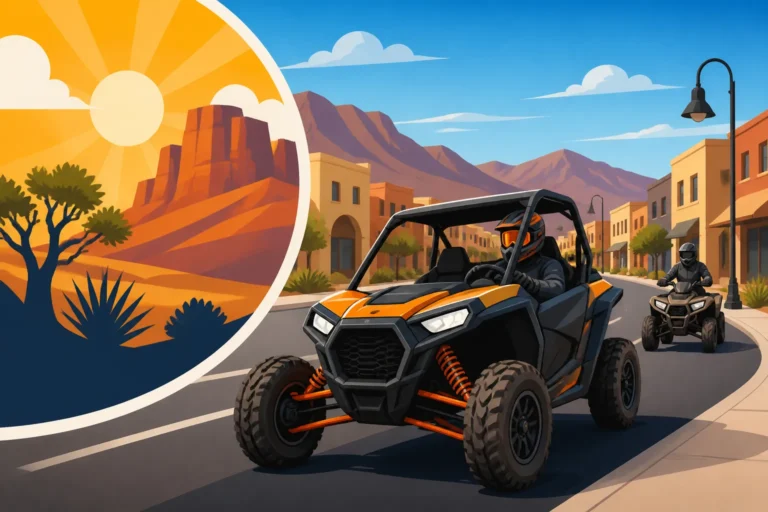
It's incredibly frustrating when you invest in a powerful, multi-seat off-highway vehicle (OHV) like a Polaris RZR, dreaming of hitting both the trails and maybe just cruising down a county road to get to that perfect camping spot, only to hit a brick wall with Nevada's street legal rules. Many riders assume that if their UTV has four seats, it automatically qualifies for road use, but Nevada's definition of a "large ATV" can be surprisingly specific. This guide is here to untangle the complexities of Nevada's street-legal requirements, specifically addressing whether your beloved four-seat RZR actually makes the cut and what you need to know to ride legally on the Silver State's designated roads.
Understanding Nevada's "Large ATV" Definition for Road Use
Nevada has specific laws governing which off-highway vehicles can be granted limited street-legal status. It's not a free-for-all, and many riders find themselves scratching their heads when their seemingly road-ready machine doesn't meet the state's criteria. The key here is the legal definition of a "large all-terrain vehicle," which is outlined in NRS 490.043. It's a critical distinction that determines whether your UTV can ever see pavement beyond a quick crossing.
More Than Just Four Wheels: The Key Criteria
When it comes to allowing an off-highway vehicle on certain public roads, Nevada isn't just looking at the number of wheels or how fast it goes. The state has a particular set of requirements for what it considers a "large all-terrain vehicle," and it goes beyond just being an ATV or UTV. According to [What Nevada's NRS 490.043 Counts as a Large ATV], the machine needs to meet one of two very specific criteria that speak to its design intent rather than just its passenger capacity.
First, it needs to have "a width of 50 inches or more but not more than 80 inches." Many modern side-by-sides, including various RZR models, easily fit within this width. However, this is just one piece of the puzzle. The more challenging part for many sport UTVs is the second set of requirements. The vehicle must be "designed by the manufacturer primarily for recreational use and off-highway travel, and which has a nonstraddle seating and a steering wheel." Again, most UTVs meet this general description.
But here’s the kicker, and this is where many popular machines fall short: it must also be "designed by the manufacturer with at least four seats for the rider and passengers or a truck bed." This is where the distinction becomes crucial. It’s not just having four seats; it’s about the manufacturer's primary design intent for those seats or the presence of a functional truck bed. A general-purpose or utility UTV like a Can-Am Defender or a Polaris Ranger, with its dedicated cargo bed and often four distinct seating positions designed for utility or a mix of utility and recreation, tends to fit this definition much more readily.
Why Your Four-Seat RZR Might Not Qualify (and Why it Matters)
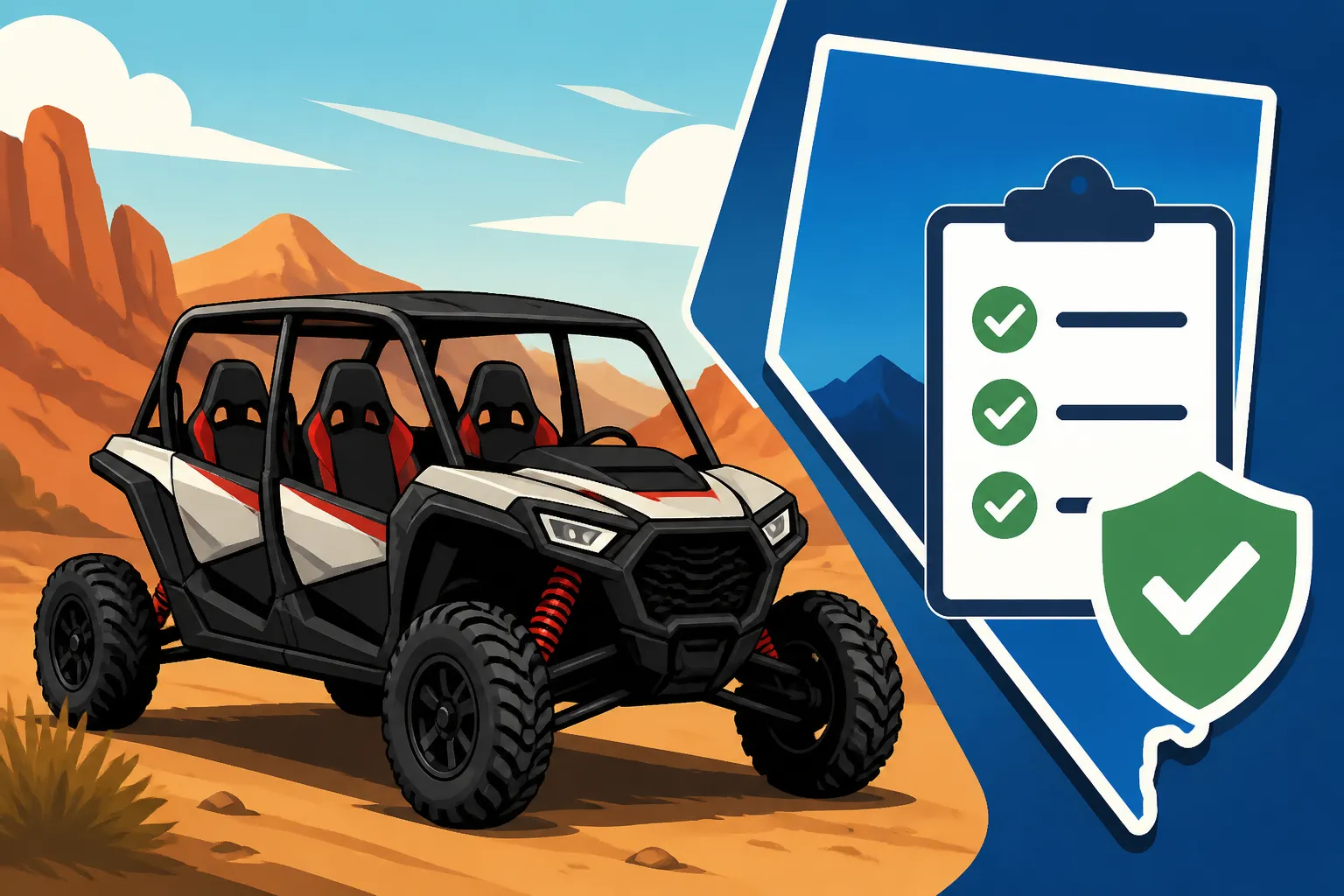
Now, let's talk about the four-seat Polaris RZR, which is a fantastic machine for off-road fun. You might look at your RZR XP 4 1000 or RZR PRO XP 4 and think, "Hey, it has four seats! I'm good to go!" And while it absolutely does have four seats, the way Nevada interprets the "designed by the manufacturer" clause can throw a wrench into those plans. The critical element is often the absence of a truck bed and the primary recreational design of the four-seat configuration for sport, not utility.
Nevada's law for large ATVs often leans towards utility-focused side-by-sides that have both multi-passenger capability and a cargo bed, or vehicles whose multi-seat design clearly indicates a more utilitarian or general-purpose role, even if they lack a bed. Many sport-oriented four-seat RZRs, while having four seats, are primarily designed for high-performance recreation and trail riding. The rear "cargo area" is often minimal or designed more for quick access to tools and gear, not for hauling substantial loads like a true truck bed. [Why a Two-Seat Sport Quad Fails Nevada's Test] illustrates the state's narrow interpretation, and even a four-seater sport UTV often falls into a similar category of not meeting the spirit of the law, which is arguably aimed more at vehicles like the aforementioned Rangers or Defenders that blur the lines between recreational and light utility work.
This means that even with four seats, a sport RZR may be deemed by the Nevada Department of Motor Vehicles (DMV) or law enforcement as not meeting the "large ATV" definition because its primary design doesn't include a truck bed and its four seats are viewed strictly in the context of recreational sport, not general-purpose travel. The state wants to see a machine that truly fits the "utility" or "general purpose" aspect of a large ATV. It’s a nuance that can catch many eager riders off guard, leading to rejection of their application for a [Nevada's Large All-Terrain Vehicle Decal] or even a citation if they attempt to ride on public roads without proper designation. It’s a tough pill to swallow, but understanding this distinction upfront can save you a lot of headache.
The Road-Legal Requirements for Large ATVs in Nevada
So, let's say your UTV does meet Nevada's strict definition of a "large ATV"—perhaps you have a four-seat Polaris General, or a Can-Am Defender with a substantial cargo bed. Even then, you can't just slap a decal on it and hit the open road. Nevada has a comprehensive list of equipment and operating rules that must be met to ensure both your safety and the safety of others on shared roadways. This isn't just about what the manufacturer put on the machine; it often involves adding aftermarket components to bring it up to snuff.
Essential Equipment for Street Legality
Converting an off-highway machine for limited road use means making sure it's visible, controllable, and equipped with all the safety features typically found on street vehicles. It's a significant checklist, and missing even one item can invalidate your street-legal status. For a full breakdown, check out [Nevada Street Legal UTV Requirements].
Here’s what you'll need:
- Headlights: Your UTV must have at least one, but preferably two, functioning headlights that emit a white light visible from 500 feet to the front. These aren't just for seeing the trail at night; they're crucial for being seen by oncoming traffic.
- Taillights & Stop Lamp: A red taillight is required, visible from 500 feet to the rear. Additionally, a separate stop lamp (or a taillight that brightens when the brakes are applied) must be present, visible from 300 feet to the rear. This is crucial for signaling your intentions to traffic behind you.
- Reflectors: At least one red reflector must be mounted on the rear, visible from all distances from 100 feet to 600 feet when illuminated by a vehicle's low beams. Sometimes a combination taillight assembly can incorporate this, but it's worth checking.
- Mirrors: You must have at least one rearview mirror, and ideally two (side mirrors), allowing you to see 200 feet to the rear. This is a common aftermarket addition for many UTVs. Brands like SuperATV offer a wide range of UTV mirrors designed specifically for off-road machines, often built to withstand the rigors of trail riding while providing the necessary visibility for street use.
- Horn: A working horn, audible from 200 feet, is a must for signaling intentions or warning others.
- Windshield: A windshield is required to protect the driver from debris. Many UTVs come with half-windshields or no windshield, so this is another common upgrade.
- Seatbelts: If your UTV has seats, it must be equipped with seatbelts, and they must be used by all occupants. This is usually standard on modern UTVs.
- Spark Arrester: While essential for off-road fire prevention, a spark arrester is also required for road-legal use to meet environmental standards and reduce fire risk, especially during dry Nevada summers.
- Muffler: The exhaust system must include a muffler that prevents excessive or unusual noise. Loud aftermarket exhausts might need to be modified or replaced.
This comprehensive list of gear, often found in [Nevada Equipment List for Road-Legal UTVs], ensures that your machine functions much like a low-speed vehicle on public roads, enhancing safety for everyone. Getting these components installed correctly is paramount before you even consider applying for the decal.
Driver Licensing and Insurance Rules
Beyond the physical equipment, Nevada also has requirements for the person behind the wheel and the machine itself concerning liability. These are non-negotiable and apply equally to your "large ATV" as they would to your car or truck.
First and foremost, anyone operating a street-legal large ATV on public roads must possess a valid driver's license. This isn't a special OHV license; it's a standard driver's license issued by Nevada or another state. If you can't legally drive a car, you can't legally drive your UTV on a Nevada county road.
Secondly, and critically, liability insurance is mandatory. Nevada law, specifically [Liability Insurance Nevada Requires Under NRS 485.185], dictates that any motor vehicle operated on a public highway must be covered by a policy that meets the state's minimum liability requirements. This means you'll need to contact your insurance provider and ensure your large ATV is properly covered for road use. Don't assume your existing off-road policy automatically extends to public roads; often, it requires a specific endorsement or a different type of policy. Carrying proof of insurance with you while riding is just as important as having your driver's license. A Nevada trooper or deputy will absolutely ask for these documents during a roadside stop.
Where You Can (and Cannot) Ride a Road-Legal Large ATV in Nevada
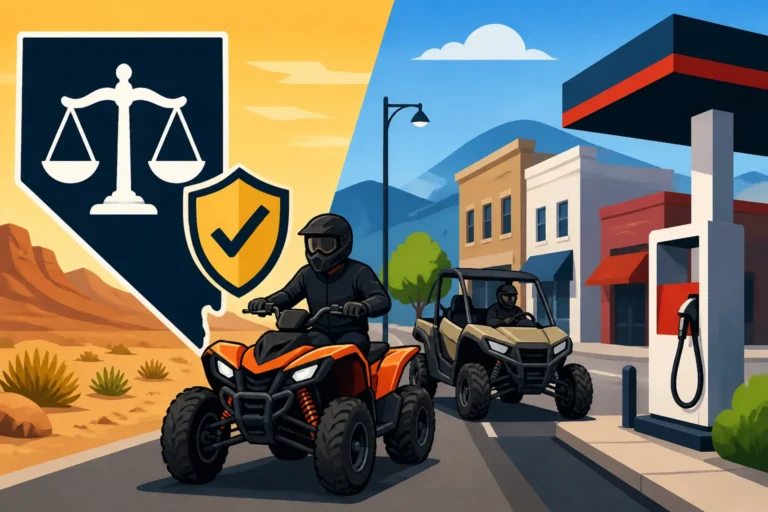
So, you've got your large ATV, it meets the state's specific definition, and you've equipped it with all the necessary gear and insurance. Fantastic! But before you hit the main highway, it's crucial to understand where you're actually allowed to ride. Nevada's street-legal status for large ATVs comes with significant restrictions. It's not about replacing your daily driver; it's about limited access to facilitate off-road recreation.
Navigating County Roads and the 2-Mile Rule
The primary allowance for road-legal large ATVs is on "minor county roads." These are typically unpaved, low-traffic roads that crisscross much of Nevada's vast rural and wilderness areas. They serve as crucial connectors to trailheads, dispersed camping spots, and other recreational opportunities. [Nevada County Roads Open to UTVs] clarifies which types of roads are generally permissible. The intent is to allow riders to access the backcountry, not to commute or travel long distances on pavement.
However, there's also the "2-mile rule" for paved roads. If you're on a paved county road or even a state highway, you are generally limited to traveling a maximum of two miles to connect to an unpaved road or trail. This means you can't just take your UTV on a long scenic drive down a paved highway. It's strictly for traversing short distances, say, to get from your campsite to a nearby trail system, or to cross a paved road to reach another dirt path. For instance, if you're riding near Logandale and need to cross SR 169 to access a different section of trails, the 2-mile rule allows for that brief crossing. But [How Far You Can Ride Pavement in Nevada] is very clear: this is not an open invitation for extended paved travel.
It's also important to note that counties and cities have the authority to opt out or impose further restrictions. Just because a road is technically a minor county road doesn't mean it's automatically open to large ATVs. Some jurisdictions, especially more populated ones, might have ordinances prohibiting OHVs on all public roads within their limits, or restricting them to specific designated routes. [Nevada Cities That Require Designated OHV Routes] will tell you that places like Las Vegas or Reno will have very different rules than, say, rural Lincoln County. Always check local ordinances before riding, as these can change.
Interstate Highways and Designated Routes
One rule that has absolutely no wiggle room is the ban on interstate highways. Under no circumstances is a large ATV permitted on an interstate highway in Nevada. These are high-speed, controlled-access roads designed for conventional vehicles, and an OHV, even one that's road-legal, simply doesn't belong there due to safety concerns.
Within cities, especially larger ones like Sparks or Henderson, the concept of "designated routes" becomes paramount. These municipalities often restrict OHV access to only specific roads or trails that have been explicitly marked for such use. You can't just assume any street within city limits is fair game, even if it's technically a county road passing through a city. These designated routes are usually few and far between, and are meant to connect trail systems or allow limited access to amenities like fuel stations. This is why you'll often see riders trailering their machines right up to the trailhead rather than trying to navigate city streets, even if their UTV has a [Nevada's Large All-Terrain Vehicle Decal]. It’s simply safer and avoids the headache of navigating complex local rules.
Getting Your Large ATV Decal and Avoiding Pitfalls
After you’ve thoroughly reviewed Nevada’s definition of a large ATV and equipped your machine to meet all the safety standards, the final step is to formally apply for the designation. This process is handled by the Nevada DMV, and while it might seem straightforward, there are some common misunderstandings and potential pitfalls to be aware of. Getting this right is crucial to legally enjoying those limited road miles.
The Application Process and What to Expect
The process for applying for a large ATV decal involves a specific application form and a visit to the DMV or an authorized dealer. You’ll need to complete the application for a large ATV decal, ensuring all information about your vehicle and its modifications is accurate. This is where proof of the necessary equipment, like those SuperATV mirrors or a proper windshield, might come into play, potentially requiring an inspection.
You'll also need to provide proof of ownership, typically your certificate of title, and your current Nevada OHV registration decal. Remember, the large ATV decal is an addition to your standard OHV registration, not a replacement for it. Expect to pay a fee for the decal itself. The DMV staff will review your application to ensure your machine technically meets the requirements of a large ATV as defined by NRS 490.043. For specific guidance on the paperwork, referencing [Applying for a Nevada Large ATV Decal] can be incredibly helpful to gather all your documents beforehand and ensure a smooth process.
Common Misconceptions and Costly Mistakes
One of the biggest misconceptions riders have is believing that if their UTV is plated in another state (like Arizona or Utah), it automatically gains street-legal status in Nevada. This is generally not the case for extensive road use. While Nevada has reciprocity agreements for off-road registration decals for short visits, these rarely extend to granting full street-legal privileges that circumvent Nevada's own specific "large ATV" requirements for its residents. Don't rely on an out-of-state plate as a workaround for Nevada's specific rules, as you'll likely face a citation from a local deputy or [What a Nevada Trooper Looks For on a County Road]. [Why Nevada Will Not Plate a Quad] explains the state's general stance on OHV road use.
Another mistake is assuming that simply having four seats is enough for your RZR to qualify. As discussed earlier, the "truck bed" or "designed with at least four seats" clause is interpreted very specifically. If your sport RZR, despite its four seats, is clearly lacking a utility bed and is designed purely for sport, the DMV might deny your application. This is a common point of frustration for riders who bought a four-seat sport UTV with the expectation of road access. It's a critical detail that hinges on the manufacturer's original design intent rather than just the number of seating positions. Always err on the side of caution and ensure your vehicle truly matches the utility-focused definition of a large ATV.
Why Aftermarket Accessories Are Crucial
Most off-the-showroom-floor UTVs, even those with four seats and a truck bed, don't come equipped with all the necessary items for Nevada's street-legal large ATV designation. This is where the aftermarket industry truly shines. Products from companies like SuperATV become indispensable. Need a proper DOT-approved windshield? SuperATV likely has one that fits your model. Looking for mirrors that can withstand trail abuse but are also street-legal? They're a go-to source. From turn signal kits to horns, and even full enclosures that incorporate a windshield, these accessories are often the bridge between a trail-only machine and one that can legally traverse those crucial two miles of pavement to reach the next dirt adventure. Investing in quality, compliant aftermarket parts is not just about convenience; it's about ensuring your safety and adhering to the law, preventing costly fines and ensuring your application for the large ATV decal is successful.
| Required Equipment | Typical UTV Status (Stock) | Aftermarket Solution (e.g., SuperATV) |
|---|---|---|
| Headlights | Yes, but may not be DOT-compliant | Upgrade kits available |
| Taillights | Yes, but may lack stop lamp or proper visibility | Integrated taillight/stop lamp kits |
| Stop Lamp | Often integrated, but separate is clearer | Dedicated LED stop lamps |
| Reflectors | Sometimes integrated in taillights, often insufficient | Stick-on or bolt-on red reflectors |
| Rearview Mirror(s) | Often none, or basic trail mirror | Wide array of side and center rearview mirrors |
| Horn | Rarely stock on sport models | Push-button or electric horn kits |
| Windshield | Half-windshield or none | Full, DOT-approved glass or polycarbonate windshields |
| Seatbelts | Yes, usually | N/A (generally stock & compliant) |
| Spark Arrester | Yes, usually | N/A (part of exhaust system) |
| Muffler | Yes, but aftermarket can be too loud | dB reducers, quiet exhaust systems |
Disclaimer
This article is for general informational purposes only and does not constitute professional advice. Laws, prices and regulations vary by location and change over time. Consult a qualified professional for guidance on your specific situation.