Nevada Stop Lamp Requirement for UTVs
Venturing out onto Nevada's scenic county roads in your UTV can be an incredible experience, connecting trails and opening up new adventures. However, many riders quickly realize that taking their off-highway vehicle (OHV) from the dirt to a paved surface, even briefly, comes with a specific set of rules and equipment requirements. It's not as simple as just adding a license plate; Nevada has a unique approach, especially concerning safety features like stop lamps. This guide is designed to cut through the confusion and explain exactly what Nevada demands from your UTV's stop lamp, along with other crucial gear, to ensure you're riding safely and legally on those designated county roads.
Understanding Nevada's "Large ATV" Designation for Road Use
Before we even dive into the nitty-gritty of stop lamps, it's absolutely vital to understand that Nevada doesn't grant full "street legal" status to most ATVs and UTVs in the same way it does a car or truck. Instead, it has a specific classification called a "Large All-Terrain Vehicle" (Large ATV) that allows for limited, conditional road use. Without meeting this initial definition, all the stop lamps in the world won't make your machine road-legal. This is often the first hurdle riders encounter, and it's a significant one.
What Qualifies as a "Large ATV" in Nevada?
Nevada Revised Statute (NRS) 490.043 defines what qualifies as a "Large ATV." The core of this definition revolves around size and capacity, specifically targeting utility-style side-by-sides rather than sport quads. To be considered a Large ATV, your machine must meet one of two criteria: it needs to be designed to carry four or more passengers, or it must have a truck bed. This distinction is paramount and often catches riders off guard.
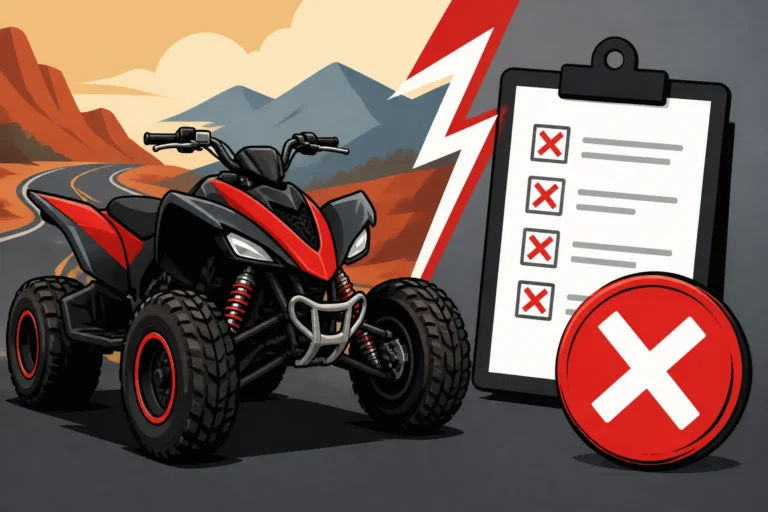
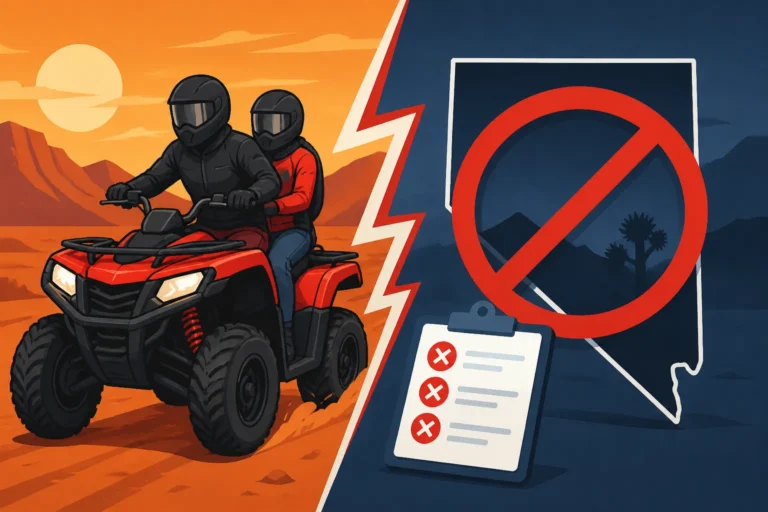
Think about your typical two-seat sport quad. While incredibly fun and capable off-road, it simply does not fit the "Large ATV" definition. It doesn't have four seats, nor does it possess a truck bed. This means that, regardless of any modifications you make or safety equipment you add, a traditional two-seat sport quad will not be eligible for Nevada's limited road use decal. Riders hoping to use their sporty two-seater to connect trails on county roads will unfortunately find themselves out of luck under this specific statute. It's a hard reality for many, but it's crucial to acknowledge these limitations from the outset.
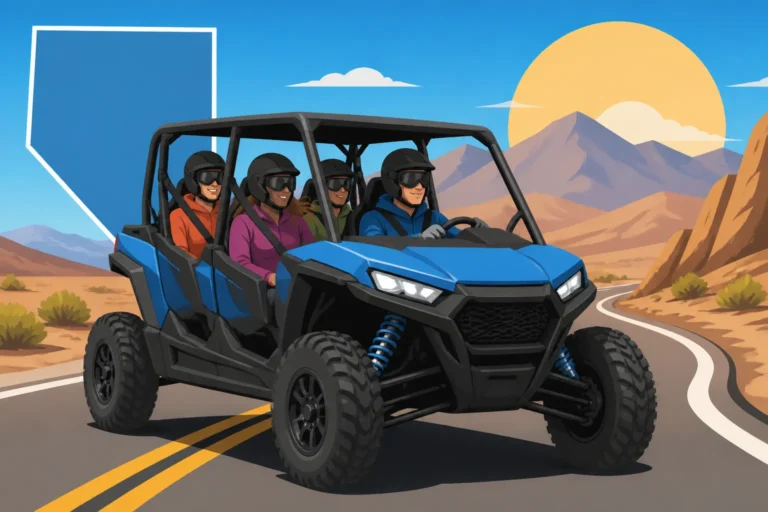
On the other hand, many popular side-by-sides, like a four-seat Polaris RZR or a Can-Am Defender with its cargo bed, do meet these criteria. These machines are designed with utility and multiple passengers in mind, making them candidates for the Large ATV designation. It's about the vehicle's inherent design and purpose, not just its engine size or overall dimensions. Understanding [What Nevada's NRS 490.043 Counts as a Large ATV] is the very first step in determining if your machine can even participate in this program.
The Limited Scope of Nevada's Street Legal Rules
Even if your UTV qualifies as a Large ATV, it's important to temper expectations regarding its road legality. This isn't about transforming your side-by-side into a vehicle you can commute to work in or drive anywhere a car can go. Nevada's provisions for Large ATVs on public roads are strictly limited. You're generally allowed to operate on "minor county roads" and, under specific circumstances, cross certain state routes. There are also strict geographical limitations.
Many cities and counties in Nevada have their own ordinances that further restrict or even prohibit Large ATVs on their local streets, regardless of state law. For example, major metropolitan areas like Las Vegas and Reno generally keep OHVs, even Large ATVs, off their streets except for very specific, designated routes. The intent of the Large ATV designation is primarily to allow riders to legally connect trails or access fuel and amenities in rural areas, not to integrate them into daily urban traffic.
Furthermore, there's a strict "two-mile limit" for paved highway travel, meaning you cannot continuously ride for more than two miles on paved surfaces, even if they are minor county roads. This rule is designed to ensure that the road use is incidental to off-road riding, not the primary mode of transportation. If you're wondering [Nevada Rules for Crossing a State Route], know that it's generally about direct crossings, not extended travel along the highway. It's critical for riders to research the specific local ordinances and road classifications in the areas they plan to ride. What might be allowed in rural Lincoln County could be entirely prohibited in the heart of Washoe County.
Diving Deep into the Stop Lamp Requirement
Now that we understand what kind of machine can even think about hitting a county road in Nevada, let's zero in on one of the most critical safety components: the stop lamp. This isn't just a suggestion; it's a mandatory piece of equipment that plays a vital role in preventing accidents, especially in situations where your UTV might be sharing the road with traditional vehicles. The law is clear on its necessity and function.
The Legal Mandate for a Stop Lamp
Nevada law explicitly requires that a Large ATV operated on public roads be equipped with at least one stop lamp. This lamp must be mounted on the rear of the vehicle and activated whenever the brake pedal or lever is applied. Its primary purpose is to signal to following drivers that your UTV is decelerating or coming to a stop, providing them with crucial warning time to react. Without a functioning stop lamp, your UTV becomes a significant hazard on any shared road, increasing the risk of a rear-end collision.
The stop lamp isn't merely a decorative light; it has to be effective. Nevada statutes specify that the stop lamp must be "plainly visible from a distance of 500 feet to the rear" in normal daylight conditions. This isn't just about the light turning on; it's about its brightness and clarity. A dim or obstructed stop lamp doesn't meet the spirit or the letter of the law. This 500-foot visibility standard is the same for [Nevada Headlight Requirements for Road Use] and taillights, emphasizing consistent visibility across all essential lighting.
It's important to distinguish the stop lamp from a standard taillight. While many UTVs come from the factory with taillights that stay illuminated when the vehicle is on, the stop lamp is a separate function that only activates with brake application. Some factory taillight assemblies may incorporate a brighter brake light function, but riders should verify this capability and ensure it meets the 500-foot visibility standard. An aftermarket solution might be necessary if your stock setup doesn't cut it.
What Makes a Stop Lamp Compliant in Nevada?
Beyond simply being present and functional, a stop lamp needs to meet certain specifications to be compliant. First and foremost, it must emit a red light. While some aftermarket lights offer various colors or patterns, for a stop lamp in Nevada, red is the only legal color. The intensity also matters; it needs to be bright enough to cut through dust, sun, and other conditions that might reduce visibility for following drivers. This is where the 500-foot rule truly comes into play.
For many UTVs, especially those not specifically designed with road use in mind, the factory lighting might not be sufficient or might not include a dedicated, adequately bright stop lamp. This is where aftermarket parts come into play. Companies like SuperATV offer a range of universal or model-specific light kits that include compliant stop lamps. These can often be integrated seamlessly into your UTV's electrical system and mounted according to legal requirements. When choosing an aftermarket stop lamp, look for products that clearly state they are DOT (Department of Transportation) compliant or meet similar visibility standards, as these are generally designed with legal road use in mind.
Installation is also key. The stop lamp must be wired correctly to activate immediately upon brake engagement. Poor wiring can lead to intermittent function, delayed activation, or even failure, all of which defeat the purpose and could lead to a citation or, worse, an accident. Many SuperATV kits come with detailed instructions, but if you're not comfortable with electrical work, it's always best to have a qualified mechanic or OHV dealer handle the installation. Running without a compliant stop lamp, or any other required equipment, can lead to [Nevada Fines for No Large ATV Decal] if you're caught on a public road where your machine doesn't meet the standard.
Beyond the Stop Lamp: Other Essential Road Equipment
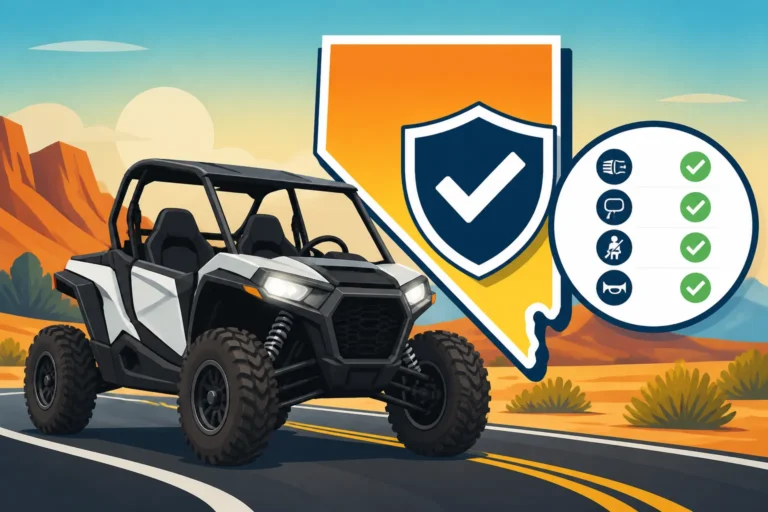
While the stop lamp is critical, it's just one piece of the puzzle when it comes to making your UTV conditionally road-legal in Nevada. Operating a Large ATV on county roads requires a host of other safety and functional equipment, all designed to ensure visibility, control, and general safety when interacting with other traffic. Neglecting any of these components can result in a citation or, more importantly, put you and others at risk.
Headlights, Taillights, and Reflectors
Just like a traditional vehicle, your Large ATV needs to be fully illuminated, especially if you anticipate riding during dawn, dusk, or at night. Nevada law mandates that your UTV be equipped with at least one headlight (though most UTVs come with two) that is capable of projecting a white light visible from 500 feet to the front. This isn't just about seeing where you're going; it's about being seen by oncoming traffic. The aiming of these headlights is also important to avoid blinding other drivers.
Similarly, in addition to the stop lamp, your UTV must have at least one red taillight mounted on the rear, plainly visible from 500 feet. This taillight should be continuously illuminated whenever your machine is operating on a public road. [Nevada Taillight and Reflector Rules] often clarify that reflective elements can supplement taillights, especially on the sides and rear, to further enhance visibility, even if your lights fail. Many aftermarket taillight assemblies combine the running light and brake light functions, which can be an efficient way to meet both requirements, provided both functions are adequately bright and distinct.
Mirrors, Horn, and Muffler
To safely navigate public roads, your UTV needs to be equipped with mirrors. Nevada law typically requires at least one rearview mirror, positioned to allow the operator a clear view of the roadway behind the vehicle. Many UTVs come with a single center rearview mirror, which often suffices. However, adding side mirrors can significantly improve situational awareness, especially when changing lanes or preparing to cross a road. You can find high-quality, durable side mirrors from brands like SuperATV that are designed to withstand the rigors of off-road use while providing the necessary visibility for road segments.
An audible warning device, commonly known as a horn, is also mandatory. This horn must be capable of emitting sound for at least two seconds and be audible from a distance of 200 feet. It's a critical safety feature for alerting other drivers, pedestrians, or even wildlife to your presence. Many UTVs have a factory horn, but if yours doesn't, or if it's too weak, an aftermarket horn is a simple addition.
Lastly, a functional exhaust system with a spark arrester is required. While spark arresters are standard on almost all off-highway vehicles for fire prevention on trails, they are also a specific requirement for road-legal machines. Your UTV must also have a muffler that keeps exhaust noise within legal limits, preventing excessive or unusual noise that could disturb residents or distract other drivers. Sound regulations are becoming increasingly strict, so ensuring your exhaust system is compliant is important for both road and trail etiquette.
Seatbelts and Helmets
Safety for occupants is paramount, whether you're on the trail or a county road. For UTVs, Nevada law generally requires that all occupants be secured by a seatbelt system appropriate for the vehicle. This means if your side-by-side has three seats, all three occupants must be belted in. This requirement aligns with general vehicle safety standards and is crucial in the event of an accident or sudden stop. Most UTVs come with factory seatbelts, but ensure they are in good working order and that all passengers use them.
Regarding helmets, the rules can be a bit nuanced depending on the rider's age and the specific context of riding. For riding off-road in Nevada, helmets are typically required for riders under the age of 18. However, when operating a Large ATV on a county road, the helmet requirements can sometimes mirror those of other low-speed or open-air vehicles. It's best to consult the specific statutes related to "Large ATVs" on public roads. Generally, if you're under 18 and riding on a public road, a helmet is a must. Even if not legally required for adults, wearing a helmet provides invaluable protection and is always a wise choice. Understanding [Nevada Helmet Rules for Road Riding] is key to staying safe and compliant.
The Application Process and Staying Compliant
So, you've equipped your UTV with all the necessary gear, including that crucial stop lamp. What's next? You can't just hit the road. There's a formal process to go through to register your machine as a "Large ATV" and obtain the specific decal that signifies its limited road legality. This involves paperwork, inspections, and ongoing diligence to ensure you remain compliant.
Obtaining Your Nevada Large ATV Decal
The process to get your Large ATV decal in Nevada involves applying through the Nevada Department of Motor Vehicles (DMV) or one of its authorized partners. You'll need to submit the correct application form, often specific to this type of registration, and provide proof of ownership, such as a title or bill of sale. A critical step in this process is a physical inspection of your UTV to verify it meets all the equipment requirements, including the presence and proper function of your stop lamp, headlights, taillights, mirrors, horn, and spark arrester.
This inspection is not typically done at the DMV itself. Instead, it's performed by a licensed Nevada OHV dealer or a sworn law enforcement officer. They will physically examine your machine against a checklist of requirements to ensure it complies with the "Large ATV" definition and all safety equipment mandates. Once the inspection is complete and you've submitted all the necessary [Nevada Paperwork for a Large ATV Decal] along with the applicable fees, the DMV will issue you a special decal. This decal, distinct from the standard off-highway registration decal, designates your UTV as a Large ATV approved for limited road use. It's a visible sign that your machine has passed the necessary checks.
Remember that [Nevada OHV VIN Inspection Requirements] are rigorous. The inspector isn't just glancing at your lights; they're ensuring everything is properly installed and functioning. Having your machine ready for this inspection, with all required equipment in perfect working order, will save you time and hassle.
Ongoing Compliance and Roadside Checks
Getting the decal is just the beginning. Maintaining ongoing compliance is equally important. This means regularly checking all your safety equipment, especially your lights, mirrors, and horn, to ensure they remain functional and visible. Off-road riding can be tough on electrical connections and light housings, so a quick pre-ride check before hitting any paved surface is always a good practice. A damaged wire to your stop lamp, for example, could render it inoperable and put you in violation of the law.
When you're out riding and encounter a law enforcement officer, they have the authority to pull you over and verify your compliance. A Nevada Trooper or county deputy will likely check for your Large ATV decal first. Then, they'll verify that your machine meets all the equipment requirements for road use. They'll specifically look for the stop lamp to activate when you brake, ensuring it's clearly visible. They'll also check your headlights, taillights, mirrors, and horn. Being able to demonstrate that all these components are in working order is crucial.
Ignorance of the law is not an excuse. If you're caught riding a non-compliant UTV on a county road, you could face citations and fines. The officer might also order you to cease road operation until your machine is brought into compliance. Understanding [What a Nevada Trooper Looks For on a County Road] can help you prepare, but the best approach is always to ensure your machine is in perfect working order before you even leave your staging area. Avoid [Nevada Tickets for Riding Where You Should Not] by staying on approved routes and keeping your machine fully compliant.
| Equipment Type | Nevada Requirement for Large ATVs (Road Use) | Key Details & Compliance Notes |
|---|---|---|
| Stop Lamp (Brake Light) | At least one, rear-mounted, red light | Activates upon brake application, visible 500 feet to the rear in daylight. |
| Headlights | At least one, front-mounted, white light | Visible 500 feet to the front. Most UTVs have two, ensure both are functional. |
| Taillight | At least one, rear-mounted, red light | Continuously illuminated when riding, visible 500 feet to the rear. |
| Reflectors | Required on sides and rear | Typically red on rear, amber on sides. May be integrated into light assemblies. |
| Rearview Mirror | At least one, providing clear view to the rear | Center mirror usually sufficient, side mirrors are highly recommended. |
| Horn | Audible warning device | Must emit sound for at least 2 seconds, audible 200 feet away. |
| Muffler | Functional, with spark arrester | Must keep noise within legal limits, essential for fire prevention. |
| Seatbelts | For all designated seating positions | Must be in good working order and worn by all occupants. |
| Tires | DOT-compliant if on paved roads (implied for safety) | While not always explicitly listed, street-legal riding suggests appropriate tires. |
| Decal | Specific "Large ATV" decal from DMV | Indicates compliance and permission for limited road use. |
Disclaimer
This article is for general informational purposes only and does not constitute professional advice. Laws, prices and regulations vary by location and change over time. Consult a qualified professional for guidance on your specific situation.