Sand Temperature in Midsummer
Nevada’s midsummer sun can make a dune feel punishing long before the air temperature seems unbearable. Hot sand can burn exposed skin, overheat tires and equipment, and turn a short walk back to camp into a miserable trek. This guide explains what to expect, how to protect riders and machines, and when to change your plan.
Why Nevada sand gets so hot in midsummer
Sand temperature is not the same as air temperature
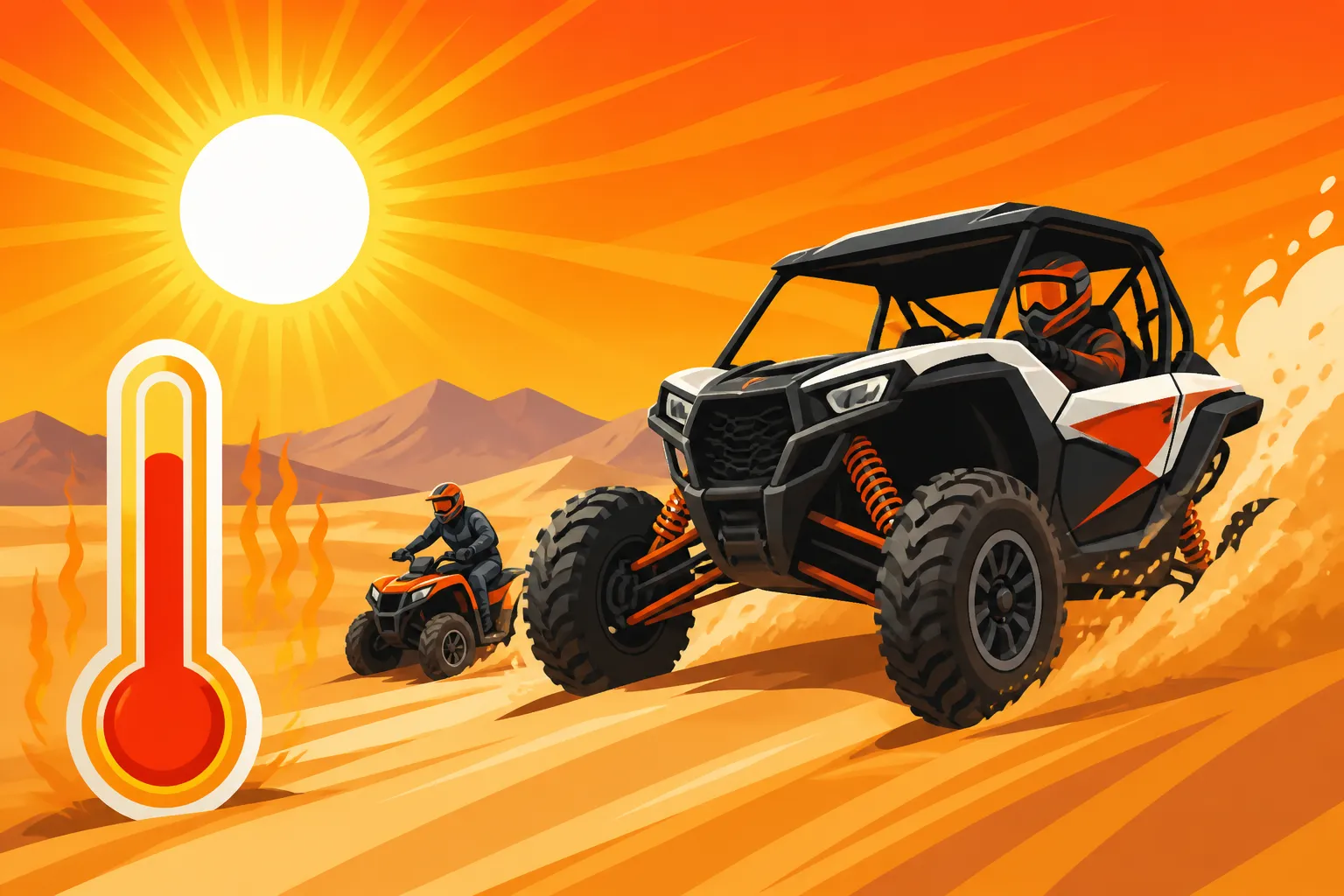
A weather forecast tells you about the air, usually measured in a shaded or sheltered setting. The sand beneath your boots sits in direct sunlight, absorbing heat for hours. On a clear summer day, its surface can become much hotter than the reported air temperature, especially on open dunes with little shade or breeze.
That difference can catch riders off guard. You might step out of an air-conditioned truck, feel that the air is merely hot, then discover that the sand is uncomfortable through thin shoes or too painful to kneel on while checking a tire. Dark gear, exposed metal, and surfaces inside a parked machine can heat up too. Treat the ground and equipment as separate heat hazards rather than assuming an air-temperature reading tells the whole story.
Conditions also vary across one riding area. A wind-exposed ridge, a shaded spot beside a vehicle, and a sun-baked sand basin may feel very different at the same time. Sand color, moisture, wind, cloud cover, and the angle of the sun all affect how quickly a particular surface heats and cools. There is no single dependable “sand temperature” for every dune or hour.
Nevada riding areas have different heat exposures
At Sand Mountain near Fallon, the broad dune field offers little natural shade once you leave the recreation-area facilities. Riders planning time on the open slopes should think about both the heat underfoot and the distance between their riding spot and a vehicle or shaded rest area. The scale of the area is one reason it helps to plan a short route before heading out; Sand Mountain’s 4,795 Acres gives useful context for how much terrain the recreation area covers.
Nellis Dunes near Las Vegas and Logandale Trails near the Valley of Fire also expose riders to intense desert sun, but their terrain and ride patterns differ. At Nellis, a quick outing may sound easy to fit into an afternoon, yet even a short ride can involve hot parking areas, dust, and exposed ground. For trip planning, Nellis Dunes for a Quick Evening Ride and Logandale Trails for a Day Trip offer area-specific context. Do not assume that a location closer to town will be cooler simply because the drive is shorter.
Heat changes through the day, not just by season
The hottest part of the day is generally a poor time for a leisurely dune outing. Sand heats gradually as sunlight continues, and it can remain hot even as the sun begins to lower. A late start may leave you unloading, gearing up, and walking across hot ground just as conditions are becoming less comfortable.
Early starts usually offer a better chance of cooler surfaces and more manageable riding. Evening can also be more comfortable, but daylight, visibility, facility hours, and the time needed to pack up all matter. Check the specific area’s access information before planning around a sunrise or sunset ride. For the broader seasonal pattern, see Riding Seasons in the Nevada Desert and confirm the practical details for your destination before you leave.
How hot sand affects riders, gear, and machines
Bare skin and lightweight footwear are vulnerable
Sand can burn or irritate skin through direct contact, particularly if someone sits, kneels, or falls. Children may be especially likely to drop to the ground to play or to take off their shoes when walking feels awkward. A simple “don’t touch the sand” reminder is not always enough when a child is tired, thirsty, or distracted. Give them footwear that stays on securely and a clear place to rest away from the exposed surface.
Wear closed-toe shoes or boots with soles substantial enough for hot ground, plus socks that cover the ankle. Gloves help when handling sun-heated tie-downs, tools, or machine parts, but don’t treat them as a substitute for checking equipment before grabbing it. If someone falls, move them to a safer place before removing protective clothing or assessing minor scrapes. Hot sand and overheated gear can make a small mishap worse.
Pay attention to symptoms beyond the soles of your feet. Headache, dizziness, nausea, unusual fatigue, confusion, or a person who is no longer acting normally can signal a serious heat problem. Stop riding, get the person out of the sun, cool them, and seek emergency help when symptoms are severe or worsening. Do not rely on a rider’s claim that they are “fine” if their behavior has changed.
Heat can add strain to tires and equipment
Hot sand is only one part of the thermal load on an ATV or UTV. Sun exposure, engine heat, low-speed riding, soft terrain, heavy loads, and extended operation can all place additional demands on a machine. A vehicle parked in full sun can also leave its seats, steering wheel, buckles, and metal fittings unpleasant or unsafe to touch. Let hot surfaces cool where practical, and use shade or a cover when available without blocking ventilation or creating another hazard.
Before a ride, follow the machine’s owner’s manual for tire condition, pressure, cooling, and operating limits. Avoid making a last-minute pressure change based on a guess or a social-media tip; tire setup depends on the vehicle, tires, load, and terrain. If a tire looks damaged or a machine shows warning signs, stop in a safe place and address the problem rather than pressing on because the trailhead is “not far.”
Carry basic recovery and repair supplies suited to your trip, but be realistic about what you can safely do in extreme heat. A recovery that would be manageable in mild weather can become exhausting when riders are already dehydrated and tools are too hot to handle comfortably. Keep the group together, take breaks in the coolest available location, and avoid sending someone on a long walk alone.
Gear can trap heat or become uncomfortable to use
Dark clothing and heavy layers can feel oppressive under direct sun, while too little protection leaves skin exposed to sun, dust, and abrasion. Choose breathable riding clothes that still provide coverage, and wear a helmet and other protective equipment appropriate to the machine and terrain. Keep goggles, gloves, and other essentials accessible instead of buried under cargo you would need to unpack in the sun.
A seat belt, helmet liner, or chest protector may feel warmer than expected after a long ride. That discomfort is a cue to take a planned rest, not a reason to remove safety equipment while the machine is moving. At stops, find shade if possible, loosen or remove gear safely, and drink before everyone becomes thirsty. Pack a small towel or cloth to test and cover sun-heated touch points, and keep water out of direct sun where possible.
Plan a safer midsummer ride
Choose a cooler window and shorten the route
Start early enough that unloading and preparation happen before the ground has been baking for hours. Build in a conservative turnaround time instead of treating the planned route as something the group must complete. A shorter loop, fewer dune climbs, and more frequent rests are sensible adjustments when heat builds faster than expected.
Use a forecast as one planning input, not a guarantee of comfortable ground conditions. Check the expected temperature, wind, cloud cover, and any heat advisories, then think about how exposed your route will be. A shaded staging area does not mean the dunes themselves are shaded. If your plans depend on a late-day ride, confirm that access and day-use arrangements fit your schedule; Sand Mountain Day Use Hours can help frame that check for Sand Mountain.
A map can help you understand distance, access roads, and where you may be able to turn back, but it cannot tell you whether a particular patch of sand is comfortable to touch. If you use onX Offroad, consider reviewing your intended route before leaving service and saving the information you need for offline use. Then make a human decision at the trailhead: if the heat already feels severe, shorten or postpone the ride rather than letting a planned route dictate the day.
Carry water and make rest stops part of the route
Bring more water than you expect to need, and make it easy for every rider to reach their own supply. A shared container buried under gear is less useful when someone needs a drink immediately. For a family or group, agree on regular stops and check in with each person rather than asking only whether they want a break. Some riders will keep going to avoid slowing everyone down.
Water is essential, but it does not make unlimited heat exposure safe. Pair hydration with shade, rest, lighter exertion, and a willingness to end the ride. Avoid waiting until a rider feels weak or nauseated before stopping. Carrying Water for a Desert Ride has more planning context for supplies, especially when the route is remote or the group is spread out.
Think through the return as carefully as the outbound ride. A walk to retrieve a vehicle, a stuck machine, or a slow mechanical issue can keep people exposed much longer than expected. Leave room in your schedule for delays, keep communication options accessible, and do not split the group casually. If someone needs to walk, choose the shortest safe route and make sure they have water, suitable footwear, and a companion when possible.
Protect riders who are new, young, or more heat-sensitive
A first-time rider may use more energy than an experienced one because they are concentrating, gripping tightly, and reacting to every bump. Children can be reluctant to ask for a break, while a new adult rider may feel pressure to keep up. Give the least-experienced person a genuine say in the pace and make stops routine for everyone rather than presenting them as a sign of weakness.
Set a simple group rule: anyone can call a stop, and the group stops together. Check that each rider has water, sun protection, and gear that fits. If a child is uncomfortable walking on hot sand, do not pressure them to cross a long exposed stretch barefoot or in flimsy footwear. Move the vehicle or adjust the plan if it is safe and permitted to do so.
Before choosing a destination, consider whether the ride offers the kind of outing your group can manage. Sand Mountain for a First Dune Trip can help first-time visitors think through the setting, but a familiar destination does not remove heat risks. Review any route with onX Offroad or another suitable mapping tool, and use the map to support conservative decisions—not to push through when conditions have become uncomfortable.
Decide when to ride, pause, or leave
Use practical warning signs rather than a single temperature number
A weather-app reading cannot account for every surface, rider, or vehicle. Instead, combine the forecast with what you observe: whether people are struggling during setup, whether the ground is uncomfortable through normal footwear, whether equipment is too hot to handle easily, and whether the group is drinking and resting regularly. If the answer to several of these is “yes,” the outing needs to change.
Before unloading, ask a few plain questions. Is there a shaded place to cool down? Does the group have enough water for the planned time and an unexpected delay? Can you shorten the ride without crossing a hazardous area? Is anyone already tired, unwell, or uncomfortable? If you cannot answer confidently, postpone the ride or choose an easier activity.
Do not wait for a dramatic emergency to call it. Turning around early is good trip judgment, not a failed outing. A shorter ride can still be enjoyable; a heat illness or breakdown in exposed terrain can change the whole day.
Have a clear pause-and-exit plan
Agree on what the group will do if someone feels unwell, a machine has a problem, or conditions become too hot. Identify a safe place to regroup and make sure everyone knows how to contact one another. On remote rides, download or save useful map details before setting out; onX Offroad may help you keep route information available when cell service is unreliable, but it should not be your only navigation or communication plan.
At a stop, move people out of direct sun, loosen restrictive gear, and cool the person steadily. If someone is confused, faints, has a seizure, or is becoming seriously ill, call emergency services and follow their instructions. Do not leave an ill person alone while others continue riding or go searching without a plan.
Finally, check land-use notices and closures before heading out. Weather, habitat protections, fire conditions, or local management decisions can affect where riding is allowed. Nevada Trail Closures to Check Before You Go is a useful reminder to verify access rather than assuming a familiar route is open. At Sand Mountain and other dune areas, staying within permitted riding zones also helps protect sensitive habitat; see Riding Around Protected Dune Habitat.
Use this quick decision table before unloading
| What you notice | Safer response |
|---|---|
| Sand is already uncomfortable through your footwear | Keep skin covered, minimize walking, and consider postponing or moving to a cooler time |
| A rider is unusually tired, dizzy, nauseated, or behaving differently | Stop the ride, move them out of the sun, cool them, and get medical help if symptoms are serious or worsen |
| The group has limited water or no realistic way to rest in shade | Shorten the outing or do not ride |
| A machine is overheating, damaged, or difficult to handle | Stop in a safe place and address the issue before continuing |
| Conditions worsen or the planned route takes longer than expected | Turn back while the group is still able to do so safely |
Disclaimer
This article is for general informational purposes only and does not constitute professional advice. Laws, prices and regulations vary by location and change over time. Consult a qualified professional for guidance on your specific situation.