Nellis Dunes for a Quick Evening Ride
Nellis Dunes can work well for a short ride when you have only a couple of evening hours, but the same limited time can make poor planning feel costly. Traffic, soft sand, fading light, and an unfamiliar route can turn a quick outing into a stressful one. This guide covers how to plan a safer, more manageable visit near Las Vegas.
Is Nellis Dunes a good fit for a quick evening ride?
What makes the area work for a short visit
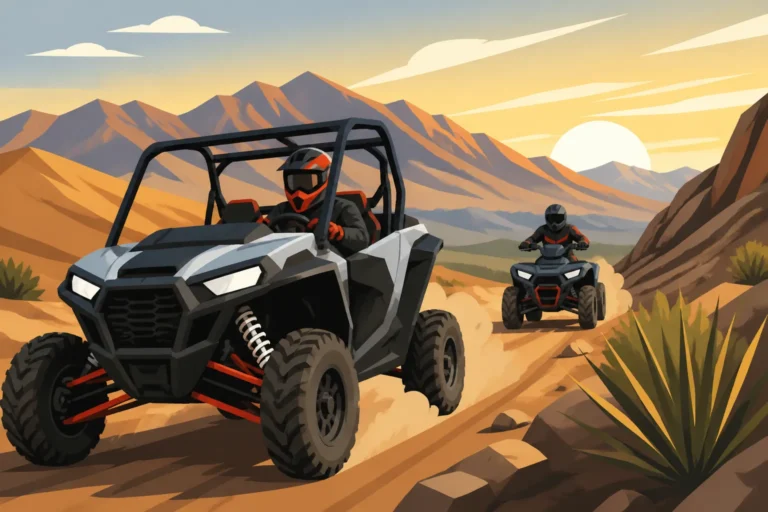
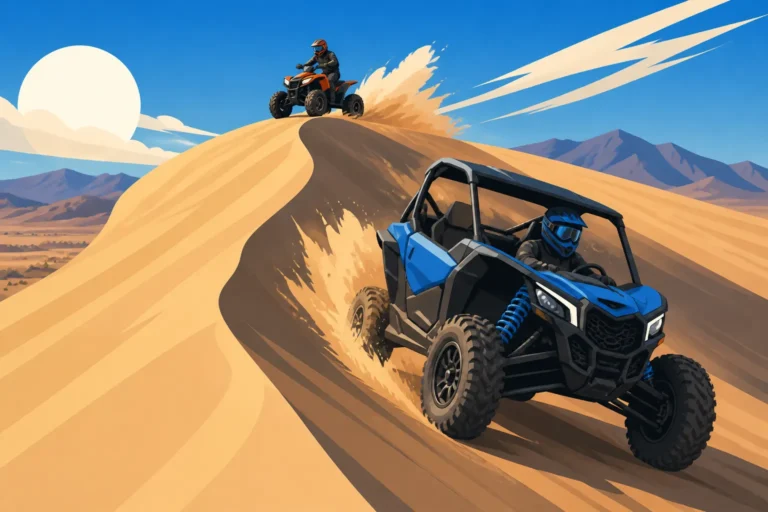
Nellis Dunes is a popular off-highway riding area near Las Vegas, with open desert terrain and sandy sections that can make even a brief ride feel like a real outing. It is an option for riders who want to unload, explore, and get back to town without committing to a full day trip. The area is often described as a free place to ride, but check current land-manager notices before heading out in case access conditions or restrictions have changed. For more background on the site, see [Nellis Dunes, Nevada's Free Dune Ride].
The main tradeoff is that “quick” depends on what you count. Driving to the area, finding a suitable place to park, unloading machines, gearing up, and checking your equipment all take time before the ride begins. If you are meeting friends, add time for late arrivals and a short conversation about where you plan to ride. A two-hour window on the calendar might leave much less than two hours for riding.
Nellis Dunes can also feel busier than expected, especially when several groups arrive around the same time. Riders moving at different speeds may share nearby terrain, and soft sand can reduce visibility when people are moving around you. If you want a quieter outing, look into the typical patterns described in [Nellis Dunes on a Saturday] and [Dust and Traffic at Nellis Dunes], then choose a time that gives you room to adjust rather than arriving with a rigid schedule.
When to choose a different plan
An evening ride is not automatically a good fit just because the temperature feels more comfortable. If you are new to riding in sand, have a machine that has not been checked recently, or are bringing a group with mixed experience, give yourself more time than a quick visit allows. Getting stuck or dealing with a mechanical issue is inconvenient in daylight; it becomes harder when visibility is fading and people are eager to get home.
Think about the riders in your group, too. A confident adult on a familiar machine may be comfortable with a short loop, while a beginner may need time to learn how the machine responds in loose sand. If one person is still practicing starts, turns, and stopping, keep the outing close to the parking area and agree that nobody will ride beyond the group’s comfort level. The beginner-oriented advice in [Nellis Dunes for Beginners] can help you decide whether a short visit is sensible for your group.
Consider skipping the ride if the forecast suggests strong wind, the surface is difficult to see, or the area is subject to a closure or restriction. Sand and dust can make it harder to spot other riders, obstacles, and changes in terrain. Conditions that seem manageable when you arrive may also change during the ride, so build in a clear point at which you will turn back rather than trying to squeeze in one more run.
Plan the logistics before you leave Las Vegas
Set a realistic ride window
Start by working backward from the time you want to be back at your vehicle. Allow for the drive, parking, unloading, gear checks, and packing up—not just the time you hope to spend riding. If your schedule is tight, choose a conservative turnaround time and tell everyone in the group what it is. That simple agreement can prevent the familiar “one more loop” delay from pushing the ride into poor light.
| Planning step | Why it matters for an evening ride | A practical approach |
|---|---|---|
| Check access and notices | Closures or restrictions can change the plan | Review land-manager information before leaving |
| Choose a turnaround time | Low light and a late departure increase stress | Set the time before unloading |
| Confirm trailer parking | A crowded or unsuitable spot can slow everyone down | Look into [Where to Park a Trailer at Nellis Dunes] |
| Check weather and wind | Dust, heat, or changing conditions affect visibility and comfort | Recheck conditions close to departure |
| Share a simple route plan | A group can become spread out quickly | Agree on a meeting point and boundaries |
| Pack for the ride home | Small problems are harder to solve after dark | Bring water, lights, and basic recovery items |
For navigation, look at the area and your intended route before you arrive. onX Offroad can be useful for reviewing mapped routes and identifying where you are in relation to nearby terrain, especially if you save map information for offline use before leaving reliable cell coverage. Treat any digital map as a planning aid, not proof that every visible line is open or appropriate to ride. Confirm land access and restrictions through official information, and do not assume that a route shown on a map is currently available.
A useful plan does not need to be elaborate. Pick a general riding zone, name a regrouping point, and decide what your group will do if someone gets separated. If you are riding with people who do not know the area, make sure they understand that they should not leave the group to follow a track on their own. A map app such as onX Offroad may help riders orient themselves, but the group should still make decisions together and use clear landmarks where possible.
Make arrival and parking part of the plan
If you are bringing a trailer, research where it can be parked before the trip. A place that looks convenient on a map may not be suitable for turning around, unloading safely, or keeping the trailer out of the way of other users. The details in [Where to Park a Trailer at Nellis Dunes] are especially relevant if you are arriving with a larger rig or meeting multiple vehicles.
Once parked, keep the unloading area orderly. Place gear where people will not trip over it, keep machines out of vehicle paths, and avoid blocking access for someone arriving behind you. Before riding away, make sure every rider knows which vehicle is yours and where to return. In a broad, dusty area, a casual “we’ll meet back here” can become confusing if the group has not picked a recognizable spot.
Pack for the ride you are actually planning, not the ride you hope to improvise. Bring water, appropriate eye protection, a charged phone, and any basic tools or recovery equipment your group can use. If a machine has a known issue—such as a tire that slowly loses pressure or a loose accessory—address it before leaving home. Time spent making a quick check in the driveway is easier to manage than a repair in fading light.
Ride with the terrain, the light, and other users in mind
Keep the route simple as daylight fades
A short evening ride is a good reason to keep your route conservative. Stay within terrain your group can handle, avoid pushing into unfamiliar areas late in the outing, and leave enough time to return without rushing. A simple loop or out-and-back plan is easier to follow than a string of unplanned turns, particularly when riders are spread out or visibility is becoming less reliable.
Use onX Offroad or another navigation tool to orient yourself before the ride, but do not let the screen distract you while moving. Check it when stopped in a safe place, then look up and focus on the terrain and traffic. If a route is unclear, turn around or regroup instead of assuming that it connects to the next visible track. That is a particularly useful habit when the group is tired or keen to fit in a final run.
Stay alert for riders approaching from different directions, and leave plenty of space around machines kicking up sand. Avoid stopping in a blind spot or at the top of a rise where another rider may not see you in time. If someone in your group is inexperienced, have them ride with a more capable person and keep the group’s pace slow enough that nobody feels pressured to follow beyond their ability.
Prepare for heat, dust, and changing conditions
Las Vegas-area desert weather can make water and sun protection important even when the outing is short. Bring water for every rider, and do not assume that a quick ride means nobody will need a break. If the day has been hot, take extra care with hydration and watch for signs that someone is becoming overheated, including unusual fatigue, confusion, nausea, or dizziness. Stop the ride and respond promptly if a rider seems unwell.
Dust and wind can affect both comfort and visibility. Wear suitable eye protection and a face covering if conditions call for it, and give other riders room rather than following closely through a dust cloud. Check your machine’s cooling system and air filter according to its maintenance needs, particularly if you ride in sandy conditions regularly. A short trip is not a reason to overlook a warning light, unusual noise, or change in handling.
Plan around darkness rather than treating it as an inconvenience. Carry a reliable light for walking or dealing with a problem, but do not assume that having lights means it is appropriate to continue riding after dark. Check the rules and restrictions that apply to the area, and aim to be back at your vehicle with enough time to load safely. For broader preparation, [Nevada Desert Riding in Summer Heat] covers heat-related considerations, while [Nevada Trail Closures to Check Before You Go] is a useful reminder to check access before departure.
Respect boundaries and leave the site in good shape
Nellis Dunes is near a developed urban area and other land uses, so stay within areas that are open to riding. Do not cross into restricted or closed land, and do not treat a visible track as permission to continue. If boundaries are unclear, stop and verify rather than guessing. onX Offroad may help you understand your location relative to mapped features, but official signs and current land-manager information should guide access decisions.
Follow posted requirements for equipment, route use, and riding conduct. Where a whip or flag is required for your machine or riding location, make sure it is installed and visible as required; [Nevada Sand Dune Flag and Whip Rules] explains the related considerations. Keep noise controlled, avoid damaging vegetation, and give wildlife and other visitors space. These habits are not just courtesy: careless riding can contribute to closures that affect everyone who uses the area.
Before you leave, check the parking area for trash, loose tie-downs, and anything that may have fallen out of a vehicle. Make sure machines and trailers are secured before driving back to town. If the outing was busier, dustier, or more complicated than you expected, adjust the plan for next time. A successful quick ride is not the one that covers the most ground; it is the one where everyone gets home safely and still wants to ride again.
Disclaimer
This article is for general informational purposes only and does not constitute professional advice. Laws, prices and regulations vary by location and change over time. Consult a qualified professional for guidance on your specific situation.