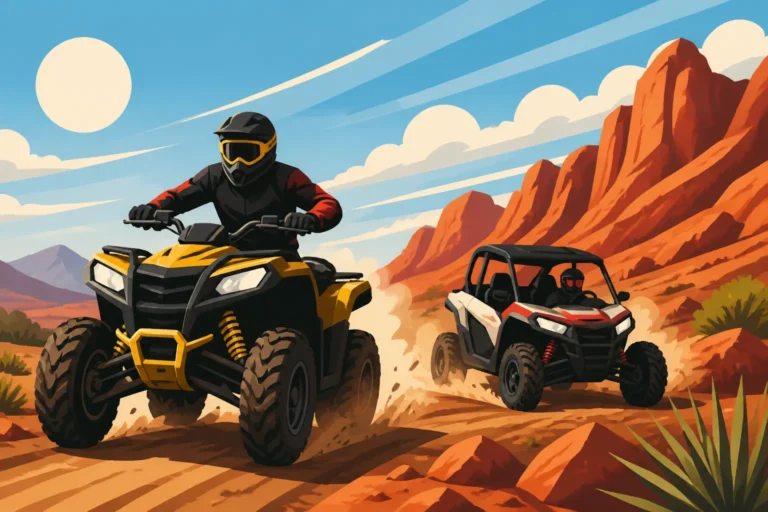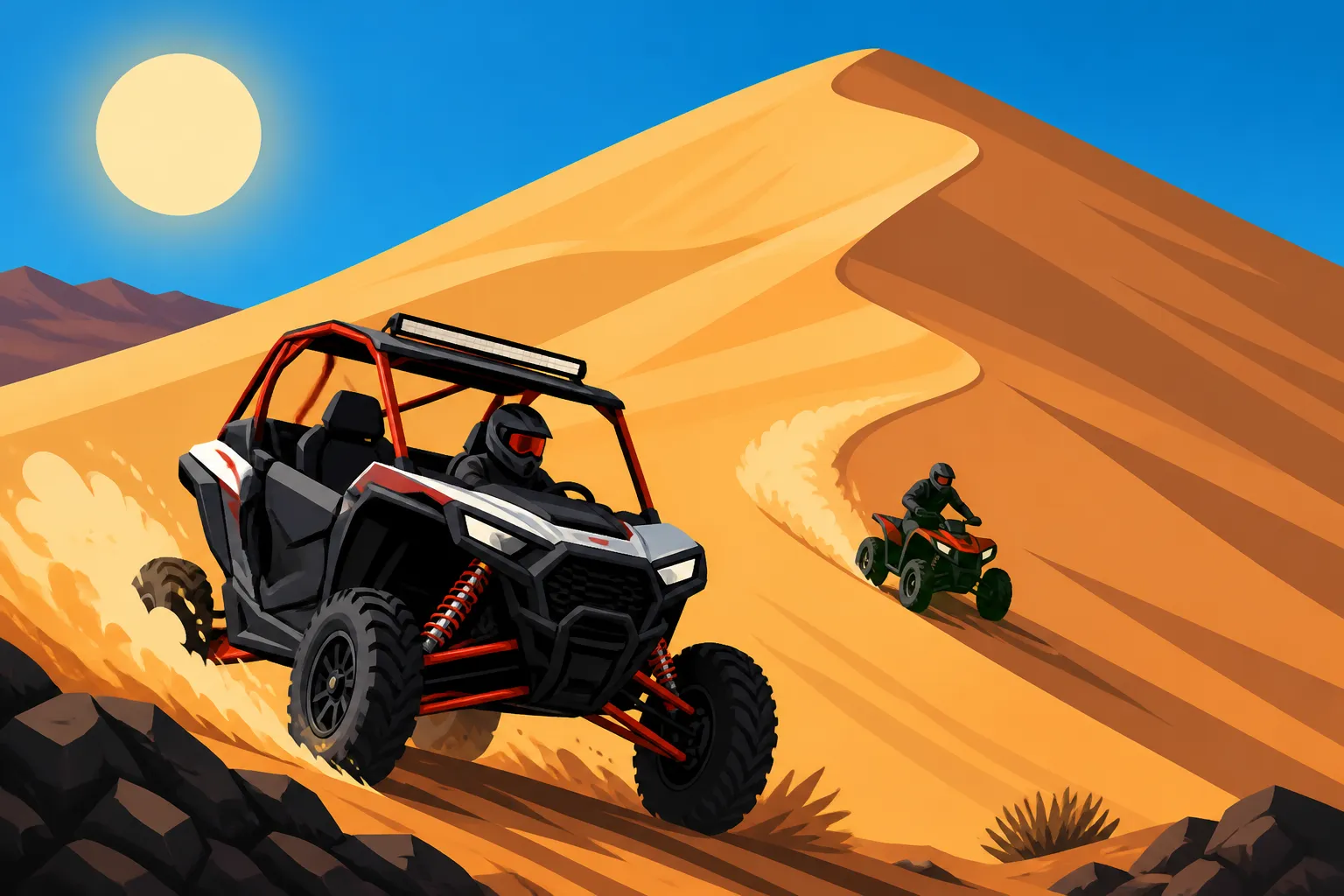
The 600-Foot Dune Near Fallon, Nevada
Sand Mountain’s towering face is striking from the highway, but the 600-foot dune can feel very different once you are on soft sand with changing wind, limited shade, and other riders nearby. This guide explains how to plan a visit near Fallon, choose suitable riding terrain, prepare your machine, and avoid common mistakes that can turn a fun outing into a difficult recovery.
Understanding the 600-foot dune near Fallon
What Sand Mountain is and where it sits
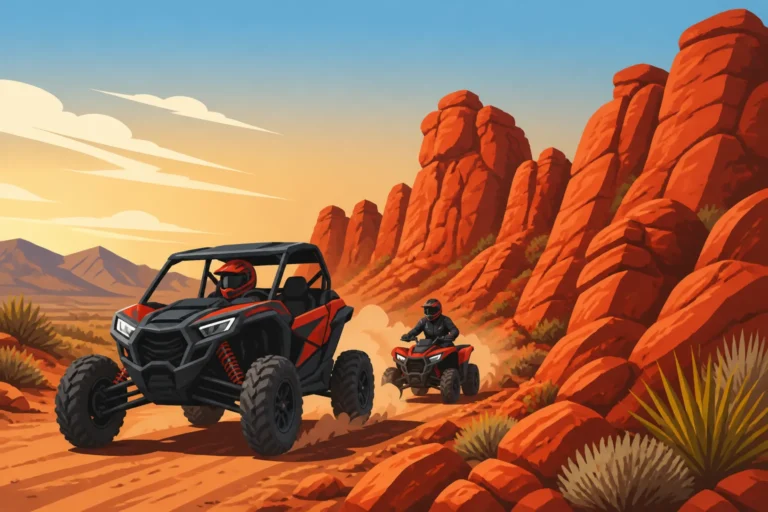
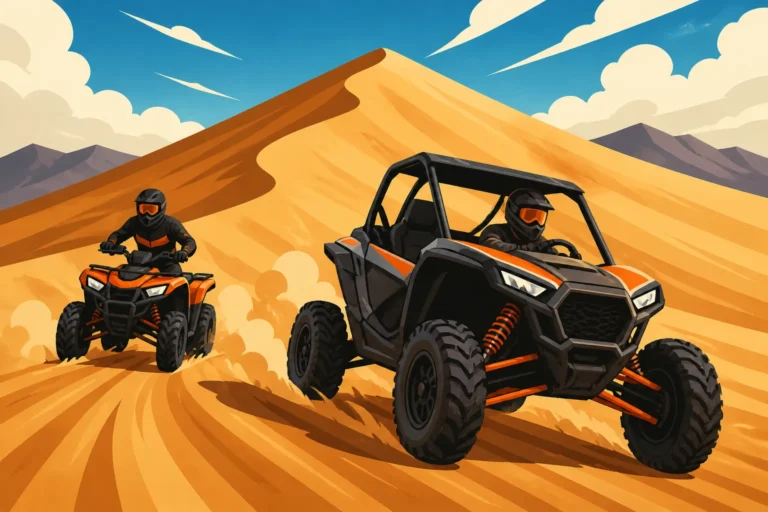
Sand Mountain is a prominent dune in western Nevada, east of Fallon along U.S. Highway 50. It rises dramatically above the surrounding desert, which is why it can look like a single, obvious challenge from a distance. In practice, the recreation area includes more than the steep face: the surrounding landscape has broad sandy stretches, marked routes, and changing terrain that can make for very different kinds of rides.
The dune is part of Sand Mountain Recreation Area, a popular destination for off-highway vehicles. Riders may arrive with different goals: climbing, exploring the sand, riding marked trails, camping, or simply seeing the dune up close. Knowing what kind of outing you want helps you decide where to ride and what to bring. A steep ascent is not the only way to experience the area.
If you are comparing Nevada’s major sand destinations, [Sand Mountain: Nevada's Great Basin Dune] offers useful context for what makes this site distinctive. Sand Mountain is also different from smaller sandy areas because its high face and open surroundings make wind, visibility, and traffic especially important considerations.
Why the dune’s size changes the ride
A dune that looks like one long slope from the bottom can have changing angles, softer patches, and uneven surfaces. Sand conditions shift with weather and repeated vehicle use, so the line that worked for another rider may not be a good choice for you. A climb that seems manageable while watching from the parking area can feel more demanding once you are moving uphill and the machine is working hard.
The height also affects how you assess the route. A rider may focus on reaching the top and overlook what happens if the machine loses momentum, begins to slide, or needs to turn around. Before starting a climb, consider whether you have a safe exit, clear visibility, and enough room to stop without putting another rider in danger. If you cannot see what is over the crest, do not assume the landing area is clear.
Sand Mountain rewards a cautious approach. You can still have a satisfying ride by exploring lower slopes and marked routes rather than treating the tallest face as a test. For a first visit, [Sand Mountain for a First Dune Trip] is a helpful companion topic for thinking through expectations and a sensible starting point.
Planning your trip from Fallon
Getting there and preparing before departure
The route from Fallon is straightforward compared with reaching remote backcountry areas, but a convenient highway approach does not mean you should arrive unprepared. Confirm your route, check local access information, and make sure your vehicle and trailer are ready for the drive. If you are towing, think ahead about where you will unload and whether your trailer setup can handle the surface at your intended parking area.
For route planning, [Getting to Sand Mountain on Nevada's US 50] focuses on the highway approach. Before setting out, use a current map and confirm that your planned access is open. Digital mapping tools such as onX Offroad can help you review routes and orient yourself, but a phone screen is not a substitute for checking land access, closures, and posted signs on site. Download map information before you leave an area with dependable service.
It also helps to plan the outing around the group rather than the most ambitious rider. Decide where to meet, how you will communicate if people become separated, and what time you want to be back at the vehicles. A group with first-time dune riders may want a shorter loop and an agreed gathering point; experienced riders can still benefit from clear boundaries and a plan for anyone who needs to stop early.
Choosing a season and a time of day
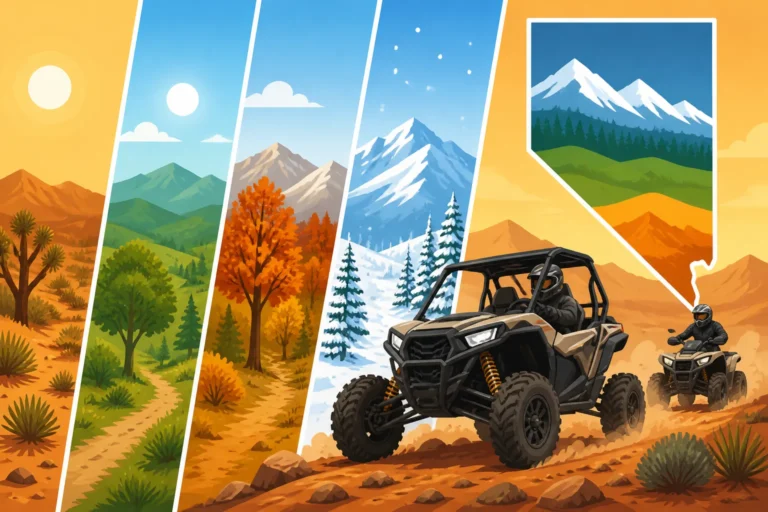
Sand conditions and comfort can change considerably with weather. Hot desert days can make riding and recovery tiring, while wind can reduce visibility and obscure tracks. Check the forecast before leaving and be ready to adjust your plan. A day that starts calm can become dusty or blustery, and a rider who is already fatigued may have a harder time noticing changing conditions.
Early planning matters because Sand Mountain is an open landscape with limited natural shade. Bring enough water for the ride and the time spent loading, unloading, and dealing with unexpected delays. Do not estimate your needs only by the number of hours you expect to be driving. A stuck machine, minor repair, or wait for a separated group member can extend the day.
For broader preparation, [Water and Fuel Planning in Nevada] covers the practical challenge of carrying enough supplies in desert riding country. If wind is part of your concern, [Sand Mountain When the Wind Picks Up] can help you think through visibility and ride decisions. Check local conditions and posted notices before you go rather than assuming the weather will stay consistent throughout the day.
Choosing terrain and riding within your ability
You do not have to climb the tallest face
It is easy to arrive at a major dune and feel that the main attraction is something you are expected to climb. That pressure is unnecessary. Sand Mountain has terrain for different confidence levels, and riding lower slopes or exploring marked routes can be a worthwhile visit on its own. The best choice is the one that suits your skill, machine, and conditions—not the one that looks most impressive from the parking area.
If you are new to dunes, begin on relatively gentle terrain where you can learn how the machine responds to loose sand. Keep your speed controlled, leave room to turn, and avoid following another rider so closely that you cannot react to a sudden stop. Build familiarity before moving toward steeper ground. A passenger, a heavier machine, or an unfamiliar throttle response can all change how a vehicle handles.
Experienced riders should also reassess conditions instead of relying on past success. Sand firmness, wind, traffic, and visibility may differ from one visit to another. Before a climb, look for a clear route and an open area beyond the crest. If another vehicle is descending or approaching, wait. It is much safer to pause than to commit to a line where neither rider can see the other.
Marked routes, maps, and closures
Marked routes can help riders stay oriented and reduce the temptation to wander into areas where travel is restricted. Follow signs and barriers, and do not assume that an existing tire track is permission to use a route. A track may lead to a closed area, sensitive habitat, or a location where turning around is difficult.
The surrounding area includes protected habitat, and some restrictions may affect where or when vehicles can travel. [How the Sand Mountain Blue Butterfly Closes Dune Areas] explains why habitat protection is part of planning at this recreation site. Take closures seriously even when the route looks rideable. A temporary restriction is not an invitation to find a way around it.
A digital map can be useful for orienting yourself, but treat it as one planning tool rather than the final authority. onX Offroad can help you review route information before departure and keep track of your general position, especially when you have downloaded relevant map details in advance. Still, use posted signs and official local information to confirm access. A map line cannot reliably tell you whether a route is currently closed or whether conditions on the ground have changed. See [Nevada Trail Maps Worth Downloading] for additional map-planning ideas.
Preparing your ATV or UTV for sand
Machine setup and practical checks
Loose sand places different demands on a machine than hard-packed roads. Before unloading, check basic items such as tire condition, controls, brakes, fuel, and any equipment needed for the day. For a UTV, confirm that seat belts and safety equipment are in usable condition. For any machine, secure loose cargo so it cannot shift when you cross uneven sand.
Tire choice can affect how a machine behaves in soft terrain, but there is no single setup that makes every dune safe. Some riders use paddle tires for sand; whether they make sense depends on the machine, the kind of riding planned, and the terrain you intend to tackle. [Paddle Tires at Sand Mountain] explores that consideration in more detail. If you are unsure about a setup, ask a knowledgeable service professional or an experienced rider familiar with your vehicle rather than copying someone else’s configuration.
Pack for minor problems as well as the planned ride. Useful items may include a basic tool kit, tire repair supplies appropriate to your machine, a tow strap, and a way to contact your group. Keep equipment secured and accessible. A recovery strap buried under camping gear is not much help when you need it on a slope.
Avoiding preventable breakdowns and recoveries
A common mistake is pushing a machine harder after it has already begun to struggle. If the vehicle loses momentum or the route feels wrong, pause where it is safe and reassess. Spinning the tires aggressively can dig the machine deeper, increase heat, and make recovery more difficult. Avoid making a difficult situation worse just because you feel pressure to keep moving.
Do not attempt a recovery without considering the slope, the machine’s position, and the people nearby. Keep bystanders well clear, use appropriate recovery points, and avoid standing in the path of a loaded strap or cable. If the machine is angled on a steep face or the situation feels beyond your experience, get help rather than improvising a risky recovery.
Plan to leave enough fuel for the return and for a reasonable delay. Sand riding can use fuel differently than a steady road trip, especially if you spend time climbing or repeatedly working through soft terrain. Keep track of fuel and ride time before you are close to empty. [Decals Peeling Off in Desert Heat] is a useful reminder that desert conditions affect not just the ride, but also the small details of keeping equipment and paperwork in order.
Safety, traffic, and group riding
Sharing the dune with other riders
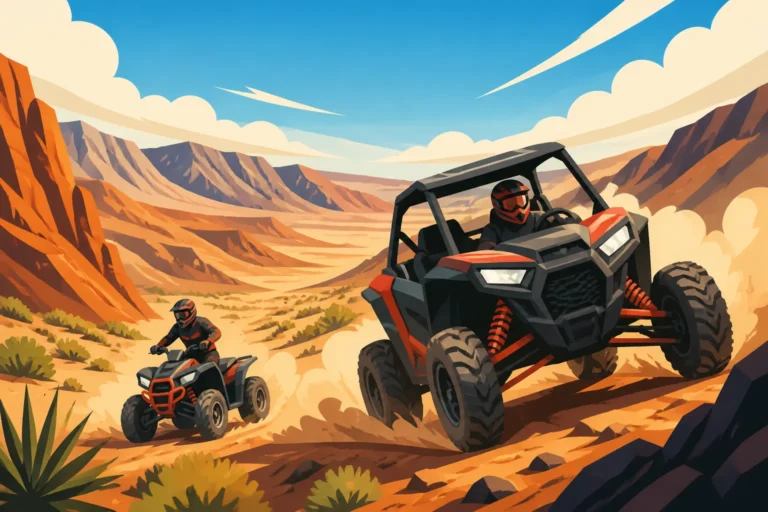
Sand Mountain can draw a mix of ATVs, side-by-sides, and other off-highway vehicles. On open terrain, riders may approach from directions that are not obvious from your position. Keep your head up, ride at a speed that allows you to respond, and avoid cutting across another person’s line. The steep face can hide vehicles on the other side, so do not crest a dune at speed when you cannot see what lies beyond it.
Give other riders room to climb and descend. Avoid stopping in a place where an approaching rider has little space to maneuver, and do not queue directly behind a vehicle attempting a climb. If you are waiting, choose a visible, out-of-the-way spot. Make eye contact or use clear signals when practical, but never assume another rider has seen you.
For group outings, agree on a simple communication plan before starting. Identify a meeting point and decide what to do if someone falls behind or takes a wrong turn. Keep the group at a pace suited to its least experienced rider. Riding in pairs or small groups can make it easier to keep track of one another, but it does not remove the need to watch for traffic and terrain.
Heat, dust, visibility, and personal readiness
Desert riding is physically demanding even when the machines are doing most of the work. Heat, vibration, dust, and sun exposure can wear you down. Drink regularly, take breaks before you feel exhausted, and protect your eyes and skin. Bring more water than you think you will need, and keep it where you can reach it without unpacking the vehicle.
Dust can make it harder to see both the route and other vehicles. Increase following distance when dust is heavy and slow down if you cannot see clearly. Goggles or other suitable eye protection can help reduce irritation, but they do not make it safe to continue through a dust cloud at speed. If visibility becomes poor, stop in a safe location away from active traffic and wait for conditions to improve.
Fatigue changes judgment. Riders may become less patient, take a steeper line than they intended, or overlook a vehicle approaching from another direction. Watch for signs that someone in your group is overheated or no longer riding comfortably. A shorter ride is a better outcome than continuing until someone is too tired to make safe decisions.
Camping, facilities, and leaving the area in good condition
What to expect at the recreation area
Sand Mountain is a desert recreation site, not a full-service resort. Plan to bring the supplies your group needs and do not assume that water, food, fuel, or dependable cellular service will be available where you park. Facilities and access details can vary, so review local information before travel and follow signs at the site.
Camping requires the same kind of preparation as riding. Bring enough water, food, and lighting for your stay, and secure items that could blow away. Check the applicable camping rules and any posted restrictions. If your plan includes an overnight stay, make sure your trailer or vehicle is positioned responsibly and does not block routes or access for other visitors.
The scale of the recreation area can make a map useful even if you are not planning a long ride. [Sand Mountain's 4,795 Acres] gives a sense of the broader landscape beyond the main dune. You can also use onX Offroad during trip preparation to review your planned route and save relevant map information for offline use, then rely on site signage to confirm what areas are open.
Protecting the landscape and planning your return
Stay on open routes and respect closures, barriers, and habitat protections. Avoid creating new tracks in sensitive areas, and pack out trash—including small items that are easy to overlook, such as food wrappers, broken straps, and drink containers. If a vehicle leaks fluid or breaks down, take reasonable steps to prevent the problem from spreading and arrange proper cleanup.
Before leaving, check that everyone is accounted for and that machines, trailers, and cargo are secure. Walk around the parking area to collect gear and litter. If someone is delayed or has a mechanical problem, keep the rest of the group together and make a clear plan rather than sending people off in different directions without communication.
A good visit does not depend on reaching the top of the tallest slope. It depends on choosing terrain that matches your ability, keeping the group safe, and leaving the recreation area in good condition for the next riders. Sand Mountain’s size is part of its appeal, but a measured plan makes it much easier to enjoy.
Disclaimer
This article is for general informational purposes only and does not constitute professional advice. Laws, prices and regulations vary by location and change over time. Consult a qualified professional for guidance on your specific situation.