Equipment a Nevada Road-Legal Machine Needs
Navigating the ins and outs of Nevada's street-legal requirements for your beloved ATV or UTV can feel like trying to find your way through a dust storm without a map. Many riders are confused about what it actually takes to get their off-highway vehicle legally onto a paved county road, often leading to frustration and, worse, tickets. This comprehensive guide will walk you through every piece of equipment your machine needs to meet Nevada's specific "Large ATV" designation, helping you understand the rules and ride with confidence.
Understanding Nevada's "Large ATV" Designation for Road Use
Before you even think about slapping a "street legal" kit on your machine, it's absolutely crucial to grasp Nevada's unique definition of what can legally operate on certain public roads. Unlike some states that might allow almost any OHV on the street with minor modifications, Nevada has a specific category known as a "Large All-Terrain Vehicle" (Large ATV). This distinction is the bedrock of all other equipment requirements, and if your machine doesn't fit this initial classification, no amount of added gear will make it legal for road use. Many riders mistakenly believe that if they just add turn signals and a horn, they're good to go, only to find out their machine itself doesn't qualify.
What Nevada Law Counts as a Large ATV
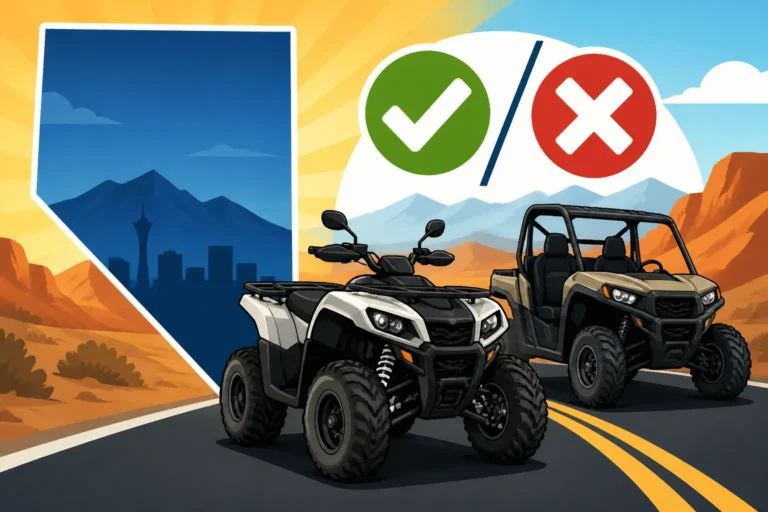
Nevada's Revised Statutes (specifically NRS 490.043) lay out a very clear, albeit sometimes frustratingly narrow, definition for what counts as a Large ATV. It's not just about engine size or horsepower, but primarily about the machine's design and intended purpose. The law specifies that a Large ATV must be designed by the manufacturer for off-highway use and have a width of 50 inches or more. Crucially, it must also have a non-straddle seat and a steering wheel. This immediately excludes traditional ATVs, which feature straddle seats and handlebars. For all intents and purposes, this designation is almost exclusively for side-by-sides (UTVs) and certain larger off-road buggies.
Beyond the physical dimensions and controls, there's another critical aspect: the vehicle must have either four or more wheels or a vehicle width of 50 inches or more, and a capacity for carrying two or more persons side-by-side or a truck bed. This means if your UTV is designed for one person, or if it lacks a "truck bed" (even a small cargo box can qualify), it might struggle to meet the full criteria. This definition is what allows many common utility UTVs and larger sport side-by-sides to even be considered for road legalization. When you're dreaming of riding your machine from your campsite to the gas station, this initial legal hurdle is the first one you absolutely must clear. For a deep dive into this, check out [What Nevada's NRS 490.043 Counts as a Large ATV].
Why a Two-Seat Sport Quad Fails Nevada's Test
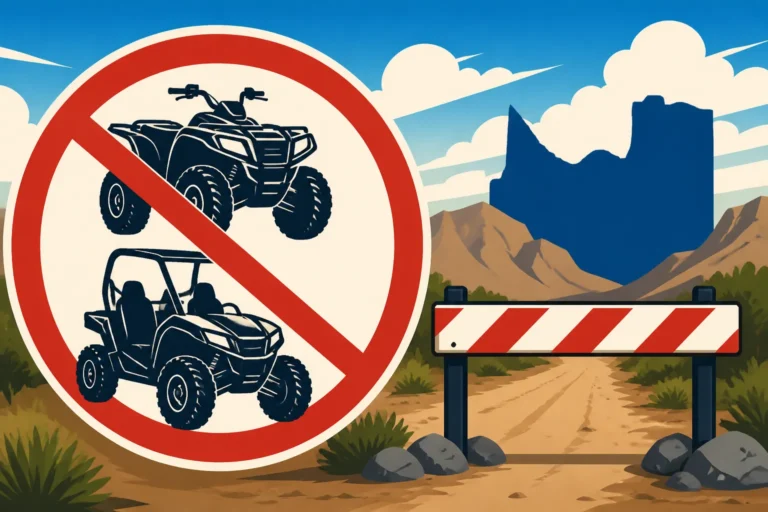
This is where the rubber meets the road, or rather, where the quad doesn't meet the road. Despite their widespread popularity for off-road recreation, traditional two-seat sport quads, or even larger utility ATVs, simply do not meet Nevada's "Large ATV" definition. They fail on multiple counts. First and foremost, they have a straddle seat, requiring the rider to sit astride the machine, much like a motorcycle. Nevada law explicitly requires a "non-straddle" seat for a Large ATV. Second, they utilize handlebars for steering, not a steering wheel. This is another non-negotiable point of failure for quads trying to achieve street-legal status in Nevada.
It’s a common misconception that if a quad is wide enough, or if it has four wheels, it should qualify. Unfortunately, the steering and seating configuration are deal-breakers. Many riders moving to Nevada from other states are surprised by this, as some jurisdictions might have more lenient rules for quads on public roads. Here in Nevada, if you're on a traditional quad, your road use will be limited to designated trails or private property, not county roads, no matter how many mirrors or signals you bolt on. It's a tough pill to swallow for quad enthusiasts, but understanding this fundamental difference upfront can save you a lot of time, money, and potential legal headaches down the line. You can explore more on this specific topic in [Why a Two-Seat Sport Quad Fails Nevada's Test].
Essential Lighting for Paved Roads in Nevada
Once your machine qualifies as a "Large ATV," the next step is to equip it with the necessary lighting to be seen and to signal your intentions to other drivers on the road. This isn't just about throwing on any old light kit; Nevada has specific requirements for visibility, brightness, and function. Skimping on these can not only be dangerous but also lead to a quick citation from a deputy or state trooper. Think of it this way: your side-by-side, even a large one, is still relatively small compared to a full-size pickup or SUV, and making sure you're highly visible is paramount for safety.
Headlights and Taillights Visible 500 Feet
Nevada law, much like many other states, mandates that your Large ATV must be equipped with at least one headlight and at least one taillight. The critical detail here is that these lights must be visible from a distance of 500 feet during darkness. This "500 feet" rule isn't just a suggestion; it's the standard by which law enforcement will judge your lighting system. This means your stock headlights and taillights on many off-road machines might need an upgrade, especially if they are designed primarily for trail illumination rather than road visibility. You need enough light output to clearly announce your presence to approaching and following vehicles.
Many aftermarket companies, including well-known brands like SuperATV, offer enhanced lighting kits designed specifically for UTVs that meet or exceed these visibility requirements. When choosing, look for LED options that offer brighter, more focused beams for headlights and clear, vibrant red for taillights. This isn't just about staying legal; it's about your safety and the safety of everyone else on the road. Without adequate lighting, you're essentially invisible in low-light conditions, turning a fun ride into a dangerous gamble. Proper installation is also key; ensuring lights are correctly aimed and wired prevents blinding oncoming drivers while maximizing your own visibility. Learn more about these requirements in [Headlights and Taillights Visible 500 Feet].
The Stop Lamp a Nevada Road Machine Needs
Beyond just running lights, your Large ATV must also have a functional stop lamp, commonly known as a brake light. This light, which must be red or amber and located on the rear of the vehicle, needs to illuminate whenever the brakes are applied. Just like your taillights, the stop lamp must be visible from 500 feet to the rear. This signal is crucial for warning drivers behind you that you are slowing down or coming to a stop, preventing potential rear-end collisions. Many UTVs come with integrated brake lights, but it's important to verify their brightness and visibility, especially if you've added any accessories that might obstruct them.
If your machine's stock setup doesn't cut it, or if it doesn't have a dedicated stop lamp, you'll need to install one. This usually involves wiring it into your brake system so it activates automatically. Some street-legal kits provide integrated taillight/brake light units, simplifying the upgrade. Always test your brake light before heading out on public roads, ensuring it functions reliably every time you apply the brakes. A non-functioning brake light is a clear safety hazard and an easy way to attract unwanted attention from law enforcement. Further details are available in [The Stop Lamp a Nevada Road Machine Needs].
Reflectors and When a Taillight Substitutes
Nevada law also requires your Large ATV to be equipped with certain reflectors to enhance passive visibility, especially if your lights fail or if you're parked on the roadside in low light. Specifically, you need at least one red reflector on the rear of the vehicle. However, there's a practical exemption: if your taillight is designed to reflect light, it can serve this dual purpose. Many modern taillight assemblies include reflective material within their lenses, effectively eliminating the need for separate reflectors.
It's a good idea to visually inspect your taillights to confirm they have this reflective quality. If not, adding inexpensive, self-adhesive red reflectors to the rear of your machine is a simple and effective way to comply. Additionally, many aftermarket light kits from companies like SuperATV include integrated reflectors as part of their design. Some riders also opt to add amber reflectors to the sides of their UTVs, though typically not legally required, it can further improve side visibility, especially if you're making turns or pulling out of driveways. The goal is to make your machine as visible as possible from all angles to prevent accidents.
Safety and Signaling Equipment
Having adequate lighting is a great start, but it's just one piece of the puzzle. To truly be road-ready in Nevada, your Large ATV needs specific safety and signaling equipment that allows you to interact safely with other traffic and ensures the protection of occupants. This goes beyond basic lighting and moves into active communication and occupant restraint, areas where off-road machines often differ significantly from street vehicles.
Nevada's Mirror Requirements for a Road UTV
When riding on public roads, you need to be aware of what's happening around you, not just in front. Nevada law dictates that a Large ATV operating on a highway (which includes certain county roads) must have at least one rearview mirror. This mirror needs to be mounted in a position that allows the driver to have a clear view of the roadway to the rear of the vehicle. While a single rearview mirror is the minimum legal requirement, most experienced riders and safety-conscious individuals will recommend having two: one on the left (driver's) side and a center rearview mirror.
Many UTVs don't come standard with street-legal mirrors, so this is often an aftermarket addition. When choosing mirrors, look for robust, vibration-resistant designs that offer a wide field of view. Some even integrate turn signals, adding an extra layer of visibility. While a single mirror technically meets the law, having a clear view of both sides and directly behind you drastically improves situational awareness. This is especially true when navigating traffic, changing lanes (if permitted, though limited by Nevada's laws), or simply ensuring no one is attempting to pass you in an unsafe manner. Don't skimp on mirror quality; it's a small investment that can have a huge impact on your safety. For specific details, refer to [Nevada's Mirror Requirements for a Road UTV].
The Horn Requirement on a Nevada Road Machine
A functional horn is not merely a courtesy; it's a legal requirement and a vital safety device for any vehicle on public roads, including your Large ATV. Nevada law states that your machine must be equipped with a horn that is audible from a distance of at least 200 feet. This horn is used to warn other drivers, pedestrians, or even wildlife of your presence, preventing potential accidents. It needs to be loud enough to cut through road noise and grab attention without being overly aggressive or obnoxious.
Most UTVs come with some form of a horn, but often it's a small, weak, or barely audible button meant for minor trail communication. For road use, you'll likely need to upgrade to a more substantial, automotive-grade horn. These are readily available from aftermarket suppliers like SuperATV and are typically easy to install, often just requiring a simple wiring connection to your existing electrical system. Ensure the horn is easily accessible from the driver's seat so you can quickly activate it in an emergency. Testing its audibility in an open area before hitting the road is also a good practice. [Nevada Horn Requirement on a Road Machine] has more on this.
Seat Belt Rules in a Side-by-Side
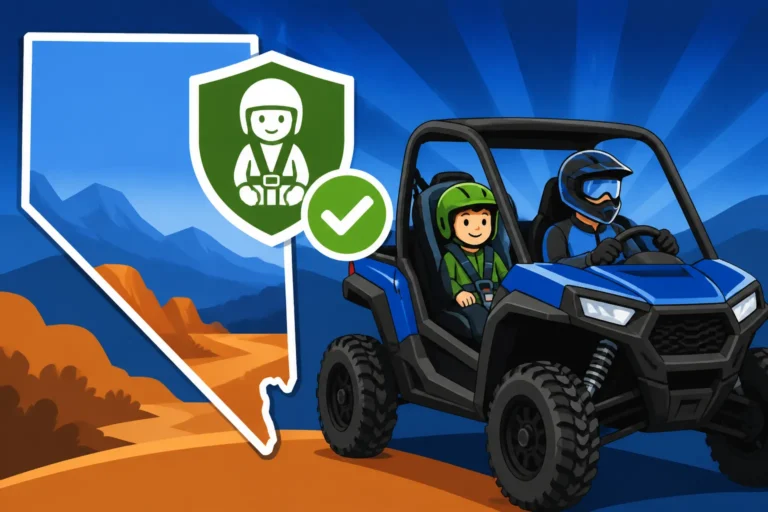
For side-by-sides, which are the primary beneficiaries of Nevada's Large ATV designation, seat belts are a non-negotiable safety feature, both off-road and especially on. Nevada's laws for road-legal Large ATVs align with standard vehicle safety practices, requiring occupants to be properly restrained. If your UTV has seats, it must have seat belts for each seating position, and all occupants must use them while the vehicle is in motion on public roads. This is a critical safety measure, preventing occupants from being ejected in the event of a collision, sudden stop, or rollover.
Most modern UTVs come standard with three-point seat belts, which are generally acceptable for road use. However, some enthusiasts upgrade to four-point or five-point harnesses for enhanced off-road safety, and these certainly meet the on-road requirements. Regardless of the type, ensure all seat belts are in good working order, free from rips or tears, and that their buckles engage and disengage correctly. Regularly inspect them for wear and tear, especially if your machine sees a lot of aggressive off-road use, as extreme forces can degrade belt material over time. This is one area where safety is paramount, and compliance is simple: buckle up! Delve into the specifics at [Nevada Seat Belt Rules in a Side-by-Side].
Engine and Exhaust System Considerations
Beyond what's visible on the exterior, Nevada also has requirements for your Large ATV's engine and exhaust system when it's operating on public roads. These regulations are in place to address environmental concerns and noise pollution, ensuring that off-highway vehicles don't unduly impact the quality of life for residents or contribute excessively to air and noise pollution in more populated areas. It's about being a good neighbor as much as it is about compliance.
Spark Arresters on Nevada Roads
A spark arrester is a critical component for any off-highway vehicle, and its importance is amplified when you consider fire safety, especially in Nevada's dry climate. Nevada law mandates that any OHV, including a Large ATV operating on public lands or roads, must be equipped with a U.S. Forest Service-approved spark arrester. This device is designed to prevent hot carbon particles from escaping the exhaust system and potentially igniting dry vegetation, which can lead to devastating wildfires.
While many stock UTVs come with spark arresters from the factory, it's essential to ensure yours is present, in good condition, and hasn't been removed or modified. Aftermarket exhaust systems often come with their own spark arresters, but always verify they meet the USFS approval. Failure to have a functional spark arrester is not only a fire hazard but also a ticketable offense. Regularly clean your spark arrester to ensure it functions efficiently and doesn't get clogged, which can impact engine performance. This simple device protects our beautiful natural landscapes and keeps you compliant with a vital safety regulation. You can learn more at [Spark Arresters on Nevada Roads].
Nevada Muffler Rules for Road Riding
Noise pollution is a significant concern in many communities, and Nevada addresses this through specific muffler requirements for vehicles on public roads. Your Large ATV must be equipped with a muffler that is in good working order and effectively prevents excessive or unusual noise. This means that open exhaust systems, straight pipes, or severely damaged mufflers are strictly prohibited. The intent is to ensure that your UTV operates at a reasonable sound level, similar to a standard automobile, and doesn't disturb residents or other road users.
While exact decibel limits can be complex and are often measured under specific testing conditions, the general rule of thumb is that your machine shouldn't be noticeably louder than a typical passenger car. If you've installed an aftermarket exhaust, ensure it's designed to be street-legal and includes appropriate baffling to keep noise levels in check. Many performance exhausts are great for the trail but can be too loud for road use. Choosing a high-quality, reputable exhaust system that balances performance with compliance is key. A quiet ride not only keeps you on the right side of the law but also makes for a more enjoyable experience for everyone.
Sound Limits and Aftermarket Exhaust
Building on the muffler rules, Nevada also has general sound limits for vehicles operating on public roads. While the specific decibel levels might be subject to change or vary by local ordinance, the overarching principle is to prevent "excessive or unusual noise" that could be deemed a public nuisance. This becomes particularly relevant for UTVs, as many riders enjoy modifying their machines with aftermarket exhaust systems for improved performance or a more aggressive sound.
If you opt for an aftermarket exhaust, it's critical to select one that is specifically designed to meet street-legal sound standards. Some performance exhausts, while thrilling on the dunes or trails, can easily exceed permissible noise levels on paved roads. If a law enforcement officer perceives your exhaust as excessively loud, you could face a citation. It's always best to err on the side of caution and choose an exhaust that is known for its relatively quiet operation while still offering performance benefits. You want your machine to be heard for safety, not for excessive noise. Testing your machine's sound output in a controlled environment, if possible, can give you a better idea of whether it will pass muster on Nevada's roads.
Tires, Windshields, and Other Road-Specific Gear
Beyond the core lighting and signaling, there are several other pieces of equipment that are essential for safely and legally operating your Large ATV on paved surfaces. These components address traction, visibility, and protection from road debris, all critical factors when transitioning from the dirt to the street. Neglecting these items can compromise safety and lead to non-compliance.
DOT Tires on a Machine That Rides Dunes
One of the most significant differences between off-road and on-road riding is the type of tire required for optimal performance and safety. When your Large ATV is intended for road use in Nevada, it must be equipped with tires that are approved by the Department of Transportation (DOT). This is not just a suggestion; it's a legal requirement. DOT-approved tires are designed and tested to meet specific safety standards for highway use, offering better traction, durability, and handling characteristics on pavement compared to purely off-road tires.
Off-road tires, particularly aggressive knobby tires or paddle tires designed for sand, are generally not suitable for sustained street driving. They wear out quickly on pavement, offer poor grip on hard surfaces, and can compromise handling. When making the transition to street-legal status, investing in a set of quality DOT-approved tires is essential. Many manufacturers, including those whose parts SuperATV distributes, offer a wide range of DOT-compliant UTV tires that balance on-road performance with acceptable off-road capability, so you don't have to swap tires every time you hit the trails. Make sure to check the sidewall of your tires for the "DOT" stamp to confirm compliance. This is a vital safety upgrade for anyone planning to ride pavement.
Nevada Windshield Rules for UTV Road Use
While a windshield isn't universally required for all street-legal vehicles in Nevada, for a Large ATV like a UTV, it's highly recommended and often a practical necessity for road use. Some interpretations and specific county ordinances might imply or require a windshield for open-air vehicles on public roads, especially if the vehicle is capable of higher speeds. More importantly, from a safety perspective, a windshield protects occupants from wind, dust, road debris, and insects, all of which become much more significant issues at road speeds.
If you choose to install a windshield, it must be made of safety glass or a safety glazing material that meets federal standards. This means it shouldn't shatter into dangerous shards upon impact and should provide clear, undistorted vision. Many aftermarket UTV windshields are available in various materials, including hard-coated polycarbonate, which offers excellent impact resistance. Some windshields even incorporate wipers, which are incredibly useful for maintaining visibility in rain or mud. While you might enjoy the open-air feel off-road, a proper windshield vastly improves comfort and safety for on-road excursions. For definitive guidance, you'll want to review [Nevada Windshield Rules for UTV Road Use].
Fenders and Mudguards for Road Travel
Imagine following a UTV on a gravel road, and every loose rock and spray of mud comes flying directly at your windshield. Not a pleasant thought, right? That's why fenders and mudguards are crucial for road-legal machines. While not explicitly detailed for "Large ATVs" in all statutes, general vehicle codes often require vehicles to be equipped with fenders or mudguards that effectively minimize the spray of water, mud, or gravel from the tires onto following vehicles.
Most UTVs come with some form of fenders, but if you've installed wider wheels or tires, or if your stock fenders are minimal, you might need to add fender flares or extended mudguards. These accessories help contain debris, preventing it from being flung outward and striking other vehicles or pedestrians. This is not just a matter of courtesy but also a legal safety requirement in many contexts. Investing in a good set of fender extensions or mud flaps is a relatively inexpensive way to ensure you're not creating a hazard for others on the road, especially when riding after rain or on mixed-surface roads.
What Paperwork and Proof You'll Need to Carry
Having your Large ATV equipped correctly is only half the battle; you also need to ensure you have the proper documentation to prove its legality and your right to operate it. Think of it as your passport to the pavement. Without the right paperwork, even a perfectly outfitted machine can land you in trouble with law enforcement. Always carry these essential documents, preferably in a waterproof pouch or bag securely stashed on your machine.
The Large ATV Decal and Your Registration Card
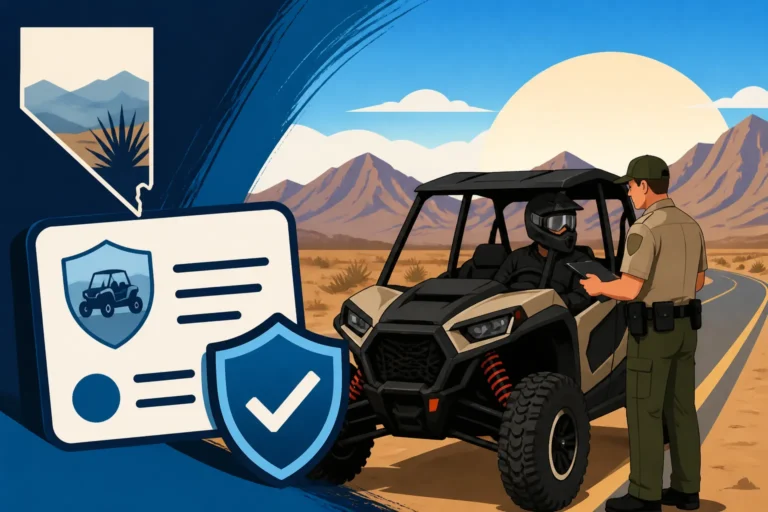
The most visible sign that your Large ATV is legally registered for road use in Nevada will be its "Large ATV Decal." This decal, often larger and distinct from the standard OHV decal, indicates that your machine has met the specific criteria for road-legal operation on designated county roads. It must be prominently displayed on your vehicle as required by law. But the decal alone isn't enough; you also need to carry the corresponding registration card. This card is the official proof that your vehicle is registered with the Nevada Department of Motor Vehicles (DMV) as a Large ATV.
When a deputy or trooper pulls you over, they're going to look for that decal first, then ask for your registration card. This card will contain vital information about your vehicle and its registration status. Ensure the information on the card matches your vehicle's VIN and your personal details. If you've just applied, remember that processing times can vary, so be patient for your decal and card to arrive. Keep these documents safe, dry, and readily accessible, as they are your primary proof of compliance. To apply for this, see [Applying for a Nevada Large ATV Decal].
Proof of Insurance for a UTV on a County Road
Just like any other motor vehicle operating on public roads in Nevada, your Large ATV must carry valid liability insurance. This is a non-negotiable legal requirement under NRS 485.185. The minimum coverage amounts are similar to those for passenger cars and are designed to protect you financially in case you cause an accident resulting in injury or property damage to others. Operating any vehicle on a public road without proof of insurance can lead to significant fines, suspension of your driving privileges, and even impoundment of your vehicle.
Before you ever venture onto a paved road, contact your insurance provider to ensure your Large ATV is adequately covered. Many standard OHV policies might only cover off-road use and may not extend to on-road operations. You'll likely need a specific rider or policy tailored for street-legal OHVs. Always carry your proof of insurance card with you, whether it's a physical card or an accepted digital copy on your phone. This is one of the first things a law enforcement officer will request during a roadside stop. Failing to produce it can cause significant delays and penalties. [Insurance Nevada Requires for Road Use] covers this in detail.
Carrying a Driver's License on a County Road Ride
This might seem obvious for road driving, but it's worth reiterating: when you're operating your Large ATV on any public road in Nevada, you must possess a valid driver's license. The same rules that apply to driving a car or truck apply here. This means no learner's permits without proper supervision, and definitely no riding if your license is suspended or revoked. You must be legally licensed to operate a motor vehicle on Nevada's roads.
During any interaction with law enforcement, your driver's license will be one of the first documents they ask for, alongside your registration and proof of insurance. Ensure your license is current and in good standing. For new residents, be mindful of the rules regarding transferring your out-of-state license within the required timeframe. Keep your license on your person, or in a readily accessible and secure spot on your machine, just like your other essential documents. Being prepared with all your paperwork makes any roadside stop much smoother and quicker.
Common Misconceptions and Additional Tips
Even with a clear understanding of the equipment and paperwork, there are still common pitfalls and misunderstandings surrounding street-legal OHVs in Nevada. Many riders assume more freedom than the law actually grants or overlook practical considerations that are vital for safe and compliant operation. Let's clear up some of those lingering questions and offer a few more pointers for a great experience.
Why Nevada Will Not Plate a Quad (and What "Street Legal" Really Means)
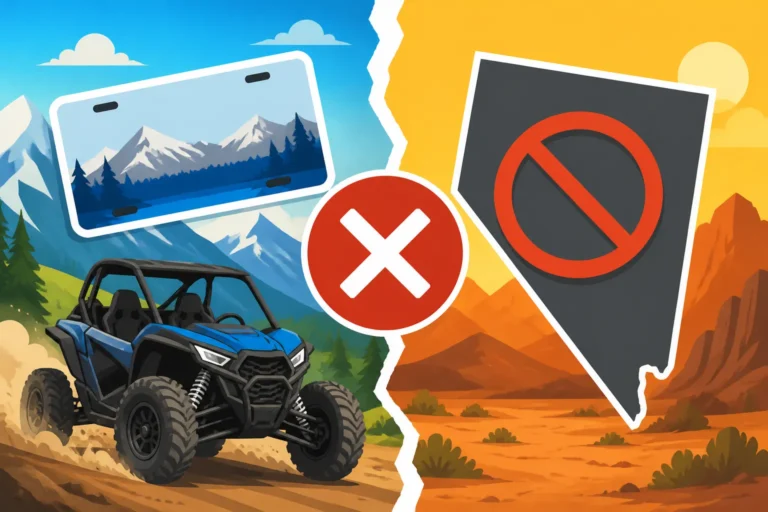
This is perhaps the biggest point of confusion for riders, especially those new to Nevada. Despite all the modifications you might make, Nevada will not issue a standard license plate for any ATV or UTV. When we talk about "street legal" in Nevada for OHVs, it's a specific and limited designation, not the same as a car or motorcycle. Your Large ATV will receive a special decal, not a metal license plate. This decal signals its eligibility for use on certain county roads, not all public roads, and certainly not state highways or interstates.
The distinction is crucial: a "street-legal" Large ATV in Nevada is permitted on designated county roads, often with a [Nevada's 2-Mile Limit on Paved Highway] for crossing or accessing trails. It does not magically become a car. It's still primarily an off-highway vehicle with limited road privileges. Many people try to get around this by plating their OHV in states like Montana or South Dakota, which offer more lenient street-legal conversions. However, bringing a Montana-plated UTV to Nevada for prolonged use will not exempt you from Nevada's own OHV registration laws and specific Large ATV requirements. Local law enforcement often views these out-of-state plates with skepticism if the machine is primarily domiciled or used in Nevada. Understand that Nevada has its own, distinct set of rules for road-eligible OHVs. Learn more in [Why Nevada Will Not Plate a Quad].
Riding to the Trailhead, Not to the Store
One of the most important mindsets to adopt when your Large ATV is street-legal in Nevada is that its primary purpose for road use is to get to and from the trail system. Nevada's laws are generally geared towards allowing OHVs to bridge short distances on county roads to access designated off-road areas, not to be a primary mode of transportation for errands or commuting. While you might be able to ride a few miles on a designated county road, don't expect to cruise through downtown Las Vegas or Reno on your UTV. Most cities and larger towns have ordinances that restrict or prohibit OHV use on their streets, even if they are technically county roads.
Think of it this way: your street-legal UTV is for getting from your campsite to the trailhead, or crossing a short stretch of pavement between dirt roads. It's not intended for picking up groceries or going out to dinner, unless specifically allowed by local ordinance in very rural areas (and even then, check). Always be aware of local city and county ordinances in the area you plan to ride. What's legal in rural Lincoln County might be strictly forbidden in a more populated area of Clark County. Keep your road excursions purposeful and limited to avoid unnecessary fines and interactions with law enforcement. This concept is explored further in [Riding to the Trailhead, Not to the Store].
Preparing Your Machine for the Nevada Desert's Demands
Nevada's desert environment is beautiful but unforgiving, and preparing your Large ATV for its specific challenges is crucial, whether you're on the trail or a paved road. The intense heat, pervasive dust, and vast, remote distances demand extra attention to your machine's maintenance and your personal preparedness.
First, cooling systems: desert heat can quickly push engines to their limits. Ensure your radiator is clean, coolant levels are topped off, and your fan is functioning optimally. Consider adding an aftermarket fan or a larger radiator if your UTV frequently overheats. Second, dust protection: Nevada dust is fine, abrasive, and gets everywhere. Invest in high-quality air filters and check them frequently. Consider pre-filters or filter socks. For yourself, riding with proper dust masks, goggles, and helmets is non-negotiable, even for short road sections where other vehicles kick up dust. Third, tires and suspension: while DOT tires are required for road, ensure your suspension is also in good shape to handle the varied terrain, from smooth asphalt to rough dirt roads. Aftermarket shocks and springs can greatly improve both comfort and control. Finally, carrying essentials: always carry extra water (for you and potentially your machine), a first-aid kit, communication devices (a satellite messenger for remote areas), and basic tools. Even a short ride on a county road could turn into a long wait for help if your machine breaks down far from civilization. Being proactive with maintenance and preparedness ensures your street-legal adventures in Nevada are safe and enjoyable.
Equipment Checklist for a Nevada Road-Legal Large ATV
To help you keep track, here's a handy checklist summarizing the essential equipment and considerations for making your Large ATV legal for operation on specific Nevada county roads. Remember to always consult the latest Nevada Revised Statutes and local ordinances for the most current information.
| Category | Required Equipment | Key Considerations |
|---|---|---|
| Vehicle Eligibility | Four+ wheels, 50"+ width, non-straddle seat, steering wheel, multi-person capacity or truck bed | Must fit Nevada's "Large ATV" definition (NRS 490.043); traditional quads are excluded. |
| Lighting | Headlight(s) (visible 500 ft) | Bright enough for road use, not just trail. |
| Taillight(s) (visible 500 ft) | Clear red, visible from the rear. | |
| Stop Lamp (brake light, visible 500 ft) | Activates with brakes, distinct from taillight. | |
| Rear Red Reflector(s) | Integrated into taillight or separate. | |
| Turn Signals (front and rear) | Essential for signaling intentions, highly recommended, often required by specific kits for "road use." | |
| Safety & Signaling | Rearview Mirror(s) | At least one required, two (left side & center) recommended for optimal visibility. |
| Horn (audible 200 ft) | Automotive-grade, easily accessible. | |
| Seat Belts/Harnesses | For every occupant, functional and used. | |
| Engine & Exhaust | USFS-Approved Spark Arrester | Prevents wildfires, ensure it's functional and clean. |
| Functional Muffler | Prevents excessive noise, comply with sound limits. | |
| Tires & Body | DOT-Approved Tires | Designed for highway use, superior to pure off-road tires on pavement. |
| Windshield (safety glass/glazing) | Highly recommended for safety and comfort, often implied by statute. | |
| Fenders/Mudguards | Prevents debris spray, especially with wide tires. | |
| Paperwork | Nevada Large ATV Decal | Affixed to vehicle, proof of specialized registration. |
| Nevada Large ATV Registration Card | Official proof of registration, carry at all times. | |
| Proof of Liability Insurance | Valid for on-road use, carry at all times. | |
| Valid Driver's License | Required to operate any motor vehicle on public roads. |
Disclaimer
This article is for general informational purposes only and does not constitute professional advice. Laws, prices and regulations vary by location and change over time. Consult a qualified professional for guidance on your specific situation.