Nevada Cities That Keep OHVs Off the Street
One of the most frustrating things for an off-highway vehicle (OHV) owner in Nevada is the sheer confusion surrounding where you can and cannot legally ride on city streets. It feels like every town has its own set of unwritten, or sometimes very written, rules, leaving you constantly wondering if you’re about to get pulled over just for trying to get to the trailhead. This guide is here to clear up that confusion, diving deep into the ordinances and realities of riding your ATV or UTV on the pavement within Nevada's diverse cities and towns.
The Confusing Reality of Nevada's OHV Street Laws
Let's be real: trying to understand where your ATV or UTV is allowed on pavement in Nevada feels like navigating a maze blindfolded. You've got state laws, county ordinances, and individual city rules, all layered on top of each other, often contradicting what you might assume. It’s enough to make you just want to stick to the dirt, but sometimes, a short paved section is unavoidable to connect trails or even just to fuel up.
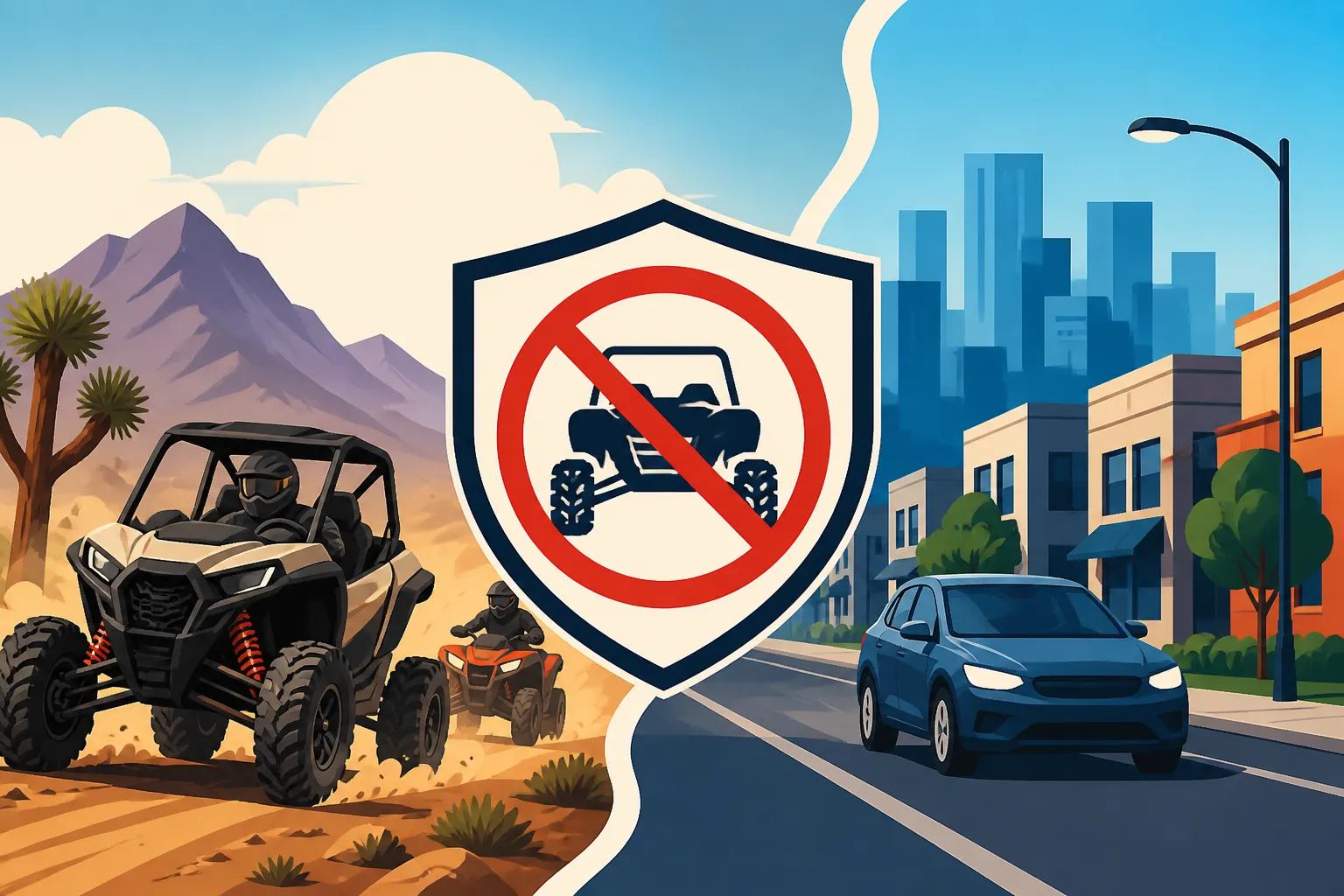
The core issue stems from the fact that while Nevada has a framework for allowing "large ATVs" on certain county roads, this state-level permission doesn't automatically extend to city streets. Cities and towns have the power to create their own ordinances, and many of them have chosen to restrict or outright prohibit OHV use on their paved thoroughfares. This creates a patchwork of regulations that can change the moment you cross an imaginary line from one jurisdiction to another. It's not uncommon to be riding legally on a county road, only to find yourself in violation the moment you enter a city's incorporated limits.
State Versus Local Control: Why It's Not a Uniform Answer
The Nevada Revised Statutes (NRS) give counties some flexibility in allowing large ATVs on certain roads. Specifically, NRS 490.043 defines what Nevada counts as a "large ATV," generally requiring four wheels, a curb weight between 900 and 2,000 pounds, and a width no more than 70 inches, with a cargo box or four seats. This classification is crucial because it's the gateway for even considering street legality. However, this state allowance is primarily for county roads, particularly those designated as minor county roads. It’s a very different ballgame once you hit an incorporated city or town.
Cities, under their municipal powers, can pass ordinances that supersede or add to state laws regarding vehicle operation within their boundaries. This is why you can't just assume that because your side-by-side qualifies as a "large ATV" and has all the necessary equipment (headlights, taillights, horn, mirrors, etc.), you're automatically good to go on any paved road. Each city has the authority to make its own decision, and they often do, based on concerns like traffic congestion, noise, safety, and resident complaints. It’s a classic example of local control, but it certainly doesn’t make it easy for us riders.
The "Large ATV" Designation and Its Limits
Even if your machine fits Nevada's definition of a "large ATV" and you've gone through the process of getting the special decal and equipping it properly (you can learn more about [What Qualifies as a Large ATV in Nevada]), that designation has its limitations. The primary benefit of this designation is for legal use on specific county roads, not necessarily all roads. For instance, a two-seat sport quad, no matter how much you've customized it, typically won't meet the "large ATV" criteria because it lacks the cargo box or four seats required. So, right off the bat, many popular sport models are excluded from any street-legal consideration.
The state's intention was often to allow ranchers, farmers, or residents in rural areas to connect properties or access trailheads on quieter, less-trafficked roads. It was never truly envisioned as a way for OHVs to become mainstream street vehicles in urban centers. This means that while you might have legally jumped through all the hoops to get your machine ready for county roads, those efforts might be entirely moot the moment you cross into city limits. It’s a crucial distinction, and one that often catches riders off guard, leading to unnecessary citations. You can dive deeper into [Nevada Street Legal UTV Requirements] if you're curious about all the equipment you'd need even for compliant roads.
Las Vegas: Navigating the Urban Sprawl on Four Wheels
Ah, Las Vegas. The bright lights, the hustle and bustle, the endless entertainment… and absolutely no tolerance for OHVs on its city streets. This is perhaps the most critical city to understand, given its size and the sheer volume of visitors. If you're planning on riding in Southern Nevada, you're likely going to be in or around the Las Vegas metropolitan area, and it's imperative to know the rules.
The City of Las Vegas, like its neighboring municipalities, has very clear ordinances prohibiting the operation of OHVs on paved roads within its incorporated boundaries. This isn't just about the famous Las Vegas Strip – it applies to virtually every street, from bustling downtown intersections to quiet residential neighborhoods. The reasoning is multifaceted, involving public safety concerns due to high traffic volumes, pedestrian activity, noise complaints, and the general unsuitability of most OHVs for sustained road use.
City Ordinances and Designated Routes
The City of Las Vegas Municipal Code is quite explicit. Generally, off-highway vehicles are not allowed on city streets unless they are specifically designated as part of an approved off-highway vehicle route. Such routes are few and far between and are typically limited to very specific access points for legitimate off-road areas, like connecting to certain parts of Nellis Dunes, or for special events that have secured all the necessary permits. These aren't routes designed for casual cruising or for getting from one side of town to the other.
If you are found riding an OHV on an unauthorized street in Las Vegas, you can expect a stern conversation with law enforcement, and quite possibly a citation. The local police departments, including the Las Vegas Metropolitan Police Department (LVMPD), are well-versed in these regulations and are vigilant, especially with the increased popularity of UTVs. They are focused on ensuring public safety and maintaining the quality of life for residents, which often means keeping noisy, dusty, or potentially unsafe vehicles off their busy streets.
The Strip and Major Arterials: Absolutely No-Go Zones
Let's be crystal clear: riding an ATV or UTV on the Las Vegas Strip, or any major arterial roads like Tropicana, Flamingo, Sahara, or Rainbow Boulevard, is an absolute, unequivocal no-go. Not only is it illegal, but it's also incredibly dangerous. These roads are designed for high-speed, high-volume vehicular traffic, often with multiple lanes and complex intersections. An OHV, even a street-legalized large ATV, is simply not suited for this environment. The size, speed, and maneuverability differences create a significant hazard for both the OHV rider and other motorists.
Furthermore, the Strip itself is heavily policed, not just by local law enforcement but also by tourist-focused security. Any attempt to ride an OHV there would be met with immediate intervention. Beyond the legal ramifications, consider the safety aspect. You're riding a machine that lacks the crash protection of a car amidst distracted drivers and bustling crowds. It’s simply not worth the risk. If you’re looking for off-road adventure near Las Vegas, there are fantastic designated areas like Nellis Dunes or Logandale Trails, but you’ll need to trailer your machine to get there.
Reno and Sparks: High Desert Cities with Their Own Rules
Moving north to the Truckee Meadows, the cities of Reno and Sparks also present their own set of challenges for OHV riders. While these areas are closer to expansive high desert riding opportunities, the urban centers themselves maintain strict regulations regarding street access for off-highway vehicles. It's a common misconception that because Nevada is so open for off-roading, its cities must be too. That's just not the case, especially in larger population centers.
Reno and Sparks, much like Las Vegas, have developed their own municipal codes to govern vehicle use within their city limits. These codes are designed to manage traffic, ensure safety for all road users, and address community concerns about noise and environmental impact. Therefore, don't expect to simply ride your UTV from your home in south Reno to a trailhead near Peavine Mountain without trailering. You'll likely encounter signs, or more critically, law enforcement, enforcing these local rules.
Washoe County Ordinance 1507 Explained
The situation in Reno and Sparks is heavily influenced by Washoe County's ordinances, specifically Washoe County Ordinance 1507, which addresses the use of OHVs on county roads. While this ordinance does allow for the use of properly equipped "large ATVs" on certain designated minor county roads, it specifically outlines conditions and restrictions. The key here is "county roads." Once you enter the incorporated limits of the City of Reno or the City of Sparks, their own municipal codes take precedence over the broader county allowances.
This means that while you might be legally operating your UTV on a gravel county road just outside the city, the moment you cross into an area like the Reno city limits, you could be in violation. It’s a frustrating boundary to navigate, but it’s the reality of local governance. These cities have chosen to largely keep OHVs off their paved streets, citing concerns about traffic safety in dense urban environments and the general incompatibility of these machines with standard road vehicles. You can often find specific details about [Washoe County Ordinance 1507] if you dig into the county's public records.
Crossing the Truckee Meadows Without Trouble
For riders in the Reno-Sparks area, the best approach is to always trailer your OHV to designated off-road areas. Trying to use city streets as a shortcut or a means of access is generally not allowed and will likely lead to a stop. Popular riding areas like Peavine Mountain, Moon Rocks, or sections of the Sierra Nevada foothills require transport. While it might seem convenient to just hop on your machine and go, the legal and safety risks far outweigh any perceived benefit.
Even for very short distances, such as moving your machine from a residential street to a nearby dirt access road, you should exercise extreme caution and be aware of local regulations. If you absolutely must traverse a short paved section and believe it falls under a permissible use (which is rare), ensure your machine is fully compliant with all state-level street-legal equipment requirements – think working headlights, taillights, brake lights, mirrors, a horn, and appropriate tires. Products from companies like SuperATV can help you equip your machine with these necessary items, but remember, equipment alone doesn't grant you blanket permission to ride city streets.
Henderson: A Growing City's Approach to OHV Access
As the second-largest city in Nevada, Henderson, located southeast of Las Vegas, also takes a firm stance on off-highway vehicles on its streets. Henderson is a rapidly growing community, and its focus is heavily on maintaining safe, orderly traffic flow and a high quality of life for its residents. This includes strict regulations against OHV use on its paved public roads.
The city's approach is consistent with other major urban centers in Nevada: OHVs are primarily intended for off-road use in designated areas, not for commuting or casual riding on city streets. With its extensive network of well-maintained parks, trails, and open spaces, Henderson offers many recreational opportunities, but these generally do not extend to street-legal OHV use within its incorporated boundaries. The city is home to families, commuters, and businesses, and integrating off-road vehicles into that mix is something they largely prohibit.
Strict Enforcement and Limited Opportunities
The Henderson Police Department actively enforces the city's municipal code regarding OHVs. Riders caught operating ATVs or UTVs on city streets where they are not permitted can face fines, and in some cases, impoundment of their vehicle. The enforcement isn't just about catching someone joyriding; it's also about responding to resident complaints about noise, dust, and perceived safety hazards.
Unlike some smaller, more rural towns, Henderson does not typically have "designated routes" that allow OHVs to traverse parts of the city. Their focus is on keeping traffic predictable and safe for all standard vehicles. This means that if you live in Henderson and own an OHV, you absolutely need a trailer to transport your machine to legal riding areas. Attempting to ride out of your neighborhood on city streets will almost certainly result in a negative encounter with law enforcement.
Designated OHV Parks Versus Street Use
Henderson and its surrounding areas do provide access to off-road opportunities, but these are typically found in designated OHV parks or on BLM land that is accessed via trailering. For example, popular areas like Nelson Hills or areas further out toward Searchlight offer excellent riding. However, these are reached by driving your truck and trailer, not by riding your UTV through the suburban streets of Henderson.
The distinction is critical: the city encourages responsible recreation in appropriate areas, but it does not support the integration of OHVs into its urban traffic fabric. So, while you might find fantastic off-road trails a reasonable drive away, you'll need to plan for transportation. Don't be tempted to "just quickly" ride your machine down the street to a friend's house or a nearby gas station; the risk of a ticket or worse is simply too high.
Mesquite: The Reputation for Open Streets (and the Reality)
Now, let's talk about Mesquite. This is one of those unique Nevada cities that often comes up in conversations about OHV street legality because it has, at times, had a more lenient approach than its larger counterparts. Many riders hear "Mesquite" and think "open season" for street riding. While it's true that Mesquite has a more OHV-friendly stance, it's not a free-for-all, and understanding the nuances is crucial to avoid trouble.
Mesquite is a smaller city in northeastern Clark County, known for its golf courses, resorts, and proximity to scenic off-road trails and the Arizona border. Its local government has historically been more open to accommodating OHV riders, recognizing the economic benefit that off-road tourism brings to the area. However, even in Mesquite, there are rules, and they're designed to balance rider access with public safety and resident concerns. It's a prime example of a city trying to find a middle ground.
Understanding Mesquite's Unique Approach
Mesquite's specific ordinances have, in the past, allowed for the use of properly equipped OHVs on some city streets, particularly to access trailheads or specific amenities. This is a significant departure from Las Vegas or Reno. However, these allowances are usually accompanied by strict conditions. For instance, specific streets might be designated for OHV use, or there might be time-of-day restrictions. It’s never a blanket permission for every street at any time.
The key is to remember that these allowances are usually focused on connectivity – helping riders get from their lodging or a staging area to the vast trail networks that surround the city. They are not intended for cruising the main thoroughfares or residential areas as a primary mode of transportation. Always check the most current Mesquite city ordinances or local tourism information before you ride, as rules can change. What was permissible last year might not be this year.
The 2-Mile Rule and Riding to the Trailhead
A concept often discussed in Mesquite (and indeed, a state-level provision for county roads) is the "2-mile rule." This rule, as it applies on some county roads, permits a properly equipped "large ATV" to traverse up to two miles on a paved county road to connect two dirt sections or to access an otherwise inaccessible trail. In some instances, Mesquite's local ordinances have adapted similar concepts to allow riders to use specific city streets for short distances to reach trailheads. You might find this concept applies when [Riding the Street in Mesquite].
This is a very specific allowance and not a general permit to ride anywhere. It’s designed to facilitate access to the incredible off-road opportunities in the area, not to turn Mesquite's streets into a continuous OHV park. If you're utilizing this provision, your machine must still meet all the street-legal equipment requirements, including working lights, mirrors, a horn, and proper registration. Don't forget that even in a more permissive city, safety gear like helmets is always a good idea, and often legally required depending on your age and the specific road conditions. Products like mirrors or turn signal kits from SuperATV can be invaluable for meeting these requirements.
Smaller Nevada Towns: Varying Degrees of Openness
Beyond the major metropolitan areas, Nevada is dotted with countless smaller towns and rural communities. These areas often have a very different relationship with off-highway vehicles, reflecting their frontier heritage and the prevalent outdoor lifestyle. You might find a much more relaxed attitude toward OHVs on city streets in these smaller communities, but it's still not a guarantee, and vigilance is key.
Towns like Elko, Ely, Fallon, Pahrump, or Laughlin often serve as hubs for extensive surrounding trail networks and agricultural activities. In many of these places, OHVs are a common sight, used for everything from ranch work to recreation. This practical integration can sometimes translate into more permissive local ordinances regarding street use, especially on quieter roads or for specific purposes.
Rural Flexibility Versus Local Ordinances
In many smaller, more rural towns, the local police force or sheriff's deputies may be more understanding of OHVs being used for short distances to access trails or run quick errands. The logic is that these communities often have less traffic, and OHVs are a more integral part of the local culture and economy. For example, a rancher in a remote part of Elko County might regularly use their quad to get from one pasture to another, traversing a short paved section of a town road. This kind of use is often accommodated, provided the machine is operated safely and respectfully.
However, "understanding" is not the same as "legal." Even in these towns, there's usually an underlying ordinance that might restrict or prohibit general OHV street use. The enforcement might be less strict, or focused more on egregious violations like reckless driving or excessive noise. But it's crucial to remember that a deputy can issue a citation if they choose to enforce the letter of the law. You cannot assume an unspoken permit.
Checking Local Laws Before You Ride
The absolute best advice for any smaller Nevada town is to check with the local city hall or sheriff's office before you unload your machine. A quick phone call can save you a lot of grief. Ask about specific ordinances regarding OHV street use, any designated routes, or restrictions. You might find, for example, that [Riding County Roads Around Pioche] is permissible, but riding on the main street of Pioche itself is not.
Some towns might have specific hours for OHV street access, or restrict them to certain types of roads (e.g., residential streets but not main highways). Others might have no specific ordinance, in which case state law regarding "large ATVs" on county roads might apply, but always with caution. When you're in these areas, you're looking for that sweet spot of local acceptance and explicit legal permission. Don't rely on hearsay or what "everyone else does."
Table: OHV Street Access Comparison in Select Nevada Cities
| City/Area | General OHV Street Access | Common Exceptions/Nuances | Enforcement Level |
|---|---|---|---|
| Las Vegas | No | Very few, highly restricted designated routes for specific access. | Strict |
| Reno | No | Washoe County Ordinance 1507 for county roads doesn't apply within city limits. | Strict |
| Sparks | No | Similar to Reno, city ordinances supersede county rules. | Strict |
| Henderson | No | Focus on standard vehicular traffic, no general OHV street access. | Strict |
| Mesquite | Limited/Conditional | May allow use on specific streets for short distances (e.g., 2-mile rule) to access trails/amenities. Check local laws. | Moderate |
| Elko (City) | Limited/Situational | More flexible for rural/agricultural use, but not a free-for-all. Main roads usually restricted. | Moderate |
| Fallon | Limited/Situational | Often more accommodating for rural connections; always verify local regulations. | Moderate |
| Pahrump | Limited/Situational | Proximity to extensive trails may lead to some local allowances; confirm with local authorities. | Moderate |
| Laughlin | Limited | May have specific routes to access river/desert trails, but generally restricted on main roads. | Moderate |
Note: This table provides a general overview. Always consult the specific municipal codes and local authorities for the most current and precise regulations before operating an OHV on any city street.
Equipping Your OHV for Any Legal Street Access
Let's assume you've done your homework, and you're in one of those rare places or specific situations where limited OHV street access is permitted, such as some county roads under the "large ATV" designation or a unique Mesquite ordinance. Even then, you can't just roll your trail-ready machine onto the pavement. Nevada law, when it allows for street use, requires specific equipment to ensure your OHV can safely share the road with traditional vehicles.
This isn't just about avoiding a ticket; it's about your safety and the safety of others. OHVs are designed for off-road conditions, and street environments demand different safety features. Failing to equip your machine properly is a recipe for disaster, not to mention a guaranteed fine. This is where investing in the right accessories comes into play. You can delve into [Nevada Equipment List for Road-Legal UTVs] for a complete rundown.
Essential Safety and Roadway Equipment
For any OHV even considering legal street use in Nevada, the following equipment is generally mandatory:
- Headlights: Your machine must have at least one headlight that emits a white light, visible from 500 feet to the front. Many stock OHV headlights are sufficient, but ensure they are working properly and aimed correctly.
- Taillights and Stop Lamp: At least one red taillight visible from 500 feet to the rear, and a stop lamp (brake light) that illuminates when the brakes are applied. If your taillight assembly doesn't include a dedicated stop lamp, you'll need to add one.
- Reflectors: Rear reflectors are also typically required. Sometimes, a taillight can double as a reflector if designed to do so.
- Mirrors: You must have at least one rearview mirror, and often two, mounted to provide a clear view to the rear. This is a crucial safety item often overlooked by purely off-road machines. Products from SuperATV, for instance, offer a variety of robust, trail-tested mirrors that can also meet street-legal requirements.
- Horn: A working horn is required, capable of emitting a sound audible from at least 200 feet. Many stock machines have basic horns, but ensure yours is functional.
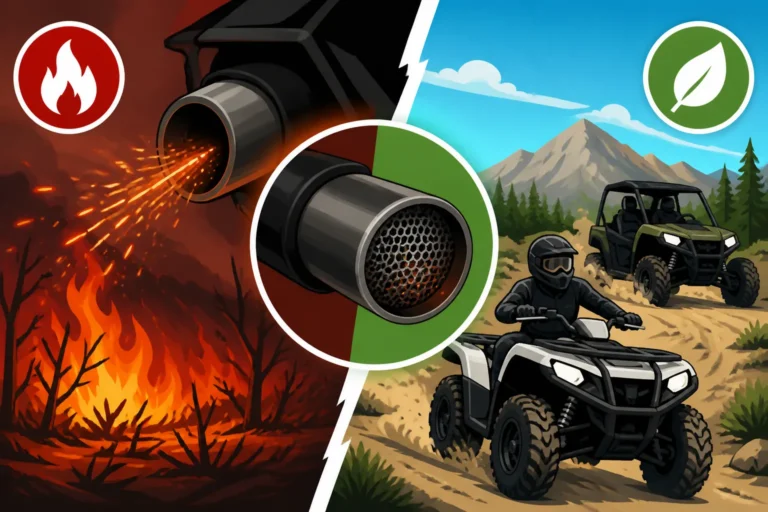
- Muffler and Spark Arrester: While important for off-road noise and fire prevention, they are also critical for street legality. Your exhaust system must meet noise regulations and have a spark arrester.
- Tires: Your tires must be DOT-approved, meaning they are designed and rated for highway speeds and conditions. Knobby off-road tires, while great for dirt, can wear quickly and handle poorly on pavement.
Remember, simply having these items isn't enough; they must be in good working order. Regularly check your lights, horn, and mirrors.
The Importance of DOT-Approved Components
The distinction between off-road and street-legal components is significant, especially when it comes to tires, windshields, and lighting. A DOT (Department of Transportation) approval means the component has met specific federal safety standards for highway use.
- DOT Tires: This is perhaps one of the most common oversights. Those aggressive mud tires that excel in the dunes or on rocky trails are often not DOT-approved. They might be too soft, have an unsuitable tread pattern for pavement, or lack the internal construction for sustained road speeds. If you're going to legally ride on any paved surface, investing in a set of DOT-approved radial tires is a must. They offer better road manners, longer life on pavement, and, most importantly, compliance.
- Windshields: While not always strictly mandatory for "large ATVs" on county roads, if your machine has a windshield, it should be made of safety glass or a similar shatter-resistant material. Some aftermarket windshields for OHVs are purely for dust and debris protection and are not rated for road impacts.
- Lighting: Beyond just "working," some regulations imply a certain level of brightness or beam pattern. For instance, headlights should illuminate the road ahead adequately without blinding oncoming traffic. Many aftermarket LED light bars, while incredibly bright off-road, are not legal for on-road use because they lack proper beam control. Again, seeking out reputable brands like SuperATV that offer street-legal conversion kits or individual DOT-compliant parts can simplify this process, ensuring you're getting components that actually meet the requirements.
Taking the time and making the investment to properly equip your OHV for street use is non-negotiable if you plan to utilize any legal road access. It's about respecting the law and ensuring everyone's safety.
The Consequences of Riding Where You Shouldn't
It's tempting, isn't it? That quick ride down the street to the corner store, or a shortcut through a neighborhood to bypass a dusty section of road. But the consequences of riding your ATV or UTV on city streets where it's not permitted can be far more severe and costly than that momentary convenience. Law enforcement in Nevada's cities takes these violations seriously, and ignorance of the law is never a valid defense.
Beyond the immediate financial penalties, there's the broader issue of perception and future access. When riders flaunt local laws, it creates negative public opinion about OHV enthusiasts as a whole. This can lead to even stricter regulations, further limiting access for everyone. It's a lose-lose situation that undermines the efforts of responsible riders and advocacy groups.
Fines and Penalties for Illegal Street Use
The exact fines for operating an OHV on a prohibited city street will vary depending on the specific municipal code, the city, and the discretion of the officer. However, you can generally expect:
- Significant Fines: Tickets for OHV violations on city streets are not cheap. They can range from a couple hundred dollars to much more, especially if there are aggravating circumstances (e.g., reckless driving, excessive speed, or multiple violations).
- Impoundment: This is perhaps the most painful consequence. Your OHV can be impounded, meaning it will be towed away to an impound lot. Reclaiming an impounded vehicle involves not only paying the fine but also tow fees, daily storage fees, and administrative charges, which can quickly add up to hundreds, if not thousands, of dollars. The hassle and expense are immense.
- Points on Your Driving Record: Depending on the nature of the violation, it might even result in points on your driver's license, potentially leading to increased insurance premiums.
- Criminal Charges (in severe cases): If your illegal street use involves reckless endangerment, property damage, or fleeing from law enforcement, you could face far more serious criminal charges, not just traffic infractions.
It's also worth noting that if your OHV is involved in an accident while being operated illegally on a city street, your insurance policy might not cover damages, leaving you personally liable for repairs, medical bills, and any legal judgments. This is a critical point that many riders overlook. [Insurance and Nevada OHV Registration] is a good read if you're trying to understand more about OHV coverage.
Why Ignoring Local Ordinances Is Never Worth It
The bottom line is that the risk far outweighs any perceived reward for riding illegally on city streets. That brief moment of convenience or fun is not worth the potential fines, the nightmare of impoundment, or the long-term repercussions on your driving record and finances. Think about it: a quick trip to the gas station could cost you a week's pay and a massive headache.
Responsible OHV ownership means understanding and respecting the rules, even when they're frustrating. If you want to ride, take the time to trailer your machine to a legal riding area. Plan your trips, stage responsibly, and adhere to all local, county, and state regulations. By doing so, you protect yourself, your wallet, and the future of off-roading access for everyone in Nevada. Let’s all do our part to keep the trails open and the streets safe by riding smart and legally.
Disclaimer
This article is for general informational purposes only and does not constitute professional advice. Laws, prices and regulations vary by location and change over time. Consult a qualified professional for guidance on your specific situation.