Street Legal ATVs in Nevada: The Short Answer
It's a question that echoes across every campfire, trailhead, and dusty garage from Laughlin to Elko: "Can I make my ATV or UTV street legal here in Nevada?" The short answer, and one that often frustrates many enthusiastic riders, is usually "no" for a typical ATV, and "yes, but with significant caveats" for specific UTVs. This isn't just a simple yes or no; it's a tangled web of state statutes and local ordinances that can leave even seasoned off-roaders scratching their heads, leading to confusion, unnecessary purchases, and sometimes, costly tickets. This comprehensive guide is here to untangle that web, clearly laying out exactly what Nevada law says about getting your off-highway vehicle (OHV) on the paved roads, what equipment you'll need, and where you can actually ride.
The Core Question: Can My ATV or UTV Be Street Legal in Nevada?
The desire to ride your machine from your driveway straight to the trailhead or even to the local store for an ice cream cone is completely understandable. It saves you the hassle of trailering, loading, and unloading, and just extends the adventure. However, the reality in Nevada is often a stark contrast to this dream, especially when it comes to traditional ATVs.
The Short Answer: It's Complicated, and Often No
When riders ask if their ATV or UTV can be "street legal," they often envision registering it, getting a license plate, and driving it on any public road just like a car. For the vast majority of ATVs—think your typical sport quad or even a smaller utility quad—this simply isn't an option in Nevada. The state's legal framework for off-highway vehicles, outlined primarily in Nevada Revised Statutes (NRS) Chapter 490, draws a very clear line between machines designed for off-road use and those permitted on paved public roads.
The underlying principle here is safety. Traditional ATVs, with their high center of gravity, narrow wheelbase, and often aggressive off-road tires, are not engineered for the demands of paved road use, traffic, and higher speeds. They lack many of the safety features standard on street-legal vehicles, such as turn signals, rearview mirrors, and DOT-compliant tires, from the factory. While aftermarket accessories can address some of these, the fundamental design and the state's legal definitions often pose an insurmountable barrier. So, while you might see an OHV crossing a road, or even riding a short distance on one, that's usually an exception to the rule, not a sign of full street legality.
Nevada's "Large All-Terrain Vehicle" Exception
Now, this is where UTV owners might find a glimmer of hope, but it's crucial to understand the very specific definition Nevada uses. The state does have a pathway for certain types of utility task vehicles (UTVs), or "side-by-sides," to gain limited road access, but it's not a blanket approval for all UTVs. This pathway is specifically for what Nevada law defines as a "Large All-Terrain Vehicle" under NRS 490.043.
To qualify as a "Large ATV" in Nevada, your machine must meet one of two strict criteria: it must be designed by the manufacturer to carry four or more passengers, or it must be equipped with a truck bed. This distinction is absolutely critical. Imagine a family-sized Polaris RZR XP 4 1000 or a Can-Am Defender with its cargo bed – these are the types of machines that often fit this definition. The idea is that these larger, more stable, and often more utility-focused machines are somewhat closer in design and function to traditional vehicles, making them marginally more suitable for limited road use. However, your typical two-seat sport quad, no matter how powerful, will almost certainly fail this test because it lacks four seats and a truck bed. This is a point of frequent misunderstanding, as many riders assume if it's a UTV, it qualifies, but Nevada's law is quite precise. For a deeper dive into these specific criteria, you can check out [What Nevada's NRS 490.043 Counts as a Large ATV].
Understanding Nevada's Street Legal Framework for OHVs
Navigating the rules for OHVs on Nevada's roads can feel like trying to find your way through a maze blindfolded. It's not just about what equipment you have, but about where you can legally ride and under what circumstances. The state makes a clear distinction between riding off-road and using public paved highways.
General Prohibition on Paved Highways
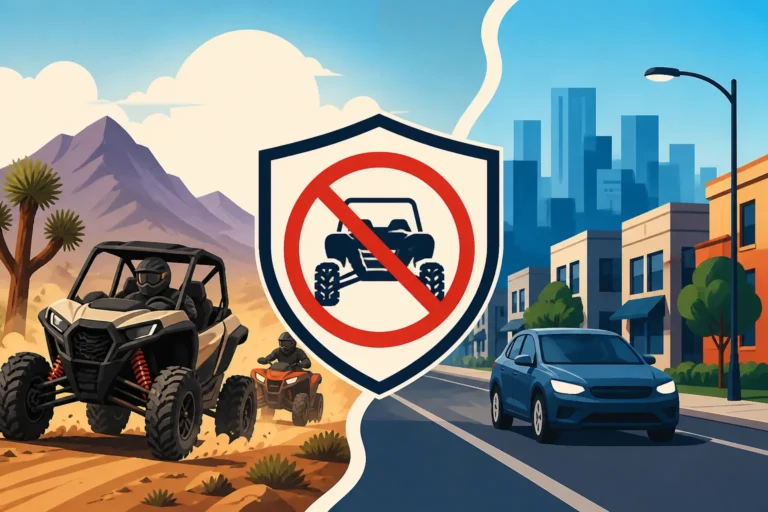
Let's get this straight: in Nevada, the general rule is that off-highway vehicles are simply not allowed on paved public highways. This isn't meant to spoil anyone's fun; it's rooted in public safety. Imagine trying to drive a machine designed for rocks and sand at highway speeds alongside cars and trucks. The difference in handling, braking, and crash protection is immense. ATVs and UTVs, even those with powerful engines, often lack the acceleration to merge safely, the stability for high-speed turns, or the robust occupant protection of a car.
This general prohibition means that if you own a quad or a side-by-side, your primary mode of transport to riding areas will usually involve a trailer. You load up your machine, drive your truck to the trailhead, and then unload to start your adventure. It's the standard practice and, frankly, the safest way to get your machine to where it belongs: off the pavement and onto the dirt. Trying to bypass this by riding on state highways is not only dangerous but will almost certainly lead to a citation from law enforcement.
The Two-Mile Limit and Crossing Highways
Now, there's a vital exception that often gets misunderstood as full street legality, and it's something every Nevada OHV rider needs to know. Nevada law does permit an OHV to operate on the paved portion of a highway for a very specific and limited purpose: to cross the highway or to ride along it for no more than two miles. This allowance is strictly for gaining access to a legal off-highway trail or staging area. It is not an invitation to cruise through town or commute to work.
Think of it this way: you're at a trailhead, and the next section of the trail is just across a paved county road. Or maybe there's a small stretch of pavement, two miles or less, connecting two vast areas of public land. In these scenarios, Nevada understands that forcing you to re-trailer your machine for such a short distance would be impractical. So, they provide this limited window. However, this exception comes with responsibilities. When using this two-mile limit, your OHV must be registered and display its valid Nevada decal. Furthermore, you must adhere to all traffic laws, including speed limits, stop signs, and yielding to other vehicles. It's a privilege designed for access, not general road use. For more details on this specific rule, you can consult [Nevada's 2-Mile Limit on Paved Highway] or learn more about [Crossing a Highway on an ATV in Nevada].
The "Large ATV" Decal: What It Is and Who Qualifies
For those UTV owners whose machines meet Nevada's specific definition of a "Large All-Terrain Vehicle," there's a special decal that grants expanded, but still conditional, road access. This isn't a traditional license plate, nor does it make your UTV street-legal everywhere; it's an acknowledgment of its specific characteristics and a gateway to riding on certain types of county roads.
What Makes a Machine a "Large ATV" in Nevada
Let's reiterate, because this is where a lot of confusion lies: your machine must meet the specific criteria of having four or more seats or being equipped with a truck bed, as outlined in NRS 490.043. It's not about the engine size, the brand, or how cool it looks; it's about its design for passenger capacity or utility.
Consider a Polaris General, a Can-Am Defender, or a Kawasaki Mule. Many models of these machines are built with either a full-sized bed for hauling gear or seating for four, five, or even six passengers. These are the kinds of vehicles that were envisioned when the "Large ATV" category was created. They often have a longer wheelbase, wider stance, and heavier curb weight, making them more stable than a two-seat sport quad. On the other hand, a popular two-seat sport model like a Polaris RZR XP 1000, while incredibly capable off-road, typically does not qualify because it lacks both the four-seat capacity and a truck bed. This is why [Why a Two-Seat Sport Quad Fails Nevada's Test] is a critical piece of information for many sport UTV owners. If your machine doesn't fit these definitions, you won't be able to get the Large ATV decal, plain and simple.
Applying for the Large ATV Decal
If your UTV indeed meets the "Large ATV" definition, the process to apply for the decal is managed by the Nevada Department of Motor Vehicles (DMV) OHV Section. You'll need to submit the required application forms, which will include details about your vehicle and proof of ownership. Typically, this will involve your certificate of title and possibly a bill of sale if you've recently purchased it. You'll also need to have your vehicle undergo a VIN inspection to verify its identity and ensure it matches your paperwork.
It’s important to remember that this decal is specifically for "Large ATVs" that also meet certain equipment requirements, which we'll discuss next. There is a fee associated with obtaining this decal, which contributes to the state's OHV program. While I can't provide current figures, you can anticipate a specific cost, and it's always best to check the official Nevada DMV website for the most up-to-date information on fees. For a complete guide on how to navigate the application process, refer to [Applying for a Nevada Large ATV Decal]. The fees, including the [Nevada Large ATV Decal Cost], are separate from your regular OHV registration decal, which is still required for off-road use. And to be absolutely clear, even with this special decal, Nevada does not issue traditional license plates for these machines; this decal is your indicator of limited road eligibility, reinforcing [Why Nevada Will Not Plate a Quad].
Equipment Requirements for a Road-Legal Large ATV
Even if your UTV qualifies as a "Large ATV" in Nevada, simply having the right size and configuration isn't enough. To legally operate it on designated county roads, your machine must be equipped with specific safety and visibility features that are more akin to those found on traditional automobiles. This is where many stock UTVs fall short and where aftermarket upgrades become essential.
Essential Safety and Visibility Gear
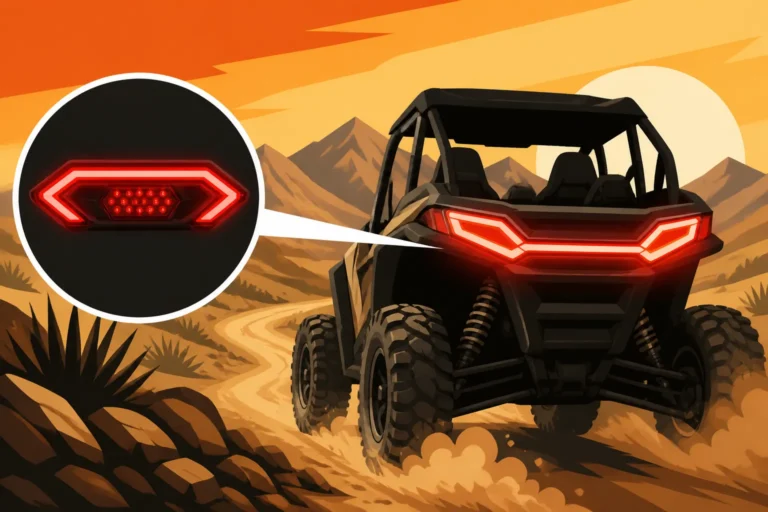
To be considered for road use with the Large ATV decal, your machine needs to have several key pieces of equipment. First and foremost, you need proper lighting. This includes functional headlights that illuminate the road ahead, as well as taillights that are visible from the rear, especially crucial for riding at dusk or in low-light conditions. A visible stop lamp (brake light) is also mandatory, alerting drivers behind you when you're slowing down or stopping. Reflectors, strategically placed on the vehicle, provide additional passive visibility.
Beyond lighting, a horn is required to signal your presence to other vehicles or pedestrians. And perhaps one of the most commonly overlooked items for off-road machines when considering road use is a rearview mirror. Just like in a car, you need to be able to see what's behind you. Many stock UTVs might have basic lights, but often lack a proper horn, functional brake light, or suitable mirrors. This is where aftermarket companies like SuperATV shine, offering a wide array of street-legal kits and individual components such as DOT-compliant mirrors, loud horns, and integrated turn signal kits that can help bring your UTV up to snuff. These upgrades address common pain points for riders trying to meet these specific regulations. For detailed information on what Nevada mandates, check out [Nevada Headlight Requirements for Road Use] and [Nevada Mirror Requirements for a Road UTV]. Ensuring all these components are properly installed and functional isn't just about avoiding a ticket; it's about your safety and the safety of everyone else on the road.
Other Critical Components: Tires, Muffler, Spark Arrester
Beyond the core lighting and signaling equipment, there are other crucial components that often come into play for road legality. Tires are a big one. While your aggressive off-road tires are fantastic for gripping loose terrain, they might not be ideal, or even legal, for sustained pavement use. Some states require DOT-compliant tires for road use, meaning they've met specific safety standards for highway speeds and conditions. While Nevada's "Large ATV" rules focus more on the other equipment, it's always wise to consider how your tire choice impacts safety and handling on pavement. Riding on strictly off-road tires can lead to premature wear, reduced traction on wet surfaces, and an overall less stable ride on hard-packed roads. For more on tire considerations, especially if you also ride dunes, see [DOT Tires on a Machine That Rides Dunes].
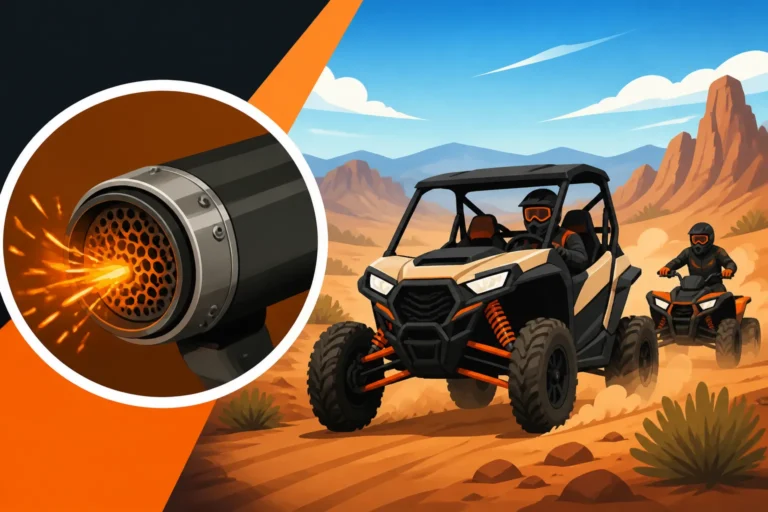
Additionally, your UTV must have a functional muffler to keep noise levels within acceptable limits. Nobody wants a roaring machine disrupting the peace of residential areas or quiet rural roads. And a spark arrester is absolutely mandatory. This device prevents hot carbon particles from exiting the exhaust system, significantly reducing the risk of wildfires – a critical concern in Nevada's dry climate, whether you're on a paved road or a dirt trail. Ensuring your exhaust system is properly maintained and equipped with a spark arrester is a non-negotiable safety measure.
Where Can a "Large ATV" Legally Ride in Nevada?
Even with the special "Large ATV" decal and all the required equipment, your UTV isn't suddenly free to roam every road in Nevada. The state maintains specific restrictions on where these machines can operate, largely differentiating between types of roads and allowing local jurisdictions to impose further limitations.
Understanding County and State Road Designations
The key to understanding where your decal allows you to ride lies in distinguishing between state highways, general county roads, and minor county roads. Generally, Nevada's state highways (like US routes or numbered state routes) remain off-limits for Large ATVs, save for the aforementioned two-mile access rule. These are typically higher-speed, higher-traffic thoroughfares that are deemed unsuitable for OHV travel.
However, the "Large ATV" decal primarily grants access to what Nevada designates as general county roads and minor county roads. These are the less-traveled, often unpaved or minimally paved roads that crisscross rural Nevada, connecting communities and providing access to vast stretches of public land. Imagine the roads leading to a remote cabin, a fishing spot, or an isolated trailhead – these are often the types of roads where a Large ATV is permitted. The intent here is to facilitate travel for those living in rural areas or accessing recreational lands without requiring them to trailer their machines for every short trip on a local road. For a clearer picture of these distinctions, refer to [Nevada's General and Minor County Roads] and [Which Nevada County Roads Qualify for ORVs]. This framework aims to balance the needs of OHV enthusiasts with general public safety and infrastructure limitations.
Local Ordinances and Restricted Areas
This is where things can get even more localized and, frankly, frustrating. While the state provides the general framework, individual cities and counties in Nevada retain the power to enact their own ordinances that can further restrict or even prohibit OHV use on roads within their specific boundaries. This means that a road that is perfectly legal for your Large ATV in one county might be completely off-limits just across the county line.
For example, bustling urban centers like Las Vegas, Reno, Henderson, and Sparks often have strict prohibitions against OHV use on city streets, regardless of whether your UTV has a Large ATV decal. These ordinances are put in place due to high traffic volumes, pedestrian safety concerns, and the general urban environment not being conducive to OHV operation. Even in some more rural counties, specific roads or residential areas might be designated as no-OHV zones. A prominent example is [Washoe County Ordinance 1507], which significantly restricts OHV access on county roads in certain areas. It's not enough to know the state law; you absolutely must check with the local city or county government's ordinances for the specific area you plan to ride. Ignorance of local law is no defense, and a costly ticket can quickly sour a fun day of riding. This is why it's crucial to be aware of [Nevada Cities That Require Designated OHV Routes] and [Nevada Counties That Ban OHVs on County Roads] before you head out.
Driver Requirements, Insurance, and Enforcement
Riding your Large ATV on designated Nevada roads isn't just about the machine; it's also about the operator. The state has specific requirements for drivers, passengers, and insurance, and law enforcement is vigilant in ensuring these rules are followed to maintain safety on public roads.
Licensing, Age, and Passenger Rules
If you're going to operate a Large ATV on any public road in Nevada, even a minor county road, you absolutely need to possess a valid driver's license. This isn't like off-road riding where, with proper supervision, younger riders might be able to operate a machine without a license. On public roads, you are sharing the space with other licensed drivers in traditional vehicles, and the state expects the same level of driver competency and accountability. This is clearly outlined in [Nevada Driver's License Rules for UTV Road Use].
Furthermore, there are age restrictions for both drivers and passengers. While the specific age for operating an OHV off-road might vary, for road use, the driver must meet the minimum age for a valid driver's license. As for passengers, particularly minors, rules often dictate supervision requirements for younger riders. For instance, children might need to be of a certain age and size to be a passenger, and there can be explicit rules about how children are restrained. If you're riding with younger family members, it's vital to know the [Nevada Minimum Age to Ride Off-Road] rules and how they apply to road-legal operations, as these rules are designed for their safety.
Insurance and What Deputies Look For
Just like any other vehicle operating on public roads in Nevada, your Large ATV must carry liability insurance. This is a non-negotiable requirement. While off-road machines don't always demand insurance for solely off-road operation (though it's always a good idea!), the moment you put tires on a public road, even a minor county road, you fall under the state's motor vehicle insurance laws. This insurance protects you and others in the event of an accident. You should always carry proof of this insurance with you, along with your driver's license and your Large ATV decal registration. This is consistent with [Insurance and Nevada OHV Registration] requirements.
When a Nevada Trooper, county deputy, or even a BLM ranger stops you on a county road, they'll be looking for a few key things. First, they'll check for your driver's license and proof of insurance. Next, they'll verify that your machine has a valid Nevada OHV decal and, if you're on a county road, the specific "Large ATV" decal. Then, they'll likely conduct a quick visual inspection to ensure your machine has the required safety equipment: headlights, taillights, brake light, horn, and mirrors. They're looking for compliance with the law and for safe operation. Operating a Large ATV on roads without the proper decal, insurance, or equipment is a surefire way to receive a citation for [Nevada Rules for Riding Where You Should Not], and it can be an expensive lesson. Knowing [What a Nevada Trooper Looks For on a County Road] can help you prepare for any roadside interaction. It’s also a good idea to have a secure place on your UTV, perhaps a weatherproof storage box from SuperATV, to keep your essential documents safe and dry during your rides.
Common Misconceptions and Out-of-State Plates
The quest for street legality often leads riders down paths of misinformation, particularly regarding out-of-state registrations and the effectiveness of "street legal kits." It's crucial to separate fact from fiction to avoid legal pitfalls and wasted money.
The Myth of Plating Out-of-State to Ride Nevada
One of the most persistent myths in the OHV community is the idea that if you register and plate your ATV or UTV in another state—like Montana or South Dakota, which have more lenient street-legal laws—you can then legally ride it on any road in Nevada. This is simply not true. While Nevada does offer some reciprocity for off-road registration decals from other states for a limited time (typically 15 days for visitors), this does not extend to full street legality on paved public roads.
Nevada's traffic and vehicle laws apply to all vehicles operating within its borders, regardless of where they are registered. If your ATV or UTV does not meet Nevada's specific definition of a "Large ATV" and possess the corresponding decal, it cannot legally operate on Nevada's paved county roads beyond the two-mile access rule, even if it has a Montana or South Dakota license plate. Out-of-state plating services might promise "street legal" status, but that status is generally only valid in the state where it was issued, or for travel in states that recognize that specific class of vehicle as street legal on their roads. Nevada is quite particular about its OHV laws, and an out-of-state plate typically will not override them for full street access. Understanding [Why a Montana Plate Does Not Help in Nevada] and researching the specifics of [Out-of-State Plating Services and Nevada Law] will save you significant headaches and potential fines.
Why the "Street Legal Kit" Alone Isn't Enough
Another common misconception revolves around "street legal kits" themselves. Many reputable aftermarket companies, including SuperATV, offer fantastic kits that provide all the necessary components to equip your UTV with turn signals, a horn, mirrors, and even DOT-approved windshields. These kits are invaluable for making your machine safer and for helping it meet the equipment requirements if it otherwise qualifies for road use.
However, simply installing a street legal kit does not automatically make your ATV or UTV "street legal" in Nevada. The state's primary hurdle is the statutory definition of a "Large All-Terrain Vehicle" (four seats or a truck bed). If your machine, like a two-seat sport quad, does not fit this fundamental definition, no amount of aftermarket equipment will change its legal classification for road use in Nevada. The kit provides the hardware, but the state provides the legal framework. You need both. The kit is a vital step for a qualifying Large ATV, but it's not a magic bullet that circumvents the state's core regulations. Riders often purchase these kits with the best intentions, only to find out their base vehicle still doesn't qualify for the special decal needed for road access. It's crucial to confirm your UTV meets the "Large ATV" criteria first, and then invest in a quality street legal kit to meet the equipment standards.
Nevada OHV Road Use at a Glance
To help consolidate the information, here’s a quick overview of key considerations for road-legal OHV use in Nevada:
| Feature | Standard ATV/2-Seat Sport UTV | Large All-Terrain Vehicle (4+ Seats or Truck Bed) |
|---|---|---|
| Full Street Legal | Generally No | Limited/Conditional |
| Primary Use | Off-Road Only | Off-Road & Designated County Roads |
| Road Access (Limited) | 2-mile limit for crossing/accessing trails | 2-mile limit & wider access on qualifying county roads |
| Nevada Decal Required | Yes (standard OHV decal for off-road use & road access) | Yes (standard OHV decal + special "Large ATV" decal) |
| License Plate | No | No (Special decal issued instead) |
| Driver's License | Required for 2-mile road access | Required for all road use |
| Liability Insurance | Recommended for off-road, Required for 2-mile road access | Required for all road use |
| Required Equipment | Basic (lights for night riding, spark arrester for trails) | Extensive (Headlights, Taillights, Stop Lamp, Reflectors, Horn, Mirrors, etc.) |
| Local Restrictions | Often strict city/county bans on any road use | Still subject to city/county ordinances and bans |
| Out-of-State Plates | Not recognized for full street legal status in Nevada | Not recognized for full street legal status in Nevada |
Disclaimer
This article is for general informational purposes only and does not constitute professional advice. Laws, prices and regulations vary by location and change over time. Consult a qualified professional for guidance on your specific situation.