Roads Lincoln County Closes to Travel Along
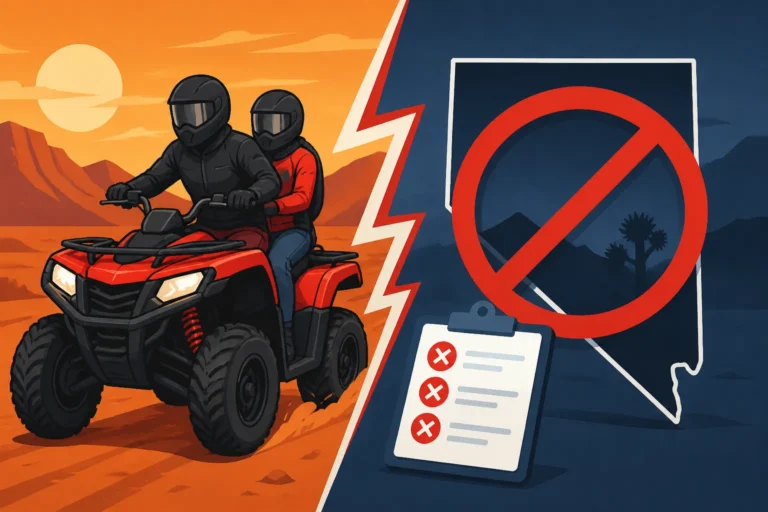
One of the biggest head-scratchers for off-highway vehicle (OHV) enthusiasts in Nevada is figuring out exactly where you can legally ride your ATV or UTV on public roads. It's not a simple statewide "yes" or "no," and local ordinances, especially in counties like Lincoln, can throw a real wrench into your weekend plans. This guide is here to clear up the confusion, specifically focusing on the roads in Lincoln County that are off-limits to your off-road machine, helping you avoid tickets and enjoy the incredible Nevada backcountry responsibly.
Understanding Nevada's OHV Road Rules: The Statewide View
Before we dive into the specifics of Lincoln County, it’s crucial to understand the overarching framework Nevada has for allowing off-highway vehicles on public roads. It's a system designed to bridge the gap between trail riding and accessing amenities, but it's full of nuances that can trip up even experienced riders. The general idea is that certain OHVs, specifically "large ATVs" (a term we'll unpack in a moment), can be granted limited access to specific types of public roads. This isn't about making your quad street-legal in the traditional sense, like a car or motorcycle; it's a designated exception for specific scenarios.
The Nevada Department of Motor Vehicles (DMV) oversees the registration and titling of OHVs, and they're also the ones who issue the special "large ATV" decal that signifies your machine is equipped and allowed on certain public roads. Without this specific decal, you're generally restricted to off-road trails and private land, with very few exceptions. Many riders assume their regular OHV registration is enough, but for road use, it's a whole different ballgame.
The "Large ATV" Definition and Why It Matters
The very first hurdle you'll encounter when considering road use for your OHV in Nevada is understanding what the state legally defines as a "large ATV." This isn't just about the physical size of your machine; it's a specific legal classification found in [What Nevada's NRS 490.043 Counts as a Large ATV]. Essentially, Nevada law limits road access to machines that meet certain criteria, primarily focusing on safety features and utility.
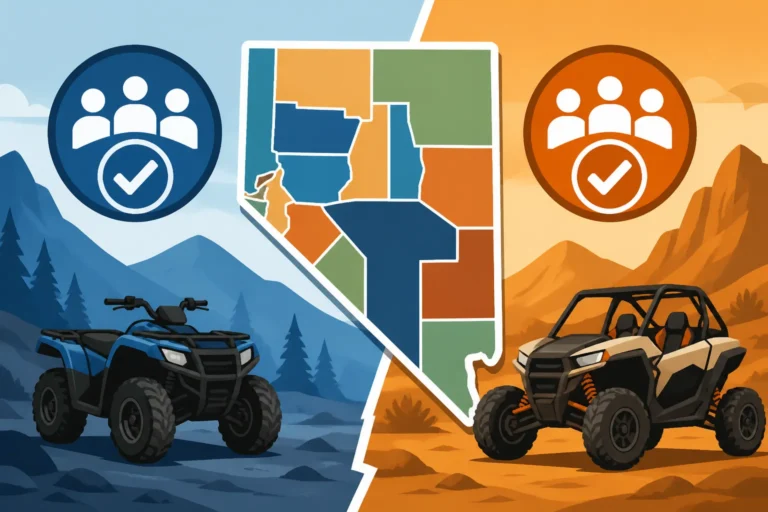
A "large ATV" is typically a side-by-side (UTV) that has at least four wheels, a steering wheel, non-straddle seating for at least two people, and a minimum curb weight of 900 pounds. Crucially, it must also have a bed or cargo box with a minimum volume of six cubic feet OR be designed by the manufacturer to carry four or more passengers. This distinction is vital because it immediately rules out most traditional sport quads, even if they have modifications like turn signals and horns. For instance, your two-seat sport quad, no matter how much you've customized it, simply won't qualify for a [Nevada Large ATV Decal] because it lacks the necessary cargo bed or four-person seating capacity. It's a common frustration, but it's the law. Many riders invest in heavy-duty accessories from companies like SuperATV to enhance their UTVs, but remember, no amount of aftermarket parts will change its fundamental classification if it doesn't meet the state's initial definition.
General Restrictions on Paved Roads
Even if your machine qualifies as a "large ATV" and has the necessary decal, you're not free to roam every paved road in Nevada. The state has strict limitations on where and how these machines can operate. Generally, large ATVs are allowed on minor county roads and some city-designated routes. However, there's a significant restriction: you cannot ride along state highways or interstates, except to cross them at a designated intersection. Furthermore, there's a [Nevada's 2-Mile Limit on Paved Highway] for continuous travel on any paved road. This means you can't just cruise for miles on an open highway to get to your favorite trail system.
Many riders get caught out by this "crossing" versus "riding along" distinction. You can approach a state route, cross it safely at a traffic light or stop sign, and then continue on the dirt or a designated county road. What you cannot do is turn onto that state route and drive parallel to it for any significant distance, even if it feels like a less-traveled road. These rules are in place for safety, as OHVs are designed for off-road environments and often lack the speed, braking, and crash protection of conventional street-legal vehicles. The penalties for violating these general rules can range from a warning to a hefty fine, so it's always best to be absolutely sure of your route.
Navigating Lincoln County's OHV Road Closures
Lincoln County, like many rural counties in Nevada, has a vast network of dirt roads and trails that are fantastic for OHV riding. However, it's also a county that has exercised its right to restrict OHV travel on specific paved and unpaved roads within its jurisdiction. This means that even if your UTV meets the "large ATV" definition and you have the decal, you still need to be aware of local ordinances. What might be legal in one part of the state might be explicitly forbidden in Lincoln County. The county's rationale often revolves around public safety, preserving infrastructure, or managing traffic flow, especially in and around its small towns.
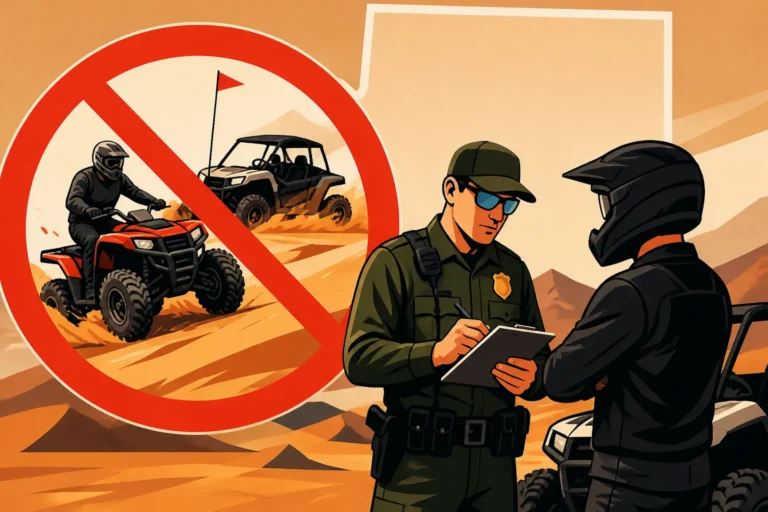
Lincoln County deputies and local law enforcement are well-versed in these local rules and aren't shy about enforcing them. Ignorance of a local ordinance is rarely an accepted excuse for a citation. This makes pre-ride planning absolutely essential, especially if you're exploring a new area. Relying solely on a general state map won't cut it; you need to find specific information about Lincoln County's OHV road rules.
Specific Roads You Cannot Ride Along in Lincoln County
Lincoln County has specifically identified several roads and highways where OHV travel is prohibited, even for properly registered and equipped "large ATVs." A primary example is [US 93 and the Roads You Cannot Ride Along]. US 93, being a major federal highway that traverses much of the county, is a definite no-go for OHVs. While you might be able to cross it at an intersection, riding along its paved shoulders or travel lanes is illegal. This is critical for riders planning trips to areas like Pioche, Caliente, or Alamo, as US 93 is the main artery connecting these communities.
Beyond US 93, many of the smaller state routes that connect to it, such as sections of SR 317, SR 318, and SR 375 (the Extraterrestrial Highway), often have similar restrictions. While some sections of these roads might pass through very remote areas, they are still considered state highways by law. The best practice is to assume that any numbered state route (e.g., "SR 317") is off-limits unless explicitly designated otherwise by county or state signage for OHV use. This is where local knowledge or an up-to-date county map specifically detailing OHV access becomes invaluable. The intent is to keep OHVs off high-speed, high-traffic corridors where they pose a safety risk to themselves and other motorists. When in doubt, stick to marked dirt trails or established county roads clearly identified as open for OHV use.
How to Confirm Open Routes and Avoid Fines
So, how do you make sure you're on a legal road and not heading for a ticket? It takes a bit of homework, but it's well worth the effort.
First, your primary resource should be the Lincoln County Sheriff's Office or the county's public works department. Often, these offices can provide maps or direct you to online resources that outline current OHV road ordinances. They are the ultimate authority on local restrictions. Don't be afraid to make a phone call before you head out. Additionally, many local OHV clubs or visitor centers in towns like Pioche or Caliente are excellent sources of information. These folks live and ride in the area and often know the nuances that aren't always clearly marked on every map.
Second, look for official signage. When a road is open for OHVs, it will typically have signage indicating permissible use, often with speed limits or other conditions. Conversely, signs explicitly prohibiting OHV use will also be posted. Pay close attention to these signs, as they override any general assumptions. Even a well-equipped UTV with SuperATV mirrors and a horn needs to respect posted prohibitions.
Finally, utilize online mapping tools, but with a critical eye. Many trail mapping apps show OHV trails, but they don't always distinguish between state highways and county roads, or account for specific county-level prohibitions. Cross-reference any planned route with official county information. For instance, if you're planning on [Riding County Roads Around Pioche] or [Riding County Roads Around Caliente], verify those specific routes. Remember, a common pitfall is assuming that because a road looks like a dirt track, it's open. Some county roads, even unpaved ones, might be closed by ordinance, or might be private property, so always confirm.
Equipment and Preparedness for Lincoln County Riding
Getting your OHV ready for any potential road use in Nevada, especially in a county with specific regulations like Lincoln, goes beyond just having the right decal. It's about ensuring your machine is safe, visible, and compliant with all state-mandated equipment requirements. Even if you're only planning to use a short stretch of road to connect trails, being fully equipped is not just about avoiding fines, but about your safety and the safety of others on the road. Remember, a deputy isn't just looking for a decal; they're also checking for the required safety gear.
The high desert environment of Lincoln County also demands specific preparedness. Distances between towns can be vast, cell service is often nonexistent, and weather conditions can change rapidly. Being properly equipped means being ready for both legal compliance and the realities of backcountry travel.
Essential Gear for Road-Legal Machines
For any "large ATV" permitted on Nevada's county roads, a specific set of equipment is legally required. This isn't optional; it's what differentiates a trail machine from one allowed on the pavement.
Here’s a checklist of what you'll need:
- Headlights and Taillights: These must be functional and visible from a distance of 500 feet. Many UTVs come standard with these, but ensure they are in good working order. Upgraded LED lights, perhaps from SuperATV, can provide even better visibility and comply with the [Nevada Headlight Requirements for Road Use].
- Brake Lights (Stop Lamp): A functioning stop lamp that illuminates when the brakes are applied is mandatory. This is crucial for signaling to other vehicles. [The Stop Lamp a Nevada Road Machine Needs] is not just a suggestion; it's a requirement.
- Reflectors: At least one red reflector must be mounted on the rear of the machine, visible from 200 feet. If your taillights don't already incorporate adequate reflectors, you'll need to add one. You can read more about [Nevada Taillight and Reflector Rules].
- Horn: A working horn is essential for warning other drivers or pedestrians. It doesn't need to be a blaring train horn, but it must be clearly audible.
- Mirrors: At least one rearview mirror is required. Many riders opt for a full set of side mirrors, which significantly improve situational awareness on the road.
- Muffler and Spark Arrester: Your OHV must be equipped with a muffler that meets state sound limits and a spark arrester. This is important for both noise control and preventing wildfires, especially in the dry Nevada environment. [Spark Arresters on Nevada Roads] are a must-have.
- Seatbelts/Restraints: If your UTV has seatbelts, they must be worn by all occupants while on any public road.
- DOT-Approved Tires: While not always strictly enforced for short stretches, having tires that are Department of Transportation (DOT) approved is best practice for road use, as they are designed for pavement wear and traction.
It’s worth noting that if you have a passenger, they also need to be properly secured and adhere to any [Nevada Helmet Rules for Passengers] if applicable to the specific road type.
Planning Your Route Around Closures
Effective route planning in Lincoln County means more than just finding trails; it means understanding how to legally access them and what roads to explicitly avoid.
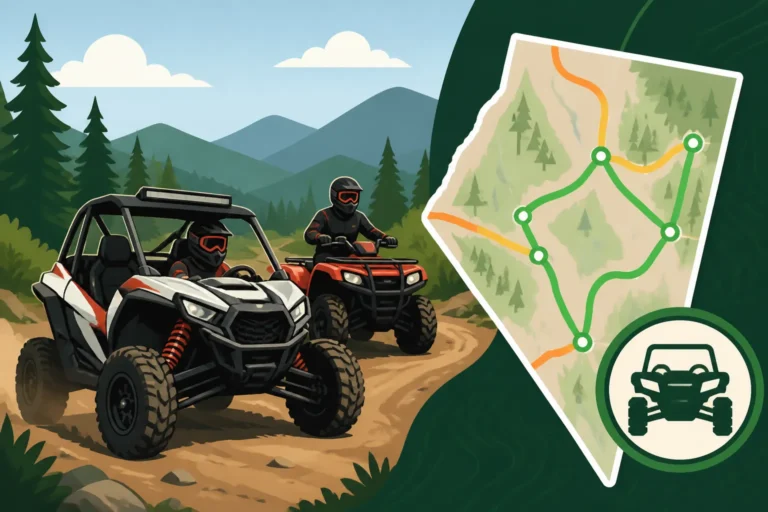
- Detailed Maps: Invest in detailed topographic maps or utilize GPS units with preloaded trail maps that differentiate between state highways, county roads, and private property. Print physical maps as a backup, as electronics can fail or lose signal.
- Official Sources First: Always consult official Lincoln County resources (Sheriff's Office, County Clerk) for the most up-to-date information on road closures or restrictions. A quick call can save you a lot of trouble.
- Identify Connection Points: Instead of trying to ride long distances on paved roads, identify the shortest, legal connections between trail systems. This might involve trailering your machine to a trailhead closer to your desired riding area, rather than trying to ride it all the way from town.
- Know Your Destination's Rules: If you're riding into or near any of Lincoln County's small towns like Caliente, Pioche, or Panaca, be aware that these municipalities may have their own additional restrictions on OHV travel within town limits, even on county roads. [Nevada Cities That Require Designated OHV Routes] often have very specific rules.
- Emergency Preparedness: Beyond legal compliance, carry essential emergency gear: extra water, fuel, a first-aid kit, tools, and communication devices (satellite messenger if cell service is spotty). Breaking down or getting lost in the Lincoln County backcountry can quickly turn serious.
By meticulously planning your route, equipping your machine properly, and respecting local regulations, you can have an amazing and legal OHV experience in Lincoln County, enjoying the vast and beautiful landscape without the worry of an unexpected citation.
Table: Lincoln County Road Restrictions Quick Reference
To help you keep track, here's a quick reference for common road types and their general OHV access status in Lincoln County, assuming your machine is a "large ATV" with a valid Nevada Large ATV Decal and all required equipment.
| Road Type | General Status for "Large ATVs" (Lincoln County) | Key Considerations |
|---|---|---|
| Interstate Highways (e.g., I-15 through county corner) | Prohibited | No riding along, only crossing at designated intersections. Extremely high speed and traffic. |
| U.S. Highways (e.g., US 93) | Prohibited | [US 93 and the Roads You Cannot Ride Along]. Only crossing at designated intersections. Major throughfare. |
| State Routes (e.g., SR 317, SR 318, SR 375) | Generally Prohibited | Treat as off-limits unless explicitly signed otherwise by county ordinance. Crossings allowed. |
| Minor County Roads (unpaved) | Generally Permitted | Most unpaved, less-traveled county roads are open, but check local ordinances for specific closures. Look for signage. |
| Minor County Roads (paved) | Permitted with Restrictions | Subject to the [Nevada's 2-Mile Limit on Paved Highway] and local ordinances. Confirm with county officials. |
| City/Town Streets (within Pioche, Caliente) | Highly Restricted/Prohibited | May have specific ordinances limiting or banning OHV use. Only designated routes for access to services are rare. Confirm. |
This table serves as a general guide, but local ordinances can change. Always verify your specific route with Lincoln County officials. For example, if you're trying to figure out [Riding From Logandale Town to the Trailhead] (though Logandale is in Clark County, the principle applies), you'd check that town's specific rules.
Disclaimer
This article is for general informational purposes only and does not constitute professional advice. Laws, prices and regulations vary by location and change over time. Consult a qualified professional for guidance on your specific situation.