Which Nevada County Roads Qualify for ORVs
Riding your ATV or UTV in Nevada is an incredible experience, but the question of where you can legally take your machine on public roads is often a huge headache. It feels like a maze of rules, county ordinances, and whispered advice that leaves many riders scratching their heads, worried they'll get a ticket just for trying to get to the trailhead. This guide is here to untangle that web, helping you understand which Nevada county roads qualify for off-road vehicle (ORV) use and how to prepare your machine for a legal cruise.
Understanding Nevada's ORV Road Laws
Nevada has made strides in recent years to clarify where off-highway vehicles can and cannot operate on public roads, recognizing the popularity of these machines for recreation and access. However, it's not a blanket "yes" or "no" for all roads. The laws are designed to balance public safety, road infrastructure, and the enjoyment of our vast open lands. Understanding the core statutes is the first step to knowing your rights and responsibilities.
The Foundation: Nevada Revised Statutes (NRS) 490
The backbone of Nevada's ORV laws lies primarily in Nevada Revised Statutes (NRS) Chapter 490, which specifically addresses off-highway vehicles. This chapter defines what an ORV is, sets forth registration requirements, and importantly, outlines the conditions under which these machines can operate on certain paved and unpaved public roads. It's a critical piece of legislation that every Nevada ORV owner should be at least passingly familiar with, as it dictates everything from your [Registering an ATV in Nevada] to what equipment you need to ride legally. Without this foundation, trying to interpret county-specific rules can feel like building a house without a blueprint.
The NRS attempts to create a framework that allows for limited road use without turning every street into an open ORV playground. The intent is generally to provide access to trailheads or connect riding areas, not for commuting or extensive road travel. This is a crucial distinction and often the source of confusion. Many riders mistakenly believe that if a machine is registered, it's automatically street legal everywhere, which simply isn't the case in Nevada for most ATVs and UTVs.
Differentiating "Highway" and "County Road"
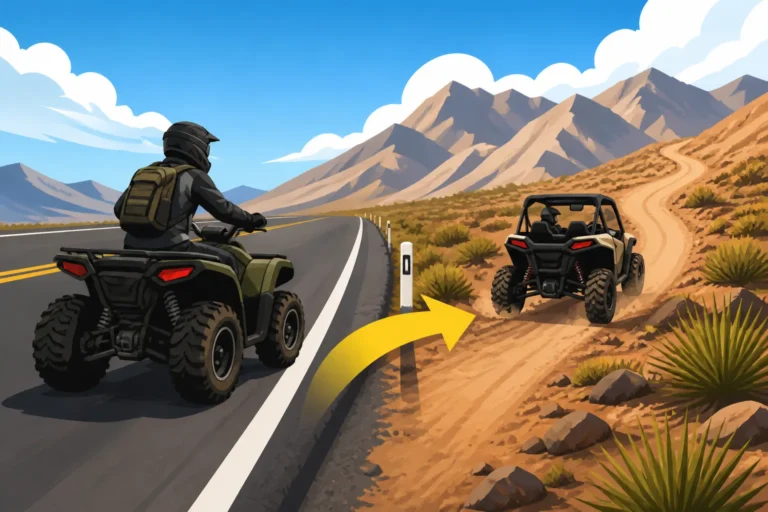
One of the biggest areas of confusion revolves around the terms "highway" and "county road." In common parlance, we often use "highway" to mean any paved road. However, Nevada law distinguishes between different types of roads, and this distinction is absolutely critical for ORV operators. A "highway" in the legal sense often includes state routes, U.S. routes, and interstate highways, where ORVs are generally prohibited except for limited, perpendicular crossings. [Crossing a Highway on an ATV in Nevada] is typically allowed only if you go directly across and yield to all traffic.
"County roads," on the other hand, especially those designated as "minor county roads" or "general county roads" by individual county ordinances, are the primary focus for ORV road access. These are typically the less-traveled, often unpaved, or lightly paved roads that crisscross rural areas and provide access to vast tracts of public land. The key takeaway here is that you cannot assume any road is fair game; you must understand the legal definition of the road and whether the specific county has opted to allow ORV use on it. This means doing your homework before you ever put a tire on the pavement.
The "Large All-Terrain Vehicle" Definition and What It Means for Roads
Nevada doesn't just categorize machines as "ATV" or "UTV"; for road use, there's a specific legal designation that determines eligibility: the "Large All-Terrain Vehicle" (LATV). This definition is paramount because only machines that meet these stringent criteria can even begin to qualify for limited road use, and even then, only on specific county roads. It’s not about how cool your machine looks or how powerful it is, but about its fundamental design.
What Nevada's NRS 490.043 Counts as a Large ATV
Under NRS 490.043, a "Large All-Terrain Vehicle" has a very specific set of characteristics. This isn't just a casual description; it's a checklist that your machine must meet to be considered for road use. Generally, it's defined as a utility terrain vehicle (UTV or side-by-side) or a similar machine that meets specific size and design requirements. Key elements typically include:
- Four or more wheels: This immediately rules out traditional two-wheeled dirt bikes.
- A width of at least 50 inches: This is where many sport ATVs and some older, narrower UTVs get disqualified. The wider stance is generally considered a safety feature for road stability.
- Dry weight of at least 900 pounds but not more than 2,000 pounds: This weight range is critical. It distinguishes heavier UTVs from lighter ATVs and very heavy utility vehicles that might fall into other classifications.
- Seating capacity for at least two people, side-by-side: This is a major differentiator. Most traditional ATVs (quads) only have a single saddle seat or a small, non-integrated passenger seat. The side-by-side seating arrangement, often with a steering wheel and foot pedals, is characteristic of a UTV.
- A steering wheel and non-straddle seating: This is a clear line in the sand. If you straddle your machine like a motorcycle or traditional ATV, it's not a Large ATV under Nevada law.
Understanding [What Nevada's NRS 490.043 Counts as a Large ATV] is the first hurdle. If your machine doesn't meet these specs, then the conversation about riding county roads ends there for you.
Why a Two-Seat Sport Quad Fails Nevada's Test
It's a common misconception that because some ATVs are quite large and powerful, they can qualify as an LATV. Unfortunately, this is almost never the case. A two-seat sport quad, for instance, despite its size and often impressive performance, will almost always fail the Nevada LATV test. Why? Because it typically doesn't have side-by-side seating, it often lacks a steering wheel, and riders straddle the machine.
Even if you have an aftermarket second seat, it's unlikely to change the fundamental classification under the law, which looks at the original design. These machines are designed for off-road recreation, not for the specific safety and operational characteristics that Nevada requires for road interaction. This is why [Why a Two-Seat Sport Quad Fails Nevada's Test] is a frequently asked question, and the answer, unfortunately for quad owners, is usually a firm no. It’s not a knock on quads themselves – they are fantastic machines for trails – but they simply don't fit the legal mold for road use in Nevada.
Designated County Roads: How Nevada Counties Opt-In or Opt-Out
Nevada's approach to ORV road use is largely decentralized, meaning that while the state sets the general framework for LATVs, individual counties have the authority to designate which of their roads are open for ORV travel. This county-by-county decision-making can be a real challenge for riders who cross county lines frequently, leading to a patchwork of regulations.
Which Nevada County Roads Qualify for ORVs
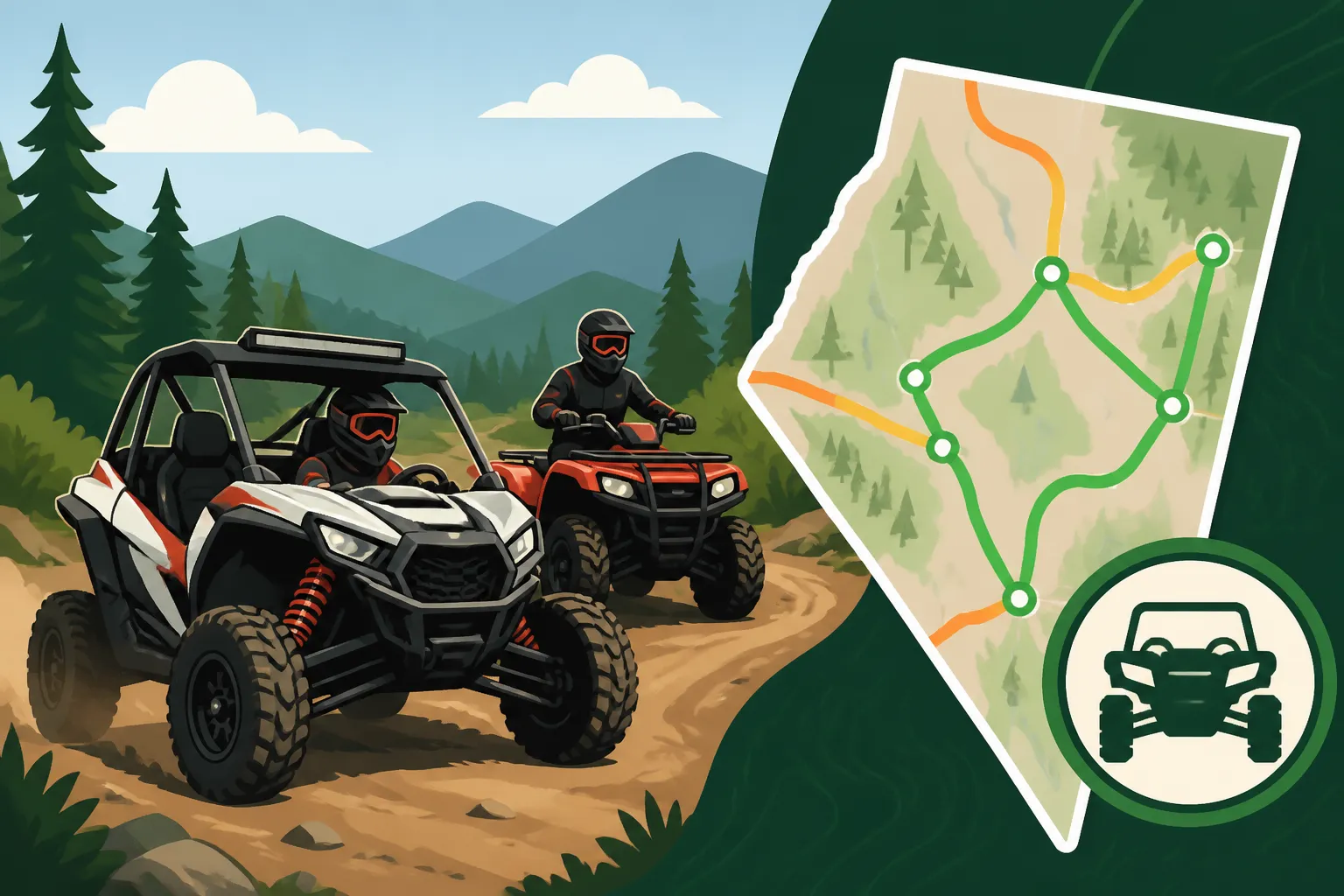
The power to designate which county roads are open for ORVs rests with the county commissions. They do this by enacting ordinances that specifically identify roads or classes of roads where LATVs are permitted. These are typically:
- Minor County Roads: Often unpaved, low-traffic roads in rural areas.
- General County Roads: Some counties may extend access to certain paved, less-traveled county roads.
- Designated Routes: Some cities or counties might create specific, marked routes that allow ORVs to travel from a staging area to a trailhead, often bypassing dense urban areas.
It's important to remember that just because a road is "unpaved" or "rural" does not automatically make it open to ORVs. You absolutely must check the specific ordinances of the county you plan to ride in. A county might opt to open all minor county roads, or they might list them individually. The safest bet is always to consult the county's official website or call their public works department. For instance, [Washoe County Ordinance 1507] provides specific guidelines for ORV use within Washoe County, demonstrating how localized these rules can be. Many riders find that equipping their machines with accessories from a company like SuperATV, such as road-legal light kits or mirrors, is a proactive step, even before they know the exact road designations, just in case.
Nevada Cities That Require Designated OHV Routes
While counties have significant control, certain cities, especially larger ones, have the authority to implement even stricter rules within their municipal boundaries. Many Nevada cities over a certain population threshold (e.g., 100,000 residents) are specifically empowered to restrict ORV use even further, often requiring designated routes or outright prohibiting ORVs on city streets. This means that even if you're on a county road that leads into a city, your legal right to ride that road might abruptly end at the city limits.
For example, large metropolitan areas like Las Vegas, Reno, and Henderson have very tight restrictions, often limiting ORV travel to specific, clearly marked routes if any are allowed at all. The intention is to keep ORVs out of dense residential and commercial traffic for safety and noise concerns. If you're looking to ride [Reno Streets and Where OHVs Cannot Go] or navigate [Las Vegas City Limits and OHV Routes], you'll quickly find that designated trails are your only option, and street riding is severely limited or non-existent. Always research the specific city or town you plan to enter. Don't assume that just because you can ride on a county road outside of town, you can simply keep going once you hit city limits.
Navigating Specific County Road Scenarios and Common Misconceptions
The nuances of Nevada's ORV road laws can lead to a lot of questions and sometimes, incorrect assumptions. Let's dig into some common scenarios and clear up a few persistent myths that often trip riders up.
Riding to the Trailhead, Not to the Store
One of the most fundamental principles behind Nevada's allowance for ORV road use is access. The law is generally intended to permit LATVs to travel on designated county roads for the purpose of getting to a trailhead or connecting one off-highway riding area to another. It is not intended to allow you to use your UTV as a primary mode of transportation for errands, shopping, or cruising around town for leisure.
Think of it this way: are you riding [Riding to the Trailhead, Not to the Store]? If the answer is yes, and you're on a designated county road with a properly equipped LATV, you're likely within the spirit of the law. If your plan is to ride your UTV to the grocery store, then to the hardware store, and then to a friend's house across town, you're likely pushing beyond the intended use and could face issues, even if technically on an "open" road. Law enforcement officers often understand this distinction, and their discretion can come into play if they feel you're abusing the privilege.
Mesquite and Its Reputation for Open Streets
Mesquite, Nevada, is a unique case and often comes up in discussions about street-legal ORVs. It has gained a reputation among riders for being more accommodating to off-highway vehicles on its streets compared to other Nevada cities. This is largely due to specific local ordinances that permit greater freedom for ORV operation on certain city streets, effectively making parts of the city more "ORV-friendly."
However, even in Mesquite, it's not a free-for-all. There are still rules, designated routes, and areas where ORVs are restricted. It’s crucial to understand the specifics of [Riding the Street in Mesquite] and not assume the same leniency applies to all streets or to other Nevada towns. Mesquite's approach is the exception, not the rule, within Nevada. Riders should still operate their machines safely, responsibly, and with all required equipment, even in areas with more relaxed rules. Many riders in Mesquite utilize their UTVs to get from their hotels to local trailheads, a perfect example of the "access" principle in action.
Understanding the 2-Mile Limit on Paved Highways
While the focus for ORV road use is generally on county roads, Nevada law does provide for a very limited allowance for LATVs on state-maintained paved highways. This is often misunderstood, so let's clarify: it's not permission to joyride down U.S. 95. [Nevada's 2-Mile Limit on Paved Highway] specifically states that an LATV may operate on the extreme right side of a paved highway for a distance not to exceed 2 miles, only if it is necessary to cross the highway or to gain access to an area of operation.
This is a very restrictive provision. It's for connecting two off-road trails separated by a short stretch of highway, or to get from one section of public land to another. It's not for traveling long distances. Furthermore, this 2-mile limit is not applicable within the boundaries of an incorporated city or town that has prohibited ORVs on its streets. If you exceed this 2-mile limit, or are found to be using the highway for purposes other than direct access, you are in violation of the law. This rule highlights that Nevada prioritizes off-road riding, with road travel being a means to an end, not an end in itself.
Essential Equipment and Driver Requirements for Road Use
Just because your LATV might qualify for a specific county road doesn't mean you can just hop on and go. Nevada has clear requirements for the machine itself and for the person operating it when riding on public roads. These rules are in place for safety and to ensure your ORV can interact predictably with other road users.
Equipment a Nevada Road-Legal Machine Needs
If you plan to take your LATV onto any public road in Nevada, even a designated county road, it must be equipped with certain safety features. These aren't optional extras; they are legal necessities. This list ensures visibility, proper signaling, and basic safety that other road vehicles possess. Key equipment includes:
- Headlights and Taillights: These must be visible from 500 feet, front and rear, respectively. They are essential for visibility, especially during dawn, dusk, or in dusty conditions. Many UTVs come with good lights, but ensure they meet the visibility standard.
- Stop Lamp (Brake Light): A working brake light is non-negotiable for signaling your intent to stop to traffic behind you.
- Reflectors: Often integrated into taillights, but additional reflectors may be required if the taillight doesn't meet specific visibility standards.
- Turn Signals: Essential for clearly indicating your intentions when changing lanes or turning. While many UTVs don't come stock with turn signals, aftermarket kits are readily available. SuperATV offers a variety of universal and model-specific turn signal kits that can help meet this requirement.
- Rearview Mirrors: At least one rearview mirror is typically required to allow the operator to see traffic approaching from behind.
- Horn: A functional horn is needed for signaling and warning other drivers.
- Muffler and Spark Arrester: While often thought of for trail use, a compliant muffler and spark arrester are also required on roads to control noise and prevent wildfires.
- Seat Belts: If your LATV has seat belts, they must be worn by all occupants.
Failing to have any of this required equipment can result in a citation. Before you hit the pavement, do a thorough check of your machine or consider adding an aftermarket kit to ensure full compliance.
The Driver's License Nevada Wants on Roads
Operating an LATV on a public road, even a designated county road, means you're driving a motor vehicle on public thoroughfares. As such, the operator must hold a valid driver's license. This isn't like off-road riding where you might let a supervised minor operate the machine; on a public road, the rules of the road apply fully.
A standard Class C (non-commercial) driver's license, the kind most people have for their cars, is typically sufficient. Learner's permits or temporary licenses may have restrictions that could impact their validity for ORV road use, so it's always best to have a full, unrestricted license. Remember, if you're pulled over by a deputy or trooper on a county road, they will expect to see a valid driver's license, just as they would if you were in a truck. [The Driver's License Nevada Wants on Roads] is a standard requirement that ensures the operator has demonstrated basic driving competency.
Insurance Nevada Requires for Road Use
Another critical requirement for operating an LATV on public roads is liability insurance. Just like a car or truck, if you're on a public road, you need to be covered. This ensures that in the event of an accident where you are at fault, there's coverage for damages or injuries to other parties. [Insurance and Nevada OHV Registration] is often a point of confusion because basic OHV registration doesn't always require insurance, but road use absolutely does.
Nevada Revised Statutes (NRS) 485.185 outlines the minimum liability insurance coverage required for motor vehicles in the state. You'll need to carry proof of this insurance with you whenever you're operating your LATV on a public road. This could be a physical insurance card or a digital copy on your phone. Without it, you could face fines and penalties, even if your machine is otherwise legally equipped and you're on a designated road. It's a non-negotiable safety net for everyone sharing the road.
Practical Tips for Planning Your Road-Legal ORV Ride
Navigating the complexities of Nevada's ORV road laws requires more than just understanding the regulations; it demands careful planning. A well-planned ride can be safe, legal, and incredibly fun, while a poorly planned one can lead to frustration, fines, and even danger.
Researching County Ordinances Before You Go
This cannot be stressed enough: do your homework! Before you ever trailer your machine or turn the key for a road-legal cruise, you absolutely must research the specific county ordinances for your intended riding area. Nevada's counties vary widely in their approach to ORV road use. What's legal in Lincoln County might not be allowed in Washoe County.
Start by visiting the county's official website, specifically looking for sections related to public works, transportation, or county code. Many counties will have specific maps or lists of designated roads. If you can't find clear information online, don't hesitate to call the county administrative office or the local Sheriff's office (non-emergency line) for clarification. Asking about [Elko County Roads Open to UTVs] or [Washoe County Roads and Large ATVs] directly will give you the most accurate and up-to-date information. Relying on outdated maps, forum discussions, or "I heard from a friend" is a recipe for trouble.
Carrying Your Paperwork Dry and Secure
When you're out on the trail or cruising a dusty county road, your important documents are vulnerable. Getting them wet, muddy, or lost is a major hassle and can complicate a roadside stop with law enforcement. Therefore, it's crucial to carry your driver's license, ORV registration card, and proof of insurance in a secure, waterproof container.
Many riders use small dry bags, waterproof cases, or even sealed plastic bags tucked into a glove box or storage compartment. Some choose to keep digital copies on their phone, but always have a backup plan for when cell service is spotty or your phone battery dies. Ensuring [Keeping Paperwork Dry in a Dusty Machine] is a small but important detail that can save you a lot of headache if you're asked for your documents.
Understanding Local Enforcement and Discretion
Finally, it's important to have a realistic understanding of how these laws are enforced. While laws are laws, local deputies and rangers often have some discretion, and their primary concern is typically public safety. If you're on a clearly marked, designated road, your LATV is fully equipped, you're driving responsibly, and you're using the road to access trails, you're unlikely to draw negative attention.
However, if you're speeding, driving erratically, operating an improperly equipped machine, or clearly using the road for non-access purposes (like cruising through a residential neighborhood), you're much more likely to be stopped. While some areas like [Riding County Roads Around Pioche] might feel very remote, law enforcement still patrols them. Being polite, having your paperwork in order, and operating your machine in a manner consistent with the law are your best defenses against a citation. Remember, they're looking out for everyone's safety, including yours.
| Feature / Requirement | Standard ATV/Quad | Large All-Terrain Vehicle (LATV/UTV) | Nevada Road Use Eligibility |
|---|---|---|---|
| Seating | Straddle | Side-by-side, non-straddle | Required for Road Use |
| Steering | Handlebars | Steering wheel | Required for Road Use |
| Width | Varies (often <50") | 50"+ (specific legal definition) | Required for Road Use |
| Weight | Varies | 900-2000 lbs (specific legal definition) | Required for Road Use |
| Headlights/Taillights | Often stock | Often stock | Required for Road Use |
| Brake Light | Often stock | Often stock | Required for Road Use |
| Turn Signals | Aftermarket only | Aftermarket commonly added | Required for Road Use |
| Rearview Mirrors | Aftermarket only | Aftermarket commonly added | Required for Road Use |
| Horn | Aftermarket only | Aftermarket commonly added | Required for Road Use |
| Driver's License | Not for off-road | Required for Road Use | Required for Road Use |
| Liability Insurance | Not for off-road | Required for Road Use | Required for Road Use |
| County Road Access | Generally NO | ONLY on designated roads | Conditional |
| Highway Access | Generally NO | LIMITED (2-mile rule) | Very Conditional |
Disclaimer
This article is for general informational purposes only and does not constitute professional advice. Laws, prices and regulations vary by location and change over time. Consult a qualified professional for guidance on your specific situation.