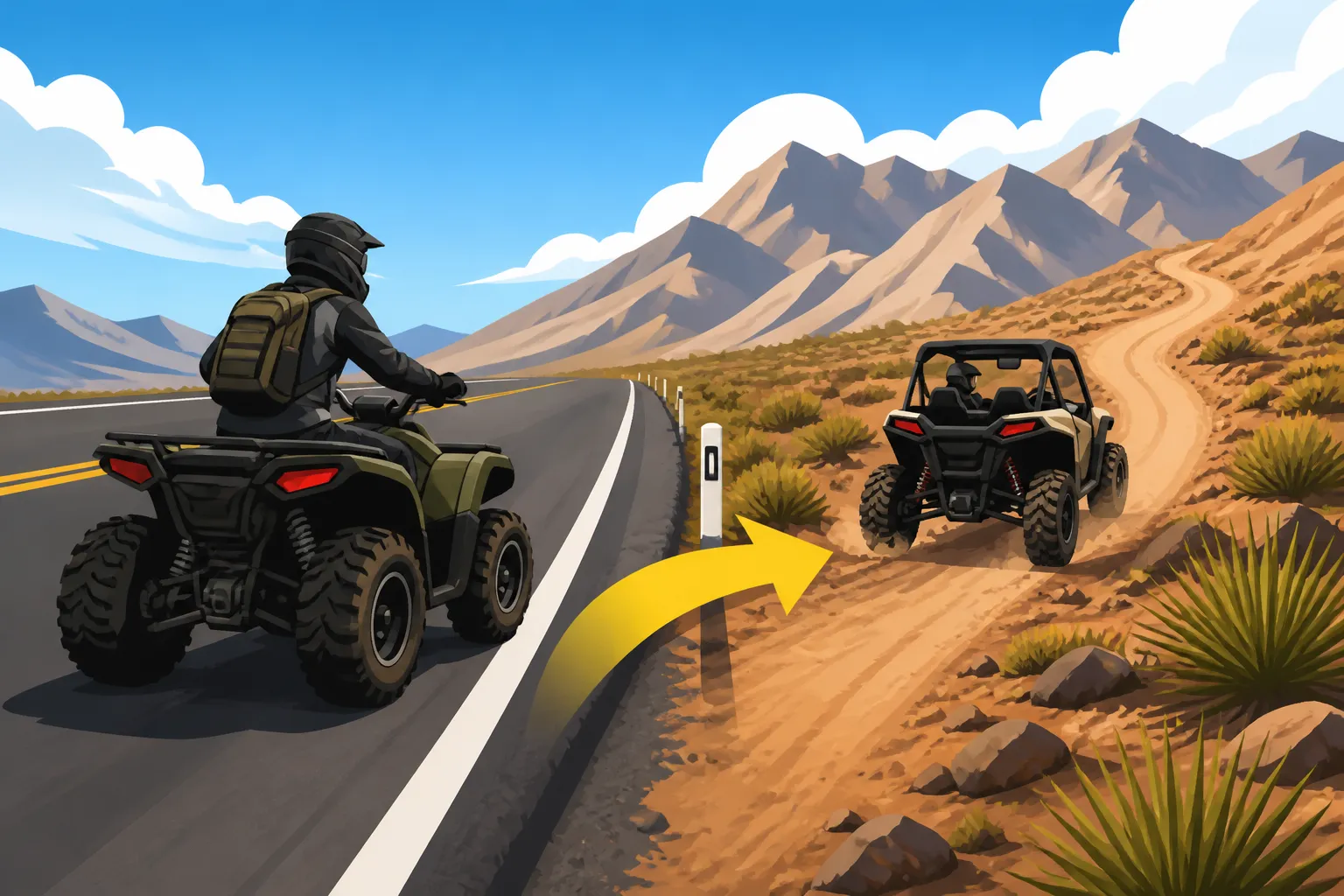
Riding a Paved Shoulder to Reach Dirt
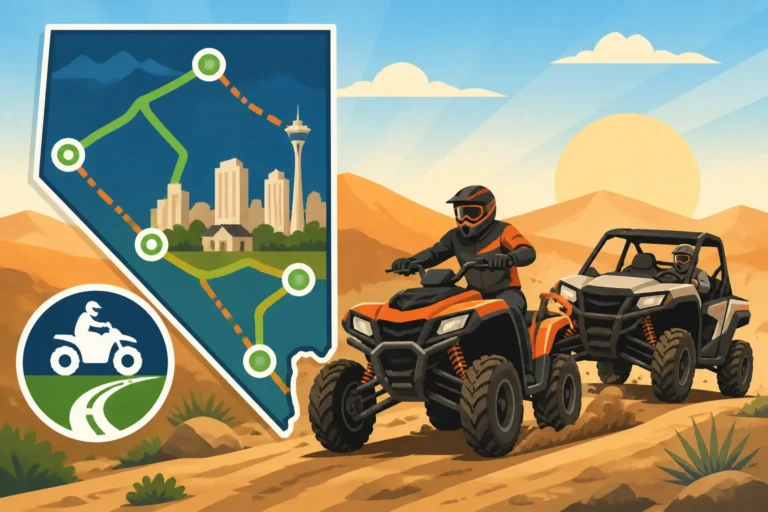
We've all been there: you're just a short hop from prime off-road territory, but there's a stretch of paved road, maybe just a shoulder, standing between your rig and the dirt. It's incredibly tempting to just drop your wheels off the trailer or roll out of your campsite and cruise that little bit of asphalt to get to the good stuff. But in Nevada, the rules around riding off-highway vehicles (OHVs) on paved shoulders can be a minefield of regulations, leading to confusion, frustration, and potentially costly tickets. This guide is here to untangle the complexities, clearly outlining what you can and cannot do when the dirt meets the pavement in the Silver State.
The Paved Shoulder Conundrum in Nevada
That seemingly innocent strip of asphalt on the edge of the road, the "paved shoulder," often feels like a natural extension of the trail, especially when the alternative is trailering your machine just a few hundred yards. But in Nevada, the law generally sees things differently. For most off-highway vehicles, a paved shoulder is still considered part of the public highway, and using it for casual travel is typically prohibited. This can be a huge source of confusion for riders, especially those new to the state or visiting from areas with different regulations. You might see others doing it, or it might just feel like the right thing to do to avoid driving your truck around the block, but understanding the letter of the law is crucial to avoiding a headache.
Nevada's General Stance on Off-Highway Vehicle Road Use
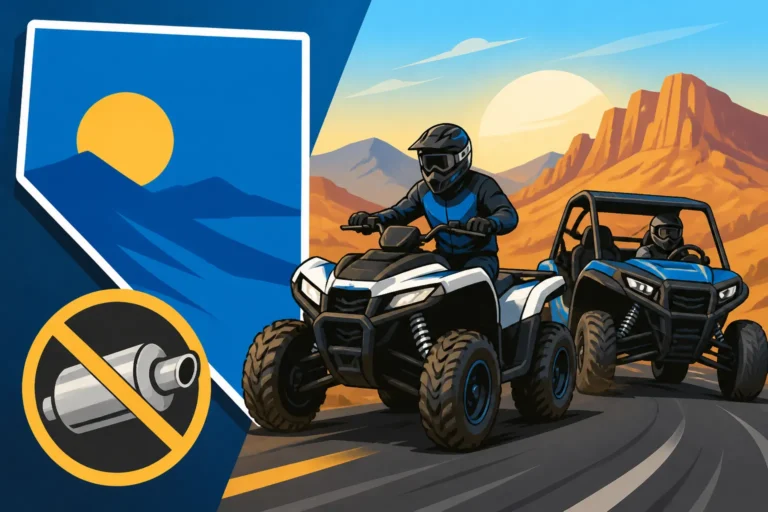
Let's be clear upfront: Nevada's default position is that ATVs and UTVs are not designed or legally permitted for general road use. They are off-highway vehicles, built for dirt, sand, and rock, not asphalt. When you register your machine in Nevada, you're getting a decal that permits you to ride on designated trails and public lands, not the streets and highways. This fundamental principle is the bedrock of all OHV road regulations in the state. Many riders assume that if they're just on the shoulder, they're "off the road," but that's a dangerous assumption to make. The intent of the law is to keep these machines, which lack many of the safety features of street-legal vehicles, off the primary transportation network.
Even if you've invested in a fantastic set of rugged tires or a robust suspension system from a brand like SuperATV to tackle the toughest Nevada terrain, those modifications don't magically confer street-legal status. The law is concerned with the classification of your vehicle and the specific rules governing where it can operate. The convenience of a short paved section should never override the need to understand and adhere to these regulations. Ignoring them isn't just a gamble; it's a direct path to potential fines and other legal troubles.
The Definition of a "Road" and "Shoulder" Under Nevada Law
In Nevada, the legal definitions can be a bit tricky, but they're essential to grasp. A "highway" or "roadway" isn't just the main travel lanes; it often includes the shoulders, median, and sometimes even the adjacent right-of-way. The Nevada Revised Statutes (NRS) are pretty explicit about what constitutes a "highway," and generally, paved shoulders fall squarely within that definition. This means that a deputy or state trooper viewing your ATV on a paved shoulder is likely to consider it an OHV operating illegally on a highway.
The distinction between a designated OHV route that happens to be paved (which is rare, but exists in specific, marked situations) and a general public road or its shoulder is critical. If you're on an unmarked paved shoulder, it's almost certainly considered part of the "highway" system, and your off-highway vehicle is not permitted to be there. This isn't about the type of surface, but about the legal designation of the thoroughfare itself. It’s important to remember that these rules are in place for safety, as OHVs handle very differently on pavement than they do on dirt, especially at typical road speeds. [What a Nevada Trooper Looks For on a County Road] might give you an idea of what kind of scrutiny you're under.
Specific Exceptions and Designated Routes
While the general rule is "no OHVs on paved shoulders," Nevada does offer very specific, limited exceptions. These are not broad permissions but carefully defined circumstances where an OHV can interact with paved roads. It's crucial not to mistake these narrow allowances for a free pass to ride on any paved surface. Understanding these nuances can save you a lot of grief, but it requires paying close attention to the details of your machine and the specific location you're riding in.
The "Large ATV" Designation and Road Eligibility
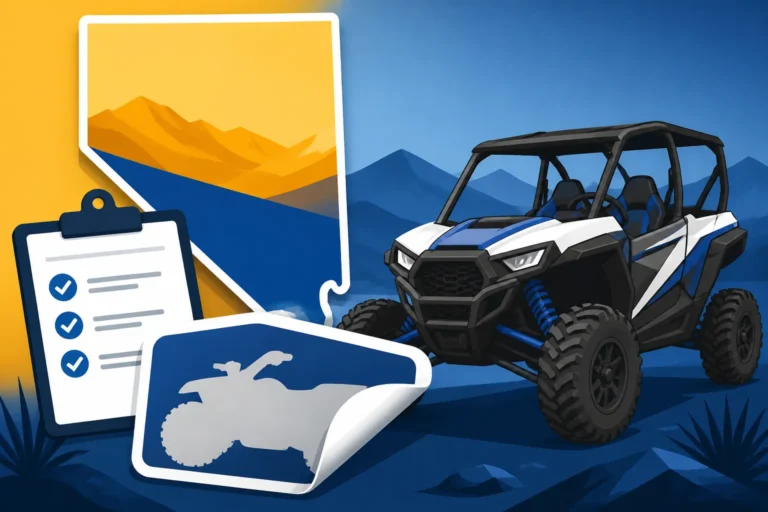
Nevada has a specific classification for what it calls "Large ATVs" under NRS 490.043. This designation primarily applies to UTVs (side-by-sides) that meet certain criteria, namely having at least four seats or a truck bed. If your UTV fits this description, and you choose to register it as a "Large ATV" with the Nevada DMV, you gain some limited privileges on minor county roads. This is a voluntary registration, and it comes with its own set of requirements, including specific equipment like headlights, taillights, brake lights, a horn, and mirrors, as well as liability insurance. [What Nevada's NRS 490.043 Counts as a Large ATV] explains this in more detail.
However, even with the "Large ATV" designation and decal, you're still generally restricted from interstates, state highways, and major arterial roads. You're limited to "minor county roads," and even then, local ordinances can further restrict or outright ban large ATVs. The paved shoulder of a state route, for instance, would remain off-limits, regardless of your "Large ATV" status. This designation is about carefully controlled access to specific, less-trafficked paved roads, not about general shoulder use. [Nevada County Roads Open to UTVs] offers more context on where these machines might be permitted.
The 2-Mile Rule: Crossing and Connecting
One of the most commonly misunderstood exceptions is Nevada's "2-mile rule." This rule allows an OHV to operate on a paved highway for a maximum of two miles solely for the purpose of crossing the highway or connecting two trails. It is not an invitation to ride parallel to the highway on the shoulder for an extended period, nor is it a way to commute to the gas station. This provision is designed to bridge very short, unavoidable gaps in the off-road trail system. [Nevada's 2-Mile Limit on Paved Highway] covers this in depth.
Even when utilizing this 2-mile exception, your OHV must meet specific safety requirements. This includes functional headlights, taillights, and brake lights, and generally, riders are expected to wear helmets. You also must have liability insurance. It's about minimizing risk during these brief transitions. You should always aim to complete this two-mile segment as quickly and safely as possible, getting back to the dirt as soon as practical. Using this rule to ride the shoulder for convenience beyond its strict intent is a surefire way to attract unwanted attention from law enforcement. The goal is connection, not travel, and certainly not riding the shoulder as if it were a dedicated trail.
Practical Realities and Enforcement
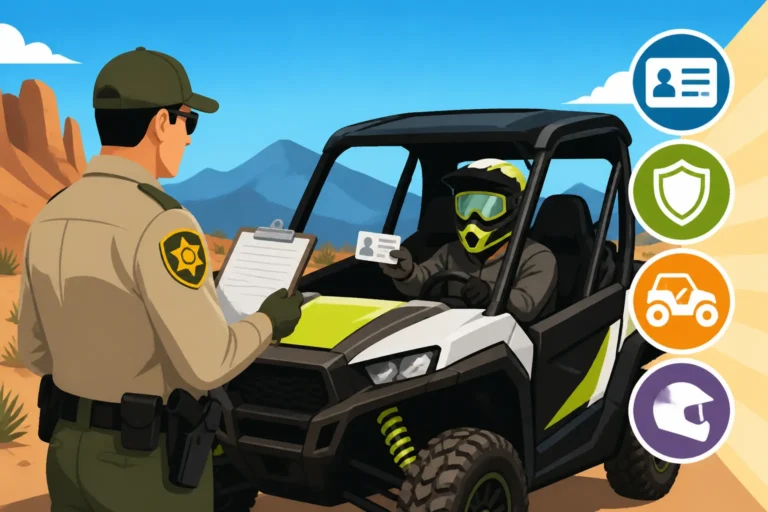
Beyond the letter of the law, there are the practical realities of riding in Nevada. Law enforcement officers, whether state troopers or county deputies, are well aware of the rules concerning OHV use on public roads and shoulders. While they might occasionally give a warning, especially in more remote areas, the risk of a citation and associated penalties is very real. It's not worth jeopardizing your ride or your wallet for a few minutes of paved convenience. Being informed about how these rules are enforced and what consequences you might face is an essential part of responsible OHV ownership in Nevada.
Fines, Penalties, and Machine Impoundment
If you're caught riding your ATV or UTV illegally on a paved shoulder or public road in Nevada, the consequences can range from a warning to a hefty fine, and in some cases, even the impoundment of your machine. Fines for operating an unregistered or improperly operated OHV on a highway can be significant. Imagine getting a ticket for several hundred dollars, plus towing and storage fees if your machine is impounded. That quick, convenient dash across the pavement suddenly becomes a very expensive mistake. [Nevada Tickets for Riding Where You Should Not] outlines some of these potential penalties.
Beyond the immediate financial hit, dealing with an impounded vehicle is a major hassle. It requires time, effort, and more money to retrieve your machine, often involving trips to impound lots or municipal offices. This isn't just a minor inconvenience; it can ruin a weekend trip or set back your riding plans considerably. It’s always better to err on the side of caution and ensure you’re operating your machine within the clear boundaries of Nevada law, especially when it comes to paved surfaces.
Checking Local Ordinances and Designated Routes
Nevada is a vast state, and while state law provides a general framework, individual counties and even cities have the authority to implement their own ordinances regarding OHV use on local roads. What might be permissible in one rural county might be strictly prohibited in a more populated area. This means that even if you understand the state's "Large ATV" designation or the "2-mile rule," you still need to do your homework for the specific location you plan to ride. [Nevada Cities That Keep OHVs Off the Street] is a great resource for this.
Many areas in Nevada, particularly around popular riding spots like Logandale or Sand Mountain, have very clear signage indicating where OHVs are permitted and where they are not. It's your responsibility as a rider to seek out and understand these local rules. Don't assume that because a county road looks minor, you can ride your standard ATV on its shoulder. Always check the local county's sheriff's office website or BLM field office for current regulations and maps before you head out. This due diligence can prevent unexpected fines and ensure a smooth, enjoyable ride.
Alternative Strategies for Reaching the Dirt Safely
Given the strict regulations and potential penalties for riding paved shoulders, the best approach is almost always to avoid them unless explicitly permitted and absolutely necessary. There are much safer, legal, and ultimately less stressful ways to get your machine from the pavement to the dirt. These methods might require a little more planning or effort, but they guarantee peace of mind and protect you from fines or impoundment.
Trailering Your Machine: The Safest Bet
The most straightforward and universally accepted way to transport your ATV or UTV to the trail is by trailering it. This eliminates any ambiguity about where your machine can and cannot legally operate on public roads. Pulling a small trailer with your OHV to a designated trailhead or staging area ensures you're starting your ride exactly where you're supposed to be, without breaking any laws. Even if the dirt is just a quarter-mile down the road, it's always worth the extra minute to load up your machine.
Many riders invest in durable ramps, tie-downs, and trailer accessories from companies like SuperATV to make loading and securing their machines as efficient as possible. This investment in proper transport equipment is far less costly than a single ticket or impoundment fee. It also protects your machine from unnecessary wear and tear on pavement, which can prematurely wear down off-road tires and put strain on components not designed for hard asphalt surfaces. [Trailering Versus Riding the Road There] clearly lays out the advantages.
Designated Trailheads and Staging Areas
Nevada's extensive network of off-highway vehicle trails and riding areas, particularly on Bureau of Land Management (BLM) land, is typically well-equipped with designated trailheads and staging areas. These spots are specifically designed for you to park your truck and trailer, unload your OHV, and directly access the dirt. They often include amenities like vault toilets, kiosks with maps, and ample parking space for multiple vehicles and trailers.
Utilizing these designated areas is not only legal but also supports the efforts of the BLM and other agencies to maintain and improve the trail system. When you use these facilities, you're contributing to the orderly and responsible enjoyment of public lands. Always check maps or resources like the Nevada Trail Finder to locate the nearest official staging area to your desired riding spot. This approach ensures you spend your time riding where you're meant to be, rather than worrying about crossing legal boundaries. [Where the County Road Ends and BLM Begins] helps explain the transition points.
Here’s a quick comparison of the two approaches:
| Feature | Riding Paved Shoulder Illegally | Trailering to Designated Staging Area |
|---|---|---|
| Legality | Generally illegal for most OHVs | Fully legal and encouraged |
| Risk of Fines | High | None |
| Machine Safety | Increased wear on off-road tires, potential road hazards | Reduced wear, safer transport |
| Convenience | Seems convenient, but carries high risk and potential hassle | Requires a trailer, but offers peace of mind and security |
| Enforcement | Likely to draw attention from law enforcement | Aligns with responsible riding practices |
| Cost | Potential for large fines, towing/impound fees | Initial cost of trailer, but saves on potential penalties |
| Peace of Mind | Constant worry about getting caught | Freedom to focus on the ride ahead |
When you're out exploring the incredible landscapes Nevada has to offer, the last thing you want is a legal issue stemming from a simple misunderstanding of road rules. It’s always best to play it safe, stick to the designated off-road areas, and transport your machine legally. This way, your adventure will be memorable for the right reasons, not for an unexpected interaction with law enforcement. [Riding to the Trailhead, Not to the Store] really sums up the right mindset.
Disclaimer
This article is for general informational purposes only and does not constitute professional advice. Laws, prices and regulations vary by location and change over time. Consult a qualified professional for guidance on your specific situation.