Transferring an ATV Title in Nevada
Let's be honest, trying to figure out the paperwork for transferring an ATV or UTV title in Nevada can feel like navigating a maze blindfolded. You've found the perfect machine, shaken hands on a deal, and now you're faced with a stack of forms and questions about what goes where. This guide is here to cut through the confusion, offering a clear, empathetic roadmap to help you successfully transfer an off-highway vehicle (OHV) title into your name in the Silver State, getting you one step closer to hitting those incredible Nevada trails.
Why Transferring a Title Isn't Always Straightforward
Anyone who's bought a used vehicle knows that the title transfer process can throw some curveballs. For off-highway vehicles in Nevada, it's no different. You might be buying from a seasoned rider who has all their paperwork in order, or you could encounter a seller who's less organized, leading to potential headaches. Understanding these common challenges upfront can save you a lot of stress down the line.
The Dreaded "Lost Title" Scenario
One of the most frequent frustrations buyers face is when the seller admits, "Oh, I can't seem to find the title." This is a massive red flag that should make you pause. While it's possible to transfer ownership without the original title, it adds significant steps and complications, often requiring the seller to apply for a duplicate title first. Without that original piece of paper signed over to you, you technically don't have clear proof of ownership. You could end up with a machine you can't legally register or sell, turning your dream ride into a garage ornament. Always insist on seeing the physical title before money changes hands, or at the very least, ensure the seller initiates the process for a duplicate title well before your purchase.
Dealing with Out-of-State Titles
Nevada's OHV title process is pretty specific, and if you're bringing a machine in from, say, California, Arizona, or Utah, you'll find there are additional hoops to jump through. Each state has its own titling and registration requirements, and what's perfectly valid proof of ownership in one state might not be immediately recognized here in Nevada. You'll often need to ensure the out-of-state title is properly endorsed by the seller and then be prepared for Nevada's specific VIN inspection process, which is a mandatory step for all machines coming from outside the state. The [The Higher Nevada Title Fee for a Machine Out of State] also applies here, so be ready for that.
Sales Between Private Parties Versus Dealers
The method of purchase also dictates how smooth or bumpy your title transfer will be. Buying from a licensed Nevada OHV dealer generally streamlines the process. They're accustomed to handling all the necessary paperwork, submitting it to the Nevada OHV Section on your behalf, and often collecting the appropriate fees. This convenience comes at a cost, of course, usually in the form of a dealer documentation fee.
On the other hand, a private party sale puts the onus entirely on you and the seller to ensure everything is correct. While it might save you some dealer fees, it demands meticulous attention to detail on your part. You'll be responsible for making sure the title is signed correctly, all forms are filled out, and you submit everything to the proper authorities within the stipulated timeframe. This is where many riders get tripped up, especially if they're not familiar with Nevada's specific requirements.
The Essential Documents for a Nevada ATV Title Transfer
Successfully transferring an ATV or UTV title in Nevada hinges on having the correct paperwork. Don't underestimate this step; missing a signature or an obscure form can send you right back to square one. Here's a breakdown of the critical documents you'll need to gather and complete.
The Nevada Off-Highway Vehicle Title Application Form OHV-001
This is perhaps the most crucial form in the entire process. The OHV-001, officially known as the "Application for Certificate of Title/Registration," is what tells the Nevada OHV Section that you intend to be the new legal owner of the machine. There are different versions of this form floating around, tailored for specific situations like new purchases, out-of-state transfers, or even registering a machine without a title. It's vital to get the correct version for your specific scenario.
You'll need to fill out your personal information, the machine's details (VIN, make, model, year), and indicate that you are applying for a title transfer. Ensure every box is filled accurately and legibly, as any discrepancies can lead to delays. The seller often has a section to sign off on the sale here, or it may refer to the separate title document. Take your time, read all instructions, and don't hesitate to ask questions if you're unsure about any part of it.
Proof of Ownership: The Existing Title or Bill of Sale
The gold standard for proof of ownership is the existing Certificate of Title. This document, issued by the state where the OHV was last titled, needs to be signed over from the seller to you, the buyer. The signatures must match the printed names on the title, and typically, there's a space for the sale date and purchase price. Make sure this transfer section is completely and correctly filled out by the seller. [What an OHV Title Looks Like] can give you an idea of what to expect.
In situations where an original title might not exist (for very old machines, or those that were never titled in a state that didn't require it), a comprehensive bill of sale becomes paramount. While Nevada typically requires a title for transfer, a solid bill of sale, often available as a template from services like LawDepot, proves the transaction and can be used in conjunction with other forms (like a VIN verification) to establish ownership. This bill of sale should include the full names and addresses of both buyer and seller, the machine's VIN, make, model, year, the sale price, and the date of sale. Both parties should sign and date it. However, remember that a bill of sale alone is often insufficient for titling; it typically supplements the title or is used in specific, rarer circumstances.
Your Valid Nevada Driver's License or ID
As the buyer, you'll need to present a valid Nevada driver's license or state-issued identification card. This is how the OHV Section verifies your identity and ensures the title is being issued to the correct person. The name on your application forms should match the name on your ID precisely. If you've just moved to Nevada, you'll want to ensure you've updated your driver's license or obtained a Nevada ID before attempting to title your OHV, as inconsistencies can cause unnecessary delays. This identity verification is a standard part of nearly all vehicle-related transactions with the state.
Step-by-Step: Navigating the Nevada Title Transfer Process
Now that you know what documents you need, let's walk through the actual process of getting that ATV or UTV title transferred into your name. Following these steps carefully will significantly increase your chances of a smooth and swift transaction.
Completing the Ownership Transfer Section on the Title
The first critical step, once you've secured the machine and the original title from the seller, is to ensure the ownership transfer section on the back of the title certificate is completed accurately. This section is essentially the "sign-off" from the previous owner. The seller needs to clearly print their name, sign their name, and date the transfer. There's usually a space for your name as the buyer as well, along with the date of purchase and the sale price.
Pay close attention to any odometer readings, though for many older or off-road-only ATVs and UTVs, an odometer reading may not be required or even present. If it is, and the machine has an odometer, ensure it's recorded correctly. A mistake in this section – like a missing signature, an incorrectly spelled name, or an unreadable date – can void the transfer and require you to go back to the seller, which can be a huge hassle if they've already moved on. This is where meticulousness truly pays off.
Filling Out Form OHV-001 with Precision
With the original title properly endorsed, your next task is to accurately complete the Nevada Off-Highway Vehicle Title Application (Form OHV-001). This form serves as your official request to the state for a new title in your name. You'll need to provide details about the machine, such as its Vehicle Identification Number (VIN), make, model, and year. Ensure the VIN on the form exactly matches the VIN on the machine itself and on the previous title. Even a single digit off can cause the application to be rejected.
You'll also need to fill in your personal information as the buyer, including your name, address, and contact details. Be sure to indicate that you are applying for a "Certificate of Title" and that this is a "Transfer of Ownership." There may be different versions or sections within the OHV-001 form depending on whether the machine is new, used, or from out of state. Double-check all checkboxes and fields for accuracy. Remember, the goal is to make it as easy as possible for the Nevada OHV Section to process your request without needing to ask for additional information or corrections. If you're dealing with a specific scenario like a lost title, you might even reference other forms like [Walking Through Form OHV-012] for related processes.
The Crucial VIN Inspection
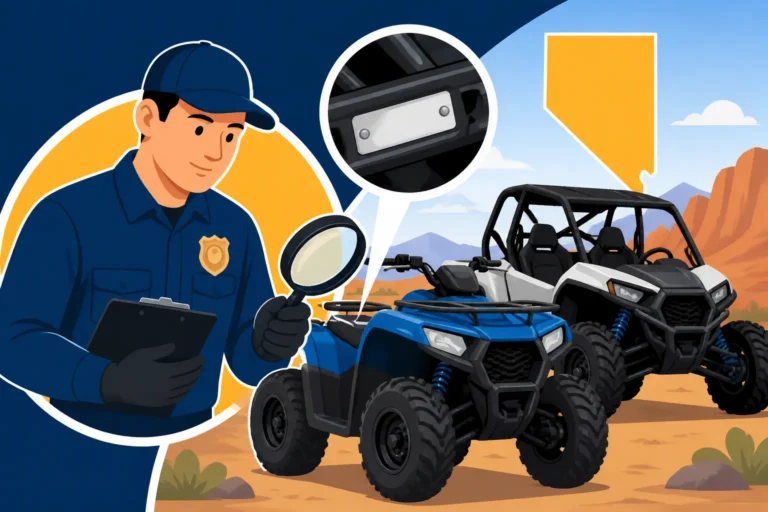
For most OHV title transfers in Nevada, particularly if the machine is coming from out of state or was previously untitled, a VIN inspection is a mandatory step. This inspection verifies that the VIN on your paperwork matches the physical VIN on the machine and that it hasn't been tampered with or stolen. This isn't something the regular Nevada DMV will do; they'll tell you they're not equipped for it. [The VIN Inspection Nevada DMV Will Not Do] is a common source of confusion for new residents.
Instead, you'll need to take your OHV to an authorized Nevada OHV dealer. Many dealerships that sell ATVs and UTVs are licensed to perform these inspections. Alternatively, a sworn law enforcement officer (like a sheriff's deputy or state trooper) can also complete the verification form. They'll physically examine the machine's VIN and sign off on a verification form, confirming its authenticity. Make sure you get the proper form filled out and signed by the inspector. [Which Dealers Can Inspect a VIN in Nevada] and [Asking a Sworn Officer to Verify a VIN] can help you find who can perform this service.
Submitting Your Paperwork and Fees
Once you have the endorsed title, the completed Form OHV-001, your ID, and any required VIN verification forms, you're ready to submit everything to the Nevada OHV Section. You can often do this at authorized OHV dealers who handle registrations, or by mailing your documents directly to the OHV Section in Carson City. When submitting, you'll also need to pay the applicable title fees. These fees can vary based on whether the machine is a resident machine or coming from out of state.
It's highly advisable to make copies of all your submitted documents for your records. The state does have a [Nevada OHV Title Application Deadline] after you purchase a machine, typically 30 days, to avoid potential late fees, so don't procrastinate. Processing times can vary, so be patient; you can look up [Nevada OHV Registration Processing Times] to get an idea of current wait times, though these are estimates. If you submit through a dealer, they may charge a small submission fee, but the convenience often outweighs the cost.
Common Challenges and How to Overcome Them
Even with the clearest instructions, sometimes things don't go exactly as planned. Nevada's OHV titling process has a few common sticking points that can derail your efforts. Knowing these pitfalls ahead of time can help you prepare and react effectively.
The Missing or Improperly Signed Title
This is perhaps the biggest hurdle for private sales. If the seller has lost the title, they are legally responsible for obtaining a duplicate title before they can transfer ownership to you. Do not proceed with the sale if they tell you they'll "send it later" or that you can "just get one." It's their machine, and they need to initiate the [Replacing a Lost Nevada OHV Title] process. You, as the buyer, cannot apply for a duplicate title on a machine you don't yet legally own.
If the title is present but improperly signed – perhaps a name is misspelled, a signature is missing, or the wrong box was checked – you'll need to go back to the seller to correct it. This can be incredibly frustrating, especially if the seller is difficult to reach after the sale. This is why inspecting the title before the transaction is paramount. In rare, extreme cases where a seller is unreachable and no title can be produced, you might have to explore more complex legal avenues, like a bonded title, but these are exceptions and usually involve significant additional cost and time. Avoiding [Buying a Quad With No Paperwork at All] is always the safest bet.
Dealing with Liens or Multiple Owners
Sometimes, an ATV or UTV might have a lien against its title, meaning a financial institution or individual holds an interest in the machine until a loan is paid off. You absolutely cannot get a clean title until that lien is formally released. The seller must provide you with a lien release document from the lienholder. This is usually a signed and notarized statement confirming the loan has been paid in full. Without it, the Nevada OHV Section will not transfer a clean title to you. Always check the existing title for any recorded liens. You'll definitely want to understand [Nevada OHV Title for a Machine With a Lien] if this situation arises.
If the machine is owned by two or more people, all listed owners typically need to sign the transfer section of the title. If the title lists "John Doe AND Jane Doe," both must sign. If it says "John Doe OR Jane Doe," usually only one signature is required, but it's always safer to get both if possible. This also applies to situations like divorce, where [Splitting an OHV Title in a Divorce] would involve specific legal documentation to transfer one party's interest to the other.
Understanding the Fees Involved
Nobody likes hidden costs. When transferring an OHV title in Nevada, there are a few fees you should be prepared for. The primary one is the title fee itself, which is paid to the state. This amount can change, so always check the current figures on the official Nevada DMV website or with an authorized dealer. Remember, as mentioned earlier, there's often [The Higher Nevada Title Fee for a Machine Out of State] compared to a machine that's already titled within Nevada.
Additionally, if you fail to submit your title transfer paperwork within the 30-day window after purchase, you could be assessed [Nevada's $10 Late Fee on an Expired OHV Decal] (or title, in some contexts). Some authorized dealers may also charge a small service fee for processing your paperwork and submitting it on your behalf. While it might seem like a lot, these fees contribute to the overall OHV program in Nevada, including trail maintenance and safety initiatives. Always budget for these costs so you're not caught off guard.
| Document Type | Purpose | Who Provides It | Key Information to Verify |
|---|---|---|---|
| Old Title | Proof of previous ownership, signed over to you | Seller | Seller's signature, your name, date, sale price, lien release (if any) |
| Form OHV-001 | Application for your new Nevada title | You (buyer) | Your personal info, machine's VIN, make/model, transfer type |
| VIN Inspection | Verification that the machine's VIN is legitimate and matches paperwork | Nevada OHV Dealer or Sworn Law Enforcement Officer | Accurate VIN, inspector's signature, date |
| Bill of Sale | Documenting sale terms (useful for private sales, especially older machines) | You and Seller (or LawDepot template) | Seller/buyer names, machine details, price, date, signatures |
| Nevada ID | Your identity verification | You (buyer) | Current Nevada driver's license or state ID card |
Disclaimer
This article is for general informational purposes only and does not constitute professional advice. Laws, prices and regulations vary by location and change over time. Consult a qualified professional for guidance on your specific situation.