Lincoln County Deputies and OHV Paperwork
Heading out to explore the stunning red rocks and vast open spaces of Lincoln County on your ATV or UTV is an absolute blast, but there’s nothing that can put a damper on a fantastic day quicker than a roadside stop from a deputy when your paperwork isn't in order. This guide will walk you through exactly what Lincoln County law enforcement looks for when they pull you over, what documents you absolutely need to carry, and how to navigate those interactions smoothly to keep your ride enjoyable and worry-free.
What Lincoln County Deputies Are Looking For
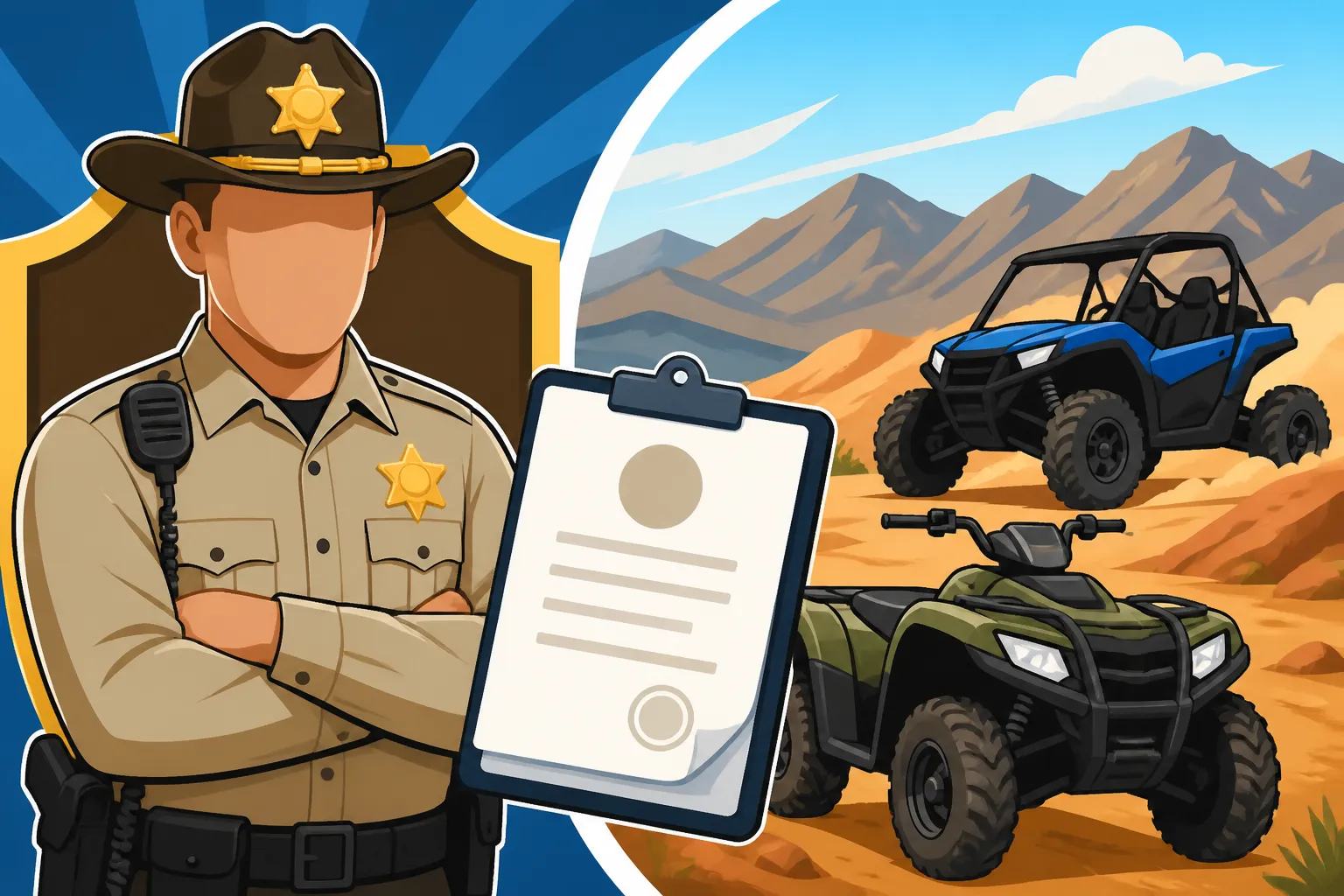
When you're out riding the scenic trails, open desert, or traversing designated county roads in Lincoln County, you're bound to encounter local law enforcement, especially during busy weekends or in popular riding areas. It’s easy to feel a little anxious when you see those flashing lights, but understanding what deputies are actually checking for can help alleviate some of that stress. They aren't trying to ruin your fun; they're ensuring everyone is riding safely and legally, which ultimately benefits the entire OHV community.
Why Deputies Check OHV Paperwork
The primary reasons Lincoln County deputies stop OHV riders come down to safety, legal compliance, and resource management. First and foremost, they're looking to confirm that your machine is properly registered and titled. [What a Nevada OHV Decal Actually Proves] is that your machine contributes to the state's OHV program, which in turn funds trail maintenance, signage, and public safety initiatives. Without proper registration, the system that supports our beloved riding areas simply wouldn't work. Deputies also want to ensure the machine isn't stolen, and checking title or registration information is a quick way to verify ownership. Imagine spending thousands on a machine only to have it stolen; deputies are helping prevent that.
Beyond registration, deputies are concerned with general compliance with Nevada's OHV laws. This includes ensuring riders are operating their machines responsibly, adhering to age restrictions, and that any vehicle used on designated county roads meets specific equipment requirements. For instance, if you're riding a UTV on a minor county road, they'll want to see if it meets the criteria for a [Nevada Large ATV Decal] and if you have the proper driver's license and insurance. These checks aren't just about handing out tickets; they’re about promoting a safer environment for all users, whether they’re other riders, hikers, or residents enjoying the peace of Lincoln County.
Common Scenarios for a Deputy Stop
You might encounter a deputy check in several common scenarios across Lincoln County. Popular trailheads, like those near Caliente or Pioche, are frequent spots, especially if vehicles are being unloaded or riders are staging. Deputies often patrol these areas to ensure everyone is starting their ride legally. Road crossings are another prime location. If you’re using your OHV to cross a public paved road, even if it's just to get from one section of trail to another, you become more visible to law enforcement, and they'll want to confirm you're doing so legally. Remember, [Nevada Rules for Crossing a Highway on an ATV] are very specific.
Furthermore, deputies might set up checkpoints in well-known riding zones or during peak riding seasons, like holiday weekends. Areas around Amargosa Big Dune or sections of the Silver State Trail that run through Lincoln County could see increased patrols. Sometimes, a stop might be initiated due to a visible safety concern, such as excessive speed, unsafe operation, or if your machine appears to lack required safety equipment. While it might feel like an inconvenience, these stops are part of a larger effort to keep our riding areas safe, preserve access, and ensure that off-highway recreation remains a positive experience for everyone in Lincoln County.
The Essential OHV Paperwork You MUST Carry
Navigating the trails of Lincoln County means being prepared, and that preparation extends far beyond having enough fuel and water. The paperwork you carry is just as crucial as your helmet or emergency kit. Forgetting a key document can quickly escalate a routine stop into a much more serious situation, leading to fines or even impoundment of your machine. It's not enough to have the documents; they need to be accessible, legible, and match your machine and identity.
Proof of Registration: Decal and Card
The absolute bedrock of your OHV legality in Nevada is your registration. This means you must have a valid Nevada OHV decal visibly affixed to your machine and the corresponding registration card in your possession. The decal, typically placed on the left-rear fender of an ATV or the left-rear side of a UTV, signifies that your machine is officially registered with the state. [Left Side or Rear: Where the Decal Goes] outlines the precise placement rules. This decal carries a unique number that deputies can cross-reference to confirm your registration status.
Equally important is the physical registration card. This card, usually a small paper document, contains vital information such as your name, the machine's VIN, make, model, and the registration expiration date. While the decal proves it's registered, the card confirms who it's registered to and the details of the machine. Deputies will ask to see this card. It's a good practice to keep it laminated or in a waterproof pouch to protect it from dust, sweat, and the elements common in Lincoln County’s desert environment. Losing or damaging it means you’ll need to order a replacement, which is an unnecessary hassle you can avoid with a little foresight. [Keeping Paperwork Dry in a Dusty Machine] is a vital tip for Nevada riders.
Proof of Ownership: Title or Bill of Sale
Proving you actually own the machine you're riding is another critical component deputies will verify. The ideal document for this is the certificate of title. A title is a legal document that establishes ownership and provides a clear chain of custody for the machine. If you've just purchased your ATV or UTV, you're expected to have applied for a [Titling an Off-Highway Vehicle in Nevada] within a specific timeframe, usually 30 days. This proves it's yours and not, for example, a stolen machine.
If you’re in the process of titling a recently purchased machine, a detailed bill of sale can serve as temporary proof of ownership. This is especially true if you’ve [Buying a Used ATV Privately in Nevada]. A good bill of sale should include the date of sale, the purchase price, the full names and addresses of both the buyer and seller, the machine's make, model, year, and its Vehicle Identification Number (VIN). [What a Nevada ATV Bill of Sale Should Carry] details what information is essential. For private sales, creating a comprehensive bill of sale is crucial for both parties. Resources like LawDepot can provide excellent, legally sound templates to ensure you cover all necessary information, protecting you from potential disputes later on. Without either a title or a strong bill of sale, a deputy might have reasonable grounds to question your possession of the OHV.
Driver's License and Insurance
When operating an OHV, especially if you're crossing or riding on designated county roads in Lincoln County, your personal identification and, in some cases, proof of insurance become relevant. If you’re old enough to operate a motor vehicle on public roads, you’ll need a valid driver’s license. Nevada law mandates a driver’s license for anyone operating a vehicle on a public highway, which includes designated county roads where OHVs are permitted. [Nevada Driver's License Rules for UTV Road Use] are specific, and deputies will certainly verify this.
For those operating large ATVs (like many UTVs) on designated public roads, liability insurance is also a requirement. This typically doesn't apply to pure off-road use, but if you've gone through the process of getting a [Nevada Large ATV Decal] for limited street use, you must carry proof of that insurance. [Does Nevada Require ATV Insurance on Roads?] is a common question, and the answer is yes, if you intend to use those specific public roads. Even if you're not on a public road, carrying your driver's license or other valid ID is always a smart move for identification purposes.
Table: Key OHV Paperwork and Its Purpose
| Document Category | Specific Document | Purpose | Why Deputies Look For It |
|---|---|---|---|
| Registration | Nevada OHV Decal | Proof of current state registration | Ensures compliance, funds trails, verifies legal use |
| Nevada Registration Card | Details machine info, owner name, VIN, and expiration | Confirms decal validity, matches owner/machine, identifies stolen OHVs | |
| Ownership | Certificate of Title | Legal proof of machine ownership | Establishes clear ownership, prevents theft, verifies legal transfer |
| Detailed Bill of Sale | Temporary proof of ownership, especially for recent private purchases | Supports legal possession before title transfer, crucial for private sales | |
| Operator ID/Safety | Valid Driver's License | Proof of legal age/ability to operate a motor vehicle | Mandated for public road use, ensures rider qualification |
| Proof of Liability Insurance | Required for OHVs on designated public roads (Large ATV Decal holders) | Mandated for public road use, covers potential accidents |
Common OHV Paperwork Pitfalls in Lincoln County
Even the most seasoned rider can sometimes overlook a detail, and when it comes to OHV paperwork in Lincoln County, those small oversights can lead to big headaches. It’s easy to get caught up in the excitement of hitting the trails, but understanding and avoiding these common pitfalls will save you a lot of grief and potential fines. Deputies are diligent, and they’ve seen it all, so don’t assume a minor lapse will go unnoticed.
Expired Decals and Missing Documents
One of the most frequent reasons riders run into trouble is an expired OHV decal. Life gets busy, and it's easy to forget that annual or tri-annual renewal date. [When a Nevada OHV Decal Expires] is usually on the last day of the month it was issued, and rangers and deputies absolutely check this. Riding with an expired decal is a clear violation, and it will result in a citation. The state also imposes a [Nevada's $10 Late Fee on an Expired OHV Decal] if you don't renew on time, adding insult to injury. Don't let a lapse in memory turn into an expensive day out on the trails. Many people don't realize the penalty for not having a current decal until it's too late.
Beyond expired decals, simply not having your documents with you is a common issue. You might have a valid registration and title back at home, but if you can’t present them to a deputy during a stop, it's as if you don't have them at all. While some deputies might give you a warning and a chance to produce the documents later, many will issue a citation on the spot. This is why having your physical registration card, proof of ownership (title or bill of sale), and driver’s license (if applicable) accessible on your machine is non-negotiable. If you’re worried about wear and tear, consider making photocopies to keep on your person, while the originals are safely tucked away, but be aware that deputies generally prefer to see originals or official electronic copies where allowed.
Incorrect Information and Out-of-State Machines
Another pitfall is having paperwork with incorrect or outdated information. Perhaps you bought a used machine and never updated the registration or title to your name. Or maybe there's a typo in the VIN on your registration card that doesn't match the machine itself. These discrepancies raise red flags for deputies, as they can indicate potential issues with ownership or even a stolen vehicle. Always double-check that all information on your registration, title, and bill of sale accurately reflects your machine and your identity. This includes updating your address if you move.
For riders coming from out of state, there's a common misconception that their home state’s registration is always sufficient. While Nevada does offer some reciprocity, it’s not limitless. [How Long an Out-of-State ATV Can Stay in Nevada] without requiring Nevada registration is typically 15 days of continuous use within the state. If you’re planning an extended stay or frequent trips to Lincoln County, you might eventually need to register your machine in Nevada. Deputies are aware of these rules and will check if your out-of-state decal is valid and if you've exceeded the permissible timeframe for visitors. Understanding these nuances before you hit the trails can save you a lot of hassle.
Dealing With a Stop: What to Expect and How to Respond
No one wants to be pulled over, but it's a reality of OHV riding, especially in areas like Lincoln County where law enforcement actively patrols. Knowing what to do, what to say, and how to present your documentation can make a world of difference in how the interaction unfolds. A calm, cooperative approach, combined with proper preparation, is your best defense against a stressful situation.
Being Prepared for an Interaction
The best way to handle a stop is to be prepared before it ever happens. This means having all your essential paperwork organized, legible, and easily accessible on your person or in a secure, waterproof compartment on your machine. Fumbling through backpacks or digging under seats while a deputy waits can create unnecessary tension. Consider a small, waterproof document holder that you can keep in your jacket pocket or a dedicated storage bag on your OHV. Knowing exactly where everything is will streamline the process.
Beyond physical documents, it’s important to mentally prepare. Understand that deputies are simply doing their job to enforce state laws and ensure safety. A respectful attitude goes a long way. This doesn't mean you can't ask questions or clarify details, but always do so politely. If you’re looking to verify your current registration status or need help navigating title transfers, the Nevada DMV OHV Section is the go-to resource. While LawDepot can assist with document templates for private sales, always refer to the official DMV for state-specific registration and titling processes.
Interacting with Law Enforcement
When a Lincoln County deputy initiates a stop, pull over safely to the side of the trail or road in a clear, visible location. Turn off your engine and, if in a UTV, keep your hands visible, perhaps on the steering wheel. For ATVs, simply keep your hands visible and avoid sudden movements. When the deputy approaches, greet them respectfully. They will typically ask for your driver's license, registration, and proof of ownership. Calmly and clearly state that your documents are ready and present them when asked.
Answer their questions honestly and concisely. Avoid arguing or becoming defensive, even if you feel you haven't done anything wrong. If you are unsure about a question, it's okay to say so. If you have an expired decal, for example, acknowledge it and explain if you've recently submitted your renewal, perhaps showing a receipt if you have one. While this might not exempt you from a citation, it shows good faith. Deputies appreciate cooperation, and a positive interaction can sometimes lead to a warning instead of a ticket, especially for minor infractions. Remember, the goal is to resolve the situation efficiently and get back to enjoying your ride. [Lincoln County Deputies and OHV Paperwork] is a primary concern for them, so make it easy for them to verify.
Consequences of Non-Compliance
Unfortunately, if you are found to be non-compliant with Nevada's OHV paperwork requirements, there will be consequences. The most common outcome is a citation, which means a fine. [Nevada OHV Late Registration Penalty] is just one example; riding unregistered can carry a much higher penalty. These fines can add up quickly and turn an otherwise enjoyable day into a costly mistake. For instance, riding without a valid decal or registration is a direct violation of NRS 490.060.
In more serious cases, or for repeated offenses, a deputy might even have the authority to impound your machine. This happens, for example, if there's a significant question of ownership (no title, no bill of sale, and a suspected stolen vehicle), or if the machine is considered a public nuisance or safety hazard. Getting an impounded OHV back is a bureaucratic and expensive nightmare involving impound fees, storage fees, and often requires proof of proper registration and ownership before release. It’s a situation no rider ever wants to face, highlighting why a little effort in keeping your paperwork immaculate is truly worth it.
Disclaimer
This article is for general informational purposes only and does not constitute professional advice. Laws, prices and regulations vary by location and change over time. Consult a qualified professional for guidance on your specific situation.