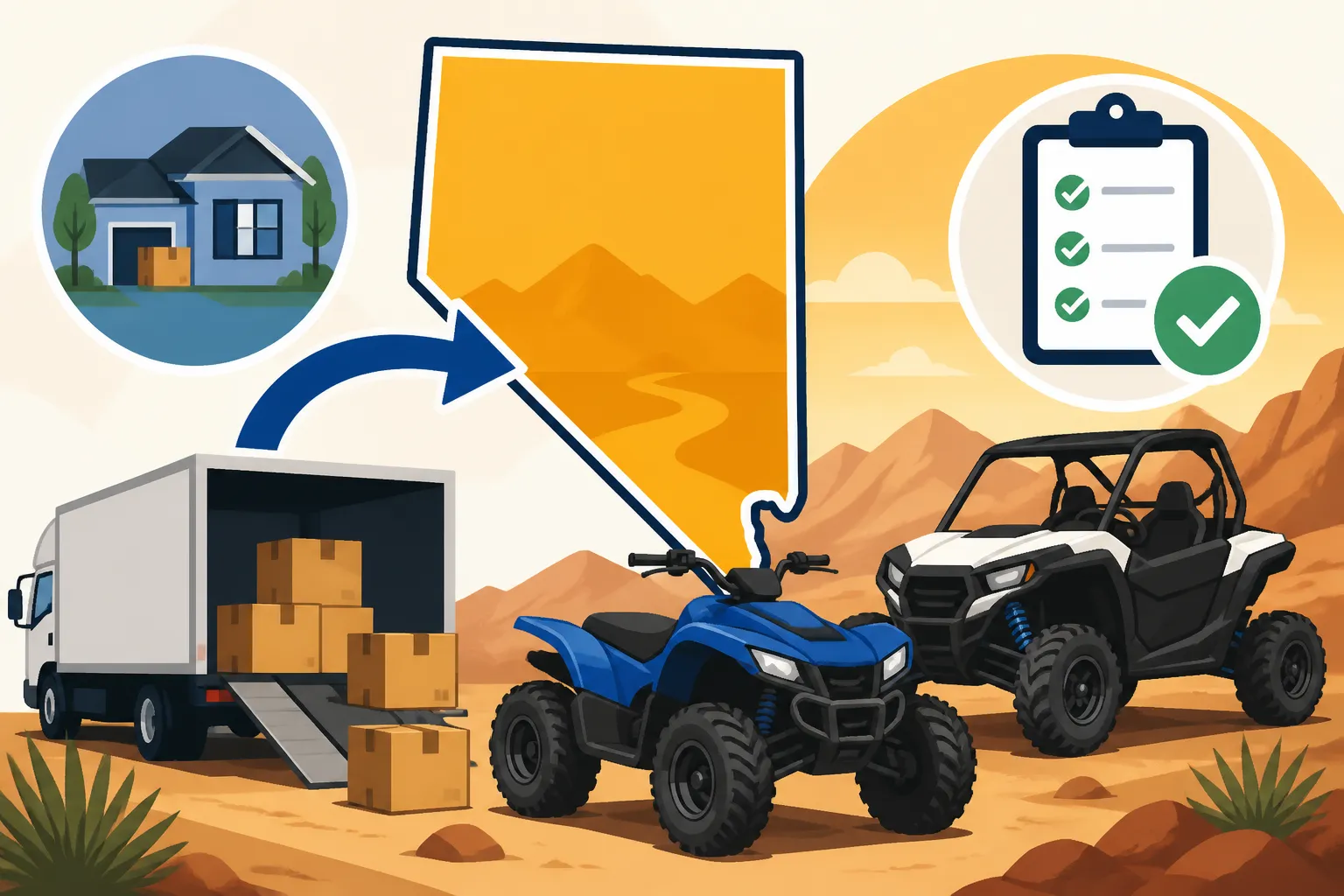
Nevada OHV Registration After Moving to the State
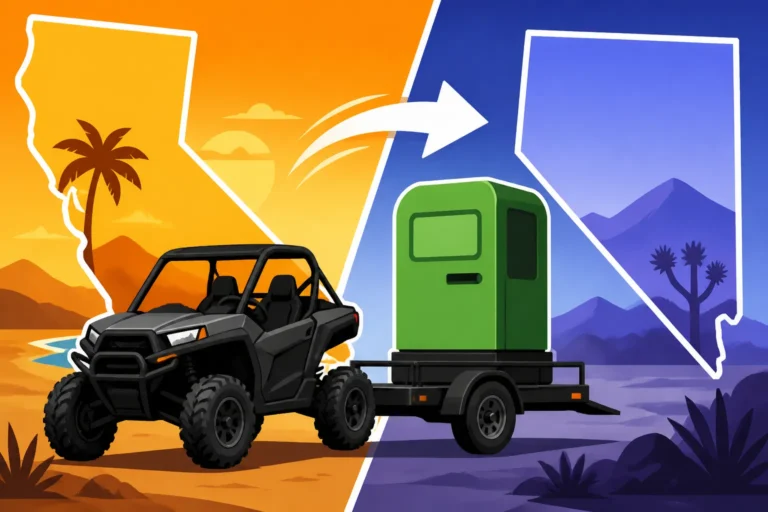
Moving to a new state is exciting, but it often comes with a mountain of administrative tasks, and figuring out what to do with your off-highway vehicle (OHV) can feel like another complicated layer of bureaucracy. Many folks get confused about whether their out-of-state registration is still valid or if they need to jump through new hoops. This comprehensive guide is here to walk you through the Nevada OHV registration and titling process specifically for new residents, helping you get your ATV or UTV legal and ready for the Silver State's incredible trails.
Understanding Nevada's Welcome Wagon for Your OHV
When you first roll into Nevada with your trusty ATV or UTV, you might assume your existing out-of-state registration gives you a grace period. And while visitors do get a little leeway, new residents operate under a different set of rules. The state wants to get your machine into its system fairly quickly once you establish residency. It’s not just about collecting fees; it’s about ensuring all OHVs using public lands are accounted for and that the funds generated go back into maintaining those very trails we all love.
It can feel overwhelming, especially when you're still unpacking boxes, but understanding the timeline and requirements upfront will save you a headache later. Think of it as your first step to becoming a true Nevada off-roader!
The Initial Grace Period (or Lack Thereof for New Residents)
This is a common point of confusion. Many states offer a short grace period for new residents to transfer their vehicle registrations. However, when it comes to off-highway vehicles in Nevada, the nuance is critical. While non-resident visitors generally get a 15-day window to ride on public lands with their out-of-state registration before needing a Nevada decal, this leniency typically doesn't extend to new residents. Once you’ve established residency in Nevada – whether by getting a Nevada driver's license, registering another vehicle, or proving intent to stay – you are generally expected to comply with Nevada's OHV registration and titling requirements promptly. The best practice is to begin the process as soon as possible after moving.
The state wants to integrate your machine into its system for a few key reasons. First, the registration fees contribute directly to the maintenance and development of OHV trails across Nevada. Second, it helps with law enforcement and identifying stolen machines. So, if you've recently moved to places like Reno, Las Vegas, or even a smaller community like Ely, don't delay in getting your OHV properly registered. Waiting too long could lead to a citation if you're encountered by a deputy or ranger on public lands. It’s always better to be proactive and get your ducks in a row.
Gathering Your Ownership Documents
Before you even think about filling out forms, you need to lay your hands on all your crucial ownership documents. This usually means your out-of-state title and a bill of sale. If you've financed your machine, the title might be held by the lienholder, so you'll need to contact them to arrange for it to be sent to you or directly to the Nevada DMV for the transfer process. Without these foundational documents, you're essentially trying to build a house without a blueprint, and the process will grind to a halt.
Think of it this way: Nevada needs to establish a clear chain of ownership for your OHV. They want to ensure you are the rightful owner before they issue a new title and registration decal in your name. This protects you, and it protects future buyers. If your previous state didn't issue titles for OHVs, that's a common scenario, and Nevada has a pathway for it, but you'll still need robust proof of ownership like a comprehensive bill of sale, perhaps notarized, or a prior registration document. Sometimes, folks use services like LawDepot to generate legally sound bills of sale if they've acquired a machine without a formal dealer transaction, which can be very helpful for proving ownership. Being prepared with all your paperwork from the start will make your trip to the DMV or a dealer much smoother.
The Step-by-Step Process for New Nevada Residents
Once you’ve settled into your new Nevada home and gathered your ownership documents, it’s time to tackle the actual registration process. This isn't just a quick form submission; there are a few distinct steps that new residents need to follow, particularly concerning the VIN inspection and selecting the correct application. Don't worry, we'll break it down for you, because navigating government forms can sometimes feel like trying to read ancient hieroglyphs!
The Crucial VIN Inspection
One of the most critical steps for any OHV being titled or registered in Nevada for the first time, especially one coming from out of state, is the Vehicle Identification Number (VIN) inspection. This isn't something the regular Nevada DMV counter staff can do for you. They simply aren't equipped for it, and frankly, it's not their job. Instead, Nevada wants a qualified, independent verification. You might find yourself thinking, "Wait, the DMV won't do it?" And yes, that's correct. This can be a point of frustration for many new residents who assume they can get everything done at one stop.
So, who can do it? Your primary options are a Nevada licensed OHV dealer or a sworn law enforcement officer. Many OHV dealerships offer this service, sometimes for a small fee, as part of their routine business. They have the expertise to verify the VIN, ensuring it hasn't been tampered with and matches your documentation. If you're going the law enforcement route, you'll need to contact your local sheriff's department or city police department to inquire about their availability and process. Be prepared that they might have specific times or locations for these inspections, or might require an appointment. The goal is to verify that the VIN on your machine matches your paperwork and to confirm the machine's basic description. This inspection is a foundational piece of the puzzle for getting your OHV properly set up in Nevada. For more details, check out [The VIN Inspection Nevada DMV Will Not Do].
Completing the Right Application Form
Nevada, bless its bureaucratic heart, has several different forms for OHV registration and titling. For new residents bringing an OHV into the state, you'll specifically need to complete a form that accounts for an out-of-state purchase or a machine previously registered elsewhere. It's easy to grab the wrong one, which can lead to delays and wasted time. The key is to look for the form that explicitly covers "Application for an Off-Highway Vehicle Title and/or Registration" and specifies "out-of-state."
Often, this will be a variation of the OHV-001 form, but always double-check the latest version available on the Nevada DMV website or at an OHV dealer. This form will ask for detailed information about your OHV, your personal details, and specifics about its previous registration. Make sure to fill out every section completely and accurately. Missing information is a common reason for applications to be rejected. If you're unsure, don't hesitate to ask a staff member at an OHV dealer (many process registrations) or consult a professional service. You might even use a template from LawDepot to help organize your thoughts before transferring information to the official form. Remember, the goal is to provide a comprehensive and clear picture of your OHV to the state. The more precise you are, the faster the process will move along. This is critical for [Registering an ATV in Nevada].
Submitting Your Paperwork and Fees
Once you have your VIN inspection complete, your application form filled out correctly, and all your supporting documents in hand (out-of-state title, bill of sale, identification), it's time to submit everything. You can typically do this through a licensed Nevada OHV dealer, which is often the easiest route, or directly at a Nevada DMV office that handles OHV services. Dealers often provide this as a convenience and can help ensure everything is in order before submission.
When you submit, you'll also be paying the necessary fees. These typically include a title fee and the registration fee, which can be paid for either one year or three years at a time. While I can't provide current specific amounts, understand that there will be distinct costs associated with both titling your machine in Nevada and then obtaining your registration decal. The title fee covers the administrative cost of creating your new Nevada title, which will be mailed to you later. The registration fee goes towards the operational costs of the OHV program and, importantly, helps fund trail maintenance and development. Always confirm the exact amounts with the dealer or DMV before you go, as fees can change. For a general idea, you might look at [Cost to Title an ATV in Nevada] and [Nevada OHV Registration Fee for One Year] for more context. Be prepared to pay with an accepted method, and always keep copies of your submitted paperwork and receipts for your records. This is also important for understanding [Nevada's Thirty-Day Registration Deadline].
Navigating Common Hurdles and Special Scenarios
Even with the best preparation, the OHV registration process after moving to a new state can throw a few curveballs your way. From not having a title to wondering if your particular machine even needs to be registered, there are specific situations that warrant extra attention. It’s never a one-size-fits-all process, and knowing how to handle these common hurdles will save you time and frustration.
| Document/Action Required | New Nevada Resident OHV Registration | Notes/Tips |
|---|---|---|
| Proof of Ownership | Out-of-state title, MCO, or notarized bill of sale | Essential for establishing legal ownership. If no title, gather all available documents. |
| VIN Inspection | Required for all out-of-state machines | Must be done by a licensed Nevada OHV dealer or a sworn law enforcement officer. |
| Application Form | Nevada OHV-001 (or similar) specifically for out-of-state machines | Ensure you use the correct form version; ask if unsure. |
| Personal ID | Valid driver's license or state ID | Must match the name on ownership documents. |
| Fees | Titling and registration fees (1 or 3 years) | Check current fee schedule with DMV or dealer. |
| Proof of Residency | (Often implied by NV driver's license/vehicle registration) | May be requested if other documents are out-of-state. |
What if You Don't Have a Title?
This is a scenario many OHV owners face, especially if their previous state didn't title off-road vehicles, or if they purchased their machine through a private sale with minimal paperwork. It can feel like a massive roadblock, but Nevada does have a process for [Nevada OHV Registration Without a Title]. The key here is proving ownership in other ways. While an official title is always preferred, if you don't have one, you'll need to compile as much alternative documentation as possible.
This might include a comprehensive bill of sale (preferably notarized), previous registration certificates from your old state, receipts for parts or maintenance with your name on them, or even sworn affidavits from previous owners. The more evidence you can provide to establish a clear chain of ownership, the better your chances of successfully registering your OHV. Sometimes, people will use legal document services like LawDepot to ensure their bill of sale or affidavit is legally robust. These documents can help fill the gap when an official title is absent, demonstrating to the DMV that you are, in fact, the rightful owner. Be prepared for a bit more scrutiny and potentially a longer processing time if you're registering without a clean title, but don't give up hope – it is often still possible.
Machines Exempt from Registration
Not every machine that rolls on dirt in Nevada needs to be registered. There are specific exemptions that could apply to your OHV, which could save you time and money. It’s worth checking if your machine falls into one of these categories before you embark on the full registration process. Common exemptions include certain agricultural machines used strictly for husbandry purposes, machines used solely on private land and not crossing public lands, or older machines manufactured before a certain year (typically pre-1976). There are also specific exemptions for machines under a certain engine displacement, often those under 70cc.
If you believe your OHV might be exempt, you’ll need to understand the exact criteria and be prepared to provide proof. For example, if you claim the husbandry exemption for a quad used on your ranch, you might need to show proof of your agricultural operation. If it's a pre-1976 machine, you'll need to prove its manufacture date. While these exemptions can simplify things, they often come with strict conditions about where and how the machine can be operated. Make sure you fully understand the limitations; otherwise, you could inadvertently break the law. For a complete overview, consult [Machines Nevada Exempts From Registration]. Always err on the side of caution and register if there's any doubt, especially if you plan to hit popular riding spots like Sand Mountain or Logandale Trails.
When to Seek Professional Help
For some new residents, the thought of gathering documents, getting a VIN inspection, filling out complex forms, and navigating state offices can be daunting. This is perfectly normal! Moving is stressful enough without adding bureaucratic hurdles. In such cases, knowing when to enlist professional help can be a lifesaver, ensuring the process is handled correctly and efficiently.
One excellent resource is a licensed Nevada OHV dealer. Many dealerships offer full OHV registration and titling services, not just for machines they sell, but for any eligible OHV. They are familiar with all the forms, the VIN inspection requirements, and the latest fee schedules. They can often complete the VIN inspection right there at their shop, help you fill out the specific forms like [Why Nevada Has Five Registration Applications], and submit everything on your behalf. While there might be a small service fee for this convenience, the peace of mind and time saved can be well worth it. Additionally, if you have a particularly tricky situation, such as an OHV without a clear title or one with a complex ownership history, consulting a legal professional or a specialized vehicle documentation service might be beneficial. They can advise you on the best path forward and help you gather or create the necessary supporting documents, perhaps even drawing up legally sound affidavits using tools like LawDepot if needed. Don't be afraid to ask for help; the goal is to get your machine legal so you can enjoy all that Nevada's vast backcountry has to offer. For more information, you might look into [Nevada OHV Registration Paperwork Checklist].
Disclaimer
This article is for general informational purposes only and does not constitute professional advice. Laws, prices and regulations vary by location and change over time. Consult a qualified professional for guidance on your specific situation.