Supervising a Teenager on a County Road
Trying to introduce your teenager to the joys of exploring Nevada's incredible backcountry by UTV or ATV, especially on those connecting county roads, can feel like navigating a minefield of rules and regulations. It’s natural to worry about their safety and staying on the right side of the law. This guide will walk you through everything you need to know about supervising a teenager while riding off-highway vehicles on designated county roads in the Silver State, ensuring a fun and legal experience for everyone.
Understanding Nevada's Rules for Young Riders on Roads
Nevada has specific regulations that govern who can operate an off-highway vehicle (OHV) and where, especially when it comes to riding on county roads. It’s not simply a matter of getting on and going; there are age limits, licensing requirements, and strict supervision protocols designed to keep everyone safe. Many parents find themselves scratching their heads, wondering if their teen's enthusiasm is enough to meet the legal requirements.
Minimum Age and Licensing for Road Use
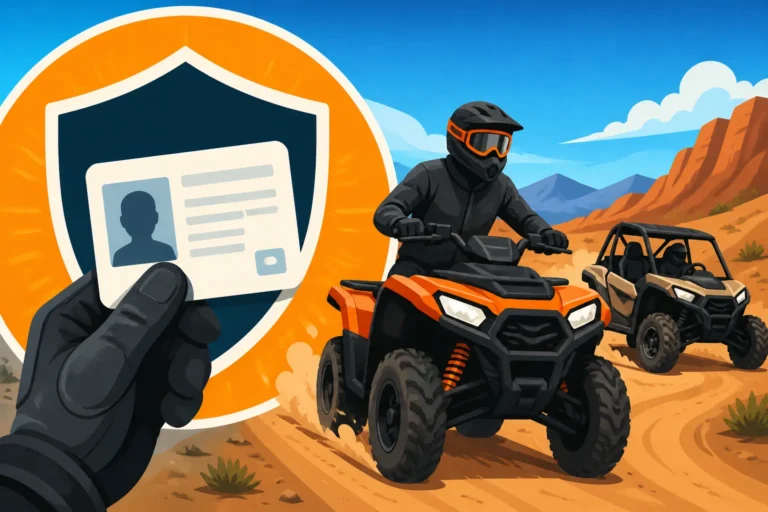
First things first: when we talk about county roads, we're discussing a very specific type of riding. This isn't the same as riding strictly off-road on designated trails where the rules might be a bit more relaxed for younger riders. For county road use, Nevada law dictates that the operator of a "large all-terrain vehicle" (which includes most UTVs and some larger ATVs that meet specific criteria) must possess a valid driver's license. This means your teenager must be at least 16 years old to hold a standard driver's license, or 15 and a half with an instruction permit under specific conditions, and then only if they meet the criteria to operate a "large ATV" on the road. This immediately excludes many younger teenagers who might be perfectly capable of riding off-road but haven't yet reached driving age. It's a critical distinction many riders overlook.
Furthermore, the machine itself must qualify as a "large ATV" under Nevada law. This isn't every quad or side-by-side out there. Generally, it refers to a machine designed to carry at least two persons, or one designed to carry at least one person and having a cargo box with a capacity of 350 pounds or more. This means your typical sport quad or even a smaller recreational UTV might not fit the bill. You can find more details in [What Qualifies as a Large ATV in Nevada]. The requirements for a driver's license for road use are explicitly laid out, and a provisional license often counts, but an instruction permit usually requires a licensed adult in the passenger seat or within close proximity, just like with a car.
The Role of Adult Supervision
Even if your teenager meets the age and licensing requirements to operate a "large ATV" on a county road, supervision remains a crucial element, especially for those under 16. Nevada law states that a person under 16 years of age cannot operate an OHV on a highway (which includes county roads for this purpose) unless supervised by a person 18 years or older who is "actually riding in or on the off-highway vehicle." This means if your teen is 15 and has a learner's permit allowing them to drive a "large ATV," you, as a supervising adult, need to be right there with them, in the passenger seat of the UTV, or on a tandem ATV if that's the machine. You can't just be riding your own machine a few hundred yards behind them.
This "in or on" requirement is pretty strict and aims to ensure immediate intervention if something goes wrong. It's about more than just seeing them; it's about being able to physically assist or take control. For many families, this means the teenager will be driving a side-by-side with an adult riding shotgun. This direct supervision contrasts sharply with off-road riding, where a minor can sometimes ride their own machine alongside a supervising adult. The county road environment is seen as more akin to traditional vehicle operation, hence the stricter oversight. For specific guidance, you might check [Nevada Rules for Riders Under 16 on Roads].
Equipping Your Teen and Machine for County Road Travel
Beyond the age and supervision rules, both your teenager and their off-highway vehicle need to be properly equipped to be on Nevada county roads. This isn't just about general safety; it's about legal compliance. Failing to meet these equipment standards can lead to citations, even if you're otherwise following all the other rules. It's an area where many enthusiasts get tripped up, assuming what works for the trail works for the road.
Mandatory Machine Equipment for Road Use
To be considered street legal on designated Nevada county roads, a "large ATV" requires specific equipment. This isn't an optional checklist; it's law. Your machine needs:
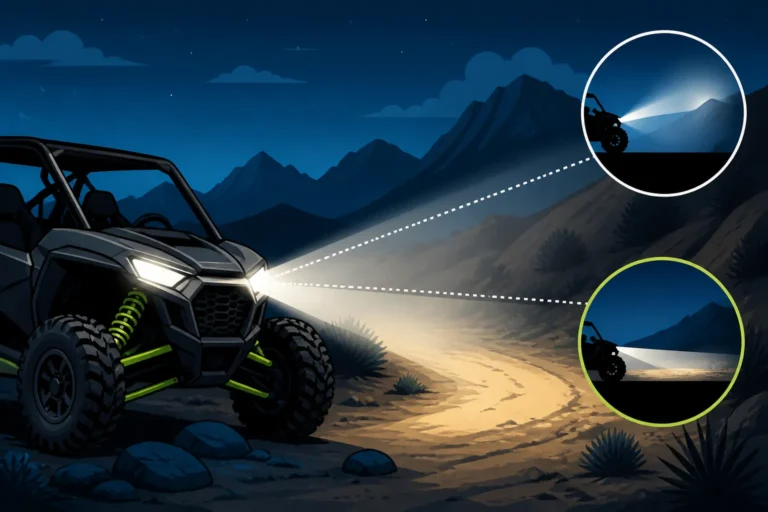
- Headlights that can be seen from 500 feet away at night.
- Taillights that can be seen from 500 feet away at night.
- A stop lamp (brake light).
- Reflectors (though a functioning taillight can sometimes suffice for the rear reflector).
- A horn.
- A muffler with a spark arrester.
- A rearview mirror.
- Seatbelts if the vehicle is equipped with them (which most UTVs are).
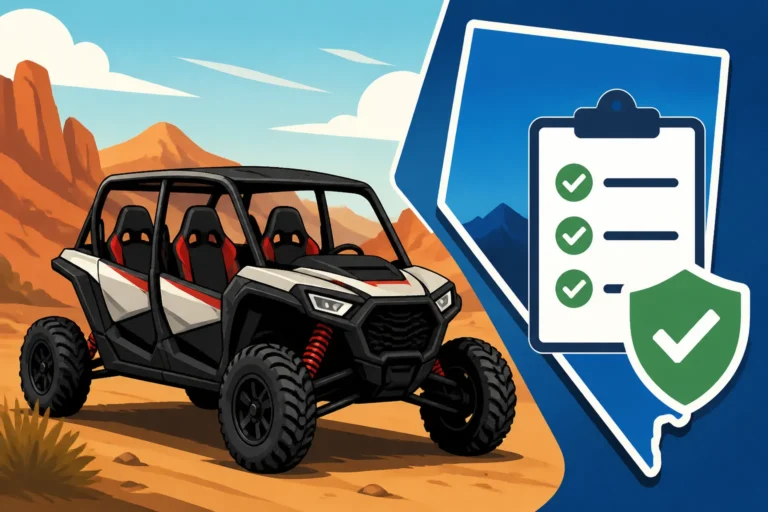
It’s worth noting that many aftermarket parts are available from companies like SuperATV that can help bring your machine up to spec, from mirrors to turn signal kits, though turn signals are not explicitly required by the base Nevada law for a large ATV to operate on minor county roads. Ensure any modifications made by SuperATV or others are installed correctly and meet visibility standards. For instance, those SuperATV mirrors should provide a clear view to the rear. Regularly check all lights, the horn, and ensure the muffler isn't too loud and that the spark arrester is intact. A simple pre-ride checklist can save a lot of headaches. [Nevada Equipment List for Road-Legal UTVs] offers a detailed breakdown.
Personal Protective Gear for Young Riders
While the machine needs to be street-legal, the rider also has personal protective equipment requirements, especially for minors. In Nevada, any person riding an OHV on a county road must wear an approved safety helmet. This isn't just a suggestion; it's a mandatory safety measure that applies to all riders, regardless of age, when operating on public roads. The helmet must be properly fitted and securely fastened. It's about protecting the most vulnerable part of the body in the event of an accident, which, despite our best efforts, can still happen.
Beyond the helmet, while not strictly mandated by law for road use, good judgment suggests additional protective gear for your teenager. This includes eye protection (goggles or a face shield), long pants, a long-sleeved shirt or jacket, over-the-ankle boots, and gloves. These items offer protection against debris, sun exposure, and abrasions in a fall. When your teen is out there, perhaps using some of the durable storage solutions from SuperATV to carry their gear, ensure they're always fully protected. Instilling good habits now, especially when riding on roads where you might encounter other traffic, will serve them well for years to come. Remember, the goal is not just to comply with the law, but to ensure your child's maximum safety. You can review [Nevada Helmet Law for Road Riding] for further details.
Navigating Nevada's County Roads Safely with a Teen
Once you’ve got the machine and the rider properly equipped and understand the legal framework, it's time to hit the road – or at least, the right roads. Nevada's vast and varied landscape includes countless miles of dirt and gravel county roads that are perfect for OHV exploration, but not all roads are fair game. Knowing which roads are permissible and practicing safe riding techniques are paramount when riding with a teenager.
Identifying Permitted County Roads
This is where it gets a little tricky, as not every "county road" is open to OHV use. Nevada law broadly defines which types of roads are open to large ATVs, generally focusing on "minor county roads" or those specifically designated for OHV use. Major highways, state routes (like US 93 or SR 169), and city streets are almost universally off-limits, save for brief crossings or designated routes within certain towns like Mesquite. Some counties, like Washoe County, have even enacted ordinances to restrict OHV use on all county roads within their jurisdiction, while others, like Lincoln County, are generally more open.
Before heading out, it's critical to research the specific area you plan to ride. Look for signs indicating OHV access or restrictions. Online maps and local county government websites can be invaluable resources. A general rule of thumb is to stick to unpaved, less-trafficked county roads that explicitly don't have "no OHV" signs. These are typically the routes that connect the main paved roads to the vast network of BLM trails. You're usually looking for those two-track dirt roads that feel more like a trail than a highway. [Nevada County Roads Open to UTVs] provides more context on where you can and cannot ride. Remember, the intent is often to connect trail segments or provide access to trailheads, not to facilitate joyrides through residential areas.
Safe Riding Practices and Communication
Riding on county roads, even minor ones, presents different challenges than riding strictly off-road. You might encounter slow-moving vehicles, dust, blind corners, and other road users who aren't expecting an OHV. It's essential to teach your teenager defensive riding techniques. Always ride on the far right side of the road, maintain a safe speed, and be prepared for oncoming traffic, even if the road seems deserted. Dust can be a major issue in Nevada's dry climate, so teach your teen to hang back from other riders to maintain visibility and to slow down when approaching blind turns or crests.
Communication is key when riding with your teen. If you're in a side-by-side, regular conversation about conditions, hazards, and navigation is easy. If riding separate machines, consider investing in helmet-to-helmet communication systems. Establish hand signals for common commands like "slow down," "stop," or "hazard ahead." Practice these signals before you hit the road. Reinforce the importance of looking out for wildlife, other riders, hikers, and even livestock. Encourage your teen to develop an awareness of their surroundings, not just the path directly in front of their SuperATV-equipped machine. Building these habits early on is not just about compliance; it's about fostering a lifetime of safe and enjoyable riding.
The Finer Points of Liability and Enforcement
Even with the best intentions and preparations, understanding the legal ramifications and what to expect from law enforcement is vital when supervising a teenager on Nevada county roads. It’s not just about avoiding a ticket; it’s about understanding your responsibilities as a parent and operator.
Insurance and Legal Responsibilities
If your "large ATV" is registered for road use (meaning it has the special "large ATV" decal from the Nevada DMV), you are required to carry liability insurance. This is a critical point that differentiates road-legal OHVs from those used exclusively off-road, where insurance is generally not mandated by the state. This insurance, similar to car insurance, is there to cover damages or injuries your machine might cause to others or their property while on a public road. Without it, you could face significant financial and legal consequences in the event of an accident.
As the supervising adult, you share responsibility for your teenager's actions on the road. If your teen is involved in an incident while under your supervision, you could be held liable. This underscores the importance of not just meeting the legal requirements but actively teaching and enforcing safe, responsible riding. Make sure your insurance card is always with you and the machine's registration. Deputies will often ask for proof of insurance during a stop. Review [Insurance Nevada Requires for Road Use] for more details on this often-overlooked requirement.
Common Misconceptions and Penalties
One of the biggest misconceptions is that if you're on a dirt road, you're "off-road" and general OHV rules apply. This is simply not true in Nevada. If it's a county-maintained road, even if unpaved, specific road rules apply. Another common error is thinking that because a machine is registered off-highway, it's automatically legal on any dirt road. Again, the "large ATV" distinction and its specific decal are crucial for county road access. A standard OHV decal doesn't grant you general road access.
Penalties for non-compliance can range from warnings to significant fines. Operating an OHV on a county road without the proper "large ATV" decal can result in a fine, and deputies are well-versed in checking for this. The same goes for not having valid insurance or failing to wear a helmet. If your teenager is found operating a machine illegally, the consequences can fall on both them and you as the supervising adult. Deputies at popular riding areas like Logandale or those patrolling county roads around Logandale, Pioche, or Caliente, are often checking for proper registration, equipment, and compliance with age and supervision rules. It’s always better to be fully informed and prepared than to face a deputy and a potential citation on your ride.
| Requirement Category | Specific Requirement | Applies to Teen Driver | Applies to Supervising Adult | Applies to Machine |
|---|---|---|---|---|
| Driver/Operator | Valid Driver's License | Yes (16+ or permit) | N/A | N/A |
| Minimum Age | 16 (for license) | 18+ | N/A | |
| Supervision | Adult in/on OHV | N/A | Yes (if teen < 16) | N/A |
| Personal Gear | Approved Safety Helmet | Yes | Yes | N/A |
| Machine Equipment | Headlights (500 ft) | N/A | N/A | Yes |
| Taillights (500 ft) | N/A | N/A | Yes | |
| Stop Lamp | N/A | N/A | Yes | |
| Horn | N/A | N/A | Yes | |
| Muffler w/ Spark Arrester | N/A | N/A | Yes | |
| Rearview Mirror | N/A | N/A | Yes | |
| Seatbelts (if equipped) | N/A | N/A | Yes | |
| Documentation | "Large ATV" Decal | N/A | N/A | Yes |
| Liability Insurance | N/A | N/A | Yes | |
| Registration Card | N/A | N/A | Yes |
Disclaimer
This article is for general informational purposes only and does not constitute professional advice. Laws, prices and regulations vary by location and change over time. Consult a qualified professional for guidance on your specific situation.