Registering a Machine Delivered From Out of State
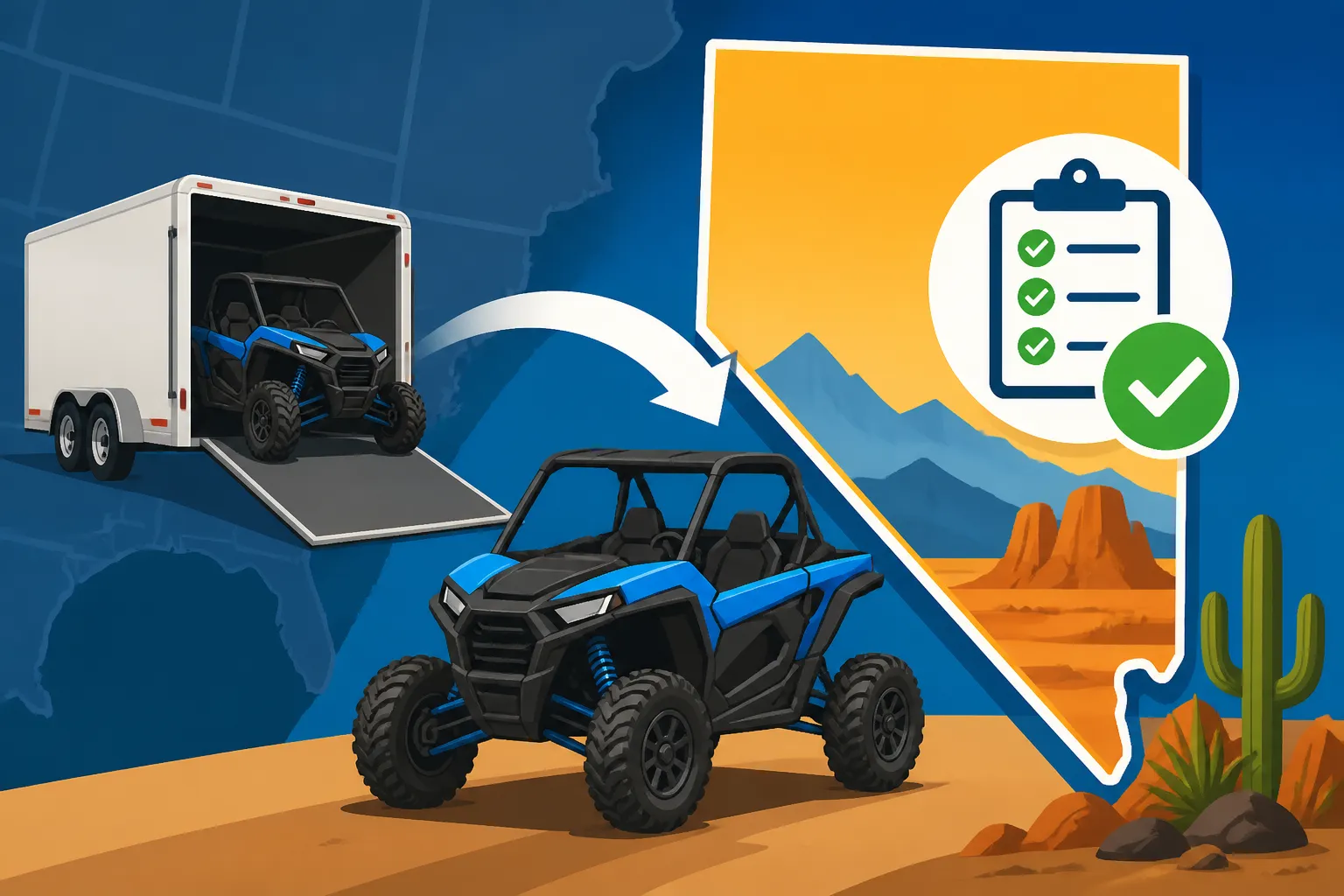
It can be incredibly exciting to finally pull the trigger on that amazing off-highway vehicle you’ve been eyeing, especially when you find the perfect deal online or through an out-of-state dealer. The convenience of having it delivered right to your doorstep in Nevada is fantastic. But then it arrives, gleaming and ready for the desert, and a fresh wave of anxiety hits: "How on earth do I register this thing in Nevada when no local dealer handled the paperwork?" It’s a common frustration, and this guide is here to walk you through every step of registering an OHV that's been delivered from out of state, ensuring you hit the trails legally and without unnecessary headaches.
The Unique Challenge of an Out-of-State Delivery
Buying an OHV, whether it's an ATV, UTV, or dirt bike, from an out-of-state seller or an online marketplace often presents a different set of challenges compared to purchasing from a local Nevada dealership. While the initial transaction might seem smoother or even more cost-effective, the subsequent registration process can throw a few curveballs your way. It's not insurmountable, but it requires a more hands-on approach from you, the new owner.
Why Out-of-State Purchases Differ
When you buy from a licensed Nevada OHV dealer, they typically handle a significant portion of the registration and titling paperwork for you. They’ll collect sales tax, process the application forms, and often even take care of the crucial VIN inspection, saving you a ton of legwork and confusion. This is their standard operating procedure, and it’s a service built into the purchase price.
However, when your machine comes from out of state, none of that white-glove service applies. The seller might be a private individual with no knowledge of Nevada's specific requirements, or they might be a dealership in another state that doesn't collect Nevada sales tax or process Nevada DMV paperwork. This means the burden of gathering the correct forms, getting the necessary inspections, and calculating the proper fees falls squarely on your shoulders. It's a bit like assembling IKEA furniture without the instructions – doable, but you have to be extra careful to get it right the first time.
The Importance of a Complete Paper Trail
Because you won't have the luxury of a local dealer submitting a tidy packet of documents on your behalf, every single piece of paper from your out-of-state purchase becomes incredibly important. Think of it as building your own case for why you are the rightful owner and why your machine should be registered in Nevada. This paper trail starts with the moment you agree to buy the machine and continues through the delivery. You need to be meticulous about securing a comprehensive bill of sale, the original title (or proof of its upcoming transfer), and any other supporting documentation that proves ownership and the details of the transaction. Without a clear, verifiable record, you could face significant delays and frustration when you finally get to the DMV. Remember, they can't just take your word for it; they need proof in writing. Having everything organized will make the process much smoother, especially when you might also need to address things like [Nevada OHV Registration Without a Title] if your seller can't produce the original.
Gathering Your Essential Paperwork (Even Without a Local Dealer)
The key to a smooth registration process for an out-of-state delivered OHV lies almost entirely in the paperwork you present. Without a local dealer to guide you, you need to be extra diligent about what you collect and how you prepare it. Don't assume anything; when in doubt, get it in writing.
The Crucial Bill of Sale and Proof of Ownership
The bill of sale is the bedrock of your ownership claim. It acts as the legal receipt and contract between you and the seller. For Nevada, a robust bill of sale should explicitly state the full names and addresses of both the buyer and seller, the complete Vehicle Identification Number (VIN) of the OHV, the purchase price, and the date of the transaction. It's also wise to include a clear description of the machine (make, model, year) and any warranties (or lack thereof). Both parties should sign and date it.
If you're buying from a private party out of state, they might not have a formal bill of sale. In such cases, you can use templates from online services like LawDepot to create a legally sound document that both you and the seller can sign. This ensures all critical information is captured, preventing headaches down the line. Beyond the bill of sale, other proofs of ownership could include a dealer invoice from the original sale, a Manufacturer's Certificate of Origin (MCO or MSO) if it's a brand-new machine, or a previous registration document from the other state. For more details on what should be included, check out [What a Nevada ATV Bill of Sale Should Carry].
Tracking Down the Out-of-State Title
The original title certificate, sometimes called a Certificate of Title, is arguably the most important document you’ll need. This piece of paper legally establishes who owns the OHV. If the machine has ever been titled in another state, you need that physical, original title, properly signed over to you by the seller. The seller's signature must match the name on the title, and it's imperative that the seller accurately fills out the assignment of ownership section, including the odometer reading if applicable (even for OHVs, it's good practice).
What if the title is held by a lienholder (meaning the previous owner still had a loan on it)? In this scenario, the lienholder will typically mail the title directly to you or the Nevada DMV once the loan is paid off. Ensure you get documentation from the seller proving the lien has been satisfied or will be. If the seller legitimately cannot find the title, this becomes a much trickier situation. You’ll need to work with the seller to obtain a duplicate title from their state's Department of Motor Vehicles before you can proceed with Nevada registration. This can add significant delays. For guidance on handling such situations, you might find [When a Seller Cannot Find the Title] helpful.
Preparing for Nevada-Specific Forms
Once you have your core ownership documents, you'll need to turn your attention to the forms specific to Nevada. The primary form for registering an OHV is the Application for OHV Decal/Title, often referred to as Form OHV-001. However, because your machine is coming from out of state, you might also need to use Form OHV-012, the Application for Nevada OHV Title and/or Decal for Out-of-State Purchase/Transfer. It's always a good idea to download both from the Nevada DMV website and familiarize yourself with them.
These forms ask for detailed information about the OHV, the seller, and your purchase. Be prepared to provide the VIN, make, model, year, engine size, purchase date, and purchase price. Accuracy is paramount, so double-check all numbers and spellings against your bill of sale and title. The Nevada DMV has specific versions for different situations, so understanding [Why Nevada Has Five Registration Applications] can prevent you from using the wrong one. Take your time filling these out; errors here can cause frustrating setbacks.
Navigating the Nevada DMV's Requirements for Non-Local Purchases
With your paperwork in hand, the next phase involves meeting Nevada's specific requirements, which largely center around verifying the machine and its ownership details. This often means working with parties outside of the typical DMV counter, particularly for the VIN inspection.
The All-Important VIN Inspection
Nevada requires a physical inspection of your OHV's VIN to ensure it matches your paperwork and hasn't been tampered with. This is a critical step, and here's the catch: the Nevada DMV will not perform this inspection themselves. So, when your shiny new-to-you OHV is sitting in your driveway, you can't just trailer it down to the local DMV office expecting them to check it over. For more on this, see [The VIN Inspection Nevada DMV Will Not Do].
Instead, you have two primary options for getting the VIN inspection completed:
- A Licensed Nevada OHV Dealer: Many powersports dealerships in Nevada are authorized to perform these inspections. Call ahead to schedule an appointment and confirm their inspection fees. They will complete a "Vehicle Inspection Certificate" form (usually OHV-002) for you.
- A Sworn Law Enforcement Officer: This includes sheriff's deputies, police officers, or Nevada Highway Patrol troopers. This is often a more challenging route, as officers might have limited availability or require you to bring the OHV to a specific location. Again, call your local law enforcement agency's non-emergency line to inquire about their process for OHV VIN verifications. They will also fill out the OHV-002 form.
Regardless of who performs it, ensure they complete the entire form accurately, including their signature, badge number (for law enforcement), or dealer information. This completed form is essential for your registration application. For a deeper dive into who can help, refer to [Who Can Do a VIN Inspection in Nevada] and [Asking a Sworn Officer to Verify a VIN].
Calculating and Paying Your Fees
Nevada OHV registration involves a few different fees. When you bring an OHV in from out of state, you'll generally encounter:
- Title Fee: This is the cost to process your new Nevada title. For machines previously titled out of state, this fee is often higher than for machines already within Nevada's system. Be prepared for this difference. You can find specifics about [The Higher Nevada Title Fee for a Machine Out of State].
- Registration Decal Fee: This covers the actual decal that you'll display on your OHV. You usually have the option of a one-year or three-year registration. While the one-year option is cheaper upfront, the three-year option saves you time and money in the long run. Details can be found at [Nevada OHV Registration Fee for One Year] and [Nevada OHV Registration Fee for Three Years].
- Sales Tax: This is a big one for out-of-state purchases. If the seller (especially a dealer) did not collect Nevada sales tax at the time of purchase, you will be required to pay it to the Nevada DMV when you register and title the OHV. This tax is typically calculated based on the purchase price listed on your bill of sale. Be sure to budget for this, as it can be a significant amount.
It's always a good idea to check the current fee schedule on the Nevada DMV website or call the OHV section directly for the most up-to-date figures. They will be able to give you the precise amounts for your specific situation.
Submitting Your Application and Waiting for Your Decal
Once you have gathered all your documents – the signed-over out-of-state title, the completed bill of sale, the VIN inspection certificate (OHV-002), and your filled-out application forms (OHV-001 and/or OHV-012) – along with your payment for fees and sales tax, it's time to submit everything.
You can typically submit your application packet in person at a Nevada DMV office that handles OHV services (it's wise to confirm this beforehand, as not all offices do) or by mail to the OHV section in Carson City. Submitting in person can sometimes allow for immediate review and correction of minor issues, but mail is often a necessary option for those far from a physical office.
After submission, there will be a processing period. This can vary depending on the time of year and DMV workload. You can generally expect to receive your new Nevada title and registration decal by mail within a few weeks. For an idea of what to expect, check out [Nevada OHV Registration Processing Times]. Crucially, remember Nevada's "30-day clock": you are required to apply for registration and title within 30 days of purchasing or taking ownership of the OHV, even if it was delivered from out of state. Failing to meet this deadline can result in late fees. This deadline is quite strict, so be mindful of [Nevada's Thirty-Day Registration Deadline].
Common Pitfalls and How to Avoid Them
Even with the best intentions, registering an out-of-state delivered OHV can sometimes present unexpected challenges. Being aware of the most common pitfalls can help you navigate the process more smoothly and avoid costly delays or fines.
Missing or Incomplete Documentation
This is by far the most frequent issue. Imagine driving all the way to the DMV, waiting in line, only to be told your bill of sale is missing critical information, or the title isn't properly signed. It's incredibly frustrating and entirely avoidable.
- Solution: Before your OHV even arrives, confirm with the seller exactly what documents they will provide. Insist on a detailed bill of sale that includes all required information (VIN, purchase price, buyer/seller info, date). If the seller is a private party, consider creating a comprehensive bill of sale using resources like LawDepot to ensure all legal bases are covered and have both parties sign it. If it’s a new machine, confirm you will receive the original Manufacturer’s Certificate of Origin (MCO/MSO). For a used machine, verify you'll get the original title, properly signed over. Make copies of everything for your records before you send or hand over original documents.
The VIN Inspection Runaround
Getting the VIN inspection can sometimes be a test of patience, especially if you live in a rural area or try to get it done last minute. Law enforcement agencies often prioritize emergency calls, and dealers might have long wait times for service.
- Solution: Don't procrastinate on the VIN inspection. As soon as your OHV arrives and you have the necessary ownership documents, start scheduling your VIN inspection. Call a couple of different licensed OHV dealers in your area to compare availability and fees. If you opt for law enforcement, call the non-emergency dispatch line well in advance to understand their process and schedule. Be prepared to trailer the OHV to them if they require it. Having your paperwork organized for the officer or dealer will speed up the process. Remember, they need the OHV-002 form to complete, and you should bring your bill of sale and title for their reference.
Understanding Nevada's 30-Day Rule
Many new owners are unaware of the strict 30-day deadline for registering an OHV after purchase or delivery. This clock starts ticking the moment you take possession, not when you get around to it. Missing this window can lead to additional fees.
- Solution: Mark your calendar! As soon as you complete the purchase and take delivery of your OHV, calculate your 30-day deadline. Treat this deadline as a firm commitment. Prioritize gathering your documents and scheduling the VIN inspection immediately. If you find yourself cutting it close, consider going to a physical DMV office if possible, as processing times might be quicker than mail. While a $10 late fee might not seem like a lot, it's an unnecessary expense that can be easily avoided by being proactive. For details on these penalties, see [Nevada's $10 Late Fee on an Expired OHV Decal]. It’s much less stressful to get everything done early and enjoy your new machine without worrying about deadlines.
Required Documentation Checklist for Out-of-State Delivered OHV
| Document Type | Purpose | Notes |
|---|---|---|
| Bill of Sale | Establishes transfer of ownership. | Should include VIN, purchase price, date, names/signatures of buyer/seller. If drafting your own, a reliable template from a service like LawDepot is recommended. |
| Manufacturer's Certificate of Origin (MCO) | Proof of a brand new OHV's origin. | Required for brand new OHVs that have never been titled. |
| Previous Title (if used) | Proof of legal title history from other state. | Original title from the previous state, properly signed over to you by the seller. No copies. |
| VIN Inspection Certificate | Verifies the OHV's identity. | Form OHV-002, completed by a Nevada licensed OHV dealer or a sworn law enforcement officer. |
Disclaimer
This article is for general informational purposes only and does not constitute professional advice. Laws, prices and regulations vary by location and change over time. Consult a qualified professional for guidance on your specific situation.