When a Title Is Not Required at All
Let's be real: dealing with powersports paperwork can feel like trying to solve a Rubik's Cube in the dark. You've heard whispers about titles, registrations, and decals, and it's easy to get overwhelmed. But what if I told you there are specific, totally legitimate situations where your ATV or UTV might not need an official title at all in Nevada? This guide is going to walk you through exactly those scenarios, explaining when you can breathe a sigh of relief on the titling front and what alternative documentation you absolutely need to keep handy.
The Historical Exemption: Machines Acquired Before the Cutoff
One of the biggest sources of confusion for many Nevada OHV owners revolves around whether their machine even needs a title in the first place. The answer often depends on when you acquired it, thanks to a specific piece of legislation.
Pre-Existing Ownership and the Law's Intent
Nevada's titling requirements for off-highway vehicles, or OHVs, didn't come into full effect overnight. The law requiring titles for ATVs and UTVs was introduced with a specific effective date: July 1, 2012. This is a crucial detail because it created a "grandfathering" clause for machines already owned before that date. The state's intention wasn't to retroactively burden every existing OHV owner with a new titling requirement for a machine they'd lawfully owned for years. Instead, it was designed to establish a clear chain of ownership and combat theft for all new OHV transactions moving forward. So, if you've been cruising the Nevada desert on the same quad since, say, 2010, you likely fall under this pre-existing ownership exemption. You own it, you ride it, and you probably won't be issued a title unless you specifically request one, or the machine changes hands.
For these long-owned machines, the state essentially acknowledges that you've already established ownership through other means, such as an original bill of sale, previous registration documents, or even just a long history of possession. The key here is "proof of ownership," which we'll dive into more deeply. While a title is the gold standard for proving who legally owns a vehicle, it's not the only way, especially for these older machines. The system recognizes that people don't always keep documents perfectly for decades, but they certainly maintain possession and use of their beloved off-roaders.
This exemption is a massive relief for many long-time enthusiasts who simply want to continue enjoying their machines without jumping through new bureaucratic hoops for an item they've already owned for a substantial period. It avoids the potentially impossible task of tracking down previous owners or manufacturers for documentation that might no longer exist. Instead, the focus shifts to verifiable, albeit sometimes less formal, evidence of continuous ownership prior to that critical 2012 date.
Proving Pre-Cutoff Ownership
Even without an official state-issued title, you still need to be able to prove you own your machine, especially if you ever plan to sell it or, more commonly, register it for public land use. For machines acquired before July 1, 2012, this proof typically comes in the form of original purchase receipts, older registration certificates, or a notarized affidavit of ownership. Imagine you bought a used Honda TRX450R back in 2011 from a private seller in Reno. If you still have the handwritten bill of sale from that transaction, signed by both parties, that often serves as sufficient proof of ownership for registration purposes. It might not look like the fancy document described in [What an OHV Title Looks Like], but its historical significance is what counts here.
The challenge, of course, is that over a decade later, those original documents might be lost, damaged, or simply never existed in a formal capacity to begin with. This is where a sworn affidavit becomes incredibly valuable. An affidavit is a formal, written statement of fact made under oath, typically notarized. You would declare that you are the rightful owner, state when and how you acquired the machine, and provide details about the OHV itself, such as the VIN. While not a title, it's a legally recognized document that can fill the gap. Online resources like LawDepot can be incredibly helpful for finding templates for such affidavits, ensuring they contain all the necessary legal language.
When dealing with very old machines, especially those passed down through families or acquired through less formal means, gathering this proof can take some effort. Always ensure any document you present includes the vehicle identification number (VIN) so it can be definitively linked to your specific OHV. The state's goal is not to deny registration but to ensure you are the legitimate owner, preventing the registration of stolen property. Without a title, these alternative proofs become your primary defense against any questions about who truly owns that classic dirt blaster you've been riding for years.
Implications for Buying or Selling Older Machines
So, what happens when you want to sell that pre-2012 quad that doesn't have a title, or you're looking to buy one? This is where understanding the exemption becomes paramount for both parties. For a seller, transparently explaining that the machine is exempt from titling due to its acquisition date, and providing robust alternative proof of ownership, is key to a smooth transaction. You'll want to present any old bills of sale, past registration cards, or that notarized affidavit. Preparing a detailed [What a Nevada ATV Bill of Sale Should Carry] for the buyer is crucial, even if no title is changing hands. This document effectively becomes the buyer's new proof of ownership.
For a buyer, purchasing an untitled OHV can sometimes raise red flags, and understandably so. Without a title, there's a natural concern about potential theft or undisclosed liens. However, knowing about the pre-2012 exemption can alleviate these worries. As a buyer, your due diligence should include verifying the seller's story, inspecting the machine's VIN, and ensuring you receive a comprehensive bill of sale that clearly outlines the transaction and acknowledges the machine's untitled status due to the exemption. You might even consider having the seller sign an affidavit confirming their ownership, especially if you want extra peace of mind. While a title provides undeniable proof, a well-documented sale of an exempt machine is perfectly legal and common.
Ultimately, the process requires a bit more care and communication than a titled sale, but it's a recognized path for many transactions involving older OHVs in Nevada. Don't let the lack of a title automatically deter you from a good deal on a vintage machine, but definitely ensure you're getting all the necessary documentation to establish your new ownership securely. It's about being informed and prepared, whether you're the one selling off your beloved old ride or bringing a piece of history home.
Exempt Categories: Not All OHVs Need Titles
Beyond the historical cutoff date, there are specific types of off-highway vehicles that are exempt from titling requirements based on their characteristics or intended use. These are important distinctions that can save you time and paperwork.
Machines Under 70cc
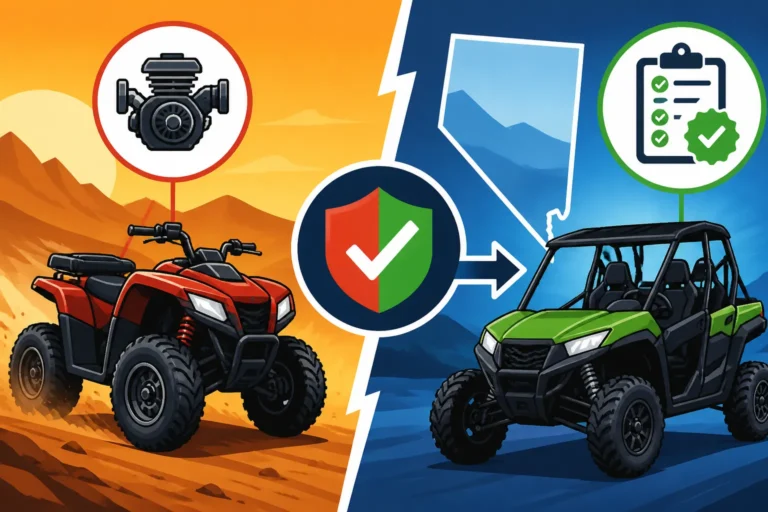
Nevada law specifically exempts certain smaller machines from titling requirements. If your ATV or UTV has an engine displacement of less than 70 cubic centimeters (cc), it typically falls outside the scope of needing a formal title. This often applies to small youth quads, mini dirt bikes, or even some electric-powered children's machines. The reasoning behind this exemption usually relates to the lower power, slower speeds, and reduced risk associated with these smaller vehicles. They're generally not seen as the same caliber of vehicle that needs the stringent tracking and theft prevention measures that come with full titling.
This exemption is distinct from general registration, which is a common source of confusion. While a machine under 70cc may not require a title, it still needs to be registered with the state if it's going to be operated on public lands in Nevada. Think of it this way: the state doesn't need to track permanent ownership for a small youth machine in the same way it does for a full-size side-by-side, but it still wants to ensure that any vehicle using public trails contributes to trail maintenance and safety programs. You can read more about this in [Machines Under 70cc and Why They Skip Registration].
For parents buying a small machine for their kids, this means one less piece of official paperwork to worry about. You'll still want a bill of sale to prove you own it, and you'll definitely need to register it with the DMV for a decal if you plan to hit any public riding areas, but the full titling process is off the table. This simplifies the initial purchase and ongoing ownership for many families introducing their youngsters to the joys of off-road riding.
Pre-1976 Machines
Another category of OHVs that often escapes the titling requirement are those manufactured before January 1, 1976. This historical exemption is similar to how many classic cars are treated, recognizing that vehicles of a certain vintage predate modern titling and VIN systems. The older a machine is, the less likely it is that original titling records exist, or that they conform to current state requirements. Nevada's laws reflect this reality by excusing these truly vintage machines from the modern titling process.
Proving a machine was built before 1976 can sometimes be a puzzle, especially if the original manufacturer's plate or documentation is missing. However, various methods can be used, such as manufacturer's certificates, old sales invoices, or even a sworn affidavit attesting to its age based on widely available information for that specific make and model. This ensures that enthusiasts of antique OHVs aren't prevented from enjoying their passion due to impossible paperwork demands. It's all about historical context and practicality.
While these pre-1976 machines are exempt from titling, they are generally still subject to registration requirements if they are to be operated on public lands, just like their sub-70cc counterparts. The state wants to know who's out there on the trails, regardless of how old their ride is. So, while you might skip the title fees, be prepared to pay for [Nevada's Annual OHV Registration] and get that decal affixed. This ensures that even the most classic rides contribute to the upkeep of Nevada's extensive trail system.
Husbandry and Government Use
Certain OHVs are exempt from titling requirements based on their specific, non-recreational use. The most prominent example is machines used exclusively for husbandry purposes. This exemption is designed for ATVs and UTVs that are primarily or solely operated on private land, such as farms, ranches, or other agricultural properties, for work-related tasks like herding livestock, checking fences, or transporting feed. These machines are tools for a trade, not recreational vehicles used on public trails.
The logic here is straightforward: if a machine never leaves private property and is strictly for farm work, the state has less interest in formally titling it for public road or trail use. These machines are not typically bought and sold in the recreational market, and their operations are confined to private domains. You can delve deeper into this specific exemption in [The Husbandry Exemption for Nevada Ranches]. It's a pragmatic recognition of how these vehicles are essential for agricultural operations, without imposing unnecessary administrative burdens.
Similarly, OHVs owned and operated by government agencies (federal, state, or local) are also exempt from titling requirements. This includes machines used by law enforcement, search and rescue teams, park rangers, or other official bodies for their duties. These vehicles are government property, and their ownership is tracked through different internal systems, making a state-issued title redundant. For anyone utilizing these exemptions, whether for farming or official duties, it's crucial that the OHV truly adheres to the specified use, as misrepresenting its purpose to avoid titling or registration can lead to penalties.
Understanding the Difference Between Title and Registration
One of the biggest areas of confusion for new and even experienced OHV owners is the distinction between a vehicle's title and its registration. They both involve paperwork, but they serve fundamentally different purposes.
Ownership vs. Operating Privileges
At its core, a vehicle title is a legal document that proves ownership. It states who the legal owner of the ATV or UTV is, much like the deed to a house proves who owns the property. This document is crucial for establishing the chain of ownership, especially when buying or selling, and it helps prevent theft by making it difficult to sell a machine you don't legally own. It's a permanent record that typically changes hands only when the vehicle is sold. You can hold onto a title for decades, even if the machine isn't actively being used or registered.
Registration, on the other hand, grants you the privilege to operate your OHV on public lands and designated trails. It's permission from the state to use public resources and acknowledges that you've paid the necessary fees that often go towards trail maintenance, safety programs, and administrative costs. When you register your OHV, you receive a decal that must be affixed to the machine, signaling to park rangers and law enforcement that you're in compliance. Registration is usually time-sensitive, typically lasting one or three years, and must be renewed periodically. Just because you own a machine (have the title) doesn't automatically mean you can ride it on public land; you still need to register it. Conversely, as we've discussed, you can sometimes register a machine without having a state-issued title, provided you have other acceptable proofs of ownership.
This distinction is vital for avoiding fines and ensuring you're legally compliant when enjoying Nevada's vast riding areas. Many riders mistakenly believe that if they have a title, they're good to go. However, a title alone won't get you past a ranger checking for current registration. It's a two-part system designed to address both who owns the machine and whether it's permitted for public use.
Why You Still Need Registration Even Without a Title
It's a common misconception that if your OHV doesn't require a title, you don't need any other paperwork. As we've established, this is far from the truth, especially if you plan on riding on public lands. Even if your machine falls under one of the exemptions for titling—it's pre-2012, under 70cc, pre-1976, or used for husbandry—it absolutely still needs to be registered with the Nevada Department of Motor Vehicles (DMV) if you're taking it out on public trails. This includes vast areas managed by the Bureau of Land Management (BLM), state parks, and designated OHV areas.
The registration fees collected by the state directly support the very trails you love to ride. They fund things like signage, restroom facilities, mapping, and general upkeep of Nevada's extensive OHV trail network. So, when you pay for your decal, you're directly contributing to the maintenance of the infrastructure that makes your riding possible and enjoyable. This is why rangers are vigilant about checking for current decals – it's not just about compliance, but also about ensuring resources for the OHV community. [Where Nevada OHV Registration Money Goes] provides a comprehensive breakdown of how these funds are utilized.
If you have an untitled machine, the process for [Nevada OHV Registration Without a Title] typically involves presenting your proof of ownership (bill of sale, affidavit, etc.) along with the standard registration application. The DMV will then issue you a registration card and the all-important decal. So, while you might skip the step of getting a formal title certificate, don't ever skip the annual or three-year registration if you want to legally explore Nevada's incredible off-road scenery. It's the cost of admission to thousands of miles of adventure.
Potential Pitfalls and Best Practices
Navigating the world of untitled OHVs, whether buying or selling, comes with its own set of potential pitfalls. The primary risk, of course, is unknowingly dealing with a stolen machine. Without a clear title, it can be harder to definitively trace a machine's history. Another pitfall is inadequate documentation. A vague, handwritten bill of sale with minimal information can create headaches down the road, especially if you ever need to prove ownership for registration or in a dispute.
To mitigate these risks, best practices are crucial. If you're buying an untitled OHV, always insist on a detailed bill of sale. This document should include the full names, addresses, and signatures of both buyer and seller, the date of the sale, the full VIN of the machine, its make, model, and year, and the sale price. If the seller claims it's exempt from titling due to the pre-2012 rule or other reasons, ask for any supporting documents like old registrations. Consider using a template from a reputable source like LawDepot to ensure all pertinent information is captured. [Checking an ATV VIN Before You Buy] is an absolute must, regardless of whether a title is present or not. Run that VIN through available databases to check for theft reports.
For sellers, being proactive with documentation is your best friend. Even if you've owned the machine since before 2012 and never received a title, having an organized file with your original purchase receipt, any previous registration cards, and a prepared, comprehensive bill of sale will build trust with potential buyers. If you don't have original purchase proof, consider creating a notarized affidavit of ownership before you even list the machine for sale. Transparency and thorough documentation are the keys to smooth, legal transactions for untitled OHVs, protecting both you and the next owner from future complications.
Navigating Sales and Transfers Without a Title
When an OHV doesn't have a state-issued title, the transfer of ownership relies heavily on other forms of documentation. This means the bill of sale, and sometimes an affidavit, become incredibly important legal instruments.
The Critical Role of a Bill of Sale
In the absence of a formal title, the bill of sale transforms from a helpful receipt into the single most critical piece of documentation proving ownership. For an untitled OHV, this document is your proof that you legally acquired the machine from its previous owner. It's what you'll show to the DMV when you go to register it, and what you'll rely on if any questions about ownership ever arise. Therefore, it cannot be a flimsy, hastily scribbled note.
A robust bill of sale needs to be comprehensive and clear. It should unequivocally identify both the buyer and the seller with their full legal names and current addresses. Crucially, it must accurately describe the OHV being sold, including its make, model, year, color, and most importantly, its complete Vehicle Identification Number (VIN). The VIN is the unique identifier for that specific machine, making it distinct from any other. The sale price and date of transaction are also essential. Both the buyer and the seller should sign and date the document, and it's highly recommended to have it notarized, adding an extra layer of legal validity. Resources like LawDepot offer excellent templates for bills of sale that cover all these necessary details, ensuring you don't miss anything vital. Remember, if you’re buying an untitled machine, this paper is your proof; guard it carefully.
Without a title, this bill of sale acts as the new owner's verifiable link in the chain of ownership. It effectively bridges the gap left by the absence of a traditional title certificate. When [Buying a Used ATV Privately in Nevada], especially one without a title, never underestimate the power and necessity of a meticulously filled-out bill of sale. It's your legal shield and your ticket to getting that machine registered and out on the trails.
Affidavit of Ownership as an Alternative
Sometimes, even a bill of sale isn't available, perhaps it was lost years ago, or the machine was acquired informally a long time back. In such cases, an affidavit of ownership can step in as a powerful alternative for establishing proof of ownership, particularly when you need to [Nevada OHV Registration Without a Title]. An affidavit is a formal, written statement made under oath and typically notarized, where you declare yourself to be the rightful owner of the OHV.
This sworn statement includes details such as how and when you acquired the machine, its VIN, make, model, and any other identifying features. You're essentially telling the state, "I solemnly swear that I own this machine, and here's why." While it's not a title, it's a legally recognized document that the Nevada DMV can accept as proof of ownership for registration purposes. It's especially useful for older machines where the original paperwork has vanished over time, but the owner has a clear, long-standing claim to the vehicle. Many people find templates for affidavits on legal document sites like LawDepot, which can guide them through the process of drafting a legally sound statement.
It's important to understand that an affidavit of ownership doesn't create a title; it simply provides an official, sworn declaration of who possesses and claims ownership of the machine. The DMV reviews these affidavits on a case-by-case basis, and as long as the information is credible and the VIN doesn't come up as stolen, it can often facilitate the registration process. This provides a crucial pathway for many long-term owners of untitled OHVs to bring their machines into compliance for public land use.
When to Consider Getting a Title Anyway
Even if your ATV or UTV technically doesn't require a title due to an exemption, there might be compelling reasons to pursue one anyway. For many owners, having an official state-issued title provides an undeniable sense of security and clarity that other forms of documentation, while legal, sometimes lack. It's the definitive proof of ownership recognized across all jurisdictions.
One significant advantage of obtaining a title, even if exempt, is enhancing the resale value and ease of future transactions. When you go to sell your OHV, presenting a clear, current title makes the process much smoother for potential buyers. They won't have to worry about the complexities of untitled sales, which can sometimes deter less experienced buyers or those wary of potential legal issues. A titled machine simply has a more liquid market. It eliminates any ambiguity and provides peace of mind for both parties, making your machine more attractive on the open market.
Furthermore, some financial institutions might require a title if you ever plan to use your OHV as collateral for a loan, or if you're exploring financing options for a different machine where your current OHV is part of a trade-in. While not common for recreational vehicles, it's a possibility. Ultimately, deciding whether to obtain a title for an exempt machine comes down to personal preference, future plans for the OHV, and how much you value the absolute certainty that a title provides. The process to [Titling an Off-Highway Vehicle in Nevada] can be initiated even if your machine is exempt, providing you with that gold-standard document.
Summary of Nevada OHV Titling Exemptions
To help clarify when a title is and isn't required, here's a quick overview:
| Scenario | Title Required? | Alternative Proof of Ownership | Notes |
|---|---|---|---|
| Acquired Before July 1, 2012 | No | Original Bill of Sale, Prior Registration, Affidavit | Still requires registration for public land use. |
| Engine Under 70cc | No | Bill of Sale | Primarily for youth machines; still requires registration for public land use. |
| Manufactured Before Jan 1, 1976 | No | Bill of Sale, Manufacturer Docs, Affidavit | Vintage machines; still requires registration for public land use. |
| Used Exclusively for Husbandry | No | Proof of agricultural use, Bill of Sale | Must remain on private land for work purposes; not for recreational use. |
| Owned by Government Entity | No | Agency documentation | For official use only. |
| New Machine Purchased After July 1, 2012 | Yes | MCO/MSO, Bill of Sale | Standard process for all modern OHV purchases. [Registering an ATV in Nevada] |
| Used Machine with Existing Nevada Title | Yes | Existing Title, Bill of Sale | Title is transferred to new owner. |
Disclaimer
This article is for general informational purposes only and does not constitute professional advice. Laws, prices and regulations vary by location and change over time. Consult a qualified professional for guidance on your specific situation.