Registering a Homebuilt Buggy in Nevada
It’s a fantastic feeling, isn't it? Pouring your heart and soul, and probably a good chunk of change, into building your very own off-highway buggy. You dream of tearing through the Nevada desert in a machine crafted by your own hands. But then reality hits: how on earth do you register something that didn't come with a shiny Manufacturer's Certificate of Origin? This guide is here to walk you through the often-confusing process of registering your pride-and-joy homebuilt buggy in Nevada, ensuring you hit the trails legally.
The Unique Challenge of Registering a Homebuilt Buggy
Registering any off-highway vehicle (OHV) in Nevada comes with its own set of rules, but when you've built the machine yourself, you're looking at a different ballgame entirely. You don't have a VIN stamped by a major manufacturer, nor do you have a neat stack of sales paperwork from a dealership for the complete unit. This isn't just a minor hurdle; it's a fundamental difference in how the state establishes ownership and vehicle identity.
Why Homebuilt Machines Pose a Paperwork Puzzle
Most factory-built ATVs and UTVs arrive at the Nevada Department of Motor Vehicles (DMV) with a clear lineage. There's a Manufacturer's Certificate of Origin (MCO) from Polaris, Can-Am, Yamaha, or the like, detailing the VIN and proving it's a brand-new machine. When you buy from a dealer, they handle a lot of the initial registration legwork, and when you buy used, there's typically a Nevada title that transfers hands.
With a homebuilt buggy, none of that exists. You're starting from scratch. You might have receipts for an engine, a transmission, a custom frame, axles, and countless other components, but no single document describes the "whole" vehicle you’ve created. This lack of a single, unifying document is where the challenge begins. Nevada needs to identify your machine, ensure it's not stolen, and confirm that you, the builder, are indeed its rightful owner before they'll even think about issuing a decal. This is a common frustration for backyard mechanics and custom fabricators who just want to enjoy their hard work on the trails.
Establishing Proof of Ownership for Every Component
Because your buggy doesn't come with a single MCO, you need to prove ownership of all its major components. Think of it as building a legal paper trail, piece by piece. This means keeping meticulous records of every significant part you purchased, especially the core components like the engine, transmission, frame, and axles. Did you buy an engine from a private seller? You'll need a bill of sale. Did you order a custom frame online? Keep that invoice.
If you can't produce a bill of sale for a particular component, you might need to create an affidavit of ownership. This is where resources like LawDepot can come in handy. You can use their templates to draft a legally sound document stating that you are the sole owner of a particular part, explaining how you acquired it, and signing it in front of a notary. It sounds tedious, but having a clear ownership record for each piece is critical. Without it, the DMV might look at your collection of parts and simply say, "We can't confirm this is yours." It’s all about preventing fraud and ensuring proper titling down the road.
Essential Paperwork for Your Custom Creation
Before you even think about visiting the DMV, you need to gather a specific stack of documents. This isn't just about showing up with a smile and a good story; it’s about providing irrefutable evidence of your machine's existence and your ownership.
The Application for Vehicle Identification Number Assignment (OHV-012)
This is the big one for homebuilt machines. Since your buggy doesn't have a factory VIN, Nevada needs to assign one. You'll need to fill out the [Walking Through Form OHV-012] application, which essentially asks you to describe your vehicle in detail. This isn't just a formality; it's how the state creates a record for your unique build. Be prepared to list the manufacturer (which, in this case, is you), the year it was built (the year you completed it), the make (often "Homemade" or "Custom"), and the model (e.g., "Dune Buggy" or "Rock Crawler").
On this form, you'll also need to provide information about the engine, including its make, model, and serial number. This is why those component receipts are so important. If you pulled an engine from an old car or another OHV, you’ll need to prove you own that engine. This form is the foundation of your buggy's legal identity, so take your time and fill it out accurately. Errors here can cause significant delays.
Proof of Ownership for Major Components
As discussed, this is where your detailed record-keeping truly pays off. You'll need to present bills of sale, invoices, or other transfer documents for the major components of your buggy. The DMV is looking for a chain of ownership that leads back to you. If you fabricated parts yourself, you might need to make a sworn statement to that effect. For anything purchased used or without a formal receipt, an affidavit of ownership generated through a platform like LawDepot, signed, and notarized, can serve as invaluable proof.
Imagine you bought a used transmission from a friend. A simple handwritten bill of sale stating the item, price, date, and signatures of both parties would be essential. For a brand-new suspension system, your original purchase invoice from the vendor is perfect. The more documentation you have, the smoother this part of the process will be. Remember, the DMV is trying to prevent stolen parts from being incorporated into new vehicles, so they're going to be thorough.
Affidavit of Construction (OHV-012A)
This document is often required in conjunction with the VIN assignment application for homebuilt machines. It’s where you formally swear that you built the vehicle described. It asks for details about the components used, where they came from, and essentially solidifies your claim as the builder and owner. Think of it as your sworn testimony to the vehicle's creation. You’ll detail things like the type of frame, axles, engine, and other key parts.
Like other crucial documents, this affidavit often requires notarization. This adds a layer of legal authenticity, confirming that you are indeed the person making the claim. Having all your component receipts lined up makes filling out this affidavit much easier and more defensible. Without it, the DMV has no formal declaration from you, the builder, about the machine's origin.
| Document Type | Purpose | Required for Homebuilt Buggies? | Example Use Case |
|---|---|---|---|
| OHV-012 | Application for Vehicle Identification Number Assignment | Yes | To get a VIN assigned to your custom-built frame and components. |
| OHV-012A | Affidavit of Construction | Yes | To formally declare you built the machine and detail its components, often required with OHV-012. |
| Bills of Sale / Invoices | Proof of ownership for major components (engine, frame, axles) | Yes | Receipt for a new engine, handwritten bill of sale for a used transmission. |
| Affidavit of Ownership | For components lacking a traditional bill of sale | Potentially | If you salvaged parts without receipts, or bought from a friend without formal paperwork, use LawDepot to create this. |
| Nevada Emissions Info | Depending on engine/year, may be required for road-legal status | No (for OHV only) | Not typically required for an off-highway only decal, but good to know for future reference if laws change. |
Navigating the Nevada VIN Inspection
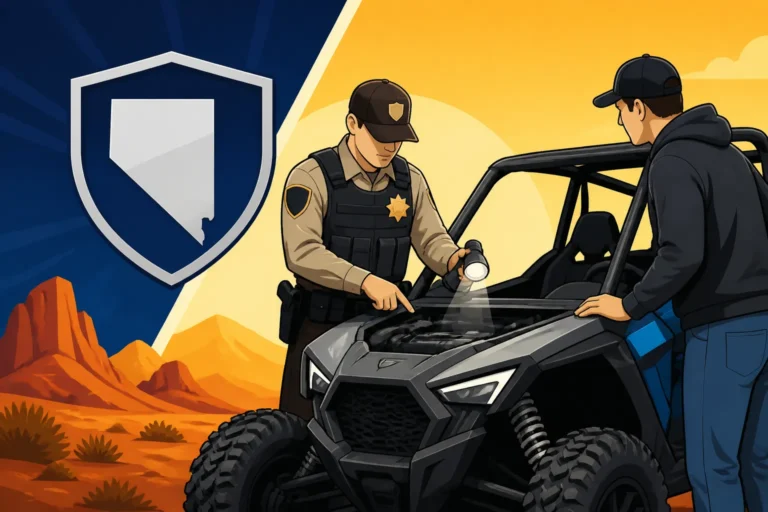
Once you've got your paperwork in order, the next critical step is getting your homebuilt buggy inspected. This isn't just a casual glance; it's a verification process to ensure the machine matches your documentation and doesn't have any red flags. This is where the DMV typically steps back, as they do not perform VIN inspections themselves.
Who Can Perform a Homebuilt VIN Inspection
You can't just roll your buggy up to any random shop. Nevada is very specific about who can verify a VIN, especially for a custom or homebuilt machine. For factory-built vehicles, licensed Nevada dealers and certain businesses can perform these inspections. However, for a homebuilt, which needs a VIN assigned and then verified, the process is a bit different.
Often, for assigned VINs, you'll need a sworn officer from the Nevada Highway Patrol (NHP) or another local law enforcement agency to conduct the inspection. They're looking to confirm that the numbers you’ve provided for major components (like the engine serial number) are present and haven’t been tampered with, and that the physical characteristics of the machine match your descriptions on the OHV-012 and OHV-012A forms. This helps prevent fraud and ensures the integrity of the state's vehicle identification system. It's a good idea to call your local NHP office or county sheriff's department ahead of time to understand their specific procedures for this type of inspection. You might need to make an appointment or bring the buggy to a specific location. Remember, [The VIN Inspection Nevada DMV Will Not Do] is a key piece of information here.
What the Inspector Looks For
During the inspection, the officer will meticulously compare your buggy to the information you've provided on your application and affidavit. They'll look at:
- Component Serial Numbers: They'll verify the serial number on the engine, and potentially other major components, against your paperwork. If there's no serial number on a component you claimed, be prepared to explain why and perhaps show additional proof of ownership.
- Physical Description: Does the buggy's color, general configuration, and type (e.g., two-seater, four-seater) match what you've written?
- Assigned VIN Placement: Once a VIN is assigned by the DMV (after initial paperwork submission), you will typically receive instructions on where and how to permanently affix it to the frame. The inspector will confirm this new VIN is properly and securely displayed. This step often happens after the initial document submission, where the DMV approves the VIN assignment, sends you the physical VIN plate or sticker, and then you get it inspected. It's a multi-stage process, not a one-stop shop.
- Safety Features: While not a full safety inspection for road-worthiness (as it's an OHV), they might note basic safety equipment like brakes, lights, and a roll cage. Their primary focus, however, is on identity verification and ensuring the machine isn't a "chop shop" build.
Having all your original receipts and affidavits readily available during the inspection can answer any questions the officer might have on the spot. It shows you've done your due diligence.
Submitting Your Application and Getting Your Decal
After all the meticulous paperwork and the VIN inspection, you're finally ready for the finish line: submitting your application to the DMV and getting that coveted decal.
The Full Submission Package
You'll need to compile all your approved documents into a comprehensive package to submit to the Nevada DMV Off-Highway Vehicle Section. This will include:
- Completed OHV-012 (Application for Vehicle Identification Number Assignment): Ensure all sections are filled out, including your builder information.
- Completed OHV-012A (Affidavit of Construction): Signed and notarized.
- Proof of Ownership for Components: All your bills of sale, invoices, and any LawDepot-generated affidavits of ownership for individual parts.
- VIN Inspection Form: The completed and signed verification form from the NHP officer or other approved inspector, confirming the assigned VIN.
- Applicable Fees: There will be fees associated with titling your homebuilt machine and for the registration decal itself. Remember, [Nevada Title Fees for a Resident Machine] and registration fees apply. You might also have a [What the $2 VIN Assignment Fee Buys] to cover the administrative cost of assigning the VIN. These fees can vary, so always check the latest figures on the Nevada DMV website.
- Photo Identification: Your driver's license or state ID.
It's always a good idea to make copies of everything for your records before submitting the originals. Sometimes, with complex applications like homebuilt vehicles, processing can take a little longer. Knowing you have copies of every piece of paper can save you a lot of stress if anything gets misplaced or further questions arise. You can usually submit these documents by mail or in person at a larger DMV office that handles OHV registration, such as the office in Carson City. For specific details, you may want to check out [The Nevada DMV OHV Section] resources.
Receiving Your Nevada OHV Title and Decal
Once the DMV processes your application and approves all your documentation, they will issue you a Nevada Off-Highway Vehicle title. This title legally establishes your ownership of the homebuilt buggy, just like any other manufactured vehicle. This is a huge milestone, as it means your custom creation now has a legitimate identity in the eyes of the state.
Along with your title, you'll also receive your Nevada OHV registration decal. This is the colorful sticker you'll proudly display on your buggy, proving it's registered and ready for the trails. Remember, the decal typically needs to be placed on the left side or rear of the vehicle, visible to anyone checking for compliance. [Left Side or Rear: Where the Decal Goes] is something you'll want to remember. This decal comes with an expiration date, and you'll need to renew it periodically, either annually or for three years, depending on which option you chose. [One Year or Three Years in Nevada] will give you details on those choices.
Now, you're officially good to go. You've navigated the unique challenges of registering a homebuilt buggy, proving ownership piece by piece, getting a VIN assigned, passing inspection, and finally securing your title and decal. The sense of accomplishment will be immense, knowing that you built it, registered it, and can now ride it legally across Nevada's incredible landscapes.
Disclaimer
This article is for general informational purposes only and does not constitute professional advice. Laws, prices and regulations vary by location and change over time. Consult a qualified professional for guidance on your specific situation.