Passengers on a Nevada Road-Legal UTV
One of the biggest head-scratchers for UTV owners in Nevada is figuring out who can ride along when you take your machine onto a county road. It's not as simple as just throwing more seats in the back; there are specific rules about how many people can legally ride, where they need to sit, and even how old they have to be. This guide is going to break down all the confusing bits about having passengers in your Nevada road-legal UTV, so you can hit those approved county roads with confidence and keep everyone safe and compliant.
Deciphering Nevada's "Large All-Terrain Vehicle" Status
Before you even think about passengers, it's absolutely crucial to understand what Nevada considers a "Large All-Terrain Vehicle" (LATV). This designation is the golden ticket for getting your UTV registered for limited road use on designated county roads, and it directly impacts how many passengers you can legally carry. Many riders assume if their UTV has a back seat, it's good to go, but the state has very specific criteria that often catch people by surprise.
The Four-Seat or Truck Bed Test for Road Legality
Nevada's law, specifically [What Nevada's NRS 490.043 Counts as a Large ATV], sets the bar for what can be considered a Large All-Terrain Vehicle. It's not just about size or engine displacement. For your UTV to qualify for the special road decal, it must meet one of two key conditions regarding its design: either it was manufactured with at least four seats, or it has a truck-like bed capable of carrying cargo. This might seem like a small detail, but it's a huge hurdle for many popular machines.
Imagine you've got a sleek, two-seat sport UTV that you've souped up with all the bells and whistles. You love taking it to places like Logandale or Sand Mountain. You decide you want to ride it legally on some of the approved county roads to get to a trailhead. But when you go to apply for the Large ATV decal, you might find yourself denied because your machine only has two seats and no designated truck bed. This often frustrates owners who've spent a lot on their machines, only to find they don't quite fit the specific legal definition for road use. It's not about how many seats you can add, but how it left the factory. [Why a Two-Seat Sport Quad Fails Nevada's Test] is a prime example of this.
Why Your Two-Seat Sport UTV Won't Qualify for More Passengers on Roads
Following on from the previous point, if your UTV originally came from the manufacturer with only two seats and doesn't have a specific truck bed, it simply won't qualify as a Large All-Terrain Vehicle in Nevada, regardless of how many aftermarket seats you install. This is a common pitfall for owners of sport-oriented side-by-sides like many Polaris RZRs or Can-Am Mavericks that are designed for performance, not utility.
Let's say you picked up a fantastic two-seater and then added a "jump seat" or a rear bench kit from a company like SuperATV to bring along your kids or friends. While these aftermarket solutions are great for off-road adventures on trails, they don't magically confer "Large ATV" status for road-legal purposes in Nevada. A deputy checking your paperwork on a [Nevada County Roads Open to UTVs] might not even look at your aftermarket seats; they're going to verify the vehicle's original manufacturing specifications against the LATV criteria. If it wasn't built with four seats or a truck bed from the start, those extra seats are effectively "off-road only" when it comes to riding on state-approved county roads. This often leaves riders feeling confused and disappointed, wondering why their modification isn't recognized for road use.
Seating Capacity and Occupant Rules for Road-Legal UTVs
Once your UTV does qualify as a Large All-Terrain Vehicle, then you can start thinking about how many people you can carry and where they need to sit. The state doesn't just want you to have enough seats; it wants those seats to be safe, factory-installed, and properly equipped with restraints. It's all about ensuring everyone riding along is as protected as possible when traveling on pavement.
Manufacturer Seating Versus Aftermarket Additions
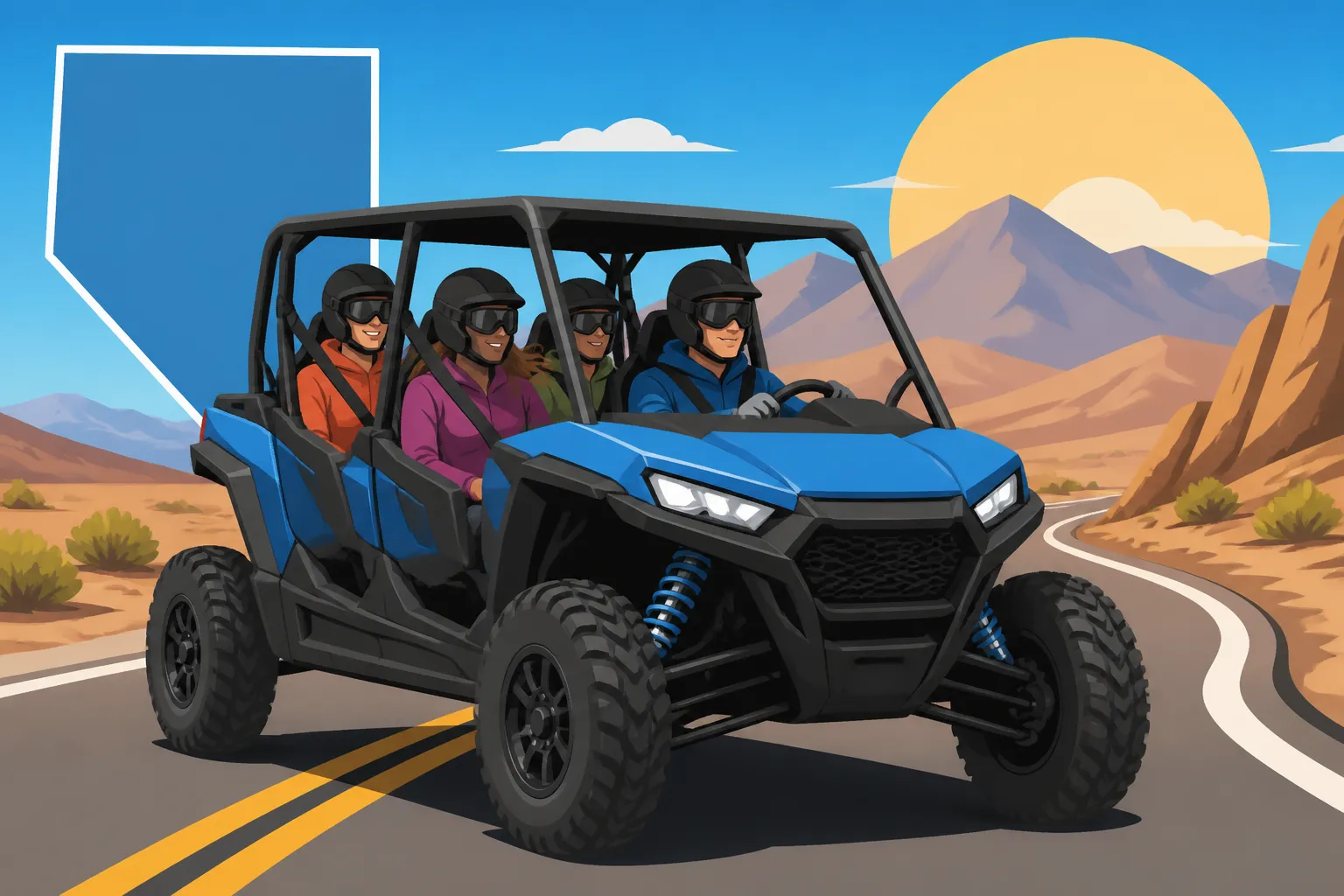
For a road-legal UTV, the number of passengers you can carry is generally limited to the number of seats the manufacturer originally installed and designed to be used. If your UTV came from the factory with four seats, then you can carry four occupants (including the driver). If it was a six-seater, then six. The state's focus is on the factory-engineered safety of those seating positions.
This distinction is important because many riders install additional seats in their UTVs for trail riding. Maybe you bought a two-seater and then added a third middle seat, or a rear bench to accommodate more family members. While these additions might be perfectly fine for off-road use, especially if they're quality components from a reputable brand, Nevada's road rules for LATVs typically defer to the original manufacturer's design. If a law enforcement officer pulls you over on a county road, they'll be looking for original equipment seating. Carrying passengers in an aftermarket seat that wasn't part of the UTV's original "Large ATV" design could lead to a citation for improper passenger transport. This can be a real bummer if you thought you were doing everything right by adding a safe, aftermarket seat for your loved ones.
Seat Belts and Occupant Restraints Are Non-Negotiable
Every single passenger in a Nevada road-legal UTV, just like in a regular car, must be properly secured with a seat belt or an equivalent occupant restraint system. This isn't just a suggestion; it's a legal requirement. When your UTV qualifies as a [What Qualifies as a Large ATV in Nevada], it effectively becomes subject to similar safety standards as other motor vehicles when on approved roadways.
Think about it: you wouldn't let a child ride in a car without a seatbelt, and the same logic applies here. The bumps and jostles of even a graded dirt county road, let alone a paved one, can be unpredictable. If your UTV has factory-installed seats, they will have integrated seat belts. Make sure everyone buckles up every single time you hit the road, even for short stretches. Law enforcement officers, whether it's a [What a Nevada Trooper Looks For on a County Road] or a local deputy, will absolutely be checking for this. Failure to properly restrain all occupants can result in fines and, more importantly, puts your passengers at significant risk in the event of a sudden stop or collision. It’s a simple click that can make all the difference in protecting those riding with you.
Age and Supervision Requirements for UTV Passengers on Nevada Roads
Just because you have an open seat and a seat belt doesn't mean anyone can hop in for a ride on a Nevada county road. There are specific age requirements, especially for younger passengers, and supervision rules that drivers need to be aware of. This is often where confusion really sets in, as the rules for off-road riding might differ from those on designated public roads.
Minor Passengers on County Roads
Nevada has specific rules regarding the age of passengers, particularly minors, in UTVs operating on county roads. Generally, children need to be old enough to be properly secured by the vehicle's seat belt system. The exact age can sometimes depend on how the child fits the restraint, similar to car seat laws. However, there are additional considerations for young passengers in the context of off-highway vehicles on roads.
It's common to see families enjoying UTVs on trails, with kids of various ages in the back. But when you transition to a county road, the rules tighten. For example, [Nevada Rules for a Child Passenger on a Road] outlines that if a child is too small for the UTV's built-in seat belt, they might need an appropriate booster or child safety seat, just like in a car. Not all UTVs are designed to easily accommodate these. Imagine you're planning a trip from Logandale town to the trailhead on an approved route, and you've got your younger kids with you. You'll need to ensure they're not only buckled but also meet any height and weight requirements for the seat belts, or are in an approved child restraint. Don't risk a fine or, worse, a serious injury, by assuming an off-road seat setup is sufficient for road use.
Supervising Young Riders in a Side-by-Side
Beyond simply being properly restrained, there are also supervision aspects to consider when minors are riding as passengers in a road-legal UTV. While the driver is always responsible for all occupants, the specific regulations might touch on the driver's age or the context of the ride. [Supervising a Teenager on a County Road] highlights that even if a teenager is old enough to sit in a regular seat, the driver still holds the primary responsibility for their safety and adherence to all rules.
When you're out riding on [Nevada's General and Minor County Roads], you're operating a vehicle that, while still an off-highway machine, is now sharing space with traditional traffic. This means the driver needs to be extra vigilant, not just for their own actions but for the conduct and safety of their passengers, especially children. Ensure that younger passengers understand the importance of keeping their hands and feet inside the vehicle, remaining seated, and not distracting the driver. There's a big difference between a controlled off-road environment and the unpredictable nature of a public road, even a less-trafficked county one. Your role as the driver extends to being a constant supervisor for your minor passengers to ensure they don't unwittingly put themselves or others at risk.
Safety Gear and Best Practices for Passengers
Getting your UTV road-legal and having the right number of seats is just the beginning. Ensuring your passengers are properly equipped with safety gear and that you follow best practices for their comfort and protection is paramount. Road conditions, even on designated county routes, can be unpredictable, and being prepared makes all the difference.
Helmets and Eye Protection for All Occupants
While Nevada's general off-road helmet law typically applies to riders under 18, when you're operating a UTV on a county road, the rules can become more stringent, and it's always best to err on the side of caution. Many states require helmets for all occupants in open-air vehicles like UTVs on public roads, regardless of age. While Nevada's specific road-legal UTV helmet rules for passengers can be a bit nuanced depending on the exact road and vehicle classification, it's always recommended that everyone wear one. [Nevada Helmet Law for Road Riding] is a good resource to check the latest specifics.
Beyond helmets, proper eye protection is crucial for everyone. Dust, debris, insects, or even small rocks can be kicked up by your own tires or passing vehicles. A branch could snap back. Whether it's goggles, safety glasses, or a full-face helmet visor, ensuring your passengers have clear vision and protected eyes is a simple but vital step. Imagine hitting a stretch of gravel on a county road near [Riding County Roads Around Pioche] and suddenly kicking up a cloud of dust. Without eye protection, your passengers could be temporarily blinded or suffer an eye injury. Don't compromise on this — good quality helmets and eye protection are non-negotiable for passenger safety.
Keeping Kids Safe in the Back Seat
If your UTV is one of the four-seat or more models, ensuring kids in the back are safe requires extra attention. They might not have the same visibility as those in the front, and the ride back there can sometimes feel rougher. Beyond proper restraints and helmets, consider how to mitigate other risks.
First, ensure nothing loose is flying around the back that could become a projectile in a sudden stop. Secure coolers, bags, or any other cargo. Second, especially for younger kids, emphasize the "stay seated, hands inside" rule consistently. Their natural curiosity might lead them to reach out or stand up, which is incredibly dangerous on a moving vehicle, particularly on a public road. A sudden bump or turn could throw them. Consider adding grab handles from a brand like SuperATV if your UTV doesn't have enough, or if the factory ones are hard for small hands to reach comfortably. [Kids in the Back Seat of a Side-by-Side] need clear communication and constant reinforcement of safety rules. Always do a quick check before moving to ensure all passengers, especially children, are properly secured, aware of the rules, and have their safety gear on. It's better to take an extra minute than to regret it later.
What to Expect from Law Enforcement Regarding Passengers
When you take your road-legal UTV onto a Nevada county road, you're entering an environment where law enforcement officers are actively ensuring compliance with traffic laws. This includes checking not only your registration and driving behavior but also the safety and legality of your passengers. Being prepared for a roadside stop and understanding what officers look for can save you a lot of hassle.
What a Deputy Asks for at a Roadside Stop
If a Nevada deputy, park ranger, or state trooper pulls you over on a county road, they're likely to ask for a few key things right away. Naturally, they'll want to see your driver's license (yes, you need one for road use!) and proof of your UTV's registration with the special Large ATV decal. But don't be surprised if they also do a quick visual check of your passengers. [What a Nevada Trooper Looks For on a County Road] often includes a scan for proper seat belt usage and visible safety gear like helmets, especially for younger occupants.
They might ask about the age of any minor passengers to ensure they're compliant with any specific age restrictions for road-legal UTVs, and that they are properly supervised. For instance, if you're riding through [Riding County Roads Around Caliente] on your way to a trail, a deputy might observe your entire group. If they see a small child unrestrained or seemingly too young for the setup, they will inquire. Having your paperwork in order for the machine is one thing, but making sure your human cargo is also compliant is just as important. They want to ensure everyone is safe and that you're operating the vehicle responsibly according to all applicable laws.
Consequences of Non-Compliance Regarding Passengers
Ignoring the rules about passengers in your road-legal UTV in Nevada can lead to more than just a stern warning. Law enforcement officers have the authority to issue citations and impose fines for violations. These can range from improper restraint of a passenger to operating a vehicle with an illegal number of passengers or transporting minors without proper supervision or safety gear.
Imagine you're riding with an extra passenger in an aftermarket seat that isn't recognized for road use, or a child isn't properly buckled, and you get pulled over near [Riding Out of Amargosa Valley to the Dune]. You could be looking at a ticket for each infraction. Beyond the monetary cost, these violations can put points on your driving record and, more importantly, put a damper on your riding plans. In more severe cases, or if repeated, it could even impact your ability to enjoy road-legal UTV riding in the future. The rules are in place for safety, and deputies take them seriously. It's far better to ensure every passenger is accounted for, properly seated, and fully restrained than to face the penalties and risks associated with non-compliance. Always double-check [Nevada Rules for Riding a Side-by-Side on Roads] before you head out.
Navigating the Rules: Common Questions and Scenarios
Even with all the guidelines, specific situations can still leave riders scratching their heads. Nevada's rules for road-legal UTVs and passengers, while clear in writing, can feel complex in practice, especially for those new to the state or converting a machine for limited road use. Let's tackle some common questions and scenarios to help clear up the last bits of confusion.
The Two-Up Question: Can You Have a Passenger on a Road-Legal Quad?
This is a classic question that comes up frequently: if I have a quad (ATV) that qualifies for some kind of road use, can I carry a passenger? In Nevada, the answer is generally no for typical ATVs. While some ATVs are designed with a "two-up" or "tandem" seating arrangement for off-road use, these machines typically do not qualify as a "Large All-Terrain Vehicle" under NRS 490.043 because they don't have four seats or a truck bed. This means they are almost universally not eligible for the special road decal that permits limited county road travel.
Therefore, even if your quad could physically carry two people, you're generally restricted to a single operator when riding on approved county roads. The emphasis in Nevada's law for road-legal machines is squarely on side-by-sides (UTVs) that meet the LATV criteria. [Riding Two-Up on a County Road] is almost exclusively an option for qualifying UTVs, not ATVs, in Nevada's road-legal context. Trying to ride a tandem ATV on a county road with a passenger, even if they're properly helmeted, could lead to a citation because the machine itself doesn't fit the road-legal definition for carrying more than one person. It's a key distinction that can surprise quad riders.
Insurance and Paperwork for Your Passengers
While your passengers don't need their own special permits or driver's licenses to ride along in your road-legal UTV, you, as the driver and vehicle owner, are responsible for ensuring that your insurance coverage is adequate. [Insurance Nevada Requires for Road Use] states that liability insurance is mandatory for any UTV that operates on county roads. This insurance is designed to cover potential damages or injuries that your UTV might cause to others, and it's also crucial for protecting your passengers.
When you're stopped by law enforcement, they will ask for proof of insurance. Beyond legal compliance, think about the practical side: should an accident occur, you want to ensure that your passengers are covered for medical expenses or other related costs. Always check with your insurance provider to confirm that your policy extends to passengers when operating your UTV on public roads. Make sure you have your current insurance card readily accessible, perhaps in a waterproof bag along with your registration. Being able to provide [Proof of Insurance for a UTV on a County Road] quickly and clearly shows responsibility and helps a roadside stop go smoothly.
| Aspect of Passenger Rules | Large All-Terrain Vehicle (LATV) on County Roads | Standard ATV on County Roads (Limited Crossing) | Off-Road Use (Trails/Dunes) |
|---|---|---|---|
| Vehicle Type | UTV with 4+ seats OR truck bed | ATV (typically single rider) | Any ATV/UTV (depends on design) |
| Number of Passengers | Limited to factory-installed seats | Generally zero (single rider) | Limited to manufacturer's design |
| Seat Belts Required | Yes, for all occupants | N/A (single rider) | Recommended, if available |
| Helmets for Adults | Recommended (check local ordinances) | Recommended | Recommended |
| Helmets for Minors | Highly Recommended / Often Required | Highly Recommended / Often Required | Often Required (under 18) |
| Eye Protection | Required for all | Required for operator | Required for all |
| Driver's License Needed | Yes | Yes (for crossing roads) | No (off-road only) |
| Minimum Passenger Age | Depends on fit with restraints | N/A (single rider) | Varies (often 6+) |
| Supervision for Minors | Required for driver | N/A (single rider) | Required for driver |
| Brand Impact (e.g., SuperATV) | Aftermarket seating generally not recognized for road capacity; safety upgrades beneficial | N/A | Aftermarket seats/upgrades common |
Navigating Designated Routes and the 2-Mile Rule
Nevada's system for road-legal UTVs is very specific: it allows travel only on designated "general and minor county roads" and for limited distances, typically a maximum of [How Far You Can Ride Pavement in Nevada] to cross a highway or access a trailhead. This isn't permission to joyride through town or commute on major state routes. This distinction is critical because it impacts where your passengers can legally be with you.
Let's say you're taking your family for a ride near [Getting From Logandale Town to the Trailhead]. You might need to use a short stretch of county road to connect to the extensive trail system. During this short stretch, all passenger rules apply rigorously. However, once you transition onto pure off-road trails, some of the road-specific passenger regulations might relax slightly (though core safety like helmets and seatbelts should always be maintained). The important thing is that the moment your wheels touch that designated county road, you and all your passengers are subject to Nevada's traffic laws for Large All-Terrain Vehicles. Don't assume that because you're just "riding a little bit" on pavement, the rules are less strict. They are often even more stringent due to the shared-use environment. Always be aware of your surroundings and adhere to all laws, no matter how short the pavement stretch.
Disclaimer
This article is for general informational purposes only and does not constitute professional advice. Laws, prices and regulations vary by location and change over time. Consult a qualified professional for guidance on your specific situation.